e10vk
UNITED STATES SECURITIES AND EXCHANGE COMMISSION
Form 10-K
| |
|
|
| þ |
|
ANNUAL REPORT PURSUANT TO SECTION 13 OR 15(d) OF THE SECURITIES
EXCHANGE ACT OF 1934 |
For the fiscal year ended July 31, 2008
OR
| |
|
|
| o |
|
TRANSITION REPORT PURSUANT TO SECTION 13 OR 15(d) OF THE
SECURITIES EXCHANGE ACT OF 1934 |
For the transition period from to
Commission file number 1-14959
BRADY CORPORATION
(Exact name of registrant as specified in charter)
| |
|
|
| Wisconsin
|
|
39-0178960 |
| (State or other jurisdiction of
|
|
(IRS Employer Identification No.) |
| incorporation or organization) |
|
|
6555 West Good Hope Road,
Milwaukee, WI 53223
(Address of principal executive offices) (Zip Code)
(414) 358-6600
(Registrant’s telephone number, including area code)
Securities registered pursuant to Section 12(b) of the Act:
| |
|
|
| Title of each class
|
|
Name of each exchange on which registered |
|
|
|
|
| Class A Nonvoting Common Stock, Par
|
|
New York Stock Exchange |
| Value $.01 per share |
|
|
Securities registered pursuant to Section 12(g) of the Act:
None
Indicate by check mark if the registrant is a well-known seasoned issuer, as defined in
Rule 405 of the Securities Act. Yes þ No o
Indicate by check mark if the registrant is not required to file reports pursuant to
Section 13 or Section 15(d) of the Act. Yes o No þ
Indicate by check mark whether the registrant (1) has filed all reports required to be filed
by Section 13 or 15(d) of the Securities Exchange Act of 1934 during the preceding 12 months (or
for such shorter period that the registrant was required to file such reports), and (2) has been
subject to such filing requirements for the past 90 days. Yes þ No o
Indicate by check mark if disclosure of delinquent filers pursuant to Item 405 of
Regulation S-K is not contained herein, and will not be contained, to the best of the registrant’s
knowledge, in definitive proxy or information statements incorporated by reference in Part III of
this Form 10-K or any amendment to this Form 10-K. o
Indicate by check mark whether the registrant is a large
accelerated filer, an accelerated filer, a non-accelerated filer, or a smaller reporting company. See the definitions
of “large accelerated filer,” “accelerated filer” and “smaller reporting
company” in Rule 12b-2 of the
Exchange Act. (Check one):
| |
|
|
|
|
|
|
| Large accelerated filer þ |
|
Accelerated filer o |
|
Non-accelerated filer o
(Do not check if a smaller reporting company) |
|
Smaller Reporting Company o |
Indicate by check mark whether the registrant is a shell company (as defined in Rule 12b-2 of
the Act). Yes o No þ
The aggregate market value of the non-voting common stock held by non-affiliates of the
registrant as of January 31, 2008, was approximately $1,432,768,457 (based on closing sale price of
$30.49 per share on that date as reported for the New York Stock Exchange). As of September 22,
2008, there were outstanding 49,855,020 shares of Class A Nonvoting Common Stock (the “Class A
Common Stock”), and 3,538,628 shares of Class B Common Stock. The Class B Common Stock, all of
which is held by affiliates of the registrant, is the only voting stock.
PART I
Brady Corporation and Subsidiaries are referred to herein as the “Company,” “Brady,” or “we”.
Item 1. Business
(a) General Development of Business
The Company, a Wisconsin corporation founded in 1914, currently operates 63 manufacturing or
distribution facilities in Australia, Belgium, Brazil, Canada, China, Denmark, France, Germany,
India, Italy, Japan, Malaysia, Mexico, the Netherlands, Norway, Poland, Singapore, Slovakia, South
Korea, Sweden, Thailand, the United Kingdom and the United States. The Company also sells through
subsidiaries or sales offices in these countries, with additional sales through a dedicated team of
international sales representatives in Hong Kong, the Philippines, Spain, Taiwan, Turkey and the
United Arab Emirates. The Company further markets its products to parts of Eastern Europe, the
Middle East, Africa and Russia. The Company’s corporate headquarters are located at 6555 West Good
Hope Road, Milwaukee, Wisconsin 53223, and the telephone number is (414) 358-6600. The Company’s
Internet address is http://www.bradycorp.com.
(b) Financial Information About Industry Segments
The information required by this Item is provided in Note 7 of the Notes to Consolidated
Financial Statements contained in Item 8 — Financial Statements and Supplementary Data.
(c) Narrative Description of Business
Overview
Brady Corporation is an international manufacturer and marketer of identification solutions
and specialty products which identify and protect premises, products and people. Brady’s core
capabilities in manufacturing, channel management, printing systems, precision engineering and
materials expertise make it a leading supplier to customers in general manufacturing, maintenance
and safety, process industries, construction, electrical, telecommunications, electronics,
laboratory/healthcare, airline/transportation, security/brand education, governmental, public
utility, and a variety of other industries. The Company’s ability to provide customers with a broad
range of differentiated solutions both through the organic development of its existing business and
the acquisition of complementary and adjacent businesses, its commitment to quality and service,
its global footprint and its diversified sales channels have made it a world leader in its markets.
Brady manufactures and markets a wide range of products for use in diverse applications. Major
product lines include facility identification; safety and complementary products; wire and cable
identification products; sorbent materials; people identification products, regulatory publishing;
high-performance identification products for product identification, and work-in-process
identification; bar code labels and precision die-cut components for mobile telecommunications
devices, hard disk drives, medical devices and supplies, automotive electronics and other
electronics. Products are marketed through multiple channels, including distributors, resellers,
business-to-business direct marketing and a direct sales force.
The need for the Company’s products is driven, in part, by customer specifications, by
regulatory compliance requirements imposed by agencies such as the Occupational Safety & Health
Administration (“OSHA”) and the Environmental Protection Agency (“EPA”) in the United States and
similar regulatory agencies around the world, and by the need to identify and track assets or to
identify, direct, warn, inform, train and protect people or products.
The Company has a broad customer base, with its largest customer representing approximately 6%
of net sales.
Competitive Strengths
The Company believes the following competitive strengths will allow it to achieve its
strategy:
Leader in Niche Markets. Brady competes in niche markets where it believes it is often the
leading supplier with the manufacturing expertise, infrastructure, channels and sales resources
necessary to provide the required product or comprehensive solution. For
3
example, the Company believes it is the leading supplier of wire identification products to
the North American MRO (Maintenance, Repair and Operations) market and of precision die-cut
components to the mobile telecommunications market. The Company believes its leadership positions
make it a preferred supplier to many of its customers and enables it to be successful in its
markets, which are generally fragmented and populated with smaller or regional competitors.
Differentiated Solutions and Commitment to Innovation. The Company believes its sophisticated
engineering and manufacturing capabilities, as well as its expertise in materials, give it a
competitive advantage in supplying customized or high specification product solutions to meet
individualized customer needs. The Company has been successful in identifying and incorporating
innovative technologies to create integrated and precise solutions. Additionally, it is able to use
its materials expertise and its investment in research and development to provide unique products
to meet the demands of end-customers in new, faster growing markets adjacent to its traditional
markets, such as laboratory identification, aerospace, defense, and mass transit. Brady’s
commitment to product innovation is reflected in its research and development efforts that include
approximately 250 employees primarily dedicated to research and development activities mainly in
the United States, but also in Belgium, China, Germany, Singapore, Sweden and South Korea.
Operational Excellence. Brady has achieved continuous improvement in operational
productivity. It employs well-developed problem solving techniques and invests in state-of-the-art
equipment to capture efficiencies. The Company is largely vertically integrated and designs,
manufactures and markets a majority of the products it sells. The Company has invested heavily over
the last several years to centralize its North American distribution network and to standardize its
SAP software applications. It has consistently generated positive cash flow from operations by
continually reducing costs and optimizing inventory management and the efficiency of its
manufacturing operations.
Broad Customer Base and Geographic Diversity. Brady believes its global infrastructure and
diverse market presence limit the impact of an economic downturn on its business in any particular
country or region, enables it to act as a primary supplier to many of its global customers and
provides a solid platform for further expansion. Sales from international operations increased from
44.4% of net sales in fiscal 2000 to 62.9% of net sales in fiscal 2008. The Company’s broad product
offering and global presence benefit many of its customers who seek a single or primary supplier.
Brady has over 500,000 end-customers that operate in multiple industries.
Disciplined Acquisition and Integration Strategy. The Company has a dedicated team of
experienced professionals that employ a disciplined acquisition strategy and process to acquire
companies. It applies strict financial standards to evaluate all acquisitions using an expected
return model based on a modified return on invested capital calculation. It also conducts
disciplined integration reviews of acquired firms to track progress toward results expected at the
time of acquisition. Since 1996, the Company has acquired and integrated 53 companies to increase
market share in existing and new geographies, expand the product range it offers to both existing
and new customers, as well as add new technological capabilities.
Channel Diversity and Strength. Brady utilizes a wide range of channels to reach customers
across a broad array of industries. It employs direct marketing expertise to meet its customers’
need for convenience. The Company also has long-standing relationships with, and is a preferred
supplier to, many of its largest distributors. In addition, the Company employs a global sales team
to support both distributors and end users and to serve their productivity, tracking and safety
requirements. The Company believes its strong brands and reputation for quality, innovation and
on-time delivery contribute to the popularity of its products with distributors, original equipment
manufacturers (“OEMs”), resellers and other customers.
Deep and Talented Team. The Company believes that its team of employees has substantial depth
in critical operational areas and has demonstrated success in reducing costs, integrating
acquisitions and improving processes through economic cycles. The international experience of its
management team and its commitment to developing strong management teams in each of the local
operations is a competitive advantage. In addition, the Company believes it employs a world-class
team of people and dedicates significant resources to recruiting people committed to excellence and
investing in their potential. The depth and breadth of knowledge within the entire Brady
organization strengthens relationships with its customers and suppliers and enables the Company to
provide its customers with a high level of product and industry expertise.
4
Key Strategies
The Company’s primary growth objectives are to build upon its leading market positions, to
improve its performance and profitability and to expand its existing activities through a
multi-pronged strategic approach that incorporates both organic growth and acquisitions. The
Company’s key strategies include:
Improve Profitability. The Company plans to continue its focus on improving operating
efficiency, reducing costs, and improving productivity and return on invested capital. To this end,
Brady has launched the Brady Business Performance System (“BBPS”) in most of its operations
globally. This approach to improving profitability focuses on strategy deployment, operational
efficiencies and lean manufacturing principles to drive cost-savings, enhance customer service and
overall business performance. In addition, each acquisition the Company makes provides additional
opportunities to improve its performance as well as the performance of the acquired company. The
Company often continues to realize synergies with acquired companies several years after the
acquisition date.
Capitalize on Growing Niche Markets. The Company seeks to leverage its premier reputation,
global footprint and strength in manufacturing and materials expertise to capitalize on growth in
existing niche markets. Growth prospects are driven primarily by the general health of regional
economies, changes in legal and regulatory compliance requirements and the increased need of
customers to identify their assets and protect their employees, as well as technological advances
in markets such as mobile telecommunications, computers and other electronic devices.
Increase Market Share. Many Brady markets are fragmented and populated with smaller or
regional competitors. The Company seeks to leverage its investment in new product development and
its global sales, operations and distribution capabilities to increase market share, as well as
expand its distribution channels to capture new customers. The Company employs a dedicated and
experienced sales team that works closely with existing distributors and customers to identify and
capture new opportunities. In addition, Brady plans to leverage the strength of its brands, the
quality of its products and its long-standing relationships with key customers to build upon
current market positions.
Enter New Markets. The Company looks to leverage its quality products, global infrastructure,
channel relationships and selling capabilities to effectively enter new markets, many of which are
fragmented and populated with smaller competitors. For example, Brady is expanding its precision
die-cut capabilities into the medical market and is leveraging its common distribution networks
into the sorbent materials market. Through product innovation and development activities, Brady
seeks to introduce new technologies and differentiated products as well as seek additional
applications for products in existing and new markets. The Company reviews its product and market
portfolio on a regular basis through its standardized review process in order to identify new
opportunities.
Expand Geographically. Brady’s long-term strategy involves the pursuit of growth
opportunities in a number of markets outside of the United States. The Company is committed to
being in close proximity to its customers and to low-cost manufacturing. Brady currently operates
in 30 countries and employs approximately 7,800 people. Of the approximately 7,800 global
employees, Asia-Pacific accounts for 42%, with North America, Europe, and Latin America employing
31%, 20%, and 7% of the workforce, respectively. Brady has made strategic acquisitions and has
invested heavily in its global infrastructure and flexible manufacturing capacity in order to
follow its customers into new geographies. Brady’s regional management structure is a key component
in effectively entering and competing in new geographies.
Pursue Strategic Acquisitions. The Company intends to continue to make complementary
strategic acquisitions to further its goals of strengthening its market positions and entering new
markets and geographies. Brady works to drive substantial value creation through capitalizing on
its acquisition and integration acumen.
Improve Working Capital. Over the past fiscal year, the Company has sharpened its focus on
working capital management. The Company intends to drive increases in operating cash flow by
heightened focus on inventory, accounts receivable, and accounts payable management. This focus is
further evidenced by the incorporation of working capital targets in the majority of employee
incentive plans.
Products
The Company is largely vertically integrated by designing, developing, coating and producing
most of its identification products and printing systems. Brady materials are developed internally
and manufactured out of a variety of films, many of which are coated by Brady, for applications in
the following markets: electronic, industrial, electrical, utility, laboratory, safety and
security. Brady also manufactures specialty tapes and related products that are characterized by
high-performance printable top coats and adhesives, most
5
of which are formulated by the Company, to meet high-tolerance requirements of the industries
in which they are used.
The Company’s stock and custom products consist of over 500,000 stock-keeping units, including
complete identification systems and other products used to create a safer work environment, improve
operating efficiencies, and increase the utilization of assets through tracking and inventory
process controls. Major product categories include: facility and safety signs, identification tags
and markers, pipe and valve markers, asset identification labels, lockout/tagout products, security
and traffic control products, printing systems and software for creating safety and regulatory
labels and signs, spill control and clean up products, wire and cable markers, high-performance
labels, laboratory identification labels and printing systems, stand-alone printing systems,
bar-code and other software, automatic identification and data collection systems, personal
identification products, and precision die-cut solutions.
Some of the Company’s stock products were originally designed, developed and manufactured as
custom products for a specific customer. However, such products have frequently created wide
industry acceptance and have become stock items offered by the Company through direct marketing and
distributor sales. The Company’s most significant types of products are described below.
| |
• |
|
Facility Identification |
Informational signs and do-it-yourself printers for use in a broad range of industrial,
utility, commercial, governmental and institutional applications. These signs are either
self-adhesive or mechanically mounted, designed for both indoor and outdoor use and are
manufactured to meet standards issued by the National Safety Council, OSHA and a variety of
industry associations in the United States and abroad. The Company’s sign products include
admittance, directional and exit signs; electrical hazard warnings; energy conservation messages;
fire protection and fire equipment signs; hazardous waste labels; hazardous and toxic material
warning signs; transformers and power pole markers; personal hazard warnings; housekeeping and
operational warnings; pictograms; radiation and laser signs; safety practices signs and regulatory
markings; employment law posters; and photo luminescent (glow-in-the-dark) products.
Warehouse identification products including labels, tags, and printing systems used to locate
and identify inventory in storage facilities such as warehouses, factories, stockrooms and other
industrial facilities.
Pipe markers and valve tags including plastic or metal, self-adhesive or mechanically applied,
stock or custom-designed pieces for the identification of pipes and control valves in the
mechanical contractor and process industry markets. These products are designed to help identify
and provide information as to the contents, direction of flow and special hazardous properties of
materials contained in piping systems, and to facilitate repair or maintenance of the systems.
Asset-identification products that are an important part of an effective asset-management
program in a wide variety of markets. These include self-adhesive or mechanically mounted labels or
tags made of aluminum, brass, stainless steel, polycarbonate, vinyl, polyester, mylar and paper.
These products are also offered in tamper-evident varieties, and can be custom designed to ensure
brand protection from counterfeiting.
| |
• |
|
Safety and Security Products |
Lockout/tagout products — under OSHA regulations, all energy sources must be “locked out”
while machines are being serviced or maintained to prevent accidental engagement and injury. The
Company’s products allow its customers to comply with these regulations and to ensure worker safety
for a wide variety of energy- and fluid-transmission systems and operating machinery.
Security and traffic control products including a variety of security seals, parking permits
and wristbands designed for visitor control in financial, governmental, educational and commercial
facilities including meeting and convention sites. The Company also offers a wide variety of
traffic control devices including traffic signs, directional and warning signs, parking tags and
permits, barriers, cones and other products including barricading, visual warning systems,
floor-marking products, safety badges, and first aid cabinets/kits, among others.
Spill control and clean-up products including synthetic sorbent materials in a variety of
shapes, sizes and configurations; spill kits, containment booms, industrial rugs, absorbing pillows
and pads, barrier spill matting and granular absorbents; and other products for absorbing and
controlling chemical, oil-based and water-based spills.
| |
• |
|
Wire and Cable Identification
|
6
Brady manufactures a broad range of wire and cable-marking products, including labels,
sleeves, software that allows customers to create their own labels, and printers to print and apply
them. These products mark and identify wires, cables and their termination points to facilitate
manufacturing, construction, repair or maintenance of equipment, and data communication and
electrical wiring systems used in virtually every industrial, power and communication market.
Identification systems and products including photo ID card systems that combine biometrics,
digital imaging and other technologies to positively identify people; self-expiring name tags that
make use of migratory ink technology which, upon activation, starts a timed process resulting in an
altered message, color or design to indicate expiration; software for visitor and employee
identification; and identification accessories including lanyards, badge holders, badge reels and
attachments, as well as photo identification kits.
| |
• |
|
High Performance Identification |
Brady produces a complete line of label materials and printing systems to meet customers’
needs for identification requirements for product identification, work in process labeling and bar
coding that perform under harsh or demanding conditions, such as extreme temperatures, or
environmental or chemical exposure. Brady prints stock and custom labels and also sells unprinted
materials to enable customers to print their own labels.
| |
• |
|
Precision Die-Cut Parts |
The Company manufactures customized precision die-cut products that are used to seal,
insulate, protect, shield or provide other mechanical performance properties in the assembly of
electronic, telecommunications and other equipment, including mobile phones, personal data
assistants, computer hard disk drives, computers and other devices. Solutions not only include the
materials and converting, but also automatic placement and other value-added services. The Company
also provides converting services to the medical market for materials used in in-vitro diagnostic
kits, patient monitoring, and bandaging applications.
The Company also designs and produces software for bar-coding and inspection automation,
industrial thermal-transfer printers and other electromechanical devices to serve the growing and
specialized needs of customers in a wide variety of markets. Industrial labeling systems, software,
tapes, ribbons and label stocks provide customers with the resources and flexibility to produce
signs and labels on demand at their site. The Company also offers poster printers, cutting systems,
laminators and supplies to education and training markets.
Marketing and Sales
Brady seeks to offer high quality products with rapid response and superior service so that it
can provide solutions to customers that are better, faster and more economical than those available
from the Company’s competitors. The Company markets and sells its products domestically and
internationally through multiple channels including distributors, direct sales, mail-order-catalog
marketing, retail, and electronic access through the Internet. The Company has long-standing
relationships with a broad range of electrical, safety, industrial and other domestic and
international distributors. The Company’s sales force seeks to establish and foster ongoing
relationships with the end-users and distributors by providing technical application and product
expertise.
The Company also direct markets certain products and those of other manufacturers by catalog
sales, outbound telemarketing, and electronic access via the Internet in both domestic and
international markets. Such products include industrial and facility identification products,
safety and regulatory-compliance products and original equipment manufacturer component products,
among others. Catalogs are distributed in the United States, Australia, Brazil, Canada, China,
France, Germany, Italy, Spain, Sweden, Switzerland and the United Kingdom, and include
foreign-language catalogs.
Brands
The Company’s products go to market under a variety of brand names. The Brady brand includes
high-performance labels, printers, software, safety and facility identification products,
lock-out/tag-out products, people identification products, and precision die-cut parts and
specialty materials. Other die-cut materials are marketed as Balkhausen products. Safety and
facility identification products are also marketed under the Safety Signs Service brand, with some
lockout/tagout products offered under the Prinzing and Scafftag brands. In addition, identification
for the utility industry is marketed under the Electromark brand and spill-control products are
7
marketed under the SPC and D.A.W.G. brands; poster printers and cutting systems for education
and government markets are offered under the Varitronics name brand; wire identification products
are marketed under the Modernotecnica brand and the Carroll brand; direct marketing safety and
facility identification products are offered under the Seton, Emedco, Signals, Safetyshop, Clement
and Personnel Concepts names; security and identification badges and systems are included in the
Temtec, B.I.G., Identicard/Identicam, STOPware, J.A.M. Plastics, PromoVision, and Quo-Luck brands;
hand-held regulatory documentation systems are available under the Tiscor name; automatic
identification and bar-code software is offered under the Teklynx brand; and security sealing and
transportation identification is offered under the Transposafe Systems name.
Manufacturing Process and Raw Materials
The Company manufactures the majority of the products it sells, while purchasing certain items
from other manufacturers. Products manufactured by the Company generally require a high degree of
precision and the application of adhesives with chemical and physical properties suited for
specific uses. The Company’s manufacturing processes include compounding, coating, converting,
printing, melt-blown operations, software development and printer design and assembly. The
compounding process involves the mixing of chemical batches for primers, top coatings and
adhesives. The coatings and adhesives are applied to a wide variety of materials including
polyester, polyimide, cloth, paper, metal and metal foil. The converting process may include
embossing, perforating, laminating, die cutting, slitting, and printing or marking the materials as
required.
The Company produces the majority of the pressure sensitive materials through an integrated
manufacturing process. These integrated manufacturing processes permit greater flexibility to meet
customer needs in product design and manufacture, and an improved ability to provide specialized
products designed to meet the needs of specific applications. Brady’s “cellular” manufacturing
processes and “just-in-time” inventory control are designed to attain profitability in small orders
by emphasizing flexibility and the maximization of assets through quick turnaround and delivery,
balanced with optimization of lot sizes. Many of the Company’s manufacturing facilities have
received ISO 9001 or 9002 certification.
The materials used in the products manufactured by the Company consist primarily of plastic
sheets and films, paper, metal and metal foil, cloth, fiberglass, polypropylene, inks, dyes,
adhesives, pigments, natural and synthetic rubber, organic chemicals, polymers, solvents and
electronic components and subassemblies. In addition, the Company purchases finished products for
resale. The Company purchases raw materials, components and finished products from many suppliers.
Overall, the Company is not dependent upon any single supplier for its most critical base materials
or components; however the Company has chosen in certain situations to sole source materials,
components or finished items for design or cost reasons. As a result, disruptions in supply could
have an impact on results for a period of time, but generally these disruptions would simply
require qualification of new suppliers and the disruption would be modest. In certain instances,
the qualification process could be more costly or take a longer period of time and in rare
circumstances, such as a global shortage of a critical material or component, the financial impact
could be significant.
Technology and Product Development
The Company focuses its research and development efforts on material development, printing
systems design and software development. Material development involves the application of surface
chemistry concepts for top coatings and adhesives applied to a variety of base materials. Systems
design integrates materials, embedded software and a variety of printing technologies to form a
complete solution for customer applications or the Company’s own production requirements. The
Company’s research and development team also supports production and marketing efforts by providing
application and technical expertise.
The Company possesses patents covering various aspects of adhesive chemistry, electronic
circuitry, printing systems for wire markers, systems for aligning letters and patterns, and
visually changing paper. Although the Company believes that its patents are a significant factor in
maintaining market position for certain products, technology in the areas covered by many of the
patents is evolving rapidly and may limit the value of such patents. The Company’s business is not
dependent on any single patent or group of patents.
The Company conducts much of its research and development activities at the Frederic S. Tobey
Research and Innovation Center (approximately 39,600 sq. ft.) in Milwaukee, Wisconsin. The Company
spent approximately $40.6 million, $36.0 million, and $30.4 million during the fiscal years ended
July 31, 2008, 2007, and 2006, respectively, on its research and development activities. In fiscal
2008, approximately 250 employees were engaged in research and development activities for the
Company. Additional research projects were conducted in Company facilities in other locations in
the United States, Europe and Asia and under contract with universities, other institutions and
consultants.
8
The Company’s name and its registered trademarks are important to each of its business
segments. In addition, the Company owns other important trademarks applicable to only certain of
its products.
International Operations
In fiscal 2008, 2007, and 2006, sales from international operations accounted for 62.9%,
60.9%, and 57.6%, respectively, of the Company’s sales. Its global infrastructure includes
subsidiaries in Australia, Belgium, Brazil, Canada, China, Denmark, France, Germany, Hong Kong,
India, Italy, Japan, Malaysia, Mexico, the Netherlands, Norway, Poland, Singapore, Slovakia, South
Korea, Spain, Sweden, Thailand, Turkey and the United Kingdom. Most of these locations manufacture
or have the capability to manufacture some of the products they sell. In addition, Brady has sales
offices in Hong Kong, the Philippines, Spain, Taiwan, Turkey and the United Arab Emirates. Brady
further markets its products to parts of Eastern Europe, the Middle East, Africa and Russia.
Competition
The markets for all of the Company’s products are competitive. Brady believes that it is one
of the leading producers of wire markers, safety signs, pipe markers, label printing systems, and
bar-code-label-generating software. Brady competes for business principally on the basis of
production capabilities, engineering, and research and development capabilities, materials
expertise, its global footprint, global account management where needed, customer service and
price. Product quality is determined by factors such as suitability of component materials for
various applications, adhesive properties, graphics quality, durability, product consistency and
workmanship. Competition in many of its product markets is highly fragmented, ranging from smaller
companies offering only one or a few types of products, to some of the world’s major adhesive and
electrical product companies offering some competing products as part of their overall product
lines. A number of Brady’s competitors are larger than the Company and have greater resources.
Notwithstanding the resources of these competitors, management believes that Brady provides a
broader range of identification solutions than any of them, and that its global infrastructure is a
significant competitive advantage in serving large multi-national customers.
Backlog
As of July 31, 2008, the amount of the Company’s backlog orders believed to be firm was $32.0
million. This compares with $25.3 million and $42.3 million of backlog orders as of July 31, 2007
and 2006, respectively. Average delivery time for the Company’s orders varies from same day
delivery to one month, depending on the type of product, and whether the product is stock or
custom-designed and manufactured. The Company’s backlog does not provide much visibility for
future business.
Environment
At present, the manufacturing processes for our adhesive-based products utilize certain
evaporative solvents, which, unless controlled, would be vented into the atmosphere. Emissions of
these substances are regulated at the federal, state and local levels. The Company has implemented
a number of systems and procedures to reduce atmospheric emissions and/or to recover solvents.
Management believes the Company is substantially in compliance with all environmental regulations.
Employees
As of July 31, 2008, the Company employed approximately 7,800 individuals. Brady has never
experienced a material work stoppage due to a labor dispute and considers its relations with
employees to be strong. The mix of employees is changing as the Company employs more people in
developing countries where wage rates are lower and employee turnover tends to be higher than in
developed countries.
Acquisitions
Information about the Company’s acquisitions is provided in Note 2 of the Notes to
Consolidated Financial Statements contained in Item 8 — Financial Statements and Supplementary
Data.
(d) Financial Information About Foreign and Domestic Operations and Export Sales
The information required by this Item is provided in Note 7 of the Notes to Consolidated
Financial Statements contained in Item 8 — Financial Statements and Supplementary Data.
9
(e) Information Available on the Internet
The Company’s Corporate Internet address is http://www.bradycorp.com. The Company makes
available, free of charge, on or through its Internet website copies of its Annual Report on
Form 10-K, Quarterly Reports on Form 10-Q, Current Reports on Form 8-K, Section 16 reports filed by
the Company’s insiders, and amendments to all such reports as soon as reasonably practicable after
such reports are electronically filed with or furnished to the SEC. The Company is not including
the information contained on or available through its website as part of, or incorporating such
information by reference into, this Annual Report on Form 10-K.
Item 1A. Risk Factors
Before making an investment decision with respect to our stock, you should carefully consider
the risks set forth below and all other information contained in this report. If any of the events
contemplated by the following risks actually occur, then our business, financial condition, results
of operations, cash flow, or liquidity could be materially adversely affected.
Market demand for our products may be susceptible to fluctuations in the economy that may cause
volatility in our results of operations, cash flows, and liquidity.
Sales of our products may be susceptible to changes in general economic conditions, namely
general downturns in the regional economies in which we compete. Our business in the facility &
safety identification and wire identification product lines tend to vary with the nominal GDP of
the local economies in which we manufacture and sell. As a result, in periods of economic
contraction, our business may not grow or may decline. In the precision die-cut and high
performance label product lines, we may be adversely affected by reduced demand for our products
due to downturns in the global economy as this is a more volatile business. This can result in
higher degrees of volatility in our net sales, results of operations, cash flows, and liquidity.
These more volatile markets include, but are not limited to, mobile telecommunication devices, hard
disk drives and electronics in personal computers and other electronic devices.
We may be adversely impacted by an inability to identify, complete and integrate acquisitions.
A large part of our growth since fiscal 2003 has come through acquisitions and a key component
of our growth strategy is based upon acquisitions. We may not be able to identify acquisition
targets or successfully complete acquisitions in the future due to the absence of quality
companies, economic conditions, or price expectations from sellers. If we are unable to complete
additional acquisitions, our growth may be limited.
Additionally, as we grow through acquisitions, it will continue to place significant demands
on our management, operational and financial resources. Since the beginning of fiscal year 2004, we
have acquired 28 companies. These recent and future acquisitions will require integration of sales
and marketing, information technology, finance and administrative operations and information of the
newly acquired business. The successful integration of acquisitions will require substantial
attention from our management and the management of the acquired businesses, which could decrease
the time they have to serve and attract customers. We cannot assure that we will be able to
successfully integrate these recent or any future acquisitions, that these acquisitions will
operate profitably or that we will be able to achieve the financial or operational success expected
from the acquisitions. Our financial condition, cash flows and operational results could be
adversely affected if we do not successfully integrate the newly acquired businesses or if our
other businesses suffer on account of our increased focus on the newly acquired businesses.
If we fail to develop new products or our customers do not accept the new products we develop, our
business could be affected adversely.
Development of proprietary products is key to the success of our core growth and our high
gross margins now and in the future. Therefore, we must continue to develop new and innovative
products and acquire and retain the necessary intellectual property rights in these products on an
ongoing basis. If we fail to make innovations, or the market does not accept our new products, then
our financial condition, results of operations, cash flows, and liquidity could be adversely
affected. We continue to invest in the development and marketing of new products. These
expenditures do not always result in products that will be accepted by the market. Failure to
develop successful new products may also cause our customers to buy from a competitor or may cause
us to lower our prices in order to compete. This could have an adverse impact on our profitability.
10
We operate in competitive markets and may be forced to cut our prices or incur additional
costs to remain competitive, which may have a negative impact on our profitability.
We face substantial competition throughout our entire business, but particularly in the
precision die-cut business. Competition may force us to cut our prices or incur additional costs to
remain competitive. We compete on the basis of production capabilities, engineering and R&D
capabilities, materials expertise, our global footprint, customer service and price. Present or
future competitors may have greater financial, technical or other resources, lower production costs
or other pricing advantages, any of which could put us at a disadvantage in the affected business
by threatening our market share in some markets or reducing our profit margins. Additionally, in
some of our other businesses, our distributors/customers may seek lower cost sourcing
opportunities, which could cause a loss of business that may adversely impact our revenues.
Foreign currency fluctuations could adversely affect our sales and profits.
More than 60% of our revenues are derived outside of the United States. As such, fluctuations
in foreign currency can have an adverse impact on our sales and profits as amounts that are
measured in foreign currency are translated back to U.S. dollars. Any increase in the value of the
U.S. dollar in relation to the value of the local currency will adversely affect our revenues from
our foreign operations when translated into U.S. dollars. Similarly, any decrease in the value of
the U.S. dollar in relation to the value of the local currency will increase our development costs
in our foreign operations, to the extent such costs are payable in foreign currency, when
translated into U.S. dollars. During fiscal year 2008, the weakening U.S. dollar versus the
majority of other currencies increased sales by approximately $81.7 million.
Our goodwill or other intangible assets may become impaired, which may negatively impact our
results of operations.
We have a substantial amount of goodwill and other intangible assets on our balance sheet as a
result of our acquisitions. As of July 31, 2008, we had $789.1 million of goodwill on our balance
sheet, representing the excess of the total purchase price for our acquisitions over the fair value
of the net assets we acquired, and $144.8 million of other intangible assets, primarily
representing the fair value of the customer relationships, patents and trademarks we acquired in
our acquisitions. At July 31, 2008, goodwill and other intangible assets represented approximately
50.5% of our total assets. We evaluate goodwill at least annually for impairment based on the fair
value of each operating segment. We assess the impairment of other intangible assets at least
annually based upon the expected future cash flows of the respective assets. These valuations could
change if there were to be future changes in our capital structure, cost of debt, interest rates,
capital expenditures, or our ability to perform in accordance with our forecasts. If this estimated
fair value changes in future periods, we may be required to record an impairment charge related to
goodwill or other intangible assets, which would have the effect of decreasing our earnings or
increasing our losses in such period.
We have a concentration of business with several large key customers and distributors and loss of
one or more of these customers could significantly affect our results of operations, cash flows,
and liquidity.
Several of our large key customers in the precision die-cut business together comprise a
significant portion of our revenues. Our largest customer represents approximately 6% of our net
sales. Additionally, we do business with several large distribution companies. Our dependence on
these large customers makes our relationships with these customers important to our business. We
cannot guarantee that we will be able to maintain these relationships and retain this business in
the future. Because these large customers account for such a significant portion of our revenues,
they possess relatively greater capacity to negotiate a reduction in the prices we charge for our
products. If we are unable to provide products to our customers at the quality and prices
acceptable to them or adapt to technological changes, some of our customers may in the future elect
to shift some or all of this business to competitors or to substitute other manufacturer’s
products. If one of our key customers consolidates, is acquired by another company or loses market
share, the result of that event may have an adverse impact on our business. The loss of or
reduction of business from one or more of these large key customers could have a material adverse
impact on our financial condition, results of operations, cash flows, and liquidity.
We increasingly conduct a sizable amount of our manufacturing outside of the United States, which
may present additional risks to our business.
As a result of our strong growth in developing economies, particularly in Asia, a significant
portion of our sales is attributable to products manufactured outside of the United States. More
than half of our approximately 7,800 employees and more than half of our manufacturing locations
are outside of the United States. Our international operations are generally subject to various
risks including
11
political, economic and societal instability, the imposition of trade restrictions, local
labor market conditions, the effects of income taxes, and differences in business practices. We may
incur increased costs and experience delays or disruptions in product deliveries and payments in
connection with international manufacturing and sales that could cause loss of revenue. Unfavorable
changes in the political, regulatory and business climate in countries where we have operations
could have a material adverse effect on our financial condition, results of operations, and cash
flows.
We depend on our key personnel and the loss of these personnel could have an adverse effect on our
operations.
Our success depends to a large extent upon the continued services of our key executives,
managers and other skilled personnel. We cannot ensure that we will be able to retain our key
officers and employees. The departure of our key personnel without adequate replacement could
severely disrupt our business operations. Additionally, we need qualified managers and skilled
employees with technical and manufacturing industry experience to operate our business
successfully. If we are unable to attract and retain qualified individuals or our costs to do so
increase significantly, our operations would be materially adversely affected.
We may be unable to successfully implement anticipated changes to our information technology
system.
We are in the process of upgrading certain portions of our information technology. Part of
this upgrade includes continued implementations of SAP in our facilities in China, Europe,
Malaysia, Singapore, Mexico, India and the United States. In fiscal years 2007 and 2008, we
completed SAP implementations at 24 of our facilities in these regions, and expect to continue with
additional implementations in future years. We expect that the implementation of the SAP platform
will enable us to more effectively and efficiently manage our supply chain and business processes.
Our failure to successfully manage the SAP implementation process or implement these upgrades as
scheduled could cause us to incur unexpected costs or to lose customers or sales, which could have
a material adverse effect on our financial results.
The increase in our level of indebtedness could adversely affect our financial health and make us
vulnerable to adverse economic conditions.
We have incurred indebtedness to finance acquisitions and for other general corporate
purposes. Any increase in our level of indebtedness could have adverse consequences, such as:
| |
• |
|
it may be difficult for us to fulfill our obligations under our credit or other debt
agreements; |
| |
| |
• |
|
it may be more challenging or costly to obtain additional financing to fund our future
growth; |
| |
| |
• |
|
we may be more vulnerable to future interest rate fluctuations; |
| |
| |
• |
|
we may be required to dedicate a substantial portion of our cash flows to service our
debt, thereby reducing the amount of cash available to fund new product development, capital
expenditures, working capital and other general corporate activities; |
| |
| |
• |
|
it may place us at a competitive disadvantage relative to our competitors that have less
debt; and |
| |
| |
• |
|
it may limit our flexibility in planning for and reacting to changes in our business. |
Environmental, health and safety laws and regulations could adversely affect our business.
Our facilities and operations are subject to numerous laws and regulations relating to air
emissions, wastewater discharges, the handling of hazardous materials and wastes, manufacturing and
disposal of certain materials, and regulations otherwise relating to health, safety and the
protection of the environment. Our products may also be governed by regulations in the countries
where they are sold. As a result, we may need to devote management time or expend significant
resources on compliance, and we have incurred and will continue to incur capital and other
expenditures to comply with these regulations. Any significant costs may have a material adverse
impact on our financial condition, results of operations or cash flows. Further, these laws and
regulations are constantly evolving and it is impossible to predict accurately the effect they may
have upon our financial condition, results of operations or cash flows.
Item 1B. Unresolved Staff Comments
12
None.
Item 2. Properties
The Company currently operates 63 manufacturing or distribution facilities in the following
regions:
Americas: Sixteen are located in the United States; three each in Brazil and Mexico; and one
in Canada.
Europe: Four each located in the United Kingdom and Germany; three each located in Belgium
and France; two each in Italy and the Netherlands; and one each in Denmark, Norway, Poland,
Slovakia, and Sweden.
Asia-Pacific: Seven are located in China; three in Australia; two in South Korea; and one
each in Japan, Thailand, Singapore, India, and Malaysia.
The Company’s present operating facilities contain a total of approximately 3.7 million square
feet of space, of which approximately 2.6 million square feet is leased. The Company believes that
its equipment and facilities are modern, well maintained and adequate for present needs.
Item 3. Legal Proceedings
The Company is, and may in the future be, party to litigation arising in the normal course of
business. The Company is not currently a party to any material pending legal proceedings in which
management believes the ultimate resolution would have a material adverse effect on the Company’s
consolidated financial statements.
Item 4. Submission of Matters to a Vote of Security Holders
There were no matters submitted to a vote of security holders during the fourth quarter of the
fiscal year ended July 31, 2008.
13
PART II
Item 5. Market for Registrant’s Common Equity, Related Stockholder Matters and Issuer Purchases of Equity Securities
(a) Market Information
Brady Corporation Class A Nonvoting Common Stock trades on the New York Stock Exchange under
the symbol BRC. The quarterly stock price history on the New York Stock Exchange is as follows for
each of the quarters in the fiscal years ended July 31:
| |
|
|
|
|
|
|
|
|
|
|
|
|
|
|
|
|
|
|
|
|
|
|
|
|
| |
|
2008 |
|
2007 |
|
2006 |
| |
|
High |
|
Low |
|
High |
|
Low |
|
High |
|
Low |
4th Quarter |
|
$ |
39.04 |
|
|
$ |
32.99 |
|
|
$ |
37.73 |
|
|
$ |
32.73 |
|
|
$ |
42.79 |
|
|
$ |
32.94 |
|
3rd Quarter |
|
$ |
34.00 |
|
|
$ |
28.58 |
|
|
$ |
38.37 |
|
|
$ |
30.91 |
|
|
$ |
40.49 |
|
|
$ |
34.67 |
|
2nd Quarter |
|
$ |
40.03 |
|
|
$ |
29.44 |
|
|
$ |
40.52 |
|
|
$ |
35.70 |
|
|
$ |
39.98 |
|
|
$ |
28.20 |
|
1st Quarter |
|
$ |
43.78 |
|
|
$ |
34.04 |
|
|
$ |
38.68 |
|
|
$ |
33.16 |
|
|
$ |
34.22 |
|
|
$ |
26.98 |
|
There is no trading market for the Company’s Class B Voting Common Stock.
(b) Holders
As of September 22, 2008, there were 713 Class A Common Stock shareholders of record and
approximately 4,100 beneficial shareholders. There are three Class B Common Stock shareholders.
(c) Issuer Purchases of Equity Securities
In September 2007, the Company announced that the Board of Directors of the Company had
authorized a share repurchase plan for up to one million shares of the Company’s Class A Nonvoting
Common Stock. The share repurchase plan may be implemented by purchasing shares on the open market
or in privately negotiated transactions, with repurchased shares available for use in connection
with the Company’s stock-based plans and for other corporate purposes. Share repurchases pursuant
to this plan were completed in the fourth quarter of fiscal 2008.
In March 2008, the Company announced that the Board of Directors of the Company authorized a
share repurchase plan for up to an additional one million shares of the Company’s Class A Nonvoting
Common Stock. The share repurchase plan may be implemented by purchasing shares on the open market
or in privately negotiated transactions, with repurchased shares available for use in connection
with the Company’s stock-based plans and for other corporate purposes.
The following table provides information with respect to the purchases of Class A Nonvoting
Common Stock during the fourth quarter of fiscal year 2008.
| |
|
|
|
|
|
|
|
|
|
|
|
|
|
|
|
|
| |
|
|
|
|
|
|
|
|
|
Total Number of |
|
|
Maximum Number |
|
| |
|
|
|
|
|
Average |
|
|
Shares Purchased |
|
|
of Shares that May |
|
| |
|
Total Number of |
|
|
Price Paid |
|
|
as Part of Publicly |
|
|
Yet Be Purchased |
|
|
Period |
|
Shares Purchased |
|
|
per Share |
|
|
Announced Plans |
|
|
Under the Plans |
|
May 1, 2008 – May 31, 2008 |
|
|
— |
|
|
$ |
— |
|
|
|
— |
|
|
|
1,056,204 |
|
June 1, 2008 – June 30, 2008 |
|
|
— |
|
|
$ |
— |
|
|
|
— |
|
|
|
1,056,204 |
|
July 1, 2008 – July 31, 2008 |
|
|
405,340 |
|
|
$ |
33.66 |
|
|
|
405,340 |
|
|
|
650,864 |
|
|
|
|
|
|
|
|
|
|
|
|
|
|
Total |
|
|
405,340 |
|
|
$ |
33.66 |
|
|
|
405,340 |
|
|
|
650,864 |
|
|
|
|
|
|
|
|
|
|
|
|
|
|
(d) Dividends
The Company has followed a practice of paying quarterly dividends on outstanding common stock.
Before any dividend may be paid on the Class B Common Stock, holders of the Class A Common Stock
are entitled to receive an annual, noncumulative cash dividend of $0.01665 per share (subject to
adjustment in the event of future stock splits, stock dividends or similar events involving shares
of Class A Common Stock). Thereafter, any further dividend in that fiscal year must be paid on all
shares of Class A Common Stock and Class B Common Stock on an equal basis. The Company’s revolving
credit agreement restricts the amount of certain types of payments, including dividends, that can
be made annually to $50 million plus 75% of the consolidated net income for the prior
14
fiscal year. The Company believes that based on its historic dividend practice, this
restriction will not impede it in following a similar dividend practice in the future.
During the two most recent fiscal years and for the first quarter of fiscal 2009, the Company
declared the following dividends per share on its Class A and Class B Common Stock for the years
ended July 31:
| |
|
|
|
|
|
|
|
|
|
|
|
|
|
|
|
|
|
|
|
|
|
|
|
|
|
|
|
|
|
|
|
|
|
|
|
|
| |
|
Year Ending |
| |
|
2009 |
|
2008 |
|
2007 |
| |
|
1st Qtr |
|
1st Qtr |
|
2nd Qtr |
|
3rd Qtr |
|
4th Qtr |
|
1st Qtr |
|
2nd Qtr |
|
3rd Qtr |
|
4th Qtr |
Class A |
|
$ |
0.17 |
|
|
$ |
0.15 |
|
|
$ |
0.15 |
|
|
$ |
0.15 |
|
|
$ |
0.15 |
|
|
$ |
0.14 |
|
|
$ |
0.14 |
|
|
$ |
0.14 |
|
|
$ |
0.14 |
|
Class B |
|
|
0.15335 |
|
|
|
0.13335 |
|
|
|
0.15 |
|
|
|
0.15 |
|
|
|
0.15 |
|
|
|
0.123 |
|
|
|
0.14 |
|
|
|
0.14 |
|
|
|
0.14 |
|
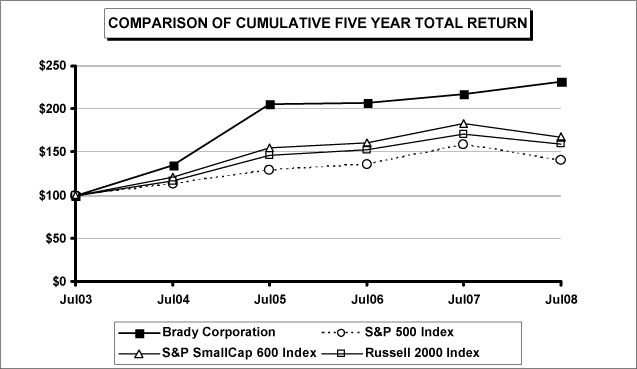
(e) Common Stock Price Performance Graph
The graph below shows a comparison of the cumulative return over the last five fiscal years
had $100 been invested at the close of business on July 31, 2003, in each of Brady Corporation
Class A Common Stock, The Standard & Poor’s (S&P) 500 index, the Standard and Poor’s Small Cap 600
index, and the Russell 2000 index.
Comparison of 5 Year Cumulative Total Return*
Among Brady Corporation, The S&P 500 Index,
The S&P Smallcap 600 Index and The Russell 2000 Index
|
|
|
| * |
|
$100 invested on 7/31/03 in stock or index — including reinvestment of dividends. Fiscal year ended July 31. |
| |
|
|
|
|
|
|
|
|
|
|
|
|
|
|
|
|
|
|
|
|
|
|
|
|
|
|
|
|
|
|
|
|
| |
| |
|
|
|
7/31/2003 |
|
|
7/31/2004 |
|
|
7/31/2005 |
|
|
7/31/2006 |
|
|
7/31/2007 |
|
|
7/31/2008 |
|
| |
Brady Corporation |
|
|
|
100.00 |
|
|
|
|
134.21 |
|
|
|
|
206.13 |
|
|
|
|
206.60 |
|
|
|
|
217.53 |
|
|
|
|
231.99 |
|
|
| |
S&P 500 Index |
|
|
|
100.00 |
|
|
|
|
113.17 |
|
|
|
|
129.08 |
|
|
|
|
136.02 |
|
|
|
|
157.97 |
|
|
|
|
140.44 |
|
|
| |
S&P SmallCap 600 Index |
|
|
|
100.00 |
|
|
|
|
121.52 |
|
|
|
|
154.64 |
|
|
|
|
160.46 |
|
|
|
|
183.09 |
|
|
|
|
167.94 |
|
|
| |
Russell 2000 Index |
|
|
|
100.00 |
|
|
|
|
117.06 |
|
|
|
|
146.07 |
|
|
|
|
152.27 |
|
|
|
|
170.73 |
|
|
|
|
159.26 |
|
|
| |
Copyright (C) 2008, Standard & Poor’s, a division of The McGraw-Hill Companies, Inc. All rights
reserved.
15
Item 6. Selected Financial Data
CONSOLIDATED STATEMENTS OF INCOME AND SELECTED FINANCIAL DATA
Years Ended July 31, 2004 through 2008
| |
|
|
|
|
|
|
|
|
|
|
|
|
|
|
|
|
|
|
|
|
| |
|
2008 |
|
|
2007 |
|
|
2006 |
|
|
2005 |
|
|
2004 |
|
| |
|
(In thousands, except per share amounts) |
|
Operating Data (1) |
|
|
|
|
|
|
|
|
|
|
|
|
|
|
|
|
|
|
|
|
Net Sales |
|
$ |
1,523,016 |
|
|
$ |
1,362,631 |
|
|
$ |
1,018,436 |
|
|
$ |
816,447 |
|
|
$ |
671,219 |
|
Gross Margin |
|
|
744,195 |
|
|
|
657,044 |
|
|
|
525,755 |
|
|
|
433,276 |
|
|
|
345,361 |
|
Operating Expenses: |
|
|
|
|
|
|
|
|
|
|
|
|
|
|
|
|
|
|
|
|
Research and development |
|
|
40,607 |
|
|
|
35,954 |
|
|
|
30,443 |
|
|
|
25,078 |
|
|
|
23,028 |
|
Selling, general and administrative |
|
|
495,904 |
|
|
|
449,103 |
|
|
|
338,796 |
|
|
|
285,746 |
|
|
|
248,171 |
|
Restructuring charge — net |
|
|
— |
|
|
|
— |
|
|
|
— |
|
|
|
— |
|
|
|
3,181 |
|
|
|
|
|
|
|
|
|
|
|
|
|
|
|
|
|
Total operating expenses |
|
|
536,511 |
|
|
|
485,057 |
|
|
|
369,239 |
|
|
|
310,824 |
|
|
|
274,380 |
|
|
|
|
|
|
|
|
|
|
|
|
|
|
|
|
|
Operating Income |
|
|
207,684 |
|
|
|
171,987 |
|
|
|
156,516 |
|
|
|
122,452 |
|
|
|
70,981 |
|
Other Income (Expense): |
|
|
|
|
|
|
|
|
|
|
|
|
|
|
|
|
|
|
|
|
Investment and other income — net |
|
|
4,888 |
|
|
|
2,875 |
|
|
|
2,403 |
|
|
|
1,369 |
|
|
|
577 |
|
Interest expense |
|
|
(26,385 |
) |
|
|
(22,934 |
) |
|
|
(14,231 |
) |
|
|
(8,403 |
) |
|
|
(1,231 |
) |
|
|
|
|
|
|
|
|
|
|
|
|
|
|
|
|
Net other expense |
|
|
(21,497 |
) |
|
|
(20,059 |
) |
|
|
(11,828 |
) |
|
|
(7,034 |
) |
|
|
(654 |
) |
|
|
|
|
|
|
|
|
|
|
|
|
|
|
|
|
Income before income taxes |
|
|
186,187 |
|
|
|
151,928 |
|
|
|
144,688 |
|
|
|
115,418 |
|
|
|
70,327 |
|
Income Taxes |
|
|
53,999 |
|
|
|
42,540 |
|
|
|
40,513 |
|
|
|
33,471 |
|
|
|
19,456 |
|
|
|
|
|
|
|
|
|
|
|
|
|
|
|
|
|
Net Income |
|
$ |
132,188 |
|
|
$ |
109,388 |
|
|
$ |
104,175 |
|
|
$ |
81,947 |
|
|
$ |
50,871 |
|
|
|
|
|
|
|
|
|
|
|
|
|
|
|
|
|
Net Income Per Common Share —
(Diluted): |
|
|
|
|
|
|
|
|
|
|
|
|
|
|
|
|
|
|
|
|
Class A nonvoting |
|
$ |
2.41 |
|
|
$ |
2.00 |
|
|
$ |
2.07 |
|
|
$ |
1.64 |
|
|
$ |
1.07 |
|
Class B voting |
|
$ |
2.39 |
|
|
$ |
1.98 |
|
|
$ |
2.05 |
|
|
$ |
1.63 |
|
|
$ |
1.05 |
|
Cash Dividends on: |
|
|
|
|
|
|
|
|
|
|
|
|
|
|
|
|
|
|
|
|
Class A common stock |
|
$ |
0.60 |
|
|
$ |
0.56 |
|
|
$ |
0.52 |
|
|
$ |
0.44 |
|
|
$ |
0.42 |
|
Class B common stock |
|
$ |
0.58 |
|
|
$ |
0.54 |
|
|
$ |
0.50 |
|
|
$ |
0.42 |
|
|
$ |
0.40 |
|
Balance Sheet at July 31: |
|
|
|
|
|
|
|
|
|
|
|
|
|
|
|
|
|
|
|
|
Working capital |
|
$ |
390,524 |
|
|
$ |
303,359 |
|
|
$ |
240,537 |
|
|
$ |
141,560 |
|
|
$ |
131,706 |
|
Total assets |
|
|
1,850,513 |
|
|
|
1,698,857 |
|
|
|
1,365,186 |
|
|
|
850,147 |
|
|
|
697,900 |
|
Long-term obligations, less current maturities |
|
|
457,143 |
|
|
|
478,575 |
|
|
|
350,018 |
|
|
|
150,026 |
|
|
|
150,019 |
|
Stockholders’ investment |
|
|
1,021,808 |
|
|
|
891,012 |
|
|
|
746,046 |
|
|
|
497,274 |
|
|
|
403,315 |
|
Cash Flow Data: |
|
|
|
|
|
|
|
|
|
|
|
|
|
|
|
|
|
|
|
|
Net cash provided by operating activities |
|
|
225,554 |
|
|
|
136,018 |
|
|
|
114,896 |
|
|
|
119,103 |
|
|
|
87,646 |
|
Depreciation and amortization |
|
|
60,587 |
|
|
|
53,856 |
|
|
|
35,144 |
|
|
|
26,822 |
|
|
|
20,190 |
|
Capital expenditures |
|
|
(26,407 |
) |
|
|
(51,940 |
) |
|
|
(39,410 |
) |
|
|
(21,920 |
) |
|
|
(14,892 |
) |
|
|
|
| (1) |
|
Financial data has been impacted by the acquisitive nature of the
Company as two, seven, eleven and four acquisitions were completed in
fiscal years ended July 31, 2008, 2007, 2006 and 2005, respectively.
See Note 2 in Item 8 for further information on the acquisitions that
were completed in each of the years. |
Item 7. Management’s Discussion and Analysis of Financial Condition and Results of Operations
Overview
In fiscal 2008, the Company posted record sales of $1,523.0 million and record net income of
$132.2 million, an increase of 11.8% and 20.8%, respectively, over fiscal 2007. Of the 11.8%
increase in sales, organic sales were flat. In addition to the impact from the seven acquisitions
completed in fiscal 2007, the Company completed two acquisitions in fiscal 2008, which added 5.8%
growth while foreign currency translation increased sales by 6.0%. Sales in the Americas increased
9.4%, European sales rose 19.3%, and sales from the Asia-Pacific segment increased 6.8%.
Net income for fiscal 2008 rose 20.8% to $132.2 million or $2.41 per diluted share of Class A
Common Stock, compared to $109.4 million, or $2.00 per diluted share of Class A Common Stock in
fiscal 2007.
16
Brady acquired two companies in fiscal 2008 including businesses located in the Americas and
Europe. The Company has added strategically driven acquisitions in spill containment products in
the Americas and security sealing and asset protection in Europe. During fiscal 2008, the Company
continued to integrate prior year acquisitions.
In fiscal 2008, the Company generated $225.6 million of cash from operations, an increase of
$89.5 million from the prior fiscal year. The increase was the result of increased net income as
discussed above, in addition to the impact of company-wide working capital initiatives focused on
accounts receivable, inventory, and accounts payable.
Brady remains a financially strong company, with a solid balance sheet and strong cash flows.
In September 2008, the Company announced that it will be increasing its cash dividend payment for
the 23rd straight year.
Results of Operations
Year Ended July 31, 2008, Compared to Year Ended July 31, 2007
The comparability of the operating results for the fiscal years ended July 31, 2008 to
July 31, 2007, has been impacted by the following acquisitions completed in fiscal 2008, as well as
the annualized impact of the acquisitions completed in fiscal 2007.
| |
|
|
|
|
|
|
|
|
| Acquisitions: |
|
Segment |
|
Date Completed |
Transposafe Systems B.V. and Holland Mounting Systems B.V.
(collectively “Transposafe”) |
|
Europe |
|
November 2007 |
DAWG, Inc. (“DAWG”) |
|
Americas |
|
March 2008 |
Fiscal 2008 sales increased $160.4 million, or 11.8% from fiscal 2007. Organic sales, defined
as sales in the Company’s existing core businesses and regions (exclusive of acquisitions owned
less than one year and foreign currency effects), were flat compared to fiscal 2007. The
acquisitions listed above and the annualized impact of the fiscal 2007 acquisitions increased sales
by $78.7 million or 5.8% in fiscal 2008 compared to fiscal 2007. Fluctuations in the exchange rates
used to translate financial results into the United States Dollar resulted in a sales increase of
$81.7 million or 6.0% for the year.
The gross margin as a percentage of sales increased to 48.9% in fiscal 2008 from 48.2% in
fiscal 2007. The increase in gross margin as a percentage of sales was primarily the result of
cost reduction actions taken during fiscal 2007 and fiscal 2008.
Research and development expenses increased to $40.6 million in fiscal 2008 from $36.0 million
in fiscal 2007, and increased slightly as a percentage of sales in fiscal 2008 to 2.7% compared to
2.6% in fiscal 2007, reflecting the Company’s continued commitment to investing in new product
development.
Selling, general, and administrative (“SG&A”) expenses increased to $495.9 million in fiscal
2008 as compared to $449.1 million in fiscal 2007. The increase in SG&A expenses was primarily the
result of the effect of currencies and acquisitions made during fiscal 2007 and fiscal 2008. As a
percentage of sales, SG&A decreased to 32.6% in fiscal 2008 from 33.0% in fiscal 2007.
Investment and other income increased $2.0 million in fiscal 2008 to $4.9 million from $2.9
million in the prior year. The income recorded in fiscal 2008 and fiscal 2007 was primarily due to
interest income earned on cash and marketable securities investments. The $4.9 million of
investment and other income recorded in fiscal 2008 consisted of $5.9 million of interest income,
partially offset by $1.0 million in foreign exchange losses. The increase in interest income in
fiscal 2008 was the result of both increased net income and working capital initiatives that have
increased cash balances.
Interest expense increased to $26.4 million from $22.9 million for fiscal 2008 as compared to
fiscal 2007. The increase in interest expense was mainly due to interest on the $150 million
private placement of senior notes that the Company completed in the third quarter of fiscal 2007.
The Company’s effective tax rate was 29.0% for fiscal 2008 as compared to 28.0% for fiscal
2007. The increased tax rate in fiscal 2008 was primarily due to increased profits in higher tax
countries.
Net income for the fiscal year ended July 31, 2008, increased 20.8% to $132.2 million,
compared to $109.4 million for the fiscal year ended July 31, 2007, as a result of the factors
noted above. Diluted net income per share increased 20.5% to $2.41 per share for fiscal 2008
compared to $2.00 per share for the fiscal year ended July 31, 2007.
17
Year Ended July 31, 2007, Compared to Year Ended July 31, 2006
The comparability of the operating results for the fiscal years ended July 31, 2007 to
July 31, 2006, has been impacted by the following acquisitions completed in fiscal 2007, as well as
the annualized impact of the acquisitions completed in fiscal 2006.
| |
|
|
|
|
| Acquisitions: |
|
Segment |
|
Date Completed |
Comprehensive Identification Products, Inc. (“CIPI”)
|
|
Americas, Europe
and Asia-Pacific
|
|
August 2006 |
Precision Converters, L.P. (“Precision Converters”)
|
|
Americas
|
|
October 2006 |
Scafftag, Ltd., Safetrak, Ltd. and Scafftag Pty., Ltd. (collectively “Scafftag”)
|
|
Americas, Europe
and Asia-Pacific
|
|
December 2006 |
Asterisco Artes Graficas Ltda. (“Asterisco”)
|
|
Americas
|
|
December 2006 |
Modernotecnica SpA (“Moderno”)
|
|
Europe
|
|
December 2006 |
Clement Communications, Inc. (“Clement”)
|
|
Americas
|
|
February 2007 |
Sorbent Products Co., Inc. (“SPC”)
|
|
Americas, Europe
and Asia-Pacific
|
|
April 2007 |
Sales for fiscal 2007 increased by $344.2 million, or 33.8% from fiscal 2006. Organic sales,
defined as sales in the Company’s existing core businesses and regions (exclusive of acquisitions
and foreign currency effects), increased $42.3 million or 4.2% for the same period. The
acquisitions listed above and the annualized impact of the fiscal 2006 acquisitions increased sales
by $260.2 million or 25.5% in fiscal 2007 compared to fiscal 2006. Fluctuations in the exchange
rates used to translate financial results into the United States Dollar resulted in a sales
increase of $41.7 million or 4.1% for the year.
The gross margin as a percentage of sales decreased from 51.6% in fiscal 2006 to 48.2% in
fiscal 2007. This decline was driven by the results in our OEM electronics business, primarily in
the mobile handset business in Asia-Pacific. The decline was also driven by the acquisitions that
Brady completed in the last 12 months, which were more heavily weighted towards OEM electronics,
which is generally characterized by lower gross margins and lower selling, general and
administrative (“SG&A”) expenses.
Research and development expenses grew to $36.0 million in fiscal 2007 from $30.4 million in
fiscal 2006, but decreased as a percentage of sales from 3.0% in fiscal 2006 to 2.6% in fiscal
2007. Brady continues to expand its investment in new product development.
SG&A expenses of $449.1 million in fiscal 2007, as compared to $338.8 million in fiscal 2006,
decreased as a percentage of sales from 33.3% in fiscal 2006 to 33.0% in fiscal 2007. The decrease
was due to changes in the Company’s sales mix towards the OEM electronics business, which typically
has lower SG&A expense.
The Company recorded expenses of $11.4 million in fiscal year 2007 for cost reduction actions,
which are primarily recorded in SG&A expenses in the consolidated statements of income. These
actions consisted of $9.2 million for severance and other employee termination costs, $1.8 million
for asset write-offs and $0.4 million for facility closure costs.
Investment and other income increased $0.5 million in fiscal 2007 from the prior year. The
income recorded in fiscal 2007 was primarily due to interest income earned on cash and marketable
securities investments, while the income recorded in fiscal 2006 was primarily due to a gain of
approximately $1.5 million on a currency option that the Company purchased to hedge against
increases in the purchase price in U.S. dollar terms of Tradex Converting AB as the transaction was
denominated in Swedish Krona.
Interest expense increased $8.7 million in fiscal 2007 due to interest on the $150 million
private placement of senior notes that the Company completed in the third quarter of fiscal 2007
and the $200 million private placement of senior notes that the Company completed in second quarter
of fiscal 2006, as well as interest on the borrowings under our revolving credit facility in fiscal
2007.
The Company’s effective tax rate was 28.0% in both fiscal 2007 and 2006.
Net income for the fiscal year ended July 31, 2007, increased 5.0% to $109.4 million,
compared to $104.2 million for fiscal year ended July 31, 2006, as a result of the factors noted
above. Diluted net income per share comparisons between fiscal 2007 of $2.00 per share and 2006
of $2.07 per share were also affected by the greater number of shares outstanding in fiscal 2007
as a result of the Company’s July 2006 sale of an additional 4.6 million shares of Class A
Nonvoting Common Stock in a public offering.
18
Business Segment Operating Results
The Company is organized and managed on a geographic basis by region. Each of these regions,
Brady Americas, Brady Europe and Brady Asia Pacific, has a President that reports directly to the
Company’s chief operating decision maker, its Chief Executive Officer. Each region has its own
distinct operations, is managed locally by its own management team, maintains its own financial
reports and is evaluated based on regional segment profit. In applying the criteria set forth in
SFAS 131 “Disclosures about Segments of an Enterprise and Related Information”, the Company has
determined that these regions comprise its reportable segments based on the information used by the
Chief Executive Officer to allocate resources and assess performance.
Subsequent to the first quarter of fiscal 2008, the Company made several reporting and
organizational changes in which the leadership, operations, and administrative functions of the two
businesses in the Americas region were consolidated. As a result of the changes, the Company
has changed the number of reporting segments from four to three during the fourth quarter of fiscal
2008.
| |
|
|
|
|
|
|
|
|
|
|
|
|
|
|
|
|
|
|
|
|
|
|
|
|
| |
|
|
|
|
|
|
|
|
|
|
|
|
|
|
|
|
|
Corporate and |
|
|
|
|
| (Dollars in thousands) |
|
Americas |
|
|
Europe |
|
|
Asia-Pacific |
|
|
Subtotals |
|
|
Eliminations |
|
|
Total |
|
SALES TO EXTERNAL
CUSTOMERS |
|
|
|
|
|
|
|
|
|
|
|
|
|
|
|
|
|
|
|
|
|
Years ended: |
|
|
|
|
|
|
|
|
|
|
|
|
|
|
|
|
|
|
|
|
|
|
|
|
July 31, 2008 |
|
$ |
667,106 |
|
|
$ |
496,715 |
|
|
$ |
359,195 |
|
|
$ |
1,523,016 |
|
|
$ |
— |
|
|
$ |
1,523,016 |
|
July 31, 2007 |
|
|
609,855 |
|
|
|
416,514 |
|
|
|
336,262 |
|
|
|
1,362,631 |
|
|
|
— |
|
|
|
1,362,631 |
|
July 31, 2006 |
|
|
498,916 |
|
|
|
319,432 |
|
|
|
200,088 |
|
|
|
1,018,436 |
|
|
|
— |
|
|
|
1,018,436 |
|
SALES GROWTH
INFORMATION |
|
|
|
|
|
|
|
|
|
|
|
|
|
|
|
|
|
|
|
|
|
Year ended July 31,
2008: |
|
|
|
|
|
|
|
|
|
|
|
|
|
|
|
|
|
|
|
|
|
|
|
|
Organic |
|
|
0.9 |
% |
|
|
(0.4 |
)% |
|
|
(1.1 |
)% |
|
|
0.0 |
% |
|
|
— |
|
|
|
0.0 |
% |
Currency |
|
|
2.0 |
% |
|
|
10.6 |
% |
|
|
7.6 |
% |
|
|
6.0 |
% |
|
|
— |
|
|
|
6.0 |
% |
Acquisitions |
|
|
6.5 |
% |
|
|
9.1 |
% |
|
|
0.3 |
% |
|
|
5.8 |
% |
|
|
— |
|
|
|
5.8 |
% |
|
|
|
|
|
|
|
|
|
|
|
|
|
|
|
|
|
|
|
Total |
|
|
9.4 |
% |
|
|
19.3 |
% |
|
|
6.8 |
% |
|
|
11.8 |
% |
|
|
— |
|
|
|
11.8 |
% |
Year ended July 31,
2007: |
|
|
|
|
|
|
|
|
|
|
|
|
|
|
|
|
|
|
|
|
|
|
|
|
Organic |
|
|
3.3 |
% |
|
|
8.3 |
% |
|
|
(0.4 |
)% |
|
|
4.2 |
% |
|
|
— |
|
|
|
4.2 |
% |
Currency |
|
|
0.5 |
% |
|
|
9.0 |
% |
|
|
5.2 |
% |
|
|
4.1 |
% |
|
|
— |
|
|
|
4.1 |
% |
Acquisitions |
|
|
18.4 |
% |
|
|
13.1 |
% |
|
|
63.3 |
% |
|
|
25.5 |
% |
|
|
— |
|
|
|
25.5 |
% |
|
|
|
|
|
|
|
|
|
|
|
|
|
|
|
|
|
|
|
Total |
|
|
22.2 |
% |
|
|
30.4 |
% |
|
|
68.1 |
% |
|
|
33.8 |
% |
|
|
— |
|
|
|
33.8 |
% |
|
|
|
|
|
|
|
|
|
|
|
|
|
|
|
|
|
|
|
|
|
|
|
|
|
SEGMENT PROFIT |
|
|
|
|
|
|
|
|
|
|
|
|
|
|
|
|
|
|
|
|
|
|
|
|
Years ended: |
|
|
|
|
|
|
|
|
|
|
|
|
|
|
|
|
|
|
|
|
|
|
|
|
July 31, 2008 |
|
$ |
157,523 |
|
|
$ |
135,426 |
|
|
$ |
58,234 |
|
|
$ |
351,183 |
|
|
$ |
(9,048 |
) |
|
$ |
342,135 |
|
July 31, 2007 |
|
|
144,583 |
|
|
|
107,552 |
|
|
|
57,236 |
|
|
|
309,371 |
|
|
|
(10,485 |
) |
|
|
298,886 |
|
July 31, 2006 |
|
|
125,065 |
|
|
|
83,970 |
|
|
|
49,316 |
|
|
|
258,351 |
|
|
|
(13,173 |
) |
|
|
245,178 |
|
19
NET INCOME RECONCILIATION
| |
|
|
|
|
|
|
|
|
|
|
|
|
| |
|
Years ended: |
|
| |
|
July 31, |
|
|
July 31, |
|
|
July 31, |
|
| |
|
2008 |
|
|
2007 |
|
|
2006 |
|
Total profit for reportable segments |
|
$ |
351,183 |
|
|
$ |
309,371 |
|
|
$ |
258,351 |
|
Corporate and eliminations |
|
|
(9,048 |
) |
|
|
(10,485 |
) |
|
|
(13,173 |
) |
Unallocated amounts: |
|
|
|
|
|
|
|
|
|
|
|
|
Administrative costs |
|
|
(134,451 |
) |
|
|
(126,899 |
) |
|
|
(88,662 |
) |
Investment and other income – net |
|
|
4,888 |
|
|
|
2,875 |
|
|
|
2,403 |
|
Interest expense |
|
|
(26,385 |
) |
|
|
(22,934 |
) |
|
|
(14,231 |
) |
|
|
|
|
|
|
|
|
|
|
Income before income taxes |
|
|
186,187 |
|
|
|
151,928 |
|
|
|
144,688 |
|
Income taxes |
|
|
(53,999 |
) |
|
|
(42,540 |
) |
|
|
(40,513 |
) |
|
|
|
|
|
|
|
|
|
|
Net income |
|
$ |
132,188 |
|
|
$ |
109,388 |
|
|
$ |
104,175 |
|
|
|
|
|
|
|
|
|
|
|
The Company evaluates segment performance using sales and segment profit. Segment profit or
loss does not include certain administrative costs, such as the cost of finance, stock options,
information technology and human resources, which are managed as global functions. Corporate
research and development, interest, investment and other income and income taxes are also excluded
when evaluating regional performance.
Americas
Sales in the Americas region increased 9.4% from fiscal 2007 to fiscal 2008, and 22.2% from
fiscal 2006 to fiscal 2007. Organic growth accounted for 0.9% in 2008 and 3.3% in 2007. The
slowing growth in organic sales for fiscal 2008 was driven by softness in the manufacturing,
construction, and utility markets, partially offset by solid performance in the education and OEM
markets. The organic growth in fiscal 2007 was due to strong growth in the United States in both
the Brady and direct marketing brands, with strong results from the electrical and wire
identification products. The 2007 growth was partially offset by the planned transfer of die-cut
business to Asia-Pacific in the early part of fiscal 2007. Canada and Brazil also experienced
organic growth from fiscal 2006 to fiscal 2007. The acquisitions of CIPI, Precision Converters,
Scafftag, Asterisco, Clement and SPC in fiscal 2007 and DAWG in fiscal 2008 added 6.5% to fiscal
2008 sales. The acquisitions of TruMed, J.A.M., Personnel Concepts and Identicard in fiscal 2006
and CIPI, Precision Converters, Scafftag, Asterisco, Clement and SPC in fiscal 2007 added 18.4% to
fiscal 2007 sales. The positive effect of fluctuations in the exchange rates used to translate
financial results into U.S. currency increased sales in the region by 2.0% and 0.5% in fiscal 2008
and 2007, respectively, when compared to the prior fiscal years.
In the Americas region, segment profit as a percentage of sales decreased slightly to 23.6% in
2008 from 23.7% in 2007. This decrease was primarily due to the slowing growth in high margin
organic sales during fiscal 2008, mostly offset by cost control efforts and improvements made in
the prior year to lower performing businesses. Comparing fiscal 2007 to 2006, segment profit as a
percentage of sales decreased to 23.7% in 2007 from 25.1% in 2006. This decrease was due to the
effect of the recent acquisitions. As expected, the segment’s recent acquisitions have produced an
initial rate of profit that is below the average rate of profit of the segment.
Europe
Sales in the European region increased 19.3% in fiscal 2008 from fiscal 2007 and 30.4% in
fiscal 2007 from fiscal 2006. Organic sales declined 0.4% in fiscal 2008 compared to an increase of
8.3% in fiscal 2007. The decline in organic sales in fiscal 2008 was primarily the result of a
weakening European economy as well as tough comparables over the prior year due to the
implementation of “No Smoking” legislation in the U.K. and France, as these sales did not recur in
fiscal 2008. The organic growth reported in fiscal 2007 was due to growth in the majority of the
businesses with a more focused approach to market segments, in addition to “No Smoking” legislation
implemented in the U.K. and France. The strength of the European economy benefited the segment as
well. Foreign currency translation increased the region’s sales by 10.6% in 2008 and increased the
segment’s sales 9.0% in 2007. The acquisitions of CIPI, Scafftag, Moderno and SPC in fiscal 2007
and Transposafe in fiscal 2008 added 9.1% to the region’s sales in fiscal 2008 and the acquisitions
of Texit and Tradex in fiscal 2006 and CIPI, Scafftag, Moderno and SPC in fiscal 2007 added 13.1%
to the region’s sales in fiscal 2007.
Segment profit as a percentage of sales increased to 27.3% in fiscal 2008 from 25.8% in fiscal
2007 and decreased to 25.8% in fiscal 2007 from 26.3% in fiscal 2006. The increase in segment
profit in fiscal 2008 was driven by the sales increases noted above in
20
addition to the realization of savings from cost reduction activities taken at the end of
fiscal 2007. The decrease experienced in fiscal 2007 from 2006 was due to the global headquarter
costs of Tradex, partially offset by the strong performance of the direct marketing businesses in
the region.
Asia-Pacific
Asia-Pacific sales increased 6.8% in fiscal 2008 from fiscal 2007 and 68.1% in fiscal 2007
from fiscal 2006. Organic sales declined 1.1% in fiscal 2008 and declined 0.4% in fiscal 2007. The
decline in organic sales in fiscal 2008 was primarily the result of a drop in sales to OEM
customers in the mobile handset market who lost significant market share, in addition to the
competitive, less profitable business the Company chose to deemphasize. Declines in the mobile
handset business were partially offset by solid growth in the smaller business lines of high
performance labels, safety and facility identification, and hard disk drives during fiscal 2008.
The decline in organic sales in fiscal 2007 was due to a slowdown in our OEM electronics business,
led by the loss of certain programs in the hard disk drive business related to industry
consolidation and a slowdown in high performance labeling. Foreign currency translation increased
the region’s sales by 7.6% from fiscal 2007 to 2008 compared to an increase of 5.2% from fiscal
2006 to 2007. The acquisitions of CIPI, Scafftag and SPC in fiscal 2007 added 0.3% to the segment’s
sales in fiscal 2008, whereas the acquisitions of QDPT, Accidental Health, Tradex, Carroll and
Daewon in fiscal 2006 and CIPI, Scafftag and SPC in fiscal 2007 added 63.3% to the region’s sales
in fiscal 2007.
Segment profit as a percentage of sales decreased to 16.2% in fiscal 2008 from 17.0% in fiscal
2007 and to 17.0% in fiscal 2007 from 24.7% in fiscal 2006. The decline in segment profit as a
percentage of sales in fiscal 2008 was due to the industry mix shift from high-end, feature rich
mobile phones to low-end basic mobile phones and continued pricing pressures within the mobile
handset supply chain, partially offset by cost reduction activities initiated in fiscal 2007. The
decrease in fiscal 2007 was due to the slowdown in our OEM electronics business, excess capacity at
our facilities and lower margins from acquisitions.
Liquidity and Capital Resources
Cash and cash equivalents were $258.4 million at July 31, 2008, compared to $142.8 million at
July 31, 2007. The Company did not hold any short-term investments at July 31, 2008, compared to
$19.2 million of auction rate securities at July 31, 2007. Accounts receivable balances increased
$22.9 million from July 31, 2007 to July 31, 2008. The increase in accounts receivable was due
primarily to the effects of foreign currency translation, the acquisitions of Transposafe and DAWG,
and sales growth, partially offset by the impact of working capital initiatives. Inventories
decreased $5.2 million from July 31, 2007 to July 31, 2008 due to the impact of working capital
initiatives, partially offset by the acquisitions of Transposafe and DAWG, as well as foreign
currency translation. Current liabilities increased $28.5 million primarily due to a significant
increase in accounts payable driven by both working capital initiatives and foreign currency
translation.
The Company has maintained significant cash balances due in large part to its strong operating
cash flow, which totaled $225.6 million for fiscal 2008, $136.0 million for fiscal 2007 and
$114.9 million for fiscal 2006. The increase in operating cash flow from fiscal 2007 to fiscal 2008
was the result of the impact of working capital initiatives on inventory, accounts receivable, and
accounts payable, in addition to a $22.8 million increase in net income and a $6.7 million increase
in depreciation and amortization resulting from capital investments and acquisitions made during
fiscal 2007 and 2008.
The Company
believes its cash position is strong. While the Company strives to
maximize investment income on its excess cash, preservation of
principal is the first priority of the Company’s investment
policy. In volatile markets, as the Company has recently experienced,
the Company’s investment policy is intended to preserve principal
as its primary goal, possibly at the expense of the yields
historically achieved.
The acquisitions of businesses used $29.3 million in fiscal 2008, $159.5 million in fiscal
2007, and $351.3 million in fiscal 2006. Contingent consideration payments of $4.4 million,
$1.2 million, and $0.2 million were made during fiscal 2008 to satisfy the earnout and holdback
liabilities of the fiscal 2006 acquisitions of Daewon Industry Corporation and STOPware, Inc., and
the fiscal 2007 acquisition of Asterisco, respectively.
Capital expenditures were $26.4 million in fiscal 2008, $51.9 million in fiscal 2007 and
$39.4 million in fiscal 2006. The Company’s capital expenditures slowed in fiscal 2008, following
two years of significant spending due to the global implementation of SAP in addition to the
expansion of facilities in various countries. Fiscal 2007 capital expenditures included $9.8
million in spending on implementing SAP in 16 of Brady’s global operations and ultimately
increasing the coverage of SAP from 60% of total revenue in fiscal 2006 to nearly 80% of total
revenue in fiscal 2009. The remainder of the increase in capital expenditures in fiscal 2007 was
due to expansions in China, Canada, India, Mexico, the Philippines, Slovakia and other locations.
Capital expenditures in
21
2006 were driven by the completion of the central distribution warehouse in Milwaukee,
Wisconsin, continued expansion in Asia, new facilities in Slovakia and in Canada and by upgrading
existing plant and machinery.
Financing activities used $76.9 million of cash in fiscal 2008, provided $129.4 million of
cash in fiscal 2007 and provided $319.0 million in fiscal 2006. In fiscal 2006, the Company
completed a secondary public offering of 4.6 million shares of its Class A nonvoting common stock
and received proceeds of $157.7 million. Cash used for dividends to shareholders was $32.5 million
in fiscal 2008, $30.1 million in fiscal 2007, and $26.1 million in fiscal 2006. Cash received from
the exercise of stock options was $14.5 million in fiscal 2008, $6.8 million in fiscal 2007, and
$8.9 million in fiscal 2006. The Company purchased treasury stock of $42.2 million in fiscal 2008;
however, it did not purchase treasury stock in fiscal 2007, and purchased treasury stock of
$24.7 million in fiscal 2006. In fiscal 2008, two stock repurchase plans were authorized pursuant
to which the Company can purchase up to two million shares on the open market or in privately
negotiated transactions, with repurchased shares available for use in connection with the Company’s
stock option plan and for other corporate purposes. The Company reacquired approximately
1,349,000 shares of its Class A Common Stock for
$42.2 million in fiscal 2008. As of July 31, 2008, the Company
was authorized to purchase up to approximately 651,000 additional shares in connection with the share repurchase
plans. In fiscal 2006, a similar stock repurchase plan was implemented, with repurchased shares
available for use in connection with the Company’s stock option plan and for other corporate
purposes. The Company completed the repurchase of 800,000 shares of its Class A Common Stock for
$26.5 million in fiscal 2006.
On October 5, 2006, the Company entered into a $200 million multi-currency revolving loan
agreement with a group of five banks that replaced the Company’s previous credit agreement. At the
Company’s option, and subject to certain standard conditions, the available amount under the new
credit facility may be increased from $200 million up to $300 million. Under the credit agreement,
the Company has the option to select either a base interest rate (based upon the higher of the
federal funds rate plus one-half of 1% or the prime rate of Bank of America) or a Eurocurrency
interest rate (at the LIBOR rate plus a margin based on the Company’s consolidated leverage ratio).
A commitment fee is payable on the unused amount of the facility. The agreement requires the
Company to maintain two financial covenants. As of July 31, 2008, the Company was in compliance
with the covenants of the agreement. The agreement restricts the amount of certain types of
payments, including dividends, which can be made annually to $50 million plus an amount equal to
75% of consolidated net income for the prior fiscal year of the Company. The Company believes that
based on historic dividend practice, this restriction would not impede the Company in following a
similar dividend practice in the future. On March 18, 2008, the Company entered into an amendment
to the revolving loan agreement which extended the maturity date from October 5, 2011 to March 18,
2013. All other terms of the revolving loan agreement remained the same. During fiscal 2008, the
Company borrowed $18 million and repaid $18 million under the revolving loan agreement. In fiscal
2007, the Company borrowed $109.3 million and repaid $109.3 million under the revolving loan
agreement. As of July 31, 2008, there were no outstanding borrowings under the credit facility.
On March 23, 2007, the Company completed the private placement of $150 million in ten-year
fixed notes at 5.33% interest to institutional investors. The notes will be amortized in equal
installments over seven years, beginning in 2011 with interest payable on the notes semiannually
on September 23 and March 23, which began in September 2007. The notes have been fully and
unconditionally guaranteed on an unsecured basis by the Company’s domestic subsidiaries. The
Company used the net proceeds of the offering to reduce outstanding indebtedness under the
Company’s revolving loan agreement and fund its ongoing strategic growth plan. This private
placement was exempt from the registration requirements of the Securities Act of 1933. The notes
were not registered for resale and may not be resold absent such registration or an applicable
exemption from the registration requirements of the Securities Act of 1933 and applicable state
securities laws. The notes have certain prepayment penalties for repaying them prior to the
maturity date. The agreement also requires the Company to maintain a financial covenant. As of
July 31, 2008, the Company was in compliance with this covenant.
On February 14, 2006, the Company completed the private placement of $200 million in ten-year
fixed notes at 5.3% interest to institutional investors. The notes will be amortized in equal
installments over seven years, beginning in 2010 with interest payable on the notes semiannually on
August 14 and February 14, which began in August 2006. The notes have been fully and
unconditionally guaranteed on an unsecured basis by the Company’s domestic subsidiaries. The
Company used the net proceeds of the offering to finance acquisitions completed in fiscal 2006 and
2007 and for general corporate purposes. This private placement was exempt from the registration
requirements of the Securities Act of 1933. The notes were not registered for resale and may not be
resold absent such registration or an applicable exemption from the registration requirements of
the Securities Act of 1933 and applicable state securities laws. The notes have certain prepayment
penalties for repaying them prior to the maturity date. The agreement also requires the Company to
maintain a financial covenant. As of July 31, 2008, the Company was in compliance with this
covenant.
On June 30, 2004, the Company finalized a debt offering of $150 million of 5.14% unsecured
senior notes due in 2014 in an offering exempt from the registration requirements of the Securities
Act of 1933. The debt offering was in conjunction with the
22
Company’s acquisition of EMED. The notes will be paid over seven years beginning in 2008, with
interest payable on the notes being due semiannually on June 28
and December 28, which began in December 2004. The Company used the proceeds of the offering to reduce outstanding indebtedness
under the Company’s revolving credit facilities used to initially fund the EMED acquisition. The
debt has certain prepayment penalties for repaying the debt prior to its maturity date. The
Company paid its first installment under the debt agreement in June 2008 for $21.4 million. The
agreement also requires the Company to maintain a financial covenant. As of July 31, 2008, the
Company was in compliance with this covenant.
Long-term obligations as a percentage of long-term obligations plus stockholders’ investment
were 30.9% at July 31, 2008, and 34.9% at July 31, 2007. Long-term obligations decreased by
$21.4 million from July 31, 2007 to July 31, 2008 due to the portion of long-term obligations that
is due for payment in fiscal 2009 that is recorded in current liabilities. Stockholders’
investment increased $130.8 million during this period primarily due to net earnings for fiscal
2008 and changes in accumulated other comprehensive income.
The Company intends to fund its short-term and long-term operating cash requirements,
including its fiscal 2009 dividend payments and 2009 debt payments, primarily through net cash
provided by operating activities.
The Company believes that its continued strong cash flows from operations, existing borrowing
capacity and continued access to capital markets will enable it to execute its long-term strategic
plan. This strategic plan includes investments, which expand its current market share, open new
markets and geographies, develop new products and distribution channels and continue to improve our
processes through the Brady Business Performance System. This strategic plan also includes
executing key acquisitions.
Subsequent Events Affecting Liquidity and Capital Resources
On September 16, 2008, the Board of Directors announced an increase in the quarterly dividend
to shareholders of the Company’s Class A Common Stock, from $0.15 to $0.17 per share. The dividend
will be paid on October 31, 2008, to shareholders of record at the close of business on October 10,
2008. This dividend represents an increase of 13% and is the 23rd consecutive annual increase in
dividends since the Company went public in 1984.
In
fiscal 2009 through September 22, 2008, under the share
repurchase plans authorized by the Company’s Board of
Directors in fiscal 2008, the Company repurchased approximately 256,000 shares on the open market for $8.6
million. Under the share repurchase plans, the Company is authorized
to purchase up to an additional 395,000 shares.
Off-Balance Sheet Arrangements
The Company does not have material off-balance sheet arrangements or related party
transactions. The Company is not aware of factors that are reasonably likely to adversely affect
liquidity trends, other than the risks discussed in this filing and presented in other Company
filings. However, the following additional information is provided to assist financial statement
users.
Operating Leases — These leases generally are entered into for investments in facilities such
as manufacturing facilities, warehouses and office space, computer equipment and Company vehicles,
when the economic profile is favorable.
Purchase Commitments — The Company has purchase commitments for materials, supplies, services,
and property, plant and equipment entered into in the ordinary course of business. Such commitments
are not in excess of current market prices.
Due to the proprietary nature of many of the Company’s materials and processes, certain supply
contracts contain penalty provisions for early termination. The Company does not believe a material
amount of penalties will be incurred under these contracts based upon historical experience and
current expectations.
Other Contractual Obligations — The Company does not have material financial guarantees or
other contractual commitments that are reasonably likely to adversely affect liquidity other than
those discussed below under “Payments Due Under Contractual Obligations.”
Related Party Transactions — The Company does not have material related party transactions
that affect the results of operations, cash flow or financial condition.
23
Payments Due Under Contractual Obligations
The Company’s future commitments at July 31, 2008, for long-term debt, operating lease
obligations, purchase obligations, interest obligations and other obligations are as follows
(dollars in thousands):
| |
|
|
|
|
|
|
|
|
|
|
|
|
|
|
|
|
|
|
|
|
|
|
|
|
| |
|
Payments Due by Period |
|
| |
|
|
|
|
|
Less than |
|
|
1-3 |
|
|
3-5 |
|
|
More than |
|
|
Uncertain |
|
| Contractual Obligations |
|
Total |
|
|
1 Year |
|
|
Years |
|
|
Years |
|
|
5 Years |
|
|
Timeframe |
|
Long-Term Debt Obligations |
|
$ |
478,574 |
|
|
$ |
21,431 |
|
|
$ |
121,429 |
|
|
$ |
142,858 |
|
|
$ |
192,856 |
|
|
$ |
0 |
|
Operating Lease Obligations |
|
|
77,937 |
|
|
|
26,151 |
|
|
|
34,607 |
|
|
|
12,431 |
|
|
|
4,748 |
|
|
|
0 |
|
Purchase Obligations(1) |
|
|
31,570 |
|
|
|
31,208 |
|
|
|
362 |
|
|
|
0 |
|
|
|
0 |
|
|
|
0 |
|
Interest Obligations |
|
|
124,100 |
|
|
|
25,204 |
|
|
|
45,589 |
|
|
|
31,699 |
|
|
|
21,608 |
|
|
|
0 |
|
Tax Obligations |
|
|
16,017 |
|
|
|
0 |
|
|
|
0 |
|
|
|
0 |
|
|
|
0 |
|
|
|
16,017 |
|
Other Obligations(2) |
|
|
11,552 |
|
|
|
511 |
|
|
|
1,382 |
|
|
|
1,857 |
|
|
|
7,802 |
|
|
|
0 |
|
|
|
|
|
|
|
|
|
|
|
|
|
|
|
|
|
|
|
|
Total |
|
$ |
739,750 |
|
|
$ |
104,505 |
|
|
$ |
203,369 |
|
|
$ |
188,845 |
|
|
$ |
227,014 |
|
|
$ |
16,017 |
|
|
|
|
|
|
|
|
|
|
|
|
|
|
|
|
|
|
|
|
|
|
|
| (1) |
|
Purchase obligations include all open purchase orders as of July 31, 2008. |
| |
| (2) |
|
Other obligations represent expected payments under the Company’s postretirement medical,
dental, and vision plans as disclosed in Note 3 to the consolidated financial statements,
under Item 8 of this report. |
Inflation and Changing Prices
Essentially all of the Company’s revenue is derived from the sale of its products in
competitive markets. Because prices are influenced by market conditions, it is not always possible
to fully recover cost increases through pricing. Changes in product mix from year to year, timing
differences in instituting price changes and the large amount of part numbers make it impracticable
to accurately define the impact of inflation on profit margins.
Critical Accounting Estimates
Income Taxes
The Company’s effective tax rate is based on pre-tax income and the tax rates applicable to
that income in the various jurisdictions in which the Company operates. The Company considers the
resolution of prior-year tax matters to be such items. Significant judgment is required in
determining the Company’s effective tax rate and in evaluating its tax positions. The Company
establishes FIN 48 liabilities when it is not more likely than not that the Company will realize
the full tax benefit of the position. The Company adjusts these FIN 48 liabilities in light of
changing facts and circumstances.
Tax regulations may require items of income and expense to be included in a tax return in
different periods than the items are reflected in the consolidated financial statements. As a
result, the effective tax rate reflected in the consolidated financial statements may be different
than the tax rate reported in the income tax return. Some of these differences are permanent, such
as expenses that are not deductible on the tax return, and some are temporary differences, such as
depreciation expense. Temporary differences create deferred tax assets and liabilities. Deferred
tax assets generally represent items that can be used as tax deductions or credits in the tax
return in future years for which the Company has already recorded the tax benefit in the
consolidated financial statements. The Company establishes valuation allowances for its deferred
tax assets when it is more likely than not that the amount of expected future taxable income will
not support the use of the deduction or credit. Deferred tax liabilities generally represent tax
expense recognized in the consolidated financial statements for which payment has been deferred or
expense for which the Company has already taken a deduction on an income tax return, but has not
yet recognized as expense in the consolidated financial statements.
Goodwill and Intangible Assets
The allocation of purchase price for business combinations requires management estimates and
judgment as to expectations for future cash flows of the acquired business and the allocation of
those cash flows to identifiable intangible assets in determining the estimated fair value for
purchase price allocation purposes. If the actual results differ from the estimates and judgments
used in these estimates, the amounts recorded in the financial statements could result in a
possible impairment of the intangible assets and goodwill or require acceleration of the
amortization expense of finite-lived intangible assets. In addition, SFAS No. 142, “Goodwill and
Other Intangible Assets,” requires that goodwill and other indefinite-lived intangible assets be
tested at least annually for impairment. Changes in management’s estimates or judgments could
result in an impairment charge, and such a charge could have an adverse effect on the Company’s
financial condition and results of operations. To aid in establishing the value of goodwill and
other intangible
24
assets at the time of acquisition, Company policy requires that all acquisitions with a
purchase price above $5 million must be further evaluated in a more detailed review.
Reserves and Allowances
The Company has recorded reserves or allowances for inventory obsolescence, uncollectible
accounts receivable, returns, credit memos, and income tax contingencies. These reserves require
the use of estimates and judgment. The Company bases its estimates on historical experience and on
various other assumptions that are believed to be reasonable under the circumstances. The Company
believes that such estimates are made with consistent and appropriate methods. Actual results may
differ from these estimates under different assumptions or conditions.
New Accounting Standards
The information required by this Item is provided in Note 1 of the Notes to Consolidated
Financial Statements contained in Item 8 — Financial Statements and Supplementary Data.
Forward-Looking Statements
Brady believes that certain statements in this Form 10-K are “forward-looking statements”
within the meaning of the Private Securities Litigation Reform Act of 1995. All statements related
to future, not past, events included in this Form 10-K, including, without limitation, statements
regarding Brady’s future financial position, business strategy, targets, projected sales, costs,
earnings, capital expenditures, debt levels and cash flows, and plans and objectives of management
for future operations are forward-looking statements. When used in this Form 10-K, words such as
“may,” “will,” “expect,” “intend,” “estimate,” “anticipate,” “believe,” “should,” “project” or
“plan” or similar terminology are generally intended to identify forward-looking statements. These
forward-looking statements by their nature address matters that are, to different degrees,
uncertain and are subject to risks, assumptions and other factors, some of which are beyond Brady’s
control, that could cause actual results to differ materially from those expressed or implied by
such forward-looking statements. For Brady, uncertainties arise from future financial performance
of major markets Brady serves, which include, without limitation, telecommunications,
manufacturing, electrical, construction, laboratory, education, governmental, public utility,
computer, transportation; difficulties in making and integrating acquisitions; risks associated
with newly acquired businesses; Brady’s ability to retain significant contracts and customers;
future competition; Brady’s ability to develop and successfully market new products; changes in the
supply of, or price for, parts and components; increased price pressure from suppliers and
customers; interruptions to sources of supply; environmental, health and safety compliance costs
and liabilities; Brady’s ability to realize cost savings from operating initiatives; Brady’s
ability to attract and retain key talent; difficulties associated with exports; risks associated
with international operations; fluctuations in currency rates versus the US dollar; technology
changes; potential write-offs of Brady’s substantial intangible assets; risks associated with
obtaining governmental approvals and maintaining regulatory compliance for new and existing
products; business interruptions due to implementing business systems; and numerous other matters
of national, regional and global scale, including those of a political, economic, business,
competitive and regulatory nature contained from time to time in Brady’s U.S. Securities and
Exchange Commission filings, including, but not limited to, those factors listed in the “Risk
Factors” section located in Item 1A of Part I of this Form 10-K. These uncertainties may cause
Brady’s actual future results to be materially different than those expressed in its
forward-looking statements. Brady does not undertake to update its forward-looking statements.
Risk Factors
Please see the information contained in Item 1A — Risk Factors.
Item 7A. Quantitative and Qualitative Disclosures About Market Risk
The Company’s business operations give rise to market risk exposure due to changes in foreign
exchange rates. To manage that risk effectively, the Company enters into hedging transactions,
according to established guidelines and policies, that enable it to mitigate the adverse effects of
this financial market risk.
The global nature of the Company’s business requires active participation in the foreign
exchange markets. As a result of investments, production facilities and other operations on a
global scale, the Company has assets, liabilities and cash flows in currencies other than the
U.S. Dollar. The primary objective of the Company’s foreign-currency exchange risk management is to
minimize the impact of currency movements on intercompany transactions and foreign raw-material
imports. To achieve this
25
objective, we hedge a portion of known exposures using forward contracts. Main exposures are
related to transactions denominated in the British Pound, the Euro, Canadian Dollar, Australian
Dollar, Swedish Krona and Chinese Yuan currency. In the third quarter of fiscal 2006, we purchased
a currency option to hedge against increases in the purchase price in U.S. dollar terms of Tradex,
as the transaction was denominated in the Swedish Krona. A gain of approximately $1.5 million was
recorded in fiscal 2006 due to this option.
The Company could be exposed to interest rate risk through its corporate borrowing activities.
The objective of the Company’s interest rate risk management activities is to manage the levels of
the Company’s fixed and floating interest rate exposure to be consistent with the Company’s
preferred mix. The interest rate risk management program allows the Company to enter into approved
interest rate derivatives if there is a desire to modify the Company’s exposure to interest rates.
As of July 31, 2008, the Company had no interest rate derivatives.
The Company is subject to the risk of changes in foreign currency exchange rates due to its
operations in foreign countries. The Company has manufacturing facilities in Australia, Brazil,
Canada, China, Mexico, South Korea, Thailand, India and throughout Europe. It sells and
distributes its products throughout the world. As a result, the Company’s financial results could
be significantly affected by factors such as changes in foreign currency exchange rates or weak
economic conditions in the foreign markets in which the Company manufactures, distributes and sells
its products. The Company’s operating results are principally exposed to changes in exchange rates
between the dollar and the European currencies, primarily the euro, changes between the dollar and
the Australian dollar, changes between the dollar and the Canadian dollar, and changes between the
dollar and the Chinese yuan. Changes in foreign currency exchange rates for the Company’s foreign
subsidiaries reporting in local currencies are generally reported as a component of shareholders’
equity. The Company’s favorable currency translation adjustments recorded in fiscal 2008 and
fiscal 2007 were $128.0 million and $79.8 million, respectively. As of July 31, 2008 and 2007, the
Company’s foreign subsidiaries had net current assets (defined as current assets less current
liabilities) subject to foreign currency translation risk of $294.5 million and $203.8 million,
respectively. The potential decrease in the net current
assets as of July 31, 2008 from a hypothetical 10 percent
adverse change in quoted foreign currency exchange rates would be approximately $29.5
million. This sensitivity analysis assumes a parallel shift in foreign currency exchange
rates. Exchange rates rarely move in the same direction relative to the dollar. This assumption
may overstate the impact of changing exchange rates on individual assets and liabilities
denominated in a foreign currency.
26
Item 8. Financial Statements and Supplementary Data
BRADY CORPORATION & SUBSIDIARIES
INDEX TO FINANCIAL STATEMENTS
| |
|
|
| |
|
Page |
|
|
28 |
Financial Statements: |
|
|
|
|
29 |
|
|
30 |
|
|
31 |
|
|
32 |
|
|
33 |
27
REPORT OF INDEPENDENT REGISTERED PUBLIC ACCOUNTING FIRM
To the Board of Directors and Stockholders of
Brady Corporation
Milwaukee, WI
We have audited the accompanying consolidated balance sheets of Brady Corporation and
subsidiaries (the “Company”) as of July 31, 2008 and 2007, and the related consolidated statements
of income, stockholders’ investment, and cash flows for each of the three years in the period ended
July 31, 2008. Our audits also included the financial statement schedule listed in the Index at
Item 15. These financial statements and financial statement schedule are the responsibility of the
Company’s management. Our responsibility is to express an opinion on the financial statements and
financial statement schedule based on our audits.
We conducted our audits in accordance with the standards of the Public Company Accounting
Oversight Board (United States). Those standards require that we plan and perform the audit to
obtain reasonable assurance about whether the financial statements are free of material
misstatement. An audit includes examining, on a test basis, evidence supporting the amounts and
disclosures in the financial statements. An audit also includes assessing the accounting principles
used and significant estimates made by management, as well as evaluating the overall financial
statement presentation. We believe that our audits provide a reasonable basis for our opinion.
In our opinion, such consolidated financial statements present fairly, in all material
respects, the financial position of Brady Corporation and subsidiaries at July 31, 2008 and 2007,
and the results of their operations and their cash flows for each of the three years in the period
ended July 31, 2008, in conformity with accounting principles generally accepted in the United
States of America. Also, in our opinion, such financial statement schedule when considered in
relation to the basic consolidated financial statements taken as a whole, present fairly, in all
material respects, the information set forth therein.
We have also audited, in accordance with the standards of the Public Company Accounting
Oversight Board (United States), the Company’s internal control over financial reporting as of
July 31, 2008, based on the criteria established in Internal Control — Integrated Framework issued
by the Committee of Sponsoring Organizations of the Treadway Commission and our report dated
September 26, 2008, expressed an unqualified opinion on the Company’s internal control over
financial reporting.
/s/ Deloitte & Touche LLP
Milwaukee, WI
September 26, 2008
28
BRADY CORPORATION AND SUBSIDIARIES
CONSOLIDATED BALANCE SHEETS
July 31, 2008 and 2007
| |
|
|
|
|
|
|
|
|
| |
|
2008 |
|
|
2007 |
|
| |
|
(In thousands) |
|
ASSETS |
|
|
|
|
|
|
|
|
Current assets: |
|
|
|
|
|
|
|
|
Cash and cash equivalents |
|
$ |
258,355 |
|
|
$ |
142,846 |
|
Short term investments |
|
|
— |
|
|
|
19,200 |
|
Accounts receivable, less allowance for losses ($10,059 and $9,109, respectively) |
|
|
262,461 |
|
|
|
239,569 |
|
Inventories: |
|
|
|
|
|
|
|
|
Finished products |
|
|
75,665 |
|
|
|
80,486 |
|
Work-in-process |
|
|
21,187 |
|
|
|
21,309 |
|
Raw materials and supplies |
|
|
37,767 |
|
|
|
37,983 |
|
|
|
|
|
|
|
|
Total inventories |
|
|
134,619 |
|
|
|
139,778 |
|
Prepaid expenses and other current assets |
|
|
43,650 |
|
|
|
42,020 |
|
|
|
|
|
|
|
|
Total current assets |
|
|
699,085 |
|
|
|
583,413 |
|
|
|
|
|
|
|
|
Other assets: |
|
|
|
|
|
|
|
|
Goodwill |
|
|
789,107 |
|
|
|
737,450 |
|
Other intangibles assets |
|
|
144,791 |
|
|
|
149,761 |
|
Deferred income taxes |
|
|
25,943 |
|
|
|
32,508 |
|
Other |
|
|
21,381 |
|
|
|
21,111 |
|
Property, plant and equipment: |
|
|
|
|
|
|
|
|
Cost: |
|
|
|
|
|
|
|
|
Land |
|
|
6,490 |
|
|
|
6,332 |
|
Buildings and improvements |
|
|
98,646 |
|
|
|
90,688 |
|
Machinery and equipment |
|
|
282,232 |
|
|
|
248,356 |
|
Construction in progress |
|
|
6,040 |
|
|
|
18,107 |
|
|
|
|
|
|
|
|
|
|
|
393,408 |
|
|
|
363,483 |
|
Less accumulated depreciation |
|
|
223,202 |
|
|
|
188,869 |
|
|
|
|
|
|
|
|
Property, plant and equipment — net |
|
|
170,206 |
|
|
|
174,614 |
|
|
|
|
|
|
|
|
Total |
|
$ |
1,850,513 |
|
|
$ |
1,698,857 |
|
|
|
|
|
|
|
|
LIABILITIES AND STOCKHOLDERS’ INVESTMENT |
|
|
|
|
|
|
|
|
Current liabilities: |
|
|
|
|
|
|
|
|
Accounts payable |
|
$ |
118,209 |
|
|
$ |
91,596 |
|
Wages and amounts withheld from employees |
|
|
82,354 |
|
|
|
73,622 |
|
Taxes, other than income taxes |
|
|
10,234 |
|
|
|
8,461 |
|
Accrued income taxes |
|
|
21,523 |
|
|
|
24,677 |
|
Other current liabilities |
|
|
54,810 |
|
|
|
60,254 |
|
Current maturities on long-term obligations |
|
|
21,431 |
|
|
|
21,444 |
|
|
|
|
|
|
|
|
Total current liabilities |
|
|
308,561 |
|
|
|
280,054 |
|
Long-term obligations, less current maturities |
|
|
457,143 |
|
|
|
478,575 |
|
Other liabilities |
|
|
63,001 |
|
|
|
49,216 |
|
|
|
|
|
|
|
|
Total liabilities |
|
|
828,705 |
|
|
|
807,845 |
|
|
|
|
|
|
|
|
Commitments and contingencies (See Note 9) |
|
|
|
|
|
|
|
|
Stockholders’ investment: |
|
|
|
|
|
|
|
|
Common stock: |
|
|
|
|
|
|
|
|
Class A Nonvoting — Issued 51,261,487 and 50,586,524 shares, respectively; (aggregate
liquidation preference of $42,628 and $42,240 at July 31, 2008 and 2007, respectively) |
|
|
513 |
|
|
|
506 |
|
Class B Voting — Issued and outstanding 3,538,628 shares |
|
|
35 |
|
|
|
35 |
|
Additional paid-in capital |
|
|
292,769 |
|
|
|
266,203 |
|
Earnings retained in the business |
|
|
639,059 |
|
|
|
540,238 |
|
Treasury stock — 1,046,191 and 0 shares, respectively of Class A nonvoting common stock,
at cost |
|
|
(33,234 |
) |
|
|
— |
|
Accumulated other comprehensive income |
|
|
128,161 |
|
|
|
83,376 |
|
Other |
|
|
(5,495 |
) |
|
|
654 |
|
|
|
|
|
|
|
|
Total stockholders’ investment |
|
|
1,021,808 |
|
|
|
891,012 |
|
|
|
|
|
|
|
|
Total |
|
$ |
1,850,513 |
|
|
$ |
1,698,857 |
|
|
|
|
|
|
|
|
See notes to consolidated financial statements.
29
BRADY CORPORATION AND SUBSIDIARIES
CONSOLIDATED STATEMENTS OF INCOME
Years Ended July 31, 2008, 2007 and 2006
| |
|
|
|
|
|
|
|
|
|
|
|
|
| |
|
2008 |
|
|
2007 |
|
|
2006 |
|
| |
|
(In thousands, except per share amounts) |
|
Net sales |
|
$ |
1,523,016 |
|
|
$ |
1,362,631 |
|
|
$ |
1,018,436 |
|
Cost of products sold |
|
|
778,821 |
|
|
|
705,587 |
|
|
|
492,681 |
|
|
|
|
|
|
|
|
|
|
|
Gross margin |
|
|
744,195 |
|
|
|
657,044 |
|
|
|
525,755 |
|
Operating expenses: |
|
|
|
|
|
|
|
|
|
|
|
|
Research and development |
|
|
40,607 |
|
|
|
35,954 |
|
|
|
30,443 |
|
Selling, general and administrative |
|
|
495,904 |
|
|
|
449,103 |
|
|
|
338,796 |
|
|
|
|
|
|
|
|
|
|
|
Total operating expenses |
|
|
536,511 |
|
|
|
485,057 |
|
|
|
369,239 |
|
|
|
|
|
|
|
|
|
|
|
Operating income |
|
|
207,684 |
|
|
|
171,987 |
|
|
|
156,516 |
|
Other income (expense): |
|
|
|
|
|
|
|
|
|
|
|
|
Investment and other income — net |
|
|
4,888 |
|
|
|
2,875 |
|
|
|
2,403 |
|
Interest expense |
|
|
(26,385 |
) |
|
|
(22,934 |
) |
|
|
(14,231 |
) |
|
|
|
|
|
|
|
|
|
|
Net other expense |
|
|
(21,497 |
) |
|
|
(20,059 |
) |
|
|
(11,828 |
) |
|
|
|
|
|
|
|
|
|
|
Income before income taxes |
|
|
186,187 |
|
|
|
151,928 |
|
|
|
144,688 |
|
Income taxes |
|
|
53,999 |
|
|
|
42,540 |
|
|
|
40,513 |
|
|
|
|
|
|
|
|
|
|
|
Net income |
|
$ |
132,188 |
|
|
$ |
109,388 |
|
|
$ |
104,175 |
|
|
|
|
|
|
|
|
|
|
|
Net income per common share: |
|
|
|
|
|
|
|
|
|
|
|
|
Class A Nonvoting: |
|
|
|
|
|
|
|
|
|
|
|
|
Basic |
|
$ |
2.45 |
|
|
$ |
2.03 |
|
|
$ |
2.10 |
|
|
|
|
|
|
|
|
|
|
|
Diluted |
|
$ |
2.41 |
|
|
$ |
2.00 |
|
|
$ |
2.07 |
|
|
|
|
|
|
|
|
|
|
|
Dividends |
|
$ |
0.60 |
|
|
$ |
0.56 |
|
|
$ |
0.52 |
|
|
|
|
|
|
|
|
|
|
|
Class B Voting: |
|
|
|
|
|
|
|
|
|
|
|
|
Basic |
|
$ |
2.43 |
|
|
$ |
2.01 |
|
|
$ |
2.09 |
|
|
|
|
|
|
|
|
|
|
|
Diluted |
|
$ |
2.39 |
|
|
$ |
1.98 |
|
|
$ |
2.05 |
|
|
|
|
|
|
|
|
|
|
|
Dividends |
|
$ |
0.58 |
|
|
$ |
0.54 |
|
|
$ |
0.50 |
|
|
|
|
|
|
|
|
|
|
|
Weighted average Class A and Class B common shares outstanding |
|
|
|
|
|
|
|
|
|
|
|
|
Basic |
|
|
54,168 |
|
|
|
53,907 |
|
|
|
49,494 |
|
|
|
|
|
|
|
|
|
|
|
Diluted |
|
|
54,873 |
|
|
|
54,741 |
|
|
|
50,385 |
|
|
|
|
|
|
|
|
|
|
|
|
|
|
| See notes to consolidated financial statements. |
30
BRADY CORPORATION AND SUBSIDIARIES
CONSOLIDATED STATEMENTS OF STOCKHOLDERS’ INVESTMENT
Years Ended July 31, 2008, 2007 and 2006
| |
|
|
|
|
|
|
|
|
|
|
|
|
|
|
|
|
|
|
|
|
|
|
|
|
|
|
|
|
| |
|
|
|
|
|
|
|
|
|
Earnings |
|
|
|
|
|
|
Accumulated |
|
|
|
|
|
|
|
|
| |
|
|
|
|
|
Additional |
|
|
Retained |
|
|
|
|
|
|
Other |
|
|
|
|
|
|
Total |
|
| |
|
Common |
|
|
Paid-In |
|
|
in the |
|
|
Treasury |
|
|
Comprehensive |
|
|
|
|
|
|
Comprehensive |
|
| |
|
Stock |
|
|
Capital |
|
|
Business |
|
|
Stock |
|
|
Income |
|
|
Other |
|
|
Income |
|
| |
|
(In thousands, except per share amounts) |
|
Balances at July 31, 2005 |
|
$ |
493 |
|
|
$ |
99,029 |
|
|
$ |
382,880 |
|
|
$ |
(1,575 |
) |
|
$ |
17,497 |
|
|
$ |
(1,050 |
) |
|
|
|
|
|
|
|
|
|
|
|
|
|
|
|
|
|
|
|
|
|
|
|
|
|
|
|
Net income |
|
|
— |
|
|
|
— |
|
|
|
104,175 |
|
|
|
— |
|
|
|
— |
|
|
|
— |
|
|
$ |
104,175 |
|
Net currency translation adjustment
and other |
|
|
— |
|
|
|
— |
|
|
|
— |
|
|
|
— |
|
|
|
18,199 |
|
|
|
— |
|
|
|
18,199 |
|
|
|
|
|
|
|
|
|
|
|
|
|
|
|
|
|
|
|
|
|
|
|
|
|
|
|
|
|
Total comprehensive income |
|
|
|
|
|
|
|
|
|
|
|
|
|
|
|
|
|
|
|
|
|
|
|
|
|
$ |
122,374 |
|
|
|
|
|
|
|
|
|
|
|
|
|
|
|
|
|
|
|
|
|
|
|
|
|
|
|
|
|
Issuance of 4,600,000 shares of
Class A Common Stock from equity
offering |
|
|
46 |
|
|
|
157,699 |
|
|
|
— |
|
|
|
— |
|
|
|
— |
|
|
|
— |
|
|
|
|
|
Issuance of 4,200 shares of Class A
Common Stock under stock option plan |
|
|
1 |
|
|
|
(8,286 |
) |
|
|
— |
|
|
|
17,205 |
|
|
|
— |
|
|
|
— |
|
|
|
|
|
Other (Note 6) |
|
|
— |
|
|
|
— |
|
|
|
— |
|
|
|
— |
|
|
|
— |
|
|
|
1,812 |
|
|
|
|
|
Tax benefit from exercise of stock
options |
|
|
— |
|
|
|
4,912 |
|
|
|
— |
|
|
|
— |
|
|
|
— |
|
|
|
— |
|
|
|
|
|
Purchase of 800,000 shares of Class A
Common Stock |
|
|
— |
|
|
|
— |
|
|
|
— |
|
|
|
(26,495 |
) |
|
|
— |
|
|
|
— |
|
|
|
|
|
Stock-based compensation expense |
|
|
— |
|
|
|
5,568 |
|
|
|
— |
|
|
|
— |
|
|
|
— |
|
|
|
— |
|
|
|
|
|
Cash dividends on Common Stock: |
|
|
|
|
|
|
|
|
|
|
|
|
|
|
|
|
|
|
|
|
|
|
|
|
|
|
|
|
Class A — $.52 per share |
|
|
— |
|
|
|
— |
|
|
|
(24,283 |
) |
|
|
— |
|
|
|
— |
|
|
|
— |
|
|
|
|
|
Class B — $.50 per share |
|
|
— |
|
|
|
— |
|
|
|
(1,781 |
) |
|
|
— |
|
|
|
— |
|
|
|
— |
|
|
|
|
|
|
|
|
|
|
|
|
|
|
|
|
|
|
|
|
|
|
|
|
|
|
|
|
Balances at July 31, 2006 |
|
$ |
540 |
|
|
$ |
258,922 |
|
|
$ |
460,991 |
|
|
$ |
(10,865 |
) |
|
$ |
35,696 |
|
|
$ |
762 |
|
|
|
|
|
|
|
|
|
|
|
|
|
|
|
|
|
|
|
|
|
|
|
|
|
|
|
|
Net income |
|
|
— |
|
|
|
— |
|
|
|
109,388 |
|
|
|
— |
|
|
|
— |
|
|
|
— |
|
|
$ |
109,388 |
|
Net currency translation adjustment
and other |
|
|
— |
|
|
|
— |
|
|
|
— |
|
|
|
— |
|
|
|
44,256 |
|
|
|
— |
|
|
|
44,256 |
|
|
|
|
|
|
|
|
|
|
|
|
|
|
|
|
|
|
|
|
|
|
|
|
|
|
|
|
|
Total comprehensive income |
|
|
|
|
|
|
|
|
|
|
|
|
|
|
|
|
|
|
|
|
|
|
|
|
|
$ |
153,644 |
|
|
|
|
|
|
|
|
|
|
|
|
|
|
|
|
|
|
|
|
|
|
|
|
|
|
|
|
|
Issuance of 104,781 shares of Class A
Common Stock under stock option plan |
|
|
1 |
|
|
|
(4,037 |
) |
|
|
— |
|
|
|
10,865 |
|
|
|
— |
|
|
|
— |
|
|
|
|
|
Other (Note 6) |
|
|
— |
|
|
|
108 |
|
|
|
— |
|
|
|
— |
|
|
|
— |
|
|
|
(108 |
) |
|
|
|
|
Tax benefit from exercise of stock
options and deferred compensation
distributions |
|
|
— |
|
|
|
4,303 |
|
|
|
— |
|
|
|
— |
|
|
|
— |
|
|
|
— |
|
|
|
|
|
Stock-based compensation expense |
|
|
— |
|
|
|
6,907 |
|
|
|
— |
|
|
|
— |
|
|
|
— |
|
|
|
— |
|
|
|
|
|
Adjustment to adopt SFAS No. 158, net
of tax of $1,551 |
|
|
— |
|
|
|
— |
|
|
|
— |
|
|
|
— |
|
|
|
3,424 |
|
|
|
— |
|
|
|
|
|
Cash dividends on Common Stock: |
|
|
|
|
|
|
|
|
|
|
|
|
|
|
|
|
|
|
|
|
|
|
|
|
|
|
|
|
Class A — $.56 per share |
|
|
— |
|
|
|
— |
|
|
|
(28,218 |
) |
|
|
— |
|
|
|
— |
|
|
|
— |
|
|
|
|
|
Class B — $.54 per share |
|
|
— |
|
|
|
— |
|
|
|
(1,923 |
) |
|
|
— |
|
|
|
— |
|
|
|
— |
|
|
|
|
|
|
|
|
|
|
|
|
|
|
|
|
|
|
|
|
|
|
|
|
|
|
|
|
Balances at July 31, 2007 |
|
$ |
541 |
|
|
$ |
266,203 |
|
|
$ |
540,238 |
|
|
$ |
— |
|
|
$ |
83,376 |
|
|
$ |
654 |
|
|
|
|
|
|
|
|
|
|
|
|
|
|
|
|
|
|
|
|
|
|
|
|
|
|
|
|
Net income |
|
|
— |
|
|
|
— |
|
|
|
132,188 |
|
|
|
— |
|
|
|
— |
|
|
|
— |
|
|
$ |
132,188 |
|
Net currency translation adjustment
and other |
|
|
— |
|
|
|
— |
|
|
|
— |
|
|
|
— |
|
|
|
44,785 |
|
|
|
— |
|
|
|
44,785 |
|
|
|
|
|
|
|
|
|
|
|
|
|
|
|
|
|
|
|
|
|
|
|
|
|
|
|
|
|
Total comprehensive income |
|
|
|
|
|
|
|
|
|
|
|
|
|
|
|
|
|
|
|
|
|
|
|
|
|
$ |
176,973 |
|
|
|
|
|
|
|
|
|
|
|
|
|
|
|
|
|
|
|
|
|
|
|
|
|
|
|
|
|
Issuance of 464,963 shares of Class A
Common Stock under stock option plan |
|
|
5 |
|
|
|
5,553 |
|
|
|
— |
|
|
|
8,941 |
|
|
|
— |
|
|
|
— |
|
|
|
|
|
Other (Note 6) |
|
|
2 |
|
|
|
6,147 |
|
|
|
— |
|
|
|
— |
|
|
|
— |
|
|
|
(6,149 |
) |
|
|
|
|
Cumulative impact of adoption of FIN 48 |
|
|
— |
|
|
|
— |
|
|
|
(903 |
) |
|
|
— |
|
|
|
— |
|
|
|
— |
|
|
|
|
|
Tax benefit from exercise of stock
options and deferred compensation
distributions |
|
|
— |
|
|
|
4,638 |
|
|
|
— |
|
|
|
— |
|
|
|
— |
|
|
|
— |
|
|
|
|
|
Stock-based compensation expense |
|
|
— |
|
|
|
10,228 |
|
|
|
— |
|
|
|
— |
|
|
|
— |
|
|
|
— |
|
|
|
|
|
Purchase of 1,349,136 shares of Class
A Common Stock |
|
|
— |
|
|
|
— |
|
|
|
— |
|
|
|
(42,175 |
) |
|
|
— |
|
|
|
— |
|
|
|
|
|
Cash dividends on Common Stock |
|
|
|
|
|
|
|
|
|
|
|
|
|
|
|
|
|
|
|
|
|
|
|
|
|
|
|
|
Class A — $.60 per share |
|
|
— |
|
|
|
— |
|
|
|
(30,400 |
) |
|
|
— |
|
|
|
— |
|
|
|
— |
|
|
|
|
|
Class B — $.58 per share |
|
|
— |
|
|
|
— |
|
|
|
(2,064 |
) |
|
|
— |
|
|
|
— |
|
|
|
— |
|
|
|
|
|
Balances at July 31, 2008 |
|
$ |
548 |
|
|
$ |
292,769 |
|
|
$ |
639,059 |
|
|
$ |
(33,234 |
) |
|
$ |
128,161 |
|
|
$ |
(5,495 |
) |
|
|
|
|
|
|
|
|
|
|
|
|
|
|
|
|
|
|
|
|
|
|
|
|
|
|
|
See notes to consolidated financial statements.
31
BRADY CORPORATION AND SUBSIDIARIES
CONSOLIDATED STATEMENTS OF CASH FLOWS
Years Ended July 31, 2008, 2007 and 2006
| |
|
|
|
|
|
|
|
|
|
|
|
|
| |
|
2008 |
|
|
2007 |
|
|
2006 |
|
| |
|
(Dollars in thousands) |
|
Operating activities: |
|
|
|
|
|
|
|
|
|
|
|
|
Net income |
|
$ |
132,188 |
|
|
$ |
109,388 |
|
|
$ |
104,175 |
|
Adjustments to reconcile net income to net cash provided by operating activities: |
|
|
|
|
|
|
|
|
|
|
|
|
Depreciation and amortization |
|
|
60,587 |
|
|
|
53,856 |
|
|
|
35,144 |
|
Gain on foreign currency contract |
|
|
— |
|
|
|
— |
|
|
|
(1,516 |
) |
Deferred income taxes |
|
|
(2,759 |
) |
|
|
70 |
|
|
|
(1,843 |
) |
Loss on sale of property, plant and equipment |
|
|
1,672 |
|
|
|
13 |
|
|
|
124 |
|
Non-cash portion of stock-based compensation expense |
|
|
10,228 |
|
|
|
6,907 |
|
|
|
5,568 |
|
Changes in operating assets and liabilities (net of effects of business acquisitions): |
|
|
|
|
|
|
|
|
|
|
|
|
Accounts receivable |
|
|
(3,704 |
) |
|
|
(17,021 |
) |
|
|
(12,468 |
) |
Inventories |
|
|
16,224 |
|
|
|
(12,323 |
) |
|
|
(16,961 |
) |
Prepaid expenses and other assets |
|
|
(629 |
) |
|
|
(13,307 |
) |
|
|
(2,163 |
) |
Accounts payable and accrued liabilities |
|
|
18,641 |
|
|
|
8,058 |
|
|
|
10,421 |
|
Income taxes |
|
|
(7,234 |
) |
|
|
(6,821 |
) |
|
|
58 |
|
Other liabilities |
|
|
340 |
|
|
|
7,198 |
|
|
|
(5,643 |
) |
|
|
|
|
|
|
|
|
|
|
Net cash provided by operating activities |
|
|
225,554 |
|
|
|
136,018 |
|
|
|
114,896 |
|
|
|
|
|
|
|
|
|
|
|
Investing activities: |
|
|
|
|
|
|
|
|
|
|
|
|
Acquisitions of businesses, net of cash acquired |
|
|
(29,346 |
) |
|
|
(159,475 |
) |
|
|
(351,331 |
) |
Payments of contingent consideration |
|
|
(5,798 |
) |
|
|
(10,906 |
) |
|
|
— |
|
Purchases of short-term investments |
|
|
(10,350 |
) |
|
|
(68,100 |
) |
|
|
(150,900 |
) |
Sales of short-term investments |
|
|
29,550 |
|
|
|
60,400 |
|
|
|
146,500 |
|
Purchases of property, plant and equipment |
|
|
(26,407 |
) |
|
|
(51,940 |
) |
|
|
(39,410 |
) |
Net settlement of foreign currency contract |
|
|
— |
|
|
|
— |
|
|
|
1,516 |
|
Proceeds from sale of property, plant and equipment |
|
|
880 |
|
|
|
2,166 |
|
|
|
546 |
|
Other |
|
|
2,263 |
|
|
|
(9,184 |
) |
|
|
(2,203 |
) |
|
|
|
|
|
|
|
|
|
|
Net cash used in investing activities |
|
|
(39,208 |
) |
|
|
(237,039 |
) |
|
|
(395,282 |
) |
|
|
|
|
|
|
|
|
|
|
Financing activities: |
|
|
|
|
|
|
|
|
|
|
|
|
Payment of dividends |
|
|
(32,464 |
) |
|
|
(30,141 |
) |
|
|
(26,064 |
) |
Proceeds from issuance of common stock |
|
|
14,500 |
|
|
|
6,829 |
|
|
|
166,664 |
|
Principal payments on debt |
|
|
(39,443 |
) |
|
|
(110,870 |
) |
|
|
(417,601 |
) |
Proceeds from issuance of debt |
|
|
18,000 |
|
|
|
259,300 |
|
|
|
615,730 |
|
Purchase of treasury stock |
|
|
(42,175 |
) |
|
|
— |
|
|
|
(24,683 |
) |
Excess income tax benefit from the exercise of stock options and deferred compensation
distributions |
|
|
4,638 |
|
|
|
4,303 |
|
|
|
4,912 |
|
|
|
|
|
|
|
|
|
|
|
Net cash (used in) provided by financing activities |
|
|
(76,944 |
) |
|
|
129,421 |
|
|
|
318,958 |
|
|
|
|
|
|
|
|
|
|
|
Effect of exchange rate changes on cash |
|
|
6,107 |
|
|
|
1,438 |
|
|
|
1,466 |
|
|
|
|
|
|
|
|
|
|
|
Net increase in cash and cash equivalents |
|
|
115,509 |
|
|
|
29,838 |
|
|
|
40,038 |
|
Cash and cash equivalents, beginning of year |
|
|
142,846 |
|
|
|
113,008 |
|
|
|
72,970 |
|
|
|
|
|
|
|
|
|
|
|
Cash and cash equivalents, end of year |
|
$ |
258,355 |
|
|
$ |
142,846 |
|
|
$ |
113,008 |
|
|
|
|
|
|
|
|
|
|
|
Supplemental disclosure of cash flow information: |
|
|
|
|
|
|
|
|
|
|
|
|
Cash paid during the year for: |
|
|
|
|
|
|
|
|
|
|
|
|
Interest, net of capitalized interest |
|
$ |
26,308 |
|
|
$ |
19,842 |
|
|
$ |
8,991 |
|
Income taxes, net of refunds |
|
|
51,834 |
|
|
|
49,233 |
|
|
|
37,661 |
|
Acquisitions: |
|
|
|
|
|
|
|
|
|
|
|
|
Fair value of assets acquired, net of cash |
|
$ |
21,508 |
|
|
$ |
87,398 |
|
|
$ |
167,900 |
|
Liabilities assumed |
|
|
(9,038 |
) |
|
|
(33,248 |
) |
|
|
(63,667 |
) |
Goodwill |
|
|
16,876 |
|
|
|
105,325 |
|
|
|
247,098 |
|
|
|
|
|
|
|
|
|
|
|
Net cash paid for acquisitions |
|
$ |
29,346 |
|
|
$ |
159,475 |
|
|
$ |
351,331 |
|
|
|
|
|
|
|
|
|
|
|
See notes to consolidated financial statements.
32
BRADY CORPORATION AND SUBSIDIARIES
NOTES TO CONSOLIDATED FINANCIAL STATEMENTS
Years Ended July 31, 2008, 2007 and 2006
(In thousands except share and per share amounts)
1. Summary of Significant Accounting Policies
Nature of Operations — Brady Corporation (“Brady” or the “Company”) is an international
manufacturer and marketer of identification solutions and specialty products which identify and
protect premises, products and people. Brady’s core capabilities in manufacturing, printing
systems, precision engineering and materials expertise make it a leading supplier to the
Maintenance, Repair and Operations (“MRO”) market and to the Original Equipment Manufacturing
(“OEM”) market.
Principles of Consolidation — The accompanying consolidated financial statements include the
accounts of Brady Corporation and its subsidiaries (the “Company”), all of which are wholly-owned.
All intercompany accounts and transactions have been eliminated in consolidation.
Use of Estimates — The preparation of financial statements in conformity with accounting
principles generally accepted in the United States of America requires management to make estimates
and assumptions that affect the reported amounts of assets and liabilities, and disclosure of
contingent assets and liabilities at the date of the financial statements and the reported amounts
of revenues and expenses during the reporting period. Actual results could differ from those
estimates.
Fair Value of Financial Instruments — The Company believes the carrying amount of its
financial instruments (cash and cash equivalents, accounts receivable and accounts payable) is a
reasonable estimate of the fair value of these instruments due to their short-term nature. See
Note 5 for more information regarding the fair value of long-term debt.
Cash Equivalents — The Company considers all highly liquid investments with original
maturities of three months or less when acquired to be cash equivalents, which are recorded at
cost.
Available-for-Sale Securities — Prior to January 2008, the Company had invested in certain
marketable securities that are categorized as available-for-sale.
These investments consisted of
auction-rate securities and were classified as short-term investments available-for-sale for all
periods presented. The amount of available-for-sale securities included in the consolidated balance
sheets as of July 31, 2008 and July 31, 2007 was $0 and $19,200, respectively, and consisted solely
of auction rate securities. The securities held at July 31, 2007
were sold at par value during fiscal 2008.
Inventories — Inventories are stated at the lower of cost or market. Cost has been determined
using the last-in, first-out (“LIFO”) method for certain domestic inventories (approximately 22% of
total inventories at July 31, 2008 and approximately 27% of total inventories at July 31, 2007) and
the first-in, first-out (“FIFO”) or average cost methods for other inventories. Had all domestic
inventories been accounted for on a FIFO basis instead of on a LIFO basis, the carrying value would
have increased by $9,530 and $8,228 at July 31, 2008 and 2007, respectively.
Depreciation — The cost of buildings and improvements and machinery and equipment is being
depreciated over their estimated useful lives using primarily the straight-line method for
financial reporting purposes. The estimated useful lives range from 3 to 33 years as shown below.
| |
|
|
| Asset Category |
|
Range of Useful Lives |
Buildings and improvements |
|
10 to 33 Years |
Mainframe computing equipment
|
|
5 Years |
Machinery and equipment |
|
3 to 10 Years |
Leasehold improvements are depreciated over the shorter of the lease term or the estimated
useful life of the asset.
Goodwill and other Intangible Assets — The cost of intangible assets with determinable useful
lives is amortized to reflect the pattern of economic benefits consumed on a straight-line basis,
over the estimated periods benefited. Intangible assets with indefinite useful lives and goodwill
are not subjected to amortization. These assets are assessed for impairment annually and when
deemed necessary.
33
Changes in the carrying amount of goodwill for the years ended July 31, 2008 and 2007, are as
follows:
| |
|
|
|
|
|
|
|
|
|
|
|
|
|
|
|
|
| |
|
Americas |
|
|
Europe |
|
|
Asia-Pacific |
|
|
Total |
|
Balance as of July 31, 2006 |
|
$ |
322,759 |
|
|
$ |
111,792 |
|
|
$ |
153,091 |
|
|
$ |
587,642 |
|
Goodwill acquired during the period |
|
|
76,944 |
|
|
|
26,696 |
|
|
|
1,685 |
|
|
|
105,325 |
|
Adjustments for prior year acquisitions |
|
|
2,161 |
|
|
|
15,005 |
|
|
|
4,239 |
|
|
|
21,405 |
|
Translation adjustments |
|
|
2,210 |
|
|
|
10,206 |
|
|
|
10,662 |
|
|
|
23,078 |
|
|
|
|
|
|
|
|
|
|
|
|
|
|
Balance as of July 31, 2007 |
|
$ |
404,074 |
|
|
$ |
163,699 |
|
|
$ |
169,677 |
|
|
$ |
737,450 |
|
|
|
|
|
|
|
|
|
|
|
|
|
|
Goodwill acquired during the period |
|
|
3,615 |
|
|
|
13,261 |
|
|
|
— |
|
|
|
16,876 |
|
Adjustments for prior year acquisitions |
|
|
2,563 |
|
|
|
(2,928 |
) |
|
|
3,902 |
|
|
|
3,538 |
|
Translation adjustments |
|
|
2,724 |
|
|
|
15,618 |
|
|
|
12,901 |
|
|
|
31,243 |
|
|
|
|
|
|
|
|
|
|
|
|
|
|
Balance as of July 31, 2008 |
|
$ |
412,976 |
|
|
$ |
189,650 |
|
|
$ |
186,480 |
|
|
$ |
789,107 |
|
|
|
|
|
|
|
|
|
|
|
|
|
|
The following acquisitions completed in fiscal 2008 increased goodwill during the year ended
July 31, 2008 by the following amounts:
| |
|
|
|
|
|
|
|
|
| |
|
Segment |
|
|
Goodwill |
|
Transposafe Systems B.V. and Holland Mounting
Systems B.V. (collectively “Transposafe”) |
|
Europe |
|
$ |
13,261 |
|
DAWG, Inc. (“DAWG”) |
|
Americas |
|
|
3,615 |
|
|
|
|
|
|
|
|
|
Total |
|
|
|
|
|
$ |
16,876 |
|
|
|
|
|
|
|
|
|
Goodwill also increased as a result of adjustments to the preliminary allocation of purchase
price for the acquisitions completed in fiscal 2007, of which the largest adjustment related to
the final purchase price adjustments for Comprehensive Identification Products, Inc (“CIPI”),
which added $3,948. Of the $3,948 increase in goodwill attributed to the allocation of the
purchase price for CIPI, $1,246 related to the adoption of Financial Accounting Standards Board
Interpretation No. 48, “Accounting for Uncertainty in Income Taxes, (“FIN 48”), $1,250 related to
the accrual for employee termination costs, $809 related to various exit costs associated with the
closure of a facility, and the remaining $643 related to tax and other liabilities existing at the
time of acquisition. As of July 31, 2008, the remaining liability from these charges was
approximately $769. Goodwill increased $1,467 related to the fiscal 2007 acquisition of Sorbent
Products Co., Inc. (“SPC”), primarily due to an adjustment in income taxes. The increase in
goodwill related to the acquisitions of CIPI and SPC was partially offset by a tax adjustment of
$1,893 associated with the fiscal 2006 acquisition of Identicam Systems relating to a deferred tax
asset existing at the time of acquisition. During fiscal year 2008, the Company finalized the
purchase price allocation of the SPC acquisition between the segments, resulting in a transfer of
goodwill from Europe to the Americas.
The remaining $31,243 increase to goodwill during fiscal 2008 was attributable to the effects
of foreign currency translation.
The following acquisitions completed in fiscal 2007 increased goodwill during the year ended
July 31, 2007 by the following amounts:
| |
|
|
|
|
|
|
|
|
| |
|
Segment |
|
|
Goodwill |
|
Comprehensive Identification Products, Inc. (“CIPI”) |
|
Americas, Europe and Asia-Pacific |
|
$ |
20,451 |
|
Precision Converters, L.P. (“Precision Converters”) |
|
Americas |
|
|
9,665 |
|
Scafftag, Ltd., Safetrak, Ltd. and Scafftag Pty.,
Ltd. (collectively “Scafftag”) |
|
Americas, Europe and Asia-Pacific |
|
|
7,030 |
|
Asterisco Artes Graficas Ltda. (“Asterisco”) |
|
Americas |
|
|
8,508 |
|
Modernotecnica SpA (“Moderno”) |
|
Europe |
|
|
11,285 |
|
Clement Communications, Inc. (“Clement”) |
|
Americas |
|
|
12,960 |
|
Sorbent Products Co., Inc. (“SPC”) |
|
Americas, Europe and Asia-Pacific |
|
|
35,426 |
|
|
|
|
|
|
|
|
|
Total |
|
|
|
|
|
$ |
105,325 |
|
|
|
|
|
|
|
|
|
34
Goodwill also increased $21,405 during the year ended July 31, 2007, as a result of
adjustments to the allocation of the purchase price for acquisitions completed in fiscal 2006 and
the recording of $1,577 for the contingent payment due to the previous owners of QDP Thailand Co.,
Ltd. (“QDPT”) and $1,000 for the contingent payment due to the previous owners of STOPware, Inc.
(“Stopware”), which were both acquired in fiscal 2006 (see Note 2 for more information). The
largest components of the increase were as a result of adjustments to the allocation of purchase
price related to Tradex Converting AB (“Tradex”) and Daewon Industry Corporation (“Daewon”), which
added $14,843 and $2,940, respectively.
Of the $14,843 increase in goodwill related to the allocation of the purchase price for
Tradex, $6,788 of the increase was due to the accrual for planned cost reduction activities
contemplated at the date of the acquisition. The accrual consists of $2,639 for severance and
other employee termination costs, $2,885 for contract termination and facility exit costs, and
$1,264 for changes in the valuation of fixed assets. As of July 31, 2008, the remaining liability
from such charges was approximately $1,316.
Of the $2,940 increase in goodwill related to the allocation of the purchase price for Daewon,
$1,829 of the increase was due to the finalization and payment of the purchase price adjustment
owed to the former owners of Daewon and $1,013 of the increase was due to the accrual for planned
cost reduction activities contemplated at the date of the acquisition. The accrual consists of
$289 for severance and other employee termination costs, $277 for contract termination and facility
exit costs, and $447 for changes in the valuation of assets. As of July 31, 2008, the Company had
no remaining liability from these charges.
The remaining $23,078 increase to goodwill during fiscal 2007 was attributable to the effects
of foreign currency translation.
Other intangible assets include patents, trademarks, customer relationships, purchased
software, non-compete agreements and other intangible assets with finite lives being amortized in
accordance with Statement of Financial Accounting Standards (“SFAS”) No. 142, “Goodwill and Other
Intangible Assets.” The net book value of these assets was as follows:
| |
|
|
|
|
|
|
|
|
|
|
|
|
|
|
|
|
|
|
|
|
|
|
|
|
|
|
|
|
|
|
|
|
| |
|
July 31, 2008 |
|
|
July 31, 2007 |
|
| |
|
Weighted |
|
|
|
|
|
|
|
|
|
|
|
|
|
|
Weighted |
|
|
|
|
|
|
|
|
|
|
| |
|
Average |
|
|
Gross |
|
|
|
|
|
|
|
|
|
|
Average |
|
|
Gross |
|
|
|
|
|
|
|
| |
|
Amortization |
|
|
Carrying |
|
|
Accumulated |
|
|
Net Book |
|
|
Amortization |
|
|
Carrying |
|
|
Accumulated |
|
|
Net Book |
|
| |
|
Period (Years) |
|
|
Amount |
|
|
Amortization |
|
|
Value |
|
|
Period (Years) |
|
|
Amount |
|
|
Amortization |
|
|
Value |
|
Amortized other
intangible assets: |
|
|
|
|
|
|
|
|
|
|
|
|
|
|
|
|
|
|
|
|
|
|
|
|
|
|
|
|
|
|
|
|
Patents |
|
|
15 |
|
|
$ |
8,603 |
|
|
$ |
(6,592 |
) |
|
$ |
2,011 |
|
|
|
15 |
|
|
$ |
8,392 |
|
|
$ |
(5,913 |
) |
|
$ |
2,479 |
|
Trademarks and other |
|
|
7 |
|
|
|
8,079 |
|
|
|
(4,688 |
) |
|
|
3,391 |
|
|
|
5 |
|
|
|
4,510 |
|
|
|
(3,250 |
) |
|
|
1,260 |
|
Customer relationships |
|
|
7 |
|
|
|
151,704 |
|
|
|
(59,101 |
) |
|
|
92,603 |
|
|
|
7 |
|
|
|
134,125 |
|
|
|
(36,674 |
) |
|
|
97,451 |
|
Non-compete agreements |
|
|
4 |
|
|
|
12,222 |
|
|
|
(8,446 |
) |
|
|
3,776 |
|
|
|
4 |
|
|
|
11,364 |
|
|
|
(6,294 |
) |
|
|
5,070 |
|
Other |
|
|
4 |
|
|
|
3,299 |
|
|
|
(3,294 |
) |
|
|
5 |
|
|
|
5 |
|
|
|
3,297 |
|
|
|
(2,554 |
) |
|
|
743 |
|
Unamortized other
intangible assets: |
|
|
|
|
|
|
|
|
|
|
|
|
|
|
|
|
|
|
|
|
|
|
|
|
|
|
|
|
|
|
|
|
Trademarks |
|
|
N/A |
|
|
|
43,005 |
|
|
|
— |
|
|
|
43,005 |
|
|
|
N/A |
|
|
|
42,758 |
|
|
|
— |
|
|
|
42,758 |
|
|
|
|
|
|
|
|
|
|
|
|
|
|
|
|
|
|
|
|
|
|
|
|
|
|
|
|
Total |
|
|
|
|
|
$ |
226,912 |
|
|
$ |
(82,121 |
) |
|
$ |
144,791 |
|
|
|
|
|
|
$ |
204,446 |
|
|
$ |
(54,685 |
) |
|
$ |
149,761 |
|
|
|
|
|
|
|
|
|
|
|
|
|
|
|
|
|
|
|
|
|
|
|
|
|
|
|
|
The acquisitions completed in fiscal 2008 (see Note 2 for more information) attributed to the
increases in amortizable trademarks and customer relationships. The largest components of the
increase in customer relationships relate to the acquisitions of Transposafe and DAWG, which added
$9,349 and $659, respectively. The increase in amortized trademarks primarily relates to the
acquisition of Transposafe which added $2,191.
The value of goodwill and other intangible assets in the consolidated balance sheet at
July 31, 2008 differs from the value assigned to them in the allocation of purchase price due to
the effect of fluctuations in the exchange rates used to translate financial statements into the
United States Dollar between the date of acquisition and July 31, 2008.
Amortization expense of intangible assets during fiscal 2008, 2007, and 2006 was $25,422,
$21,882, and $13,633, respectively. The amortization over each of the next five fiscal years is
projected to be $24,685, $23,677, $19,937, $12,478 and $9,201 for the years ending July 31, 2009,
2010, 2011, 2012 and 2013, respectively.
Impairment of Long-Lived and Other Intangible Assets — The Company evaluates whether events
and circumstances have occurred that indicate the remaining estimated useful life of long-lived and
other finite-lived intangible assets may warrant revision or that the remaining balance of an asset
may not be recoverable. The measurement of possible impairment is based on fair value of the
35
assets generally estimated by the ability to recover the balance of assets from expected
future operating cash flows on an undiscounted basis. If an impairment is determined to exist, any
related impairment loss is calculated based on the fair value of the asset. Based on the
assessments completed in fiscal 2008, there have been no indications of impairment in the Company’s
long-lived and other intangible assets.
Impairment of Goodwill — The Company evaluates goodwill under SFAS No. 142, which addresses
the financial accounting and reporting standards for the acquisition of intangible assets outside
of a business combination and for goodwill and other intangible assets subsequent to their
acquisition. This accounting standard requires that goodwill and long-lived intangible assets not
be amortized, but instead be tested for impairment on at least an annual basis.
The Company performed its annual assessments in the fourth quarter of the fiscal year. The
assessments included comparing the carrying amount of net assets, including goodwill, of each
reporting unit to its respective fair value as of the date of the assessment. Fair value was
estimated based upon discounted cash flow analyses. Because the estimated fair value of each of the
Company’s reporting units exceeded its carrying amount, management believes that no impairment
existed as of the date of the latest assessment. No indications of impairment have been identified
between the date of the latest assessment and July 31, 2008.
Catalog Costs and Related Amortization — The Company accumulates all direct costs incurred,
net of vendor cooperative advertising payments, in the development, production, and circulation of
its catalogs on its balance sheet until such time as the related catalog is mailed. The catalogs
are subsequently amortized into SG&A expense over the expected sales realization cycle, which is
one year or less. Consequently, any difference between the estimated and actual revenue stream for
a particular catalog and the related impact on amortization expense is neutralized within a period
of one year or less. The estimate of the expected sales realization cycle for a particular catalog
is based on the Company’s historical sales experience with identical or similar catalogs, an
assessment of prevailing economic conditions and various competitive factors. The Company tracks
subsequent sales realization, reassesses the marketplace, and compares its findings to the previous
estimate, and adjusts the amortization of future catalogs, if necessary. At July 31, 2008 and
2007, $13,214 and $15,292, respectively, of prepaid catalog costs were included in prepaid expenses
and other current assets.
Revenue Recognition — Revenue is recognized when it is both earned and realized or realizable.
The Company’s policy is to recognize revenue when title to the product, ownership and risk of loss
have transferred to the customer, persuasive evidence of an arrangement exits and collection of the
sales proceeds is reasonably assured, all of which generally occur upon shipment of goods to
customers. The majority of the Company’s revenue relates to the sale of inventory to customers, and
revenue is recognized when title and the risks and rewards of ownership pass to the customer. Given
the nature of the Company’s business and the applicable rules guiding revenue recognition, the
Company’s revenue recognition practices do not contain estimates that materially affect the results
of operations, with the exception of estimated returns. The Company provides for an allowance for
estimated product returns and credit memos which is recognized as a deduction from sales at the
time of the sale.
Sales Incentives — In accordance with the Financial Accounting Standard Board’s Emerging
Issues Task Force Issue (“EITF”) No. 01-9, “Accounting for Consideration Given by a Vendor to a
Customer or a Reseller of the Vendor’s Product,” the Company accounts for cash consideration (such
as sales incentives and cash discounts) given to its customers or resellers as a reduction of
revenue rather than an operating expense.
Shipping and Handling Fees and Costs — The Company accounts for shipping and handling fees and
costs in accordance with EITF Issue No. 00-10, “Accounting for Shipping and Handling Fees and
Costs.” Under EITF No. 00-10 amounts billed to a customer in a sale transaction related to shipping
costs are reported as net sales and the related costs incurred for shipping are reported as cost of
goods sold.
Advertising Costs — Advertising costs are expensed as incurred, except catalog and mailer
costs as outlined above. Advertising expense for the years ended July 31, 2008, 2007 and 2006 were
$85,908, $75,452 and $57,253, respectively.
Stock-Based Compensation — Effective August 1, 2005, the Company adopted SFAS No. 123(R),
“Share-Based Payment.” In accordance with this standard, the Company recognizes the compensation
cost of all share-based awards using the grant-date fair value of those awards (the
“fair-value-based” method). The expense is recognized on a straight-line basis over the vesting
period of the award. Total stock compensation expense recognized by the Company during the years
ended July 31, 2008, 2007, and 2006 was $10,228 ($6,239 net of taxes), $6,907 ($4,213 net of
taxes), and $5,568 ($3,396 net of taxes), respectively. As of July 31, 2008, total unrecognized
compensation cost related to share-based compensation awards was $17,900, net of estimated
forfeitures, which the Company expects to recognize over a weighted-average period of 2.7 years.
36
The Company adopted the fair value recognition provisions of SFAS No. 123(R) using the
modified-prospective-transition method. Under that transition method, compensation cost recognized
during fiscal 2008, 2007, and 2006 included: (a) compensation costs for all share-based payments
granted prior to, but not yet vested as of August 1, 2005, based on the grant date fair value
estimated in accordance with the original provisions of SFAS No. 123, and (b) compensation cost for
all share-based payments granted subsequent to August 1, 2005, based on the grant date fair value
estimated in accordance with the provisions of SFAS No. 123(R). Prior periods are not restated
under this method of adoption.
The Company has estimated the fair value of its performance-based and service-based option
awards granted after August 1, 2005 using the Black-Scholes option-pricing model. The
weighted-average assumptions used in the Black-Scholes valuation model are reflected in the
following table:
| |
|
|
|
|
|
|
|
|
|
|
|
|
|
|
|
|
|
|
|
|
|
|
|
|
| |
|
2008 |
|
2007 |
|
2006 |
| |
|
Performance- |
|
|
|
|
|
Performance- |
|
|
|
|
|
Performance- |
|
|
| |
|
Based |
|
Service-Based |
|
Based |
|
Service-Based |
|
Based |
|
Service-Based |
| Black-Scholes Option Valuation Assumptions |
|
Options |
|
Options |
|
Options |
|
Options |
|
Options |
|
Options |
Expected term (in years) |
|
|
6.57 |
|
|
|
6.04 |
|
|
|
6.57 |
|
|
|
6.07 |
|
|
|
3.39 |
|
|
|
5.72 |
|
Expected volatility |
|
|
33.68 |
% |
|
|
32.05 |
% |
|
|
34.66 |
% |
|
|
33.99 |
% |
|
|
31.10 |
% |
|
|
34.54 |
% |
Expected dividend yield |
|
|
1.58 |
% |
|
|
1.62 |
% |
|
|
1.51 |
% |
|
|
1.46 |
% |
|
|
1.50 |
% |
|
|
1.52 |
% |
Risk-free interest rate |
|
|
4.66 |
% |
|
|
3.44 |
% |
|
|
4.90 |
% |
|
|
4.52 |
% |
|
|
4.09 |
% |
|
|
4.53 |
% |
Weighted-average market value of underlying
stock at grant date |
|
$ |
35.35 |
|
|
$ |
38.22 |
|
|
$ |
33.32 |
|
|
$ |
38.17 |
|
|
$ |
33.89 |
|
|
$ |
37.62 |
|
Weighted-average exercise price |
|
$ |
35.35 |
|
|
$ |
38.22 |
|
|
$ |
33.32 |
|
|
$ |
38.17 |
|
|
$ |
33.89 |
|
|
$ |
37.62 |
|
Weighted-average fair value of options granted |
|
$ |
12.83 |
|
|
$ |
11.94 |
|
|
$ |
12.57 |
|
|
$ |
13.56 |
|
|
$ |
8.34 |
|
|
$ |
13.11 |
|
The Company uses historical data regarding stock option exercise behaviors to estimate the
expected term of options granted based on the period of time that options granted are expected to
be outstanding. Expected volatilities are based on the historical volatility of the Company’s
stock. The expected dividend yield is based on the Company’s historical dividend payments and
historical yield. The risk-free interest rate is based on the U.S. Treasury yield curve in effect
on the grant date for the length of time corresponding to the expected term of the option. The
market value is obtained by taking the average of the high and the low stock price on the date of
grant.
Research and Development — Amounts expended for research and development are expensed as
incurred.
Other comprehensive income — Other comprehensive income consists of foreign currency
translation adjustments, net unrealized gains and losses from cash flow hedges and other
investments, the unamortized gain on the post-retirement medical, dental and vision plan and their
related tax effects. The components of accumulated other comprehensive income were as follows:
| |
|
|
|
|
|
|
|
|
| |
|
July 31, 2008 |
|
|
July 31, 2007 |
|
Unrealized (loss) gain on cash flow
hedges and securities in deferred
compensation plans, net of tax of $263
and $93, respectively |
|
$ |
(971 |
) |
|
$ |
145 |
|
Unamortized gain on post-retirement
medical, dental and vision plan, net of
tax of $2,663 and $1,551, respectively |
|
|
2,493 |
|
|
|
3,424 |
|
FIN 48
contingency reserve |
|
|
(1,356 |
) |
|
|
0 |
|
Cumulative translation adjustments |
|
|
127,995 |
|
|
|
79,807 |
|
|
|
|
|
|
|
|
Accumulated other comprehensive income |
|
$ |
128,161 |
|
|
$ |
83,376 |
|
|
|
|
|
|
|
|
Foreign Currency Translation — Foreign currency assets and liabilities are translated into
United States dollars at end of period rates of exchange, and income and expense accounts are
translated at the weighted average rates of exchange for the period. Resulting translation
adjustments are included in other comprehensive income.
Income Taxes — The Company accounts for income taxes in accordance with SFAS No. 109,
“Accounting for Income Taxes,” which requires an asset and liability approach to financial
accounting and reporting for income taxes. Deferred income tax assets and liabilities are computed
annually for differences between the financial statement and tax basis of assets and liabilities
that will result in taxable or deductible amounts in the future based on enacted tax laws and rates
applicable to the periods in which the differences are expected to affect taxable income. Valuation
allowances are established when necessary to reduce deferred tax assets to the amount expected to
be realized. Income tax expense is the tax payable or refundable for the period plus or minus the
change during the period in deferred tax assets and liabilities. Beginning August 1, 2007, the
Company recognizes the effect of income tax positions only if sustaining those positions is more
likely than not. Changes in recognition or measurement are reflected in the period in which a
change in judgment occurs. Prior to August 1, 2007, the Company recognized the effect of income
tax positions only if such positions
37
were probable of being sustained.
Risk Management Activities — The Company is exposed to market risk, such as changes in
interest rates and currency exchange rates. The Company does not hold or issue derivative financial
instruments for trading purposes.
Currency Rate Hedging — The primary objectives of the foreign exchange risk management
activities are to understand and mitigate the impact of potential foreign exchange fluctuations on
the Company’s financial results and its economic well-being. While the Company’s risk management
objectives and strategies will be driven from an economic perspective, the Company will attempt,
where possible and practical, to ensure that the hedging strategies it engages in can be treated as
“hedges” from an accounting perspective or otherwise result in accounting treatment where the
earnings effect of the hedging instrument provides substantial offset (in the same period) to the
earnings effect of the hedged item. Generally, these risk management transactions will involve the
use of foreign currency derivatives to protect against exposure resulting from intercompany sales
and identified inventory or other asset purchases.
The Company primarily utilizes forward exchange contracts with maturities of less than
12 months, which qualify as cash flow hedges. These are intended to offset the effect of exchange
rate fluctuations on forecasted sales, inventory purchases and intercompany charges. The fair value
of these instruments at July 31, 2008 and 2007 was $(96) and
$(421), respectively. As of July 31, 2008, the notional amount of
outstanding forward exchange contracts was $18.3 million.
Hedge effectiveness is determined by how closely the changes in the fair value of the hedging
instrument offset the changes in the fair value or cash flows of the hedged item. Hedge accounting
is permitted only if the hedging relationship is expected to be highly effective at the inception
of the hedge and on an on-going basis. Any ineffective portions are to be recognized in earnings
immediately as a component of investment and other income. The amount of hedge ineffectiveness
was not significant for the years ended July 31, 2008, 2007 and 2006.
New Accounting Standards — The Company adopted Financial Accounting Standards Board (“FASB”)
Interpretation No. 48, “Accounting for Uncertainty in Income Taxes” (“FIN 48”) effective August 1,
2007. Among other things, FIN 48 prescribes a “more-likely-than-not” threshold to the recognition
and derecognition of tax positions, provides guidance on the accounting for interest and penalties
relating to the positions and requires the cumulative effect of applying the provisions of FIN 48
be reported as an adjustment to the opening balance of retained earnings or other appropriate
components of equity or net assets in the statement of financial position. The adoption of FIN 48
resulted in a $903 reduction to earnings retained in the business as of August 1, 2007. Upon
adoption of FIN 48, the Company also reclassified $15,907 from accrued income taxes to other
liabilities in the Company’s consolidated balance sheet.
Effective August 1, 2008, the Company adopted SFAS No. 157, “Fair Value Measurements,” to
define fair value, establish a framework for measuring fair value in accordance with generally
accepted accounting principles, and expand disclosures about fair value measurements. The Company
does not believe the adoption of SFAS No. 157 will have a material impact on the Company’s
consolidated financial statements.
Effective August 1, 2008, the Company adopted SFAS No. 159, “The Fair Value Option for
Financial Assets and Financial Liabilities, Including an amendment of SFAS No. 115,” to allow
companies to choose to elect, at specified dates, to measure eligible financial instruments at fair
value. At the date of adoption of SFAS No. 159, the Company did not elect the fair value option
for any of its financial assets or financial liabilities.
In December 2007, the FASB issued SFAS No. 141(R), “Business Combinations.” SFAS No. 141(R)
requires acquiring entities to recognize all the assets and liabilities assumed in a transaction at
fair values as of the acquisition date, but changes the accounting treatment for certain items,
including:
| |
a) |
|
Acquisition costs will generally be expensed as incurred; |
| |
| |
b) |
|
Noncontrolling interests in subsidiaries will be valued at fair value at the acquisition
date and classified as a separate component of equity; |
| |
| |
c) |
|
Liabilities related to contingent consideration will be re-measured at fair value in each
subsequent reporting period; |
| |
| |
d) |
|
Restructuring costs associated with a business combination will generally be expensed
after the acquisition date; and |
38
| |
e) |
|
In-process research and development will be recorded at fair value as an indefinite-lived
intangible asset at the acquisition date. |
SFAS No. 141(R) applies to business combinations for which the acquisition date is on or after the
beginning of the first annual reporting period beginning on or after December 15, 2008. The Company
is in the process of evaluating the impact that will result from
adopting SFAS No. 141(R), and
therefore, the Company is unable to disclose the impact that SFAS No. 141(R) will have on its
financial position and results of operations when such statement is adopted.
In March 2008, the FASB issued SFAS No. 161, “Disclosure about Derivative Instruments and
Hedging Activities.” SFAS No. 161 requires expanded quantitative, qualitative, and credit-risk
disclosures about an entity’s derivative instruments and hedging activities. This statement will
be effective for fiscal years and interim periods beginning after November 15, 2008. The Company
expects that the adoption of SFAS No. 161 will not have a material impact on its financial position
and results of operations. The Company is in the process of evaluating the impact that will result
from adopting SFAS No. 161 on the Company’s financial disclosures when such statement is adopted.
In June 2008, the FASB issued Staff Position on EITF Issue 03-6 (“FSP 03-6”), “Determining
Whether Instruments Granted in Share-Based Payment Transactions Are Participating Securities.” FSP
03-6 requires that all outstanding unvested share-based payment awards that contain rights to
nonforfeitable dividends be considered participating securities in undistributed earnings with
common shareholders. This staff position will be effective for fiscal years and interim periods
beginning after December 15, 2008. The Company is in the process of evaluating the impact that
will result from adopting FSP 03-6 on the Company’s results of operations and financial disclosures
when such statement is adopted.
2. Acquisitions of Businesses
The Company completed two business acquisitions during the fiscal year ended July 31, 2008,
seven business acquisitions during the fiscal year ended July 31, 2007 and eleven acquisitions
during the fiscal year ended July 31, 2006. All of these transactions were accounted for using the
purchase method of accounting; therefore, the results of operations are included in the
accompanying consolidated financial statements only since their acquisition dates. The Company is
continuing to evaluate the initial purchase price allocations for the acquisitions completed during
the fiscal year ended July 31, 2008, and will adjust the allocations as additional information
relative to the fair values of assets and liabilities of the acquired businesses become known.
Fiscal 2008
The Company acquired the following companies in fiscal 2008 for a total combined purchase
price, net of cash acquired, of $29,346. A brief description of each company acquired during the
year is included below:
| |
• |
|
Transposafe is headquartered near Amsterdam, Netherlands with operations in Belgium,
Germany, and Poland. Transposafe specializes in security sealing and identification
solutions for protecting assets during transport. Transposafe was acquired in November
2007. |
| |
| |
• |
|
DAWG is headquartered in Terryville, Connecticut. DAWG is an Internet marketer of
sorbents, spill-containment products, safety-storage cabinets, first aid kits, and other
products that help keep facilities safe and clean. DAWG was acquired in March 2008. |
The purchase agreement for Transposafe includes a provision for contingent payments based upon
meeting certain performance conditions over a two-year period of time subsequent to the
acquisition. The total maximum contingent payment of approximately $3,000 has been placed in an
escrow account for the acquisition of Transposafe. The Company has recorded the contingent payment
as an other long- term asset on the accompanying consolidated balance sheet.
The allocation of the purchase price of each company acquired during fiscal 2008 is
preliminary pending the final valuation of intangible assets as well as certain tangible assets and
liabilities. The following table summarizes the combined estimated fair values of the assets
acquired and liabilities assumed at the date of the acquisitions.
| |
|
|
|
|
Current assets net of cash |
|
$ |
8,373 |
|
Property, plant & equipment |
|
|
348 |
|
Goodwill |
|
|
16,876 |
|
Customer relationships |
|
|
10,008 |
|
Trademarks |
|
|
2,341 |
|
39
| |
|
|
|
|
Other intangible assets |
|
|
438 |
|
|
|
|
|
Total assets acquired net of cash |
|
|
38,384 |
|
Liabilities assumed |
|
|
9,038 |
|
|
|
|
|
Net assets acquired |
|
$ |
29,346 |
|
|
|
|
|
Of the $16,876 allocated to goodwill, approximately $3,600 is expected to be deductible for
tax purposes based on preliminary analysis.
The fiscal 2008 acquisitions were determined to be immaterial individually and in the
aggregate, so no pro-forma disclosures are required.
Fiscal 2007
The Company acquired the following companies in fiscal 2007 for a total combined purchase
price, net of cash acquired, of $159,475. A brief description of each company acquired during the
year is included below:
| |
• |
|
CIPI is headquartered in Burlington, Massachusetts, with operations in Hong Kong, China
and the Netherlands. CIPI is a market leader in badging accessories used to identify and
track employees and visitors in a variety of settings including businesses, healthcare
facilities, special events and government buildings. CIPI was acquired in August 2006. |
| |
| |
• |
|
Precision Converters is located in Dallas, Texas and is a supplier of die-cut products to
the medical market with a specific focus on disposable, advanced wound-care products.
Precision Converters was acquired in October 2006. |
| |
| |
• |
|
Scafftag is located in Barry, Wales, U.K., with operations in Australia and in the United
States and a sales office in the United Arab Emirates. Scafftag is an industry leader in
safety identification and facility management products in the U.K., specializing in products
that help companies meet legislative requirements for safety standards in the oil and gas,
construction and scaffolding industries. Scafftag was acquired in December 2006. |
| |
| |
• |
|
Asterisco is located in Sao Paulo, Brazil and is a leading manufacturer of industrial
high-performance labels in Brazil, specializing in custom labels printed on film materials
for the electronics, automotive, pharmaceutical and other industries. Asterisco was
acquired in December 2006. |
| |
| |
• |
|
Moderno is located in Milan, Italy and is a wire-identification manufacturer serving the
Maintenance, Repair and Operations market with products used primarily in the electrical
industry. Moderno was acquired in December 2006. |
| |
| |
• |
|
Clement is located in Concordville, Pennsylvania and is a direct marketer of posters,
newsletters, guides and handbooks that address safety, quality, teamwork, sales employment
practices, customer service and OSHA regulations. Clement was acquired in February 2007. |
| |
| |
• |
|
SPC is headquartered in Somerset, New Jersey, with operations in Belgium and Hong Kong.
SPC is a leading manufacturer and marketer of synthetic sorbent materials used in a variety
of industrial maintenance and environmental applications for spill clean-up, containment and
control. SPC was acquired in April 2007. |
The purchase agreements for Scafftag and Asterisco each include provisions for contingent
payments based upon meeting certain performance conditions over a period of time subsequent to the
acquisition. The total maximum contingent payments of $5.2 million have not been accrued as
liabilities on the accompanying consolidated financial statements as the payments are based on
attaining certain financial results. Approximately $4.9 million of the contingency related to the
Asterisco acquisition had been placed in an escrow account in compliance with the terms of the
purchase agreement. During fiscal 2008, the Company paid the former owners of Astersico $0.2
million to satisfy the terms of the earnout agreement, while the remaining $4.7 million was
returned to Brady due to the acquired business not meeting certain performance criteria. The
purchase agreement of Asterisco also includes a holdback provision of approximately $2.3 million
that has been recorded as a liability in the accompanying consolidated financial statements at July
31, 2008.
The following table summarizes the combined estimated fair values of the assets acquired and
liabilities assumed at the date of the acquisitions.
40
| |
|
|
|
|
Current assets |
|
$ |
38,148 |
|
Property, plant & equipment |
|
|
12,158 |
|
Goodwill |
|
|
105,325 |
|
Customer relationships |
|
|
23,897 |
|
Trademarks |
|
|
11,232 |
|
Non-compete agreements |
|
|
967 |
|
Other intangible assets |
|
|
996 |
|
|
|
|
|
Total assets acquired |
|
|
192,723 |
|
Liabilities assumed |
|
|
33,248 |
|
|
|
|
|
Net assets acquired |
|
$ |
159,475 |
|
|
|
|
|
Of the $105,325 allocated to goodwill, $72,134 is expected to be deductible for tax purposes
based on preliminary analysis.
The fiscal 2007 acquisitions were determined to be immaterial individually and in the
aggregate, so no pro-forma disclosures were required.
Fiscal 2006
The Company acquired the following companies in fiscal 2006 for a total combined purchase
price, net of cash acquired, of $351,331. A brief description of each company acquired during the
year is included below:
| |
• |
|
Stopware is located in San Jose, California and is a manufacturer of visitor-badging and
lobby-security software used to identify and track visitors. Stopware was acquired in August
2005. |
| |
| |
• |
|
Texit is a manufacturer and distributor of wire markers and cable-management products
headquartered in Odense, Denmark, with operations in Alesund, Norway. Texit was acquired in
September 2005. |
| |
| |
• |
|
TruMed is a converter of disposable products and components for manufacturers in the
medical device, diagnostic, personal care and industrial markets and is located in
Burnsville, Minnesota. TruMed was acquired in October 2005. During fiscal 2008, TruMed
combined its operations with Precision Converters in a facility in Dallas, Texas. |
| |
| |
• |
|
QDPT was formerly located in Wangnoi, Ayutthaya, Thailand and designs and manufactures
high-precision components for the electronic, medical and automotive industries,
specializing in precision laminating, stamping and contract assembly. QDPT was acquired in
October 2005. In fiscal 2007, QDPT combined its operations with TPS in a facility in
Klongluang, Pathumthani, Thailand. |
| |
| |
• |
|
J.A.M. was formerly located in Anaheim, California and specializes in the sale and
manufacture of security-related accessory products including patented badge holders,
lanyards and retractable badge reels. J.A.M. was acquired in December 2005. In fiscal 2007,
the operations of J.A.M. were merged with CIPI. |
| |
| |
• |
|
Personnel Concepts is located in Pomona, California and is a direct marketer of labor-law
compliance posters and related products. Personnel Concepts also offers consultative
expertise on required communication of federal and state minimum wages, HIPAA privacy
regulations, and EEO compliance, among other regulatory areas. Personnel Concepts was
acquired in January 2006. |
| |
| |
• |
|
IDenticard is located in Lancaster, Pennsylvania and its affiliate Identicam is located
in Markham, Ontario. The companies are market leaders in personal identification, access
control and consumable identification badges. IDenticard and Identicam were acquired in
February 2006. |
| |
| |
• |
|
Accidental Health was formerly located in Glendenning, New South Wales, Australia and is
a supplier and distributor of customized first-aid kits, related safety products and signage
for commercial enterprises. Accidental Health was acquired in March 2006. In fiscal 2007,
Accidental Health combined its operations with Brady Australia Pty. Ltd. in Sydney,
Australia. |
| |
| |
• |
|
Tradex is headquarterd in Kungalv, Sweden with operations in Sweden, China, Korea,
Mexico, the United States, Brazil, and Taiwan. Tradex is a leading manufacturer and supplier
of pressure sensitive, die-cut adhesive components for the mobile handset and electronics
industries. Tradex was acquired in May 2006. In fiscal 2007, the operations in Suzhou,
China and |
41
| |
|
|
Brazil were closed. |
| |
| |
• |
|
Carroll is located in Sydney, New South Wales, Australia and is a supplier and
distributor of identification products for the electrical industry, with a complete line of
wiring accessory products including prepared wire and cable markers, termination and
connection supplies, wire-bundling materials and electrical circuit protection products.
Carroll also markets to the automotive and marine markets. Carroll was acquired in June
2006. |
| |
| |
• |
|
Daewon is based in Seoul, South Korea with additional operations in Gumi, South Korea and
former operations in Suzhou, China. Daewon is a manufacturer and supplier of pressure
sensitive, die-cut adhesive components for the mobile handset and electronics industry and
was acquired in July 2006. In fiscal 2007, the operations in Suzhou, China were closed. |
The following table summarizes the combined estimated fair values of the assets acquired and
liabilities assumed at the date of the acquisitions.
| |
|
|
|
|
Current assets |
|
$ |
72,882 |
|
Property, plant & equipment |
|
|
22,159 |
|
Goodwill |
|
|
247,098 |
|
Customer relationships |
|
|
56,538 |
|
Trademarks |
|
|
10,619 |
|
Non-compete agreements |
|
|
3,206 |
|
Purchased software |
|
|
378 |
|
Patents |
|
|
610 |
|
Other intangible assets |
|
|
1,508 |
|
|
|
|
|
Total assets acquired |
|
|
414,998 |
|
Liabilities assumed |
|
|
63,667 |
|
|
|
|
|
Net assets acquired |
|
$ |
351,331 |
|
|
|
|
|
Of the $247,098 allocated to goodwill, $26,209 is expected to be deductible for tax purposes
based on preliminary analysis.
The purchase agreements for Texit, QDPT, and Stopware each included provisions for contingent
payments based upon meeting certain performance conditions over a period of time subsequent to the
acquisition. In fiscal 2006 and 2007, $1,800 and $2,577, respectively, of the conditions were met
and recorded in goodwill; payments of $3,377 were made during fiscal 2007 to satisfy the contingent
payment requirements. The remaining $1,000 liability was paid in fiscal 2008 for the acquisition
of Stopware. The purchase agreements for QDPT, Stopware and Daewon included holdback provisions of
$310, $200 and $4,350, respectively. The holdback provision for QDPT was paid in fiscal 2007 and
the holdback provisions for Stopware and Daewon were paid in fiscal 2008.
3. Employee Benefit Plans
The Company provides postretirement medical, dental and vision benefits (the “Plan”) for
eligible regular full and part-time domestic employees (including spouses) outlined by the plan.
During fiscal 2008, the Plan was amended to include only employees hired prior to April 1, 2008.
Postretirement benefits are provided only if the employee was hired prior to April 1, 2008, and
retires on or after attainment of age 55 with 15 years of credited service. Credited service
begins accruing at the later of age 40 or date of hire. All active employees first eligible to
retire after July 31, 1992, are covered by an unfunded, contributory postretirement healthcare plan
where employer contributions will not exceed a defined dollar benefit amount, regardless of the
cost of the program. Employer contributions to the plan are based on the employee’s age and service
at retirement. The Company funds benefit costs on a pay-as-you-go basis.
In October 2006, the FASB issued SFAS No. 158, “Employers’ Accounting for Defined Benefit
Pension and Other Postretirement Plans.” This statement requires full recognition of the funded
status of defined benefit and other postretirement plans on the balance sheet as an asset or a
liability. SFAS No. 158 also continues to require that unrecognized prior service costs/credits,
gains/losses, and transition obligations/assets be recorded in Accumulated Other Comprehensive
Income, thus not changing the income statement recognition rules for such plans. The Company
adopted the provisions of SFAS No. 158 for the fiscal year ended July 31, 2007.
The incremental effects of the initial application of SFAS No. 158 to the consolidated balance
sheet at July 31, 2007 were as follows:
42
| |
|
|
|
|
|
|
|
|
|
|
|
|
| |
|
Before |
|
|
|
|
|
|
After |
|
| |
|
Application of |
|
|
|
|
|
|
Application of |
|
| |
|
SFAS No. 158 |
|
|
Adjustments |
|
|
SFAS No. 158 |
|
Deferred income taxes |
|
$ |
34,059 |
|
|
$ |
(1,551 |
) |
|
$ |
32,508 |
|
Total assets |
|
|
1,700,408 |
|
|
|
(1,551 |
) |
|
|
1,698,857 |
|
Other current liabilities |
|
|
60,254 |
|
|
|
— |
|
|
|
60,254 |
|
Total current liabilities |
|
|
280,054 |
|
|
|
— |
|
|
|
280,054 |
|
Other liabilities |
|
|
54,191 |
|
|
|
(4,975 |
) |
|
|
49,216 |
|
Total liabilities |
|
|
812,820 |
|
|
|
(4,975 |
) |
|
|
807,845 |
|
Accumulated other comprehensive income |
|
|
79,952 |
|
|
|
3,424 |
|
|
|
83,376 |
|
|
|
|
|
|
|
|
|
|
|
Total stockholders’ investment |
|
$ |
887,588 |
|
|
$ |
3,424 |
|
|
$ |
891,012 |
|
|
|
|
|
|
|
|
|
|
|
The adoption of SFAS No. 158 had no effect on the Company’s net earnings.
The Plan is unfunded and recorded as a liability in the accompanying consolidated balance
sheets as of July 31, 2008 and 2007. The following table provides a reconciliation of the changes
in the Plan’s accumulated benefit obligations during the years ended July 31:
| |
|
|
|
|
|
|
|
|
| |
|
2008 |
|
|
2007 |
|
Obligation at beginning of year |
|
$ |
11,705 |
|
|
$ |
12,650 |
|
Service cost |
|
|
919 |
|
|
|
967 |
|
Interest cost |
|
|
771 |
|
|
|
797 |
|
Actuarial gain |
|
|
(96 |
) |
|
|
(2,097 |
) |
Benefit payments |
|
|
(687 |
) |
|
|
(612 |
) |
Plan
Amendments |
|
|
(413 |
) |
|
|
— |
|
|
|
|
|
|
|
|
Obligation at end of fiscal year |
|
$ |
12,199 |
|
|
$ |
11,705 |
|
|
|
|
|
|
|
|
As of July 31, 2008 and 2007, amounts recognized as liabilities in the accompanying
consolidated balance sheets consist of:
| |
|
|
|
|
|
|
|
|
| |
|
2008 |
|
|
2007 |
|
Current liability |
|
$ |
511 |
|
|
$ |
575 |
|
Noncurrent liability |
|
|
11,688 |
|
|
|
11,130 |
|
|
|
|
|
|
|
|
|
|
$ |
12,199 |
|
|
$ |
11,705 |
|
|
|
|
|
|
|
|
As of July 31, 2008 and 2007, pre-tax amounts recognized in accumulated other comprehensive
income in the accompanying consolidated balance sheets consist of:
| |
|
|
|
|
|
|
|
|
| |
|
2008 |
|
|
2007 |
|
Net actuarial gain |
|
$ |
4,499 |
|
|
$ |
4,698 |
|
Prior service credit |
|
|
657 |
|
|
|
277 |
|
|
|
|
|
|
|
|
|
|
$ |
5,156 |
|
|
$ |
4,975 |
|
|
|
|
|
|
|
|
Net periodic benefit cost for the Plan for fiscal years 2008, 2007 and 2006 includes the
following components:
| |
|
|
|
|
|
|
|
|
|
|
|
|
| |
|
Years Ended July 31, |
|
| |
|
2008 |
|
|
2007 |
|
|
2006 |
|
Net periodic postretirement benefit cost included the following components: |
|
|
|
|
|
|
|
|
|
|
|
|
Service cost — benefits attributed to service during the period |
|
$ |
919 |
|
|
$ |
967 |
|
|
$ |
1,049 |
|
Prior service cost |
|
|
(33 |
) |
|
|
(33 |
) |
|
|
(33 |
) |
Interest cost on accumulated postretirement benefit obligation |
|
|
771 |
|
|
|
797 |
|
|
|
675 |
|
Amortization of unrecognized gain |
|
|
(295 |
) |
|
|
(119 |
) |
|
|
(27 |
) |
|
|
|
|
|
|
|
|
|
|
Periodic postretirement benefit cost |
|
$ |
1,362 |
|
|
$ |
1,612 |
|
|
$ |
1,664 |
|
|
|
|
|
|
|
|
|
|
|
The estimated actuarial gain and prior service credit that will be amortized from accumulated
other comprehensive income into net periodic postretirement benefit cost over the next fiscal year
are $351 and $78, respectively.
The following assumptions were used in accounting for the Plan:
43
| |
|
|
|
|
|
|
|
|
|
|
|
|
| |
|
2008 |
|
2007 |
|
2006 |
Weighted average discount rate
used in determining accumulated postretirement benefit obligation liability |
|
|
6.8 |
% |
|
|
6.3 |
% |
|
|
6.0 |
% |
Weighted average discount rate used in determining net periodic benefit cost |
|
|
6.3 |
% |
|
|
6.0 |
% |
|
|
5.0 |
% |
Assumed health care trend rate used to measure APBO at July 31 |
|
|
8.0 |
% |
|
|
9.0 |
% |
|
|
10.0 |
% |
Rate to which cost trend rate is assumed to decline (the ultimate trend rate) |
|
|
5.5 |
% |
|
|
5.5 |
% |
|
|
5.5 |
% |
Fiscal year the ultimate trend rate is reached |
|
|
2013 |
|
|
|
2011 |
|
|
|
2011 |
|
The assumed health care cost trend rate has a significant effect on the amounts reported for
the Plan. A one-percentage point change in assumed health care cost trend rates would have the
following effects:
| |
|
|
|
|
|
|
|
|
| |
|
One-Percentage |
|
One-Percentage |
| |
|
Point Increase |
|
Point Decrease |
Effect on future service and interest cost |
|
$ |
(82 |
) |
|
$ |
93 |
|
Effect on accumulated postretirement benefit obligation at July 31, 2008 |
|
|
91 |
|
|
|
(112 |
) |
The following benefit payments, which reflect expected future service, as appropriate, are
expected to be paid during the years ending July 31:
| |
|
|
|
|
|
|
|
|
|
|
|
|
| |
|
Prior to |
|
After |
|
Impact of |
| |
|
Medicare Part D |
|
Medicare Part D |
|
Medicare Part D |
2009 |
|
$ |
557 |
|
|
$ |
511 |
|
|
$ |
(46 |
) |
2010 |
|
|
655 |
|
|
|
655 |
|
|
|
— |
|
2011 |
|
|
727 |
|
|
|
727 |
|
|
|
— |
|
2012 |
|
|
864 |
|
|
|
864 |
|
|
|
— |
|
2013 |
|
|
993 |
|
|
|
993 |
|
|
|
— |
|
2014 through 2018 |
|
|
7,802 |
|
|
|
7,802 |
|
|
|
— |
|
The Company has retirement and profit-sharing plans covering substantially all full-time
domestic employees and certain of its foreign subsidiaries. Contributions to the plans are
determined annually or quarterly, according to the respective plans, based on earnings of the
respective companies and employee contributions. At July 31, 2008 and 2007, $6,633 and $6,590,
respectively, of accrued profit-sharing contributions were included in other current liabilities
and other long-term liabilities on the accompanying consolidated balance sheets.
The Company also has deferred compensation plans for directors, officers and key executives
which are discussed below. At July 31, 2008 and 2007, $11,095 and $10,147, respectively, of
deferred compensation was included in current and other long-term liabilities in the accompanying
consolidated balance sheets.
During fiscal 1998, the Company adopted a new deferred compensation plan that invests solely
in shares of the Company’s Class A Nonvoting Common Stock. Participants in a predecessor phantom
stock plan were allowed to convert their balances in the old plan to this new plan. The new plan
was funded initially by the issuance of shares of Class A Nonvoting Common Stock to a Rabbi Trust.
All deferrals into the new plan result in purchases of Class A Nonvoting Common Stock by the Rabbi
Trust. No deferrals are allowed into a predecessor plan. Shares held by the Rabbi Trust are
distributed to participants upon separation from the Company as defined in the plan agreement.
During fiscal 2002, the Company adopted a new deferred compensation plan that allows future
contributions to be invested in shares of the Company’s Class A Nonvoting Common Stock or in
certain other investment vehicles. Prior deferred compensation deferrals must remain in the
Company’s Class A Nonvoting Common Stock. All participant deferrals into the new plan result in
purchases of Class A Nonvoting Common Stock or certain other investment vehicles by the Rabbi
Trust. Balances held by the Rabbi Trust are distributed to participants upon separation from the
Company as defined in the plan agreement. On May 1, 2006, the plan was amended to require that
deferrals into the Company’s Class A Nonvoting Common Stock must remain in the Company’s Class A
Nonvoting Common Stock and be distributed in shares of the Company’s Class A Nonvoting Common
Stock.
The amounts charged to expense for the retirement, profit sharing and deferred compensation
plans described above were $17,275, $14,990 and $9,862 during the years ended July 31, 2008, 2007
and 2006, respectively.
4. Income Taxes
Income before income taxes consists of the following:
44
| |
|
|
|
|
|
|
|
|
|
|
|
|
| |
|
Years Ended July 31, |
|
| |
|
2008 |
|
|
2007 |
|
|
2006 |
|
United States |
|
$ |
46,388 |
|
|
$ |
58,538 |
|
|
$ |
46,790 |
|
Other Nations |
|
|
139,799 |
|
|
|
93,390 |
|
|
|
97,898 |
|
|
|
|
|
|
|
|
|
|
|
Total |
|
$ |
186,187 |
|
|
$ |
151,928 |
|
|
$ |
144,688 |
|
|
|
|
|
|
|
|
|
|
|
Income taxes consist of the following:
| |
|
|
|
|
|
|
|
|
|
|
|
|
| |
|
Years Ended July 31, |
|
| |
|
2008 |
|
|
2007 |
|
|
2006 |
|
Current income tax expense: |
|
|
|
|
|
|
|
|
|
|
|
|
United States |
|
$ |
15,356 |
|
|
$ |
5,439 |
|
|
$ |
14,201 |
|
Other Nations |
|
|
40,735 |
|
|
|
34,835 |
|
|
|
26,143 |
|
States (U.S.) |
|
|
667 |
|
|
|
2,336 |
|
|
|
2,012 |
|
|
|
|
|
|
|
|
|
|
|
|
|
|
56,758 |
|
|
|
42,610 |
|
|
|
42,356 |
|
|
|
|
|
|
|
|
|
|
|
Deferred income tax expense (benefit): |
|
|
|
|
|
|
|
|
|
|
|
|
United States |
|
|
29 |
|
|
|
2,728 |
|
|
|
(75 |
) |
Other Nations |
|
|
(2,793 |
) |
|
|
(4,151 |
) |
|
|
(472 |
) |
States (U.S.) |
|
|
5 |
|
|
|
1,353 |
|
|
|
(1,296 |
) |
|
|
|
|
|
|
|
|
|
|
|
|
|
(2,759 |
) |
|
|
(70 |
) |
|
|
(1,843 |
) |
|
|
|
|
|
|
|
|
|
|
Total |
|
$ |
53,999 |
|
|
$ |
42,540 |
|
|
$ |
40,513 |
|
|
|
|
|
|
|
|
|
|
|
Deferred income taxes result from temporary differences in the recognition of revenues and
expenses for financial statement and income tax purposes.
The approximate tax effects of temporary differences are as follows:
| |
|
|
|
|
|
|
|
|
|
|
|
|
| |
|
July 31, 2008 |
|
| |
|
Assets |
|
|
Liabilities |
|
|
Total |
|
Inventories |
|
$ |
7,594 |
|
|
|
— |
|
|
$ |
7,594 |
|
Prepaid catalog costs |
|
|
— |
|
|
$ |
(3,076 |
) |
|
|
(3,076 |
) |
Employee benefits |
|
|
3,546 |
|
|
|
— |
|
|
|
3,546 |
|
Allowance for doubtful accounts |
|
|
2,197 |
|
|
|
— |
|
|
|
2,197 |
|
Other, net |
|
|
5,467 |
|
|
|
(45 |
) |
|
|
5,422 |
|
|
|
|
|
|
|
|
|
|
|
Current |
|
|
18,804 |
|
|
|
(3,121 |
) |
|
|
15,683 |
|
|
|
|
|
|
|
|
|
|
|
Fixed Assets |
|
|
434 |
|
|
|
(6,857 |
) |
|
|
(6,423 |
) |
Intangible Assets |
|
|
2,656 |
|
|
|
(18,292 |
) |
|
|
(15,636 |
) |
Capitalized R&D expenditures |
|
|
1,866 |
|
|
|
— |
|
|
|
1,866 |
|
Deferred compensation |
|
|
17,033 |
|
|
|
— |
|
|
|
17,033 |
|
Postretirement benefits |
|
|
7,017 |
|
|
|
— |
|
|
|
7,017 |
|
Tax loss carryforwards |
|
|
24,620 |
|
|
|
— |
|
|
|
24,620 |
|
Less valuation allowance |
|
|
(23,484 |
) |
|
|
— |
|
|
|
(23,484 |
) |
Other, net |
|
|
573 |
|
|
|
(2,308 |
) |
|
|
(1,735 |
) |
|
|
|
|
|
|
|
|
|
|
Noncurrent |
|
|
30,715 |
|
|
|
(27,457 |
) |
|
|
3,258 |
|
|
|
|
|
|
|
|
|
|
|
Total |
|
$ |
49,519 |
|
|
$ |
(30,578 |
) |
|
$ |
18,941 |
|
|
|
|
|
|
|
|
|
|
|
| |
|
|
|
|
|
|
|
|
|
|
|
|
| |
|
July 31, 2007 |
|
| |
|
Assets |
|
|
Liabilities |
|
|
Total |
|
Inventories |
|
$ |
6,289 |
|
|
|
— |
|
|
$ |
6,289 |
|
Prepaid catalog costs |
|
|
— |
|
|
$ |
(1,785 |
) |
|
|
(1,785 |
) |
Employee benefits |
|
|
2,318 |
|
|
|
— |
|
|
|
2,318 |
|
Allowance for doubtful accounts |
|
|
851 |
|
|
|
— |
|
|
|
851 |
|
Other, net |
|
|
1,939 |
|
|
|
— |
|
|
|
1,939 |
|
|
|
|
|
|
|
|
|
|
|
Current |
|
|
11,397 |
|
|
|
(1,785 |
) |
|
|
9,612 |
|
|
|
|
|
|
|
|
|
|
|
Depreciation |
|
|
— |
|
|
|
(3,777 |
) |
|
|
(3,777 |
) |
Amortization |
|
|
8,170 |
|
|
|
(19,629 |
) |
|
|
(11,459 |
) |
Capitalized R&D expenditures |
|
|
2,333 |
|
|
|
— |
|
|
|
2,333 |
|
Deferred compensation |
|
|
13,799 |
|
|
|
— |
|
|
|
13,799 |
|
45
| |
|
|
|
|
|
|
|
|
|
|
|
|
| |
|
July 31, 2007 |
|
| |
|
Assets |
|
|
Liabilities |
|
|
Total |
|
Postretirement benefits |
|
|
6,630 |
|
|
|
— |
|
|
|
6,630 |
|
Tax loss carryforwards |
|
|
25,926 |
|
|
|
— |
|
|
|
25,926 |
|
Less valuation allowance |
|
|
(19,687 |
) |
|
|
— |
|
|
|
(19,687 |
) |
Other, net |
|
|
333 |
|
|
|
(1,898 |
) |
|
|
(1,565 |
) |
|
|
|
|
|
|
|
|
|
|
Noncurrent |
|
|
37,504 |
|
|
|
(25,304 |
) |
|
|
12,200 |
|
|
|
|
|
|
|
|
|
|
|
Total |
|
$ |
48,901 |
|
|
$ |
(27,089 |
) |
|
$ |
21,812 |
|
|
|
|
|
|
|
|
|
|
|
The valuation allowance increased $3,797, $4,019 and $10,791 during the fiscal years ended
July 31, 2008, 2007 and 2006, respectively.
Tax loss carry forwards at July 31, 2008 are comprised of foreign net operating losses of
$91,358, of which $66,313 have no expiration date. The remaining balance relates to $1,232 of
foreign tax credits, state net operating losses of $42,368, and state credits of $1,256. The
Company expects to utilize all credits; however, state net operating losses have begun to expire.
Rate Reconciliation
A reconciliation of the tax computed by applying the statutory U.S. Federal income tax rate to
income before income taxes to the total income tax expense is as follows:
| |
|
|
|
|
|
|
|
|
|
|
|
|
| |
|
Years Ended July 31, |
| |
|
2008 |
|
2007 |
|
2006 |
Tax at statutory rate |
|
|
35.0 |
% |
|
|
35.0 |
% |
|
|
35.0 |
% |
|
|
|
|
|
|
|
|
|
|
|
|
|
State income taxes, net of Federal tax benefit |
|
|
0.2 |
% |
|
|
1.6 |
% |
|
|
0.2 |
% |
International rate differential |
|
|
(5.9 |
)% |
|
|
(3.3 |
)% |
|
|
(6.8 |
)% |
Rate variances arising from foreign subsidiary distributions |
|
|
(1.3 |
)% |
|
|
(2.7 |
)% |
|
|
0.2 |
% |
Adjustments to tax accruals and reserves |
|
|
1.2 |
% |
|
|
(2.0 |
)% |
|
|
(0.9 |
)% |
Other, net |
|
|
(0.2 |
)% |
|
|
(0.6 |
)% |
|
|
0.3 |
% |
|
|
|
|
|
|
|
|
|
|
|
|
|
Effective tax rate |
|
|
29.0 |
% |
|
|
28.0 |
% |
|
|
28.0 |
% |
|
|
|
|
|
|
|
|
|
|
|
|
|
The Company adopted FIN 48 on August 1, 2007. The adoption resulted in a $903 reduction to
earnings retained in the business as of August 1, 2007. Upon adoption of FIN 48, the Company also
reclassified $15,907 from accrued income taxes to other liabilities in the Company’s consolidated
balance sheets.
A reconciliation of unrecognized tax benefits (excluding interest and penalties) is as
follows:
| |
|
|
|
|
| |
|
Year Ended |
|
| |
|
July 31, |
|
| |
|
2008 |
|
Balance at August 1, 2007 |
|
$ |
13,731 |
|
Additions based on tax positions related to the current year (1) |
|
|
3,003 |
|
Additions for tax positions of prior years (1) |
|
|
580 |
|
Reductions for tax positions of prior years |
|
|
(579 |
) |
Lapse of statute of limitations |
|
|
(1,435 |
) |
Cumulative Translation Adjustments |
|
|
717 |
|
|
|
|
|
Balance at July 31, 2008 |
|
$ |
16,017 |
|
|
|
|
|
|
|
|
| (1) |
|
Includes acquisitions. |
Included in the balance of total unrecognized tax benefits at July 31, 2008 are potential
benefits of approximately $12,749, that if recognized, would affect the Company’s effective income
tax rate.
The Company does not anticipate any significant increases or decreases in the total amount of
unrecognized tax benefits within the next 12 months.
46
Interest expense is recognized on the amount of potentially underpaid taxes associated with
the Company’s tax positions, beginning
in the first period in which interest starts accruing under the respective tax law and
continuing until the tax positions are settled. During fiscal 2008, the Company recognized $96 of
interest expense and $208 of penalties related to the reserve for uncertain tax positions, net of
amounts reversing due to statute lapses. Such interest expense and penalties are included in the
accompanying consolidated statements of income as a component of income tax expense. At July 31,
2008, the Company had $2,146 accrued for interest on unrecognized tax benefits. Penalties are
accrued if the tax position does not meet the minimum statutory threshold to avoid the payment of a
penalty. At July 31, 2008, the Company had $384 accrued for penalties on unrecognized tax
benefits.
The Company and its subsidiaries file income tax returns in the US federal jurisdiction and
various state and foreign jurisdictions. The following table summarizes the open tax years for the
Company’s major jurisdictions:
| |
|
|
|
|
| Jurisdiction |
|
Open Tax Years |
|
United States — Federal |
|
|
F’05 – F’08 |
|
France |
|
|
F’05 – F’08 |
|
Germany |
|
|
F’03 – F’08 |
|
United Kingdom |
|
|
F’06 – F’08 |
|
Unremitted Earnings
The Company’s policy is to remit earnings from foreign subsidiaries only to the extent any
resultant foreign income taxes are creditable in the United States. Accordingly, the Company does
not currently provide for the additional United States and foreign income taxes which would become
payable upon remission of undistributed earnings of foreign subsidiaries. The cumulative
undistributed earnings of such subsidiaries at July 31, 2008 amounted to approximately $403,432.
47
5. Long-Term Obligations
On March 23, 2007, the Company completed the private placement of $150 million in ten-year
fixed notes at 5.33% interest to institutional investors. The notes will be amortized in equal
installments over seven years, beginning in 2011, with interest payable on the notes semiannually
on September 23 and March 23, which began in September 2007. The notes have been fully and
unconditionally guaranteed on an unsecured basis by the Company’s domestic subsidiaries. The
Company used the net proceeds of the offering to reduce outstanding indebtedness under the
Company’s revolving loan agreement and fund its ongoing strategic growth plan. The private
placement was exempt from the registration requirements of the Securities Act of 1933. The notes
were not registered for resale and may not be resold absent such registration or an applicable
exemption from the registration requirements of the Securities Act of 1933 and applicable state
securities laws. The notes have certain prepayment penalties for repaying them prior to the
maturity date. The agreement also requires the Company to maintain a financial covenant. As of
July 31, 2008, the Company was in compliance with this covenant.
On October 5, 2006, the Company entered into a $200 million multi-currency revolving loan
agreement with a group of five banks that replaced the Company’s previous credit agreement. At the
Company’s option, and subject to certain standard conditions, the available amount under the new
credit facility may be increased from $200 million up to $300 million. Under the credit agreement,
the Company has the option to select either a base interest rate (based upon the higher of the
federal funds rate plus one-half of 1% or the prime rate of Bank of America) or a Eurocurrency
interest rate (at the LIBOR rate plus a margin based on the Company’s consolidated leverage ratio).
A commitment fee is payable on the unused amount of the facility. The agreement requires the
Company to maintain two financial covenants. As of July 31, 2008, the Company was in compliance
with the covenants of the agreement. The agreement restricts the amount of certain types of
payments, including dividends, which can be made annually to $50 million plus an amount equal to
75% of consolidated net income for the prior fiscal year of the Company. The Company believes that
based on historic dividend practice, this restriction would not impede the Company in following a
similar dividend practice in the future. On March 18, 2008, the Company entered into an amendment
to the revolving loan agreement which extended the maturity date from October 5, 2011 to March 18,
2013. All other terms of the revolving loan agreement remained the same. During fiscal 2008 the
Company borrowed $18 million and repaid $18 million under the revolving loan agreement. During
fiscal 2007, the Company borrowed $109.3 million and repaid $109.3 million under the revolving loan
agreement. As of July 31, 2008, there were no outstanding borrowings under the credit facility.
On February 14, 2006, the Company completed the private placement of $200 million in ten-year
fixed notes at 5.3% interest to institutional investors. The notes will be amortized in equal
installments over seven years, beginning in 2010 with interest payable on the notes semiannually on
August 14 and February 14, which began in August 2006. The notes have been fully and unconditionally
guaranteed on an unsecured basis by the Company’s domestic subsidiaries. The Company used the net
proceeds of the offering to finance acquisitions completed in fiscal 2006 and 2007. This private
placement was exempt from the registration requirements of the Securities Act of 1933. The notes
were not registered for resale and may not be resold absent such registration or an applicable
exemption from the registration requirements of the Securities Act of 1933 and applicable state
securities laws. The notes have certain prepayment penalties for repaying them prior to the
maturity date. The agreement also requires the Company to maintain a financial covenant. As of
July 31, 2008, the Company was in compliance with this covenant.
On June 30, 2004, the Company finalized a debt offering of $150 million of 5.14% fixed rate
unsecured senior notes due in 2014 in an offering exempt from the registration requirements of the
Securities Act of 1933. The debt offering was in conjunction with the Company’s acquisition of
EMED. The notes will be repaid over seven years beginning in 2008 with interest payable on the
notes semiannually on June 28 and December 28, which began in December 2004. The Company used the
proceeds of the offering to reduce outstanding indebtedness under the Company’s revolving credit
facilities. The debt has certain prepayment penalties for repaying the debt prior to its maturity
date. The Company paid its first installment under the debt agreement in June 2008 for $21.4
million. The agreement also requires the Company to maintain a financial covenant. As of July 31,
2008, the Company was in compliance with this covenant.
Long-term obligations consist of the following as of July 31:
| |
|
|
|
|
|
|
|
|
| |
|
2008 |
|
|
2007 |
|
Various bank loans |
|
$ |
3 |
|
|
$ |
19 |
|
Fixed debt |
|
|
478,571 |
|
|
|
500,000 |
|
|
|
|
|
|
|
|
|
|
|
478,574 |
|
|
|
500,019 |
|
|
|
|
|
|
|
|
Less current maturities |
|
$ |
(21,431 |
) |
|
$ |
(21,444 |
) |
|
|
|
|
|
|
|
|
|
$ |
457,143 |
|
|
$ |
478,575 |
|
|
|
|
|
|
|
|
48
The fair value of the Company’s long-term obligations approximates $495,476 at July 31, 2008.
The fair value of the Company’s long-term obligations is estimated based on quoted market prices
for the same or similar issue and on the current rates offered for debt of the same maturities.
Maturities on long-term debt are as follows:
| |
|
|
|
|
| Years Ending July 31, |
|
|
|
|
2009 |
|
$ |
21,431 |
|
2010 |
|
|
50,000 |
|
2011 |
|
|
71,429 |
|
2012 |
|
|
71,429 |
|
2013 |
|
|
71,429 |
|
Thereafter |
|
|
192,856 |
|
|
|
|
|
Total |
|
$ |
478,574 |
|
|
|
|
|
The Company had outstanding letters of credit of $1,959 and $1,680 at July 31, 2008 and 2007,
respectively.
6. Stockholders’ Investment
Information as to the Company’s capital stock at July 31, 2008 and 2007 is as follows:
| |
|
|
|
|
|
|
|
|
|
|
|
|
|
|
|
|
|
|
|
|
|
|
|
|
| |
|
July 31, 2008 |
|
|
July 31, 2007 |
|
| |
|
Shares |
|
|
Shares |
|
|
|
|
|
|
Shares |
|
|
Shares |
|
|
|
|
| |
|
Authorized |
|
|
Issued |
|
|
Amount |
|
|
Authorized |
|
|
Issued |
|
|
Amount |
|
Preferred Stock, $.01 par value |
|
|
5,000,000 |
|
|
|
|
|
|
|
|
|
|
|
5,000,000 |
|
|
|
|
|
|
|
|
|
Cumulative Preferred Stock: |
|
|
|
|
|
|
|
|
|
|
|
|
|
|
|
|
|
|
|
|
|
|
|
|
6% Cumulative |
|
|
5,000 |
|
|
|
|
|
|
|
|
|
|
|
5,000 |
|
|
|
|
|
|
|
|
|
1972 Series |
|
|
10,000 |
|
|
|
|
|
|
|
|
|
|
|
10,000 |
|
|
|
|
|
|
|
|
|
1979 Series |
|
|
30,000 |
|
|
|
|
|
|
|
|
|
|
|
30,000 |
|
|
|
|
|
|
|
|
|
Common Stock, $.01 par value: |
|
|
|
|
|
|
|
|
|
|
|
|
|
|
|
|
|
|
|
|
|
|
|
|
Class A Nonvoting |
|
|
100,000,000 |
|
|
|
51,261,487 |
|
|
$ |
513 |
|
|
|
100,000,000 |
|
|
|
50,586,524 |
|
|
$ |
506 |
|
Class B Voting |
|
|
10,000,000 |
|
|
|
3,538,628 |
|
|
|
35 |
|
|
|
10,000,000 |
|
|
|
3,538,628 |
|
|
|
35 |
|
|
|
|
|
|
|
|
|
|
|
|
|
|
|
|
|
|
|
|
|
|
|
|
|
|
|
|
|
|
|
|
|
|
$ |
548 |
|
|
|
|
|
|
|
|
|
|
$ |
541 |
|
|
|
|
|
|
|
|
|
|
|
|
|
|
|
|
|
|
|
|
|
|
|
|
Before any dividend may be paid on the Class B Common Stock, holders of the Class A Common
Stock are entitled to receive an annual, noncumulative cash dividend of $.01665 per share.
Thereafter, any further dividend in that fiscal year must be paid on each share of Class A Common
Stock and Class B Common Stock on an equal basis.
Other than as required by law, holders of the Class A Common Stock are not entitled to any
vote on corporate matters, unless, in each of the three preceding fiscal years, the $.01665
preferential dividend described above has not been paid in full. Holders of the Class A Common
Stock are entitled to one vote per share for the entire fiscal year immediately following the third
consecutive fiscal year in which the preferential dividend is not paid in full. Holders of Class B
Common Stock are entitled to one vote per share for the election of directors and for all other
purposes.
Upon liquidation, dissolution or winding up of the Company, and after distribution of any
amounts due to holders of Cumulative Preferred Stock, holders of the Class A Common Stock are
entitled to receive the sum of $0.835 per share before any payment or distribution to holders of
the Class B Common Stock. Thereafter, holders of the Class B Common Stock are entitled to receive a
payment or distribution of $0.835 per share. Thereafter, holders of the Class A Common Stock and
Class B Common Stock share equally in all payments or distributions upon liquidation, dissolution
or winding up of the Company.
The preferences in dividends and liquidation rights of the Class A Common Stock over the
Class B Common Stock will terminate at any time that the voting rights of Class A Common Stock and
Class B Common Stock become equal.
In September 2007, the Company announced that the Board of Directors of the Company had
authorized a share repurchase plan for up to one million shares of the Company’s Class A Nonvoting
Common Stock. The share repurchase plan may be implemented by purchasing shares on the open market
or in privately negotiated transactions, with repurchased shares available for use in connection
with the Company’s stock-based plans and for other corporate purposes. In March 2008, the Company
announced that the Board of Directors of the Company authorized a share repurchase plan for up to
an additional one million shares of the Company’s Class A Nonvoting Common Stock. Under the
repurchase plans approved by the Board of Directors, the Company reacquired approximately
1,349,000 shares of its Class A Common Stock for
$42.2 million in fiscal 2008. As of July 31, 2008, the Company
was
authorized to
purchase up to approximately 651,000 additional shares in connection with the share repurchase
plans.
49
In September 2005, the Company announced that the Board of Directors of the Company approved a
share repurchase program for up to 800,000 shares of the Company’s Class A Common Stock during
fiscal 2006. The share repurchase plan was implemented by purchasing shares on the open market or
in privately negotiated transactions, with repurchased shares available for use in connection with
the Company’s stock option plan and for other corporate purposes. The Company completed the
repurchase of all 800,000 shares of its Class A Common Stock for $26,495 under the repurchase plan
approved by the Board of Directors during the fiscal year ended July 31, 2006.
In June 2006, the Company sold, pursuant to an underwritten public offering, 4,600,000 shares
of its Class A nonvoting common stock at a price of $36 per share. Cash proceeds from the offering,
net of underwriting discounts, were $158,148. In addition to underwriting discounts, the Company
incurred $403 of additional accounting, legal and other expenses related to the offering that were
charged to additional paid-in capital. The proceeds were used to fund acquisitions completed in
fiscal 2006 and early fiscal 2007.
The following is a summary of other activity in stockholders’ investment for the years ended
July 31, 2008, 2007 and 2006:
| |
|
|
|
|
|
|
|
|
|
|
|
|
|
|
|
|
| |
|
Unearned |
|
|
|
|
|
|
Shares Held |
|
|
|
|
| |
|
Restricted |
|
|
Deferred |
|
|
in Rabbi |
|
|
|
|
| |
|
Stock |
|
|
Compensation |
|
|
Trust, at cost |
|
|
Total |
|
Balances July 31, 2005 |
|
$ |
0 |
|
|
$ |
14,775 |
|
|
$ |
(15,825 |
) |
|
$ |
(1,050 |
) |
|
|
|
|
|
|
|
|
|
|
|
|
|
Shares at July 31, 2005 |
|
|
|
|
|
|
950,222 |
|
|
|
997,034 |
|
|
|
|
|
|
|
|
|
|
|
|
|
|
|
|
|
|
|
|
Sale of shares at cost |
|
|
— |
|
|
|
(450 |
) |
|
|
451 |
|
|
|
1 |
|
Purchase of shares at cost |
|
|
— |
|
|
|
573 |
|
|
|
(1,466 |
) |
|
|
(893 |
) |
Effect of plan amendment |
|
|
— |
|
|
|
2,704 |
|
|
|
— |
|
|
|
2,704 |
|
|
|
|
|
|
|
|
|
|
|
|
|
|
Balances at July 31, 2006 |
|
$ |
0 |
|
|
$ |
17,602 |
|
|
$ |
(16,840 |
) |
|
$ |
762 |
|
|
|
|
|
|
|
|
|
|
|
|
|
|
Shares at July 31, 2006 |
|
|
|
|
|
|
1,012,914 |
|
|
|
1,012,914 |
|
|
|
|
|
|
|
|
|
|
|
|
|
|
|
|
|
|
|
|
Sale of shares at cost |
|
|
— |
|
|
|
(5,242 |
) |
|
|
5,134 |
|
|
|
(108 |
) |
Purchase of shares at cost |
|
|
— |
|
|
|
1,215 |
|
|
|
(1,215 |
) |
|
|
— |
|
|
|
|
|
|
|
|
|
|
|
|
|
|
Balances at July 31, 2007 |
|
$ |
0 |
|
|
$ |
13,575 |
|
|
$ |
(12,921 |
) |
|
$ |
654 |
|
|
|
|
|
|
|
|
|
|
|
|
|
|
Shares at July 31, 2007 |
|
|
|
|
|
|
724,417 |
|
|
|
724,417 |
|
|
|
|
|
|
|
|
|
|
|
|
|
|
|
|
|
|
|
|
Sale of shares at cost |
|
|
— |
|
|
|
(1,121 |
) |
|
|
1,154 |
|
|
|
33 |
|
Purchase of shares at cost |
|
|
— |
|
|
|
1,189 |
|
|
|
(1,189 |
) |
|
|
— |
|
Issuance of restricted stock |
|
|
(6,892 |
) |
|
|
— |
|
|
|
— |
|
|
|
(6,892 |
) |
Amortization of restricted stock |
|
|
710 |
|
|
|
— |
|
|
|
— |
|
|
|
710 |
|
|
|
|
|
|
|
|
|
|
|
|
|
|
Balances at July 31, 2008 |
|
$ |
(6,182 |
) |
|
$ |
13,643 |
|
|
$ |
(12,956 |
) |
|
$ |
(5,495 |
) |
|
|
|
|
|
|
|
|
|
|
|
|
|
Shares at July 31, 2008 |
|
|
|
|
|
|
690,539 |
|
|
|
690,539 |
|
|
|
|
|
|
|
|
|
|
|
|
|
|
|
|
|
|
|
|
Prior to 2002, all Brady Corporation deferred compensation was invested in the Company’s Class
A Nonvoting Common Stock. In 2002, the Company adopted a new deferred compensation plan which
allowed investing in other investment funds in addition to the Company’s Class A Nonvoting Common
Stock. Under this plan, participants were allowed to transfer funds between the Company’s Class A
Nonvoting Common Stock and the other investment funds. On May 1, 2006 the plan was amended with the
provision that deferrals into the Company’s Class A Nonvoting Common Stock must remain in the
Company’s Class A Nonvoting Common Stock and be distributed in shares of the Company’s Class A
Nonvoting Common Stock. At July 31, 2008, the deferred compensation balance in stockholders’
investment represents the investment at the original cost of shares held in the Company’s Class A
Nonvoting Common Stock for the deferred compensation plan prior to 2002 and the investment at the
cost of shares held in the Company’s Class A Nonvoting Common Stock for the plan subsequent to
2002, adjusted for the plan amendment on May 1, 2006. The balance of shares held in the Rabbi Trust
represents the investment in the Company’s Class A Nonvoting Common Stock at the original cost of
all the Company’s Class A Nonvoting Common Stock held in deferred compensation plans.
The Company’s Employee Monthly Stock Investment Plan (“the Plan”) provides that eligible
employees may authorize a fixed dollar amount between $20 and $500 per month to be deducted from
their pay. The funds deducted are forwarded to the Plan administrator and are used to purchase the
Company’s Class A Nonvoting Common Stock at the market price. As part of the Plan, Brady pays all
brokerage fees for stock purchases and dividend reinvestments.
The Company has an incentive stock plan under which the Board of Directors may grant
nonqualified stock options to purchase shares of Class A Nonvoting Common Stock or restricted
shares of Class A Nonvoting Common Stock to employees. Additionally, the Company has a
nonqualified stock option plan for non-employee directors under which stock options to purchase
shares of Class A Nonvoting Common Stock are available for grant. The options have an exercise
price equal to the fair market value of the
50
underlying stock at the date of grant and generally vest ratably over a three-year period,
with one-third becoming exercisable one year after the grant date and one-third additional in each
of the succeeding two years. Options issued under these plans, referred to herein as
“service-based” options, generally expire 10 years from the date of grant. The Company also grants
stock options to certain executives and key management employees that vest upon meeting certain
financial performance conditions over the vesting schedule described above. These options are
referred to herein as “performance-based” options. All performance-based options that were granted
in fiscal 2006 and in prior years expire five years from the date of grant. Performance-based
options granted in fiscal 2007 and forward expire 10 years from the date of grant. Restricted
shares have an issuance price equal to the fair market value of the underlying stock at the date
of grant. They vest at the end of a five-year period and upon meeting certain financial
performance conditions. These shares are referred to herein as “performance-based restricted
shares.”
As of July 31, 2008, the Company has reserved 4,195,208 shares of Class A Nonvoting
Common Stock for outstanding stock options and restricted shares and 972,500 shares of Class A
Nonvoting Common Stock remain for future issuance of stock options and restricted shares under
the various plans. The Company uses treasury stock or will issue new Class A Nonvoting Common
Stock to deliver shares under these plans.
51
Changes in the options are as follows:
| |
|
|
|
|
|
|
|
|
|
|
|
|
| |
|
|
|
|
|
|
|
|
|
Weighted |
| |
|
|
|
|
|
|
|
|
|
Average |
| |
|
|
|
|
|
Options |
|
Exercise |
| |
|
Option Price |
|
Outstanding |
|
Price |
Balance, July 31, 2005 |
|
$ |
9.59 - $31.54 |
|
|
|
3,529,331 |
|
|
$ |
18.41 |
|
|
|
|
|
|
|
|
|
|
|
|
|
|
Options granted |
|
|
33.75 - 40.37 |
|
|
|
955,500 |
|
|
|
36.33 |
|
Options exercised |
|
|
9.59 - 28.84 |
|
|
|
(596,643 |
) |
|
|
14.95 |
|
Options cancelled |
|
|
16.00 - 40.37 |
|
|
|
(73,136 |
) |
|
|
27.20 |
|
|
|
|
|
|
|
|
|
|
|
|
|
|
Balance, July 31, 2006 |
|
$ |
9.59 - $40.37 |
|
|
|
3,815,052 |
|
|
$ |
23.27 |
|
|
|
|
|
|
|
|
|
|
|
|
|
|
Options granted |
|
|
32.93 - 38.19 |
|
|
|
908,000 |
|
|
|
36.74 |
|
Options exercised |
|
|
9.59 - 28.84 |
|
|
|
(397,682 |
) |
|
|
17.13 |
|
Options cancelled |
|
|
16.00 - 40.37 |
|
|
|
(142,631 |
) |
|
|
35.40 |
|
|
|
|
|
|
|
|
|
|
|
|
|
|
Balance, July 31, 2007 |
|
$ |
9.59 - $40.37 |
|
|
|
4,182,739 |
|
|
$ |
26.36 |
|
|
|
|
|
|
|
|
|
|
|
|
|
|
Options granted |
|
|
35.10 - 38.31 |
|
|
|
977,500 |
|
|
|
37.41 |
|
|
|
|
|
|
|
|
|
|
|
|
|
|
Options exercised |
|
|
9.59 - 38.19 |
|
|
|
(763,708 |
) |
|
|
19.02 |
|
Options cancelled |
|
|
14.16 - 30.37 |
|
|
|
(411,326 |
) |
|
|
36.42 |
|
|
|
|
|
|
|
|
|
|
|
|
|
|
Balance, July 31, 2008 |
|
$ |
9.59 - $40.37 |
|
|
|
3,985,205 |
|
|
$ |
29.43 |
|
|
|
|
|
|
|
|
|
|
|
|
|
|
The total fair value of options vested during the fiscal years ended July 31, 2008, 2007 and
2006 was $8,626, $4,687 and $4,744, respectively. The total intrinsic value of options exercised
during the fiscal years ended July 31, 2008, 2007 and 2006 was $14,479, $8,272 and $13,974,
respectively.
There were 2,399,742, 2,300,239 and 2,062,153 options exercisable with a weighted average
exercise price of $24.42, $21.07 and $17.02 at July 31, 2008, 2007 and 2006, respectively. The
cash received from the exercise of options and the tax benefit on these exercises during the fiscal
years ended July 31, 2008, 2007, and 2006 was $18,685, $8,321, and $13,828, respectively.
The following table summarizes information about stock options outstanding at July 31, 2008:
| |
|
|
|
|
|
|
|
|
|
|
|
|
|
|
|
|
|
|
|
|
| |
|
|
|
|
|
|
|
|
|
|
|
|
|
Options Outstanding and |
| |
|
Options Outstanding |
|
Exercisable |
| |
|
|
|
|
|
Weighted Average |
|
Weighted |
|
Shares |
|
Weighted |
| |
|
Number of Shares |
|
Remaining |
|
Average |
|
Exercisable |
|
Average |
| Range of |
|
Outstanding at |
|
Contractual Life |
|
Exercise |
|
at July 31, |
|
Exercise |
| Exercise Prices |
|
July 31, 2008 |
|
(in years) |
|
Price |
|
2008 |
|
Price |
Up to $14.99 |
|
|
320,834 |
|
|
|
3.7 |
|
|
$ |
13.42 |
|
|
|
320,834 |
|
|
$ |
13.42 |
|
$15.00 to $29.99 |
|
|
1,396,869 |
|
|
|
5.0 |
|
|
|
21.07 |
|
|
|
1,396,869 |
|
|
|
21.07 |
|
$30.00 and up |
|
|
2,267,502 |
|
|
|
8.1 |
|
|
|
36.84 |
|
|
|
682,039 |
|
|
|
36.46 |
|
|
|
|
|
|
|
|
|
|
|
|
|
|
|
|
|
|
|
|
|
|
Total |
|
|
3,985,205 |
|
|
|
6.7 |
|
|
|
29.43 |
|
|
|
2,399,742 |
|
|
|
24.42 |
|
|
|
|
|
|
|
|
|
|
|
|
|
|
|
|
|
|
|
|
|
|
As of July 31, 2008, the aggregate intrinsic value of the number of options outstanding and
the number of options outstanding and exercisable was $31,092 and $29,986, respectively. The
Company granted 210,000 performance-based restricted shares during fiscal 2008, with a grant price
and fair value of $32.83. As of July 31, 2008, 210,000 performance-based restricted shares were
outstanding.
7. Segment Information
The Company evaluates short-term segment performance based on segment profit or loss and
customer sales. Corporate long-term performance is evaluated based on shareholder value enhancement
(“SVE”), which incorporates the cost of capital as a hurdle rate for capital expenditures, new
product development, acquisitions, and long-term lines of business. Segment profit or loss does not
include certain administrative costs, interest, foreign exchange gain or loss, other expenses not
allocated to a segment, and income taxes. The accounting policies of the reportable segments are
the same as those described in the summary of significant accounting policies.
The Company is organized and managed on a geographic basis by region. Each of these regions,
Brady Americas, Brady Europe and Brady Asia Pacific, has a President that reports directly to the
Company’s chief operating decision maker, its Chief Executive Officer. Each region has its own
distinct operations, is managed locally by its own management team, maintains its own financial
reports and is evaluated based on regional segment profit. In applying the criteria set forth in
SFAS 131 “Disclosures about Segments of an Enterprise and Related Information”, the Company has
determined that these regions comprise its reportable segments based on the information used by the
Chief Executive Officer to allocate resources and assess performance.
52
Subsequent to the first quarter of fiscal 2008, the Company made several reporting and
organizational changes in which the leadership, operations, and administrative functions of the two
businesses in the Americas region were consolidated. As a result of the changes, the Company
has changed the number of reporting segments from four to three during the fourth quarter of fiscal
2008.
Intersegment sales and transfers are recorded at cost plus a standard percentage markup.
Intercompany profit is eliminated in consolidation. It is not practicable to disclose
enterprise-wide revenue from external customers on the basis of product or service.
| |
|
|
|
|
|
|
|
|
|
|
|
|
|
|
|
|
|
|
|
|
|
|
|
|
| |
|
|
|
|
|
|
|
|
|
|
|
|
|
|
|
|
|
Corporate |
|
|
| |
|
|
|
|
|
|
|
|
|
|
|
|
|
|
|
|
|
and |
|
|
| |
|
Americas |
|
Europe |
|
Asia-Pacific |
|
Subtotals |
|
Eliminations |
|
Totals |
Year ended July 31, 2008: |
|
|
|
|
|
|
|
|
|
|
|
|
|
|
|
|
|
|
|
|
|
|
|
|
Revenues from external customers |
|
$ |
667,106 |
|
|
$ |
496,715 |
|
|
$ |
359,195 |
|
|
$ |
1,523,016 |
|
|
|
|
|
|
$ |
1,523,016 |
|
Intersegment revenues |
|
|
54,677 |
|
|
|
8,511 |
|
|
|
25,995 |
|
|
|
89,183 |
|
|
$ |
(89,183 |
) |
|
|
— |
|
Depreciation and amortization expense |
|
|
24,856 |
|
|
|
11,172 |
|
|
|
15,482 |
|
|
|
51,510 |
|
|
|
9,077 |
|
|
|
60,587 |
|
Segment profit |
|
|
157,523 |
|
|
|
135,426 |
|
|
|
58,234 |
|
|
|
351,183 |
|
|
|
(9,048 |
) |
|
|
342,135 |
|
Assets |
|
|
755,770 |
|
|
|
396,058 |
|
|
|
397,531 |
|
|
|
1,549,359 |
|
|
|
301,154 |
|
|
|
1,850,513 |
|
Expenditures for property, plant and
equipment |
|
|
7,535 |
|
|
|
4,714 |
|
|
|
5,269 |
|
|
|
17,518 |
|
|
|
8,889 |
|
|
|
26,407 |
|
Year ended July 31, 2007: |
|
|
|
|
|
|
|
|
|
|
|
|
|
|
|
|
|
|
|
|
|
|
|
|
Revenues from external customers |
|
$ |
609,855 |
|
|
$ |
416,514 |
|
|
$ |
336,262 |
|
|
$ |
1,362,631 |
|
|
|
|
|
|
$ |
1,362,631 |
|
Intersegment revenues |
|
|
52,595 |
|
|
|
6,511 |
|
|
|
23,554 |
|
|
|
82,660 |
|
|
$ |
(82,660 |
) |
|
|
— |
|
Depreciation and amortization expense |
|
|
23,643 |
|
|
|
8,363 |
|
|
|
16,913 |
|
|
|
48,919 |
|
|
|
4,937 |
|
|
|
53,856 |
|
Segment profit |
|
|
144,583 |
|
|
|
107,552 |
|
|
|
57,236 |
|
|
|
309,371 |
|
|
|
(10,485 |
) |
|
|
298,886 |
|
Assets |
|
|
781,868 |
|
|
|
347,827 |
|
|
|
376,645 |
|
|
|
1,506,340 |
|
|
|
192,517 |
|
|
|
1,698,857 |
|
Expenditures for property, plant and
equipment |
|
|
19,834 |
|
|
|
5,849 |
|
|
|
15,301 |
|
|
|
40,984 |
|
|
|
10,956 |
|
|
|
51,940 |
|
Year ended July 31, 2006: |
|
|
|
|
|
|
|
|
|
|
|
|
|
|
|
|
|
|
|
|
|
|
|
|
Revenues from external customers |
|
$ |
498,916 |
|
|
$ |
319,432 |
|
|
$ |
200,088 |
|
|
$ |
1,018,436 |
|
|
|
|
|
|
$ |
1,018,436 |
|
Intersegment revenues |
|
|
54,716 |
|
|
|
4,017 |
|
|
|
6,376 |
|
|
|
65,109 |
|
|
$ |
(65,109 |
) |
|
|
— |
|
Depreciation and amortization expense |
|
|
20,407 |
|
|
|
6,282 |
|
|
|
7,435 |
|
|
|
34,124 |
|
|
|
1,020 |
|
|
|
35,144 |
|
Segment profit |
|
|
125,065 |
|
|
|
83,970 |
|
|
|
49,316 |
|
|
|
258,351 |
|
|
|
(13,173 |
) |
|
|
245,178 |
|
Assets |
|
|
643,206 |
|
|
|
255,635 |
|
|
|
338,424 |
|
|
|
1,237,265 |
|
|
|
127,921 |
|
|
|
1,365,186 |
|
Expenditures for property, plant and
equipment |
|
|
22,838 |
|
|
|
6,397 |
|
|
|
7,303 |
|
|
|
36,538 |
|
|
|
2,872 |
|
|
|
39,410 |
|
| |
|
|
|
|
|
|
|
|
|
|
|
|
| |
|
Years Ended July 31, |
|
| |
|
2008 |
|
|
2007 |
|
|
2006 |
|
Net income reconciliation: |
|
|
|
|
|
|
|
|
|
|
|
|
Total profit for reportable segments |
|
$ |
351,183 |
|
|
$ |
309,371 |
|
|
$ |
258,351 |
|
Corporate and eliminations |
|
|
(9,048 |
) |
|
|
(10,485 |
) |
|
|
(13,173 |
) |
Unallocated amounts: |
|
|
|
|
|
|
|
|
|
|
|
|
Administrative costs |
|
|
(134,451 |
) |
|
|
(126,899 |
) |
|
|
(88,662 |
) |
Investment and other income — net |
|
|
4,888 |
|
|
|
2,875 |
|
|
|
2,403 |
|
Interest expense |
|
|
(26,385 |
) |
|
|
(22,934 |
) |
|
|
(14,231 |
) |
|
|
|
|
|
|
|
|
|
|
Income before income taxes |
|
|
186,187 |
|
|
|
151,928 |
|
|
|
144,688 |
|
Income taxes |
|
|
(53,999 |
) |
|
|
(42,540 |
) |
|
|
(40,513 |
) |
|
|
|
|
|
|
|
|
|
|
Net income |
|
$ |
132,188 |
|
|
$ |
109,388 |
|
|
$ |
104,175 |
|
|
|
|
|
|
|
|
|
|
|
| |
|
|
|
|
|
|
|
|
|
|
|
|
|
|
|
|
|
|
|
|
|
|
|
|
| |
|
Revenues* |
|
|
Long-Lived Assets** |
|
| |
|
Years Ended July 31, |
|
|
As of Years Ended July 31, |
|
| |
|
2008 |
|
|
2007 |
|
|
2006 |
|
|
2008 |
|
|
2007 |
|
|
2006 |
|
Geographic information: |
|
|
|
|
|
|
|
|
|
|
|
|
|
|
|
|
|
|
|
|
|
|
|
|
United States |
|
$ |
622,618 |
|
|
$ |
589,013 |
|
|
$ |
484,387 |
|
|
$ |
532,273 |
|
|
$ |
537,182 |
|
|
$ |
439,467 |
|
China |
|
|
192,048 |
|
|
|
184,413 |
|
|
|
90,519 |
|
|
|
131,810 |
|
|
|
121,181 |
|
|
|
114,653 |
|
Other |
|
|
794,036 |
|
|
|
671,865 |
|
|
|
508,639 |
|
|
|
440,021 |
|
|
|
403,462 |
|
|
|
307,539 |
|
Eliminations |
|
|
(85,686 |
) |
|
|
(82,660 |
) |
|
|
(65,109 |
) |
|
|
|
|
|
|
|
|
|
|
|
|
|
|
|
|
|
|
|
|
|
|
|
|
|
|
|
|
|
|
|
Consolidated total |
|
$ |
1,523,016 |
|
|
$ |
1,362,631 |
|
|
$ |
1,018,436 |
|
|
$ |
1,104,104 |
|
|
$ |
1,061,825 |
|
|
$ |
861,659 |
|
|
|
|
|
|
|
|
|
|
|
|
|
|
|
|
|
|
|
|
53
|
|
|
| * |
|
Revenues are attributed based on country of origin. |
| |
| ** |
|
Long-lived assets consist of property, plant, and equipment, other intangible assets and goodwill. |
54
8. Net Income Per Common Share
Net income per Common Share is computed by dividing net income (after deducting the applicable
preferential Class A Common Stock dividends) by the weighted average Common Shares outstanding of
54,167,746 for 2008, 53,906,769 for 2007, and 49,493,976 for 2006. The preferential dividend on the
Class A Common Stock of $.01665 per share has been added to the net income per Class A Common Share
for all years presented.
Reconciliations of the numerator and denominator of the basic and diluted per share
computations for the Company’s Class A and Class B common stock are summarized as follows:
| |
|
|
|
|
|
|
|
|
|
|
|
|
| |
|
Years ended July 31, |
|
| |
|
2008 |
|
|
2007 |
|
|
2006 |
|
Numerator |
|
|
|
|
|
|
|
|
|
|
|
|
Net income (numerator for basic and diluted Class A net income per share) |
|
$ |
132,188 |
|
|
$ |
109,388 |
|
|
$ |
104,175 |
|
Less: |
|
|
|
|
|
|
|
|
|
|
|
|
Preferential dividends |
|
|
(847 |
) |
|
|
(836 |
) |
|
|
(758 |
) |
Preferential dividends on dilutive stock options |
|
|
(13 |
) |
|
|
(15 |
) |
|
|
(15 |
) |
|
|
|
|
|
|
|
|
|
|
Numerator for basic and diluted Class B net income per share |
|
$ |
131,328 |
|
|
$ |
108,537 |
|
|
$ |
103,402 |
|
|
|
|
|
|
|
|
|
|
|
Denominator: |
|
|
|
|
|
|
|
|
|
|
|
|
Denominator for basic net income per share for both Class A and B |
|
|
54,168 |
|
|
|
53,907 |
|
|
|
49,494 |
|
Plus: effect of dilutive stock options |
|
|
705 |
|
|
|
834 |
|
|
|
850 |
|
Treasury shares — deferred compensation plan |
|
|
— |
|
|
|
— |
|
|
|
41 |
|
|
|
|
|
|
|
|
|
|
|
Denominator for diluted net income per share for both Class A and B |
|
|
54,873 |
|
|
|
54,741 |
|
|
|
50,385 |
|
|
|
|
|
|
|
|
|
|
|
Class A common stock net income per share calculation: |
|
|
|
|
|
|
|
|
|
|
|
|
Basic |
|
$ |
2.45 |
|
|
$ |
2.03 |
|
|
$ |
2.10 |
|
| |
|
|
Diluted |
|
$ |
2.41 |
|
|
$ |
2.00 |
|
|
$ |
2.07 |
|
| |
|
|
Class B common stock net income per share calculation: |
|
|
|
|
|
|
|
|
|
|
|
|
Basic |
|
$ |
2.43 |
|
|
$ |
2.01 |
|
|
$ |
2.09 |
|
| |
|
|
Diluted |
|
$ |
2.39 |
|
|
$ |
1.98 |
|
|
$ |
2.05 |
|
| |
|
|
Options to purchase 1,599,792, 1,132,750 and 650,500 shares of Class A common stock were
excluded from the computations of diluted net income per share for years ended July 31, 2008, 2007
and 2006, respectively, because the option exercise prices were greater than the average market
price of the common shares and, therefore, the effect would be antidilutive.
9. Commitments and Contingencies
The Company has entered into various noncancellable operating lease agreements. Rental expense
charged to operations on a straight-line basis was $27,443, $22,779 and $15,181 for the years ended
July 31, 2008, 2007 and 2006, respectively. Future minimum lease payments required under such
leases in effect at July 31, 2008 are as follows, for the years ending July 31:
| |
|
|
|
|
2009 |
|
$ |
26,151 |
|
2010 |
|
|
20,515 |
|
2011 |
|
|
14,092 |
|
2012 |
|
|
7,371 |
|
2013 |
|
|
5,060 |
|
Thereafter |
|
|
4,748 |
|
|
|
|
|
|
|
$ |
77,937 |
|
|
|
|
|
In the normal course of business, the Company is named as a defendant in various lawsuits in
which claims are asserted against the Company. In the opinion of management, the liabilities, if
any, which may ultimately result from lawsuits are not expected to have a material adverse effect
on the consolidated financial statements of the Company.
55
10. Unaudited Quarterly Financial Information
| |
|
|
|
|
|
|
|
|
|
|
|
|
|
|
|
|
|
|
|
|
| |
|
Quarters |
| |
|
First |
|
Second |
|
Third |
|
Fourth |
|
Total |
2008 |
|
|
|
|
|
|
|
|
|
|
|
|
|
|
|
|
|
|
|
|
Net Sales |
|
$ |
380,134 |
|
|
$ |
364,124 |
|
|
$ |
381,909 |
|
|
$ |
396,849 |
|
|
$ |
1,523,016 |
|
Gross Margin |
|
|
187,667 |
|
|
|
175,023 |
|
|
|
189,576 |
|
|
|
191,929 |
|
|
|
744,195 |
|
Operating Income |
|
|
58,338 |
|
|
|
42,444 |
|
|
|
52,582 |
|
|
|
54,320 |
|
|
|
207,684 |
|
Net Income |
|
|
36,370 |
|
|
|
26,690 |
|
|
|
34,353 |
|
|
|
34,775 |
|
|
|
132,188 |
|
Net Income Per Class A Common Share: |
|
|
|
|
|
|
|
|
|
|
|
|
|
|
|
|
|
|
|
|
Basic |
|
|
0.67 |
|
|
|
0.49 |
|
|
|
0.64 |
|
|
|
0.65 |
|
|
|
2.45 |
|
Diluted |
|
|
0.66 |
|
|
|
0.48 |
|
|
|
0.63 |
|
|
|
0.64 |
|
|
|
2.41 |
|
2007 |
|
|
|
|
|
|
|
|
|
|
|
|
|
|
|
|
|
|
|
|
Net Sales |
|
$ |
332,259 |
|
|
$ |
321,275 |
|
|
$ |
346,332 |
|
|
$ |
362,765 |
|
|
$ |
1,362,631 |
|
Gross Margin |
|
|
164,128 |
|
|
|
150,161 |
|
|
|
169,151 |
|
|
|
173,604 |
|
|
|
657,044 |
|
Operating Income |
|
|
51,941 |
|
|
|
32,724 |
|
|
|
46,303 |
|
|
|
41,019 |
|
|
|
171,987 |
|
Net Income |
|
|
34,448 |
|
|
|
19,709 |
|
|
|
28,987 |
|
|
|
26,244 |
|
|
|
109,388 |
|
Net Income Per Class A Common Share: |
|
|
|
|
|
|
|
|
|
|
|
|
|
|
|
|
|
|
|
|
Basic |
|
|
0.64 |
|
|
|
0.37 |
|
|
|
0.54 |
|
|
|
0.49 |
|
|
|
2.03 |
|
Diluted |
|
|
0.63 |
|
|
|
0.36 |
|
|
|
0.53 |
|
|
|
0.48 |
|
|
|
2.00 |
|
56
Item 9. Changes in and Disagreements with Accountants on Accounting and Financial Disclosure
None.
Item 9A. Controls and Procedures
Disclosure Controls and Procedures:
The Company carried out an evaluation, under the supervision and with the participation of its
management, including the Chief Executive Officer and Chief Financial Officer, of the effectiveness
of the Company’s “disclosure controls and procedures” (as defined in the Exchange Act
Rule 13a-15(e)) as of the end of the period covered by this report. Based on that evaluation, the
Company’s Chief Executive Officer and Chief Financial Officer concluded that the Company’s
disclosure controls and procedures are effective as of July 31, 2008.
Management’s Report on Internal Control Over Financial Reporting:
The management of Brady Corporation and its subsidiaries is responsible for establishing and
maintaining adequate internal control over financial reporting for the Company, as such term is
defined in Rule 13a-15(f) under the Securities Exchange Act of 1934. The Company’s internal control
over financial reporting is designed to provide reasonable assurance regarding the reliability of
financial reporting and the preparation of financial statements for external purposes in accordance
with generally accepted accounting principals.
With the participation of the Chief Executive Officer and the Chief Financial Officer, our
management conducted an evaluation of the effectiveness of our internal control over financial
reporting as of July 31, 2008, based on the framework and criteria established in Internal
Control — Integrated Framework, issued by the Committee of Sponsoring Organizations of the Treadway
Commission. Based on the assessment, management concluded that, as of July 31, 2008, the Company’s
internal control over financial reporting is effective based on those
criteria. The Company’s internal control over financial reporting, as of
July 31, 2008, has been audited by Deloitte & Touche LLP, an independent registered public
accounting firm, as stated in their report, which is included herein.
Because of the inherent limitations of internal control over financial reporting,
misstatements may not be prevented or detected on a timely basis. Also, projections of any
evaluation of the effectiveness of internal control over financial reporting to future periods are
subject to the risk that the controls may become inadequate because of changes in conditions, or
that the degree of compliance with the policies or procedures may deteriorate.
Changes in Internal Control Over Financial Reporting:
The Company is in the process of implementing its enterprise resource planning system, SAP, to
many of its locations around the world. This implementation has resulted in certain changes to
business processes and internal controls impacting financial reporting. Management is taking the
necessary steps to monitor and maintain appropriate internal controls during this period of change.
There were no other changes in the Company’s internal control over financial reporting that
occurred during the Company’s most recently completed fiscal quarter that have materially affected,
or are reasonably likely to materially affect, the Company’s internal control over financial
reporting.
57
REPORT OF INDEPENDENT REGISTERED PUBLIC ACCOUNTING FIRM
To the Board of Directors and Stockholders of
Brady Corporation
Milwaukee, WI
We have audited the internal control over financial reporting of Brady Corporation and
subsidiaries (the “Company”) as of July 31, 2008, based on criteria established in Internal Control
— Integrated Framework issued by the Committee of Sponsoring Organizations of the Treadway
Commission. The Company’s management is responsible for maintaining effective internal control over
financial reporting and for its assessment of the effectiveness of internal control over financial
reporting included in the accompanying management report (Management’s Report on Internal Control
over Financial Reporting). Our responsibility is to express an opinion on the Company’s internal
control over financial reporting based on our audit.
We conducted our audit in accordance with the standards of the Public Company Accounting
Oversight Board (United States). Those standards require that we plan and perform the audit to
obtain reasonable assurance about whether effective internal control over financial reporting was
maintained in all material respects. Our audit included obtaining an understanding of internal
control over financial reporting, assessing the risk that a material weakness exists, testing and
evaluating the design and operating effectiveness of internal control based on the assessed risk,
and performing such other procedures as we considered necessary in the circumstances. We believe
that our audit provides a reasonable basis for our opinion.
A company’s internal control over financial reporting is a process designed by, or under the
supervision of, the company’s principal executive and principal financial officers, or persons
performing similar functions, and effected by the company’s board of directors, management, and
other personnel to provide reasonable assurance regarding the reliability of financial reporting
and the preparation of financial statements for external purposes in accordance with generally
accepted accounting principles. A company’s internal control over financial reporting includes
those policies and procedures that (1) pertain to the maintenance of records that, in reasonable
detail, accurately and fairly reflect the transactions and dispositions of the assets of the
company; (2) provide reasonable assurance that transactions are recorded as necessary to permit
preparation of financial statements in accordance with generally accepted accounting principles,
and that receipts and expenditures of the company are being made only in accordance with
authorizations of management and directors of the company; and (3) provide reasonable assurance
regarding prevention or timely detection of unauthorized acquisition, use, or disposition of the
company’s assets that could have a material effect on the financial statements.
Because of the inherent limitations of internal control over financial reporting, including
the possibility of collusion or improper management override of controls, material misstatements
due to error or fraud may not be prevented or detected on a timely basis. Also, projections of any
evaluation of the effectiveness of the internal control over financial reporting to future periods
are subject to the risk that the controls may become inadequate because of changes in conditions,
or that the degree of compliance with the policies or procedures may deteriorate.
In our opinion, the Company maintained, in all material respects, effective internal control
over financial reporting as of July 31, 2008, based on the criteria established in Internal Control
— Integrated Framework issued by the Committee of Sponsoring Organizations of the Treadway
Commission.
We have also audited, in accordance with the standards of the Public Company Accounting
Oversight Board (United States), the consolidated financial statements and financial statement
schedule as of and for the year ended July 31, 2008, of the Company and our report dated
September 26, 2008, expressed an unqualified opinion on those financial statements and financial
statement schedule.
/s/ Deloitte & Touche LLP
Milwaukee, WI
September 26, 2008
58
Item 9B. Other Information
None.
59
PART III
Item 10. Directors and Executive Officers of the Registrant
| |
|
|
|
|
|
|
| Name |
|
Age |
|
Title |
Frank M. Jaehnert |
|
|
51 |
|
|
President, CEO and Director |
Thomas J. Felmer
|
|
|
46 |
|
|
Sr. V.P., CFO |
Barbara Bolens |
|
|
47 |
|
|
V.P., Treasurer, Director of Investor Relations |
Allan J. Klotsche |
|
|
43 |
|
|
President — Brady Asia-Pacific and V.P., Brady Corporation |
Peter C. Sephton |
|
|
49 |
|
|
President — Brady Europe and V.P., Brady Corporation |
Matt O. Williamson |
|
|
52 |
|
|
President — Brady Americas and V.P., Brady Corporation |
Robert L. Tatterson |
|
|
43 |
|
|
V.P. and Chief Technology Officer |
Conrad G. Goodkind |
|
|
64 |
|
|
Director |
Elizabeth Pungello |
|
|
41 |
|
|
Director |
Robert C. Buchanan |
|
|
68 |
|
|
Director |
Richard A. Bemis |
|
|
67 |
|
|
Director |
Frank W. Harris |
|
|
66 |
|
|
Director |
Gary E. Nei |
|
|
64 |
|
|
Director |
Frank R. Jarc |
|
|
66 |
|
|
Director |
Chan W. Galbato |
|
|
45 |
|
|
Director |
Patrick W. Allender |
|
|
61 |
|
|
Director |
Bradley C. Richardson
|
|
|
50 |
|
|
Director |
Frank M. Jaehnert — Mr. Jaehnert joined the Company in 1995 as Finance Director of the
Identification Solutions & Specialty Tapes Group. He served as Chief Financial Officer from
November 1996 to January 2002. He served as Senior Vice President of the Company and President,
Identification Solutions and Specialty Tapes Group from January 2002 to March 2003. In February
2003, he was appointed to his current position, effective April 1, 2003. He has served as a
Director of the Company since April 2003. Before joining the Company, he held various financial and
management positions for Robert Bosch GmbH from 1983 to 1995.
Thomas J. Felmer — Mr. Felmer joined the Company in 1989 and has held several sales and
marketing positions until being named Vice President and General Manager of Brady’s U.S. Signmark
Division in 1994. In 1999, Mr. Felmer moved to Europe where he led the European Signmark business
for two years, then gained additional responsibility for the combined European Seton and Signmark
businesses, which he also led for two years. In 2003, Mr. Felmer returned to Milwaukee where he was
responsible for Brady’s global sales and marketing processes, Brady Software businesses, and due
diligence/integration of the EMED acquisition. In June 2004, he was appointed President-Direct
Marketing Americas, and was named Chief Financial Officer in January 2008.
Barbara Bolens — Ms. Bolens joined the Company in 1986 and has held a wide variety of
positions beginning in customer service and customer service management and progressing through
product management and new product development. For 10 years, she had been the Assistant Treasurer
and has held several other positions on the Corporate Finance Team throughout that time. She was
appointed to her present position in November 2004. Ms. Bolens also holds the position of Director
of Investor Relations.
Allan J. Klotsche — Mr. Klotsche joined the Company in 1988. He served in a variety of sales,
marketing, technical, and management roles until 1998, when he was appointed V.P. and General
Manager of the Precision Tapes Group. He was appointed to his current position in April 2003.
Peter C. Sephton — Mr. Sephton joined the Company in 1997 as Managing Director — Seton-U.K.
From 2001 to 2003 he served as managing director for Brady’s Identification Solutions Business in
Europe. In April 2003, he was appointed to his current position. Before joining Brady, he served in
a variety of international managerial roles with Tate and Lyle Plc, Sutcliffe Speakman Plc and
Morgan Crucible Plc. He is a graduate in accountancy and law from The University of Wales (UCC).
Matthew O. Williamson — Mr. Williamson joined the Company in 1979. From 1979 to 1994, he
served in a variety of sales and marketing leadership roles. In 1995, Mr. Williamson served as the
V.P. and General Manager of the Specialty Tape business. From 1996 to 1998, Mr. Williamson served
as the V.P. and General Manager of the Identification Solutions and Specialty Tapes Division. From
1998 to 2001, he served as V.P. and General Manager of the Identification Solutions Division. From
2001 to 2003, he served as
60
V.P. and General Manager of the Global High Performance Identification Business. In April
2003, he was appointed President of the Brady Americas business. In addition to his role as
President of the Brady Americas business, in January of 2008, Mr. Williamson assumed responsibility
for the Direct Marketing Americas, and is currently serving as President of the Americas segment.
Robert L. Tatterson — Mr. Tatterson joined the Company in 2006 as Vice President and Chief
Technology Officer. Before joining Brady, he held a variety of positions with increasing
responsibility at GE since 1992. Most recently, Mr. Tatterson served as Technology General Manager
for GE Plastics’ Display and Optical Film business in Mt. Vernon, Indiana. He is a 6 Sigma Master
Blackbelt and holds a Ph.D. in chemical engineering from the University of Michigan in Ann Arbor.
Conrad G. Goodkind — Mr. Goodkind served as Secretary of the Company from November 1999 until
November 2007, and was elected to the Board of Directors in September 2007. He serves as a member
of the Governance and Retirement Committees, and chairs the Finance Committee. He is an attorney
in the law firm of Quarles & Brady LLP, which he joined in 1979. He served as a member of the
Executive Committee of Quarles & Brady LLP from 1983 to 2005. Mr. Goodkind was a director of Cade
Industries, Inc. from 1989 to 1999, and a director of Able Distributing Co., Inc., from 1994 to
2005.
Elizabeth Pungello — Dr. Pungello has been a Director of the Company since November 2003. She
is a member of the Company’s Finance, Governance and Technology Committees. Dr. Pungello is the
great-granddaughter of Brady founder William H. Brady, Sr., and a developmental psychologist at the
Frank Porter Graham Child Development Institute at the University of North Carolina at Chapel Hill.
She has served as president of the Brady Education Foundation (formerly the W.H. Brady Foundation)
since January 2001.
Robert C. Buchanan — Mr. Buchanan has been a Director of the Company since November 1987.
Mr. Buchanan is chair of the Corporate Governance Committee, and serves as a member of the Audit
and Compensation Committees. Mr. Buchanan is the retired Chairman of the Board of Fox Valley
Corporation in Appleton, Wisconsin. He is also a trustee of The Northwestern Mutual Life Insurance
Company, Milwaukee, Wisconsin.
Richard A. Bemis — Mr. Bemis has been a Director of the Company since January 1990 and is a
member of its Corporate Governance, Finance and Technology Committees. Mr. Bemis is Co-chairman of
the Board of Directors of Bemis Manufacturing Company, a manufacturer of molded plastic products in
Sheboygan Falls, Wisconsin. He is also a director of Integrys Corporation, Chicago, Illinois.
Frank W. Harris — Dr. Harris has been a Director of the Company since November 1991.
Dr. Harris is a member of its Finance Committee, and chair of the Technology Committee. He is an
Emeritus Distinguished Professor of Polymer Science at the University of Akron, and has been on its
faculty since 1983. He is also President and CEO of Akron Polymer Systems, a company that develops
and markets polymer films, coatings and resins for high-performance applications.
Gary E. Nei — Mr. Nei has been a Director of the Company since November 1992. Mr. Nei is a
member of the Company’s Finance Committee and Chair of its Compensation Committee. Mr. Nei is
Chairman of Nei-Turner Media, a publishing company in Williams Bay, Wisconsin. He also serves as
Chairman of the Beverage Testing Institute, a publishing company in Chicago, Illinois and Chairman
of Tastings Imports, an importer of fine wines headquartered in Chicago, Illinois.
Frank R. Jarc — Mr. Jarc has been a Director of the Company since May 2000. Mr. Jarc is chair
of Brady’s Audit and Retirement Committees and is a member of the Compensation Committee. He is a
consultant specializing in corporate development and international acquisitions. From April 1999 to
March 2000 he was Senior Vice President of Corporate Development at Office Depot, an operator of
office supply superstores. Between June 1996 and March 1999, he was Executive Vice President and
Chief Financial Officer of Viking Office Products, a direct mail marketer of office products. Prior
to that, he was Executive Vice President and Chief Financial Officer of R.R. Donnelley and Sons, a
global printing company.
Chan W. Galbato — Mr. Galbato was elected to the Board of Directors in November 2006, and
serves as a member of the Audit and Technology Committees. Since 2007, he has provided strategy
and operations consulting services for CWG Hillside Investments. Prior to his current position, he
served as President and CEO of the controls division of Invensys plc from 2005 to 2007. Prior to
his position with Invensys, he served as president of services at Home Depot; president and chief
executive officer of Armstrong Floor Products; chief executive officer of Choice Parts; and chief
executive officer of Coregis Insurance Company, a GE Capital company.
Patrick W. Allender — Mr. Allender was elected to the Board of Directors in September 2007 and
serves as a member of the Audit and Compensation Committees. He is the former Executive Vice
President and Chief Financial Officer of Danaher Corporation,
61
which he joined in 1987 as CFO and secretary. Prior to joining Danaher, Mr. Allender was a
partner with Arthur Andersen LLP. Mr. Allender is currently a member of the Board of Directors of
Colfax Corporation.
Bradley C. Richardson — Mr. Richardson was elected to the Board of Directors in November 2007
and serves as a member of the Audit and Finance Committees. He is Executive Vice President,
Corporate Strategy and Chief Financial Officer of Modine Manufacturing Company. Prior to his
current position, he spent more than twenty years in a variety of financial and operational
positions at BP Amoco including CFO and VP of performance management and control for their
Worldwide Exploration and Production division based in London, president of their businesses in
Venezuela and CFO for Amoco Energy Group North America. Mr. Richardson currently serves on the
Board of Directors for Modine Manufacturing Company and Tronox Incorporated.
All directors serve until their respective successors are elected at the next annual meeting
of shareholders. Officers serve at the discretion of the Board of Directors. None of the Company’s
directors or executive officers has any family relationship with any other director or executive
officer.
Audit Committee Financial Expert — The Company’s board of directors has determined that at
least one audit committee financial expert is serving on its audit committee. Mr. Jarc, chair of
the audit committee, Mr. Allender, member of the audit committee, Mr. Richardson, member of the
audit committee, and Mr. Galbato, member of the audit committee are financial experts and are
independent as that term is used in Item 7(d)(3)(iv) of Schedule 14A under the Exchange Act.
Director Independence — A majority of the directors must meet the criteria for independence
established by the Board in accordance with the rules of the New York Stock Exchange. In
determining the independence of a director, the Board must find that a director has no relationship
that may interfere with the exercise of his or her independence from management and the Company.
Based on these guidelines all directors, with the exception of Frank Jaehnert, President and CEO,
are deemed independent.
Meetings of Non-management Directors — The non-management directors of the Board regularly
meet alone without any members of management present. Mr. Buchanan, Chairman of the Corporate
Governance Committee, is the presiding director at these sessions. In fiscal 2008 there were six
executive sessions. Interested parties can raise concerns to be addressed at these meetings by
calling the confidential Brady hotline at 1-800-368-3613.
Audit Committee Members — The Audit Committee, which is a separately-designated standing
committee of the Board of Directors, is composed of Mr. Jarc (Chairman), Mr. Buchanan, Mr. Galbato,
Mr. Richardson and Mr. Allender. Each member of the Audit Committee has been determined by the
Board to be independent under the rules of the SEC and NYSE. The charter for the Audit Committee is
available on the Company’s corporate website at www.bradycorp.com.
Code of Ethics — For a number of years, the Company has had a code of ethics for its
employees. This code of ethics applies to all of the Company’s employees, officers and Directors.
The code of ethics can be viewed at the Company’s corporate website, www.bradycorp.com, or may be
obtained in print by any person, without charge, by contacting Brady Corporation, Investor
Relations, P.O. Box 571, Milwaukee, WI 53201. The Company intends to satisfy the disclosure
requirements under Item 5.05 of Form 8-K regarding an amendment to, or a waiver from, a provision
of its code of ethics by placing such information on its Internet website.
Corporate Governance Guidelines — Brady’s Corporate Governance Principles as well as the
charters for the Audit Committee, Corporate Governance Committee, and Compensation Committee, are
available on the Company’s Corporate website, www.bradycorp.com. Shareholders may request printed
copies of these documents from Brady Corporation, Investor Relations, P.O. Box 571, Milwaukee, WI
53201.
Certifications — We have attached the required certifications under Section 302 of the
Sarbanes-Oxley Act of 2002 regarding the quality of our public disclosures as Exhibits 31.1 and
31.2 to this report. Additionally, on November 2, 2007, the Company filed with the New York Stock
Exchange (“NYSE”) an annual certification regarding our compliance with the NYSE’s corporate
governance listing standards as required by NYSE Rule 303A.12(a).
SECTION 16(a) BENEFICIAL OWNERSHIP REPORTING COMPLIANCE
Section 16(a) of the Exchange Act requires the Company’s directors and executive officers, and
persons who own more than ten percent of a registered class of the Company’s equity securities, to
file with the SEC initial reports of ownership and reports of changes in ownership of Common Stock
and other equity securities of the Company. Executive officers, directors and greater than ten
percent stockholders are required by SEC regulation to furnish the Company with copies of all
Section 16(a) forms they file.
62
To the Company’s knowledge, based solely on a review of the copies of such reports furnished
to the Company and written representations that no other reports were required, during the fiscal
year ended July 31, 2008, all Section 16(a) filing requirements applicable to its officers,
directors and greater than 10 percent beneficial owners were complied with respect to the
following:
| |
• |
|
From September 2007 through March 2008, Richard A. Bemis, Barbara Bolens, Robert C.
Buchanan, Mary K. Bush, Thomas J. Felmer, Conrad G. Goodkind, Frank W. Harris, David R.
Hawke, Frank M. Jaehnert, Frank R. Jarc, Allan J. Klotsche, Peter J. Lettenberger, David
Mathieson, Gary E. Nei, Michael O. Oliver, Elizabeth Pungello, Bradley C. Richardson, and
Matthew O. Williamson inadvertently failed to file Forms 4 for the monthly acquisition of
deferred compensation units within the Company’s deferred compensation plans. |
| |
| |
• |
|
Director Elizabeth Pungello’s Form 4 filing on April 3, 2008 contained twenty one
transactions made from March 19, 2008 through March 27, 2008 by the EBL GRAT No. 3 trust
that were inadvertently reported late. |
Item 11. Executive Compensation
Compensation Discussion and Analysis
The Compensation Discussion and Analysis explains the compensation philosophy, policies and
practices of the Company with respect to its named executive officers. This section focuses on the
compensation provided to the Company’s principal executive officer, principal financial officers
and its other three most highly compensated executives, who are collectively referred to in this
section as the “named executive officers.”
For purposes of this section, named executive officers refers to Frank M. Jaehnert, President,
Chief Executive Officer and Director; Thomas J. Felmer, Senior Vice President and Chief Financial
Officer; David Mathieson, former Senior Vice President and Chief Financial Officer; Peter C.
Sephton, President — Brady Europe and Vice President, Brady Corporation; Matthew O. Williamson,
President — Brady Americas and Vice President, Brady Corporation; and Robert L. Tatterson, Vice
President — R&D and Chief Technology Officer.
Effective December 31, 2007, David Mathieson resigned as Senior Vice President and Chief
Financial Officer of the Company and Thomas J. Felmer was named Senior Vice President and Chief
Financial Officer effective January 9, 2008.
Executive Compensation Overview and Philosophy
The goal of our executive compensation program is to build long-term value for our
shareholders by aligning the financial interests of our management team with those of our
shareholders. It is also intended to properly attract, motivate and retain a management team that
can run a top-tier performance company and ensure that executives are in possession of a meaningful
amount of Company stock.
The Compensation Committee of the Board of Directors is responsible for monitoring and
approving the compensation of the Company’s named executive officers. In compliance with this
responsibility, the Committee annually reviews and approves the individual performance of these
executives along with any changes in their base salary, the payment of an annual cash incentive and
grant of equity awards. The Committee utilizes the services of an independent executive
compensation consulting firm to assist with the review and evaluation of our compensation levels
and policies. Their expertise may also be utilized in modifying any existing or proposing any new
compensation arrangements. In addition to this professional advice, the Committee relies upon its
collective judgment and other available competitive information and data in making executive
compensation decisions. The Committee has avoided strict adherence to rigid guidelines, formulas
or short-term fluctuations in our stock price when determining or modifying executive compensation.
In order to successfully achieve our Company objectives, a combination of short-term and
long-term incentives has been developed. The Compensation Committee believes a proper balance
between these elements is necessary and includes a combination of cash and equity, with fixed and
variable components. These components are heavily dependent upon Company financial performance,
while also taking into account personal performance to a lesser degree. Our short-term incentive
is in the form of cash, while the long-term incentive is equity based and includes
performance-based and time-based stock options, along with performance-based restricted shares. We
believe these programs are designed to specifically support the achievement of the Company’s
profitability and sales goals. We also believe these programs further enhance the performance of
the Company by providing effective tools to retain, attract and motivate a group of highly skilled
executives. This results in strong financial and operational performance, which supports the
preservation and enhancement of shareholder value over time, without incurring undue risk to our
shareholders.
63
Annually senior management recommends a proposal to the Compensation Committee for
compensation for each named executive officer, with the exception of Frank M. Jaehnert, President
and Chief Executive Officer, with respect to whom the Compensation Committee determines
compensation. The Compensation Committee reviews the proposal for each officer and ultimately
approves a compensation arrangement for them. The resulting approved compensation levels,
including the President and Chief Executive Officer’s compensation, are then reported by the
Compensation Committee to the full Board of Directors.
Elements of Executive Compensation for Fiscal 2008
As noted above, it is the Compensation Committee’s philosophy that an executive compensation
program should be used to promote both the short and long-term financial objectives of the Company,
encourage the executives to act as owners of the Company and attract and retain people who are
qualified, motivated and committed to excellence. The Compensation Committee believes this can be
accomplished through compensation programs that provide a balanced mix of performance-based cash
and equity compensation. The annual bonus and equity compensation provide incentives that reward
superior performance and provide financial consequences for underperformance.
The Compensation Committee is responsible for reviewing the overall level of compensation, as
well as the various elements of compensation for each of the named executive officers. In addition
to the specific process noted below for base salaries, annual cash incentives and long-term equity
compensation, the Compensation Committee reviews individual comprehensive “tally sheets” which
include the annual cash and equity grants, along with all other benefits over a trailing four-year
period. Stock options exercised and the impact of the issuance of stock options on earnings per
share dilution are monitored on a regular basis as well.
Base Salary
Individual performance and competitiveness in the market are key components in determining
base salary and any changes in base salary. Nationally recognized compensation surveys utilizing
all companies and industries are obtained annually. A regression analysis is then performed by the
Company’s Human Resources team based on the appropriate organization level (company, group,
division) and sales volume of the appropriate Brady business. The base salary is designed to
compensate executives for their level of responsibility and sustained individual performance. One
consideration is the comparison of the individual base salaries to the median for like positions
and responsibilities based on these nationally recognized compensation surveys. Further, the
Compensation Committee has flexibility to increase base salaries above the median to retain or
attract key employees whose performance merits higher base salaries, or to set base salary below
the median where individuals are new to the job and performance is being evaluated. The
Compensation Committee annually reviews base salaries to ensure, on the basis of responsibility and
performance, that executive compensation is meeting the Compensation Committee’s principles.
In addition to the nationally recognized compensation surveys, the Compensation Committee uses
peer group data for similar positions nationally to test the reasonableness and competitiveness of
several components of compensation, including base salaries, annual incentives, and long term
incentives by position, but also uses judgment to determine the appropriate level of base salary,
which we believe reflects individual performance and responsibilities. The peer group utilized
includes 29 companies that are in a similar industry with annual revenues up to approximately $5
billion: Actuant Corporation, Agilent Technologies, Inc., Alliant Techsystems Inc., AMETEK, Inc.,
Amphenol Corporation, Anixter International Inc., Barnes Group Inc., Bemis Company, Inc., Benchmark
Electronics, Inc., Cooper Industries, Ltd., Donaldson Company, Inc., DRS Technologies, Inc.,
Energizer Holdings, Inc., Exide Technologies, Fastenal Company, Hubbell Incorporated, IDEX
Corporation, Molex Incorporated, MSC Industrial Direct Company, Inc., Nordson Corporation, Pentair,
Inc., Rogers Corporation, Roper Industries, Inc., SPX Corporation, Teleflex Incorporated, Thomas &
Betts Corporation, Vishay Intertechnology, Inc., WESCO International, Inc., and Zebra Technologies
Corporation. Included in this peer group is a smaller subset of 13 companies that have annual
revenues of less than $2 billion to provide data for similar sized companies to Brady. This subset
includes: Actuant Corporation, AMETEK, Inc., Barnes Group Inc., Donaldson Company, Inc., DRS
Technologies, Inc., Fastenal Company, IDEX Corporation, MSC Industrial Direct Company, Inc.,
Nordson Corporation, Rogers Corporation, Roper Industries, Inc., Thomas & Betts Corporation, and
Zebra Technologies Corporation. This list may vary in the future due to changes in our business or
the business of the companies utilized as peers. The determination of base salary also affects the
annual bonus payout since an individual’s annual bonus target is expressed as a percentage of base
salary. The Compensation Committee also utilizes the services of an outside consultant to assist
in understanding the compensation levels in the market.
As a result of the factors noted above, base salary increases varied for the named executive
officers. For fiscal 2008, the increases ranged from five to fifteen percent.
64
Annual Cash Incentive Bonus
All named executive officers participate in an annual cash incentive plan. This plan has a
short-term focus (one year) and is mainly based on the fiscal year financial results. Corporate
earnings per share is a major component in each individual bonus plan. Other components include
consolidated net sales, segment sales, segment profit, and working capital; each component is based
on the individual’s role at either the corporate or segment level. In addition, some executives
may have up to 20% of their bonus based on achievement of individual goals.
As part of the annual review of compensation, the Compensation Committee takes into account
total annual cash compensation in the marketplace, as reflected in the above mentioned peer group
and nationally recognized compensation surveys. Salary combined with annual target bonus levels
that have been established as a percentage of salary are intended to approximate the median of the
market total annual cash compensation, as defined in nationally recognized compensation surveys,
provided that Brady performs at a level to pay out at 100% of the targeted annual incentive award.
Brady’s actual annual bonus payouts will vary above or below the targeted amount based on the
actual performance of the Company during the fiscal year. The payouts can range from 0% to 150% of
the target. The Compensation Committee expects management to propose ambitious targets. Any
bonus payment above 100% of the target requires superior performance by the Company. In order to
be eligible to receive a bonus payout, an employee must hold a position within the Company on the
last day of the fiscal year.
The Compensation Committee annually reviews the components of these plans, the required
performance levels at each target payout level and the calculation of the individual bonus awards.
Sales and net income must exceed the prior year in order for these components of the bonus plan to
pay out, and no payment will be made on the sales component unless the Company has met a minimum
earnings per share amount ($2.18).
The individual incentive target amounts are set at a percentage of base salary and the target
amounts are larger for individuals with greater levels of responsibility. The target bonus
percentage for Mr. Jaehnert is 100% of his base salary, and for
Messrs. Felmer, Mathieson, Sephton, Williamson and Tatterson are 70% of their base salaries. Due to Mr. Felmer’s midyear transition
from his previous regional role to that of Chief Financial Officer, he retained regional bonus
components for fiscal 2008. The following table provides the components of the target bonus
percentages.
| |
|
|
|
|
|
|
|
|
|
|
|
|
|
|
|
|
|
|
|
|
|
|
|
|
|
|
|
|
| |
|
Consolidated |
|
Earnings Per |
|
Working |
|
Segment |
|
|
|
|
|
Individual |
|
Target |
| Name |
|
Net Sales |
|
Share |
|
Capital |
|
Sales (1) |
|
Segment Profit |
|
Goals |
|
Payout |
Frank M. Jaehnert |
|
|
10.0 |
% |
|
|
60.0 |
% |
|
|
10.0 |
% |
|
NA |
|
NA |
|
|
20.0 |
% |
|
|
100.0 |
% |
Thomas J. Felmer |
|
NA |
|
|
10.5 |
% |
|
|
7.0 |
% |
|
|
7.0 |
% |
|
|
31.5 |
% |
|
|
14.0 |
% |
|
|
70.0 |
% |
David Mathieson |
|
|
7.0 |
% |
|
|
42.0 |
% |
|
|
7.0 |
% |
|
NA |
|
NA |
|
|
14.0 |
% |
|
|
70.0 |
% |
Peter C. Sephton |
|
NA |
|
|
10.5 |
% |
|
|
7.0 |
% |
|
|
7.0 |
% |
|
|
31.5 |
% |
|
|
14.0 |
% |
|
|
70.0 |
% |
Matthew O. Williamson |
|
NA |
|
|
10.5 |
% |
|
|
7.0 |
% |
|
|
7.0 |
% |
|
|
31.5 |
% |
|
|
14.0 |
% |
|
|
70.0 |
% |
Robert L. Tatterson |
|
|
5.2 |
% |
|
|
31.5 |
% |
|
|
5.3 |
% |
|
|
14.0 |
% |
|
NA |
|
|
14.0 |
% |
|
|
70.0 |
% |
|
|
|
| (1) |
|
Segment sales for Messrs. Felmer, Sephton, and Williamson are based on regional sales. Segment
sales for Mr. Tatterson are based on new products launched. |
For the fiscal year ended July 31, 2008, the Company paid the following annual cash incentive
bonuses:
| |
|
|
|
|
|
|
|
|
| Name |
|
Bonus ($) |
|
Salary % |
Frank M. Jaehnert |
|
|
703,554 |
|
|
|
97.3 |
% |
Thomas J. Felmer |
|
|
98,128 |
|
|
|
33.5 |
% |
David Mathieson |
|
|
0 |
|
|
|
0 |
% |
Peter C. Sephton |
|
|
314,097 |
|
|
|
78.6 |
% |
Matthew O. Williamson |
|
|
183,410 |
|
|
|
61.3 |
% |
Robert L. Tatterson |
|
|
226,647 |
|
|
|
76.7 |
% |
The 2008 allocation of the annual cash incentive bonuses by component is as follows:
| |
|
|
|
|
|
|
|
|
|
|
|
|
|
|
|
|
|
|
|
|
|
|
|
|
|
|
|
|
| |
|
Consolidated |
|
Earnings Per |
|
Working |
|
Segment |
|
|
|
|
|
Individual |
|
Actual |
| Name |
|
Net Sales |
|
Share (1) |
|
Capital |
|
Sales |
|
Segment Profit |
|
Goals |
|
Payout |
Frank M. Jaehnert |
|
|
15.0 |
% |
|
|
58.8 |
% |
|
|
11.0 |
% |
|
NA |
|
NA |
|
|
12.5 |
% |
|
|
97.3 |
% |
Thomas J. Felmer |
|
NA |
|
|
10.3 |
% |
|
|
8.1 |
% |
|
|
0 |
% |
|
|
0 |
% |
|
|
15.1 |
% |
|
|
33.5 |
% |
65
| |
|
|
|
|
|
|
|
|
|
|
|
|
|
|
|
|
|
|
|
|
|
|
|
|
|
|
|
|
| |
|
Consolidated |
|
Earnings Per |
|
Working |
|
Segment |
|
|
|
|
|
Individual |
|
Actual |
| Name |
|
Net Sales |
|
Share (1) |
|
Capital |
|
Sales |
|
Segment Profit |
|
Goals |
|
Payout |
David Mathieson |
|
|
0 |
% |
|
|
0 |
% |
|
|
0 |
% |
|
NA |
|
NA |
|
|
0 |
% |
|
|
0 |
% |
Peter C. Sephton |
|
NA |
|
|
10.3 |
% |
|
|
0 |
% |
|
|
10.5 |
% |
|
|
47.3 |
% |
|
|
10.5 |
% |
|
|
78.6 |
% |
Matthew O. Williamson |
|
NA |
|
|
10.3 |
% |
|
|
4.6 |
% |
|
|
9.0 |
% |
|
|
26.2 |
% |
|
|
11.2 |
% |
|
|
61.3 |
% |
Robert L. Tatterson |
|
|
7.9 |
% |
|
|
30.9 |
% |
|
|
5.8 |
% |
|
|
18.1 |
% |
|
NA |
|
|
14.0 |
% |
|
|
76.7 |
% |
|
|
|
| (1) |
|
Earnings per share as utilized in the individual bonus plans is calculated using a fixed
amount of 55 million shares. |
The payouts in fiscal 2008 represent an achievement of 150% for the consolidated net sales
target of $1.42 billion, 98% for the earnings per share target of $2.42, 0% to 117% for the working
capital targets, and 0% to 150% for the regional net sales targets and 0% to 150% for the regional
segment profit targets for those named executive officers with regional responsibility. A
component of the payout was also influenced by the individual’s performance against his individual
goals.
Equity Incentives: Long-term Incentive Compensation
The Company utilizes a combination of performance-based stock options, time-based stock
options and performance-based restricted shares to attract, retain and motivate key employees who
directly impact the performance of the Company over a timeframe of greater than a year. The
combination of performance-based stock options, time-based stock options and performance-based
restricted shares is used to provide a balance between annual Company performance and the
generation of long-term shareholder value. Stock option based plans are influenced by Brady’s
stock price, which directly affects the amount of compensation the executive receives upon vesting
and exercising the options. The size and type of equity awards is determined by the Compensation
Committee with periodic input from its outside consultant.
Performance-based Stock Options:
In order to provide greater alignment between the financial performance of the Company and the
executive’s long-term incentive compensation, the named executive officers have been issued
performance-based stock options which require specific earnings per share target attainment over a
three-year period in order to vest. The earnings per share target set on the options granted in
fiscal 2008 was $2.64 per share, which was an aggressive target to reach and was subsequently not
met. As the targets for the fiscal year ended July 31, 2008 were not met, one-third of these
options, which were tied to fiscal 2008 performance, did not vest.
The grant date of the options was pre-determined in advance to coincide with the beginning of
the Company’s fiscal year. Consistent with the practice, the stock option grants were reviewed
and approved by the Compensation Committee in July with an effective grant date of the first
working day of August. The grant price is the fair market value of the stock on the grant date and
is calculated by taking the average of the high and low stock price on that date. These stock
options vest one-third each fiscal year following the grant based on attaining the predetermined
minimum consolidated earnings per share target each year. These options have a maximum ten year
life following the grant date.
Time-based Stock Options:
The timing of the grant of time-based stock options is determined at the mid-November
Compensation Committee meeting each year. The grant date is established approximately two weeks
following the release of the first quarter earnings in November. Time-based stock option grants in
fiscal 2008 were reviewed and approved by the Compensation Committee on November 20, 2007 with an
effective grant date of December 4, 2007. The grant price is the fair market value of the stock on
the grant date and is calculated by taking the average of the high and low stock price on that
date. The time-based stock options vest one-third each year for the first three years and have a
ten year life.
Performance-based Restricted Stock
Periodically, the Company issues restricted stock grants to key executives as an additional
retention element of their overall compensation. In January 2008, the Compensation Committee
approved the issuance of performance restricted stock awards to six of Brady’s senior executives.
A total of 210,000 restricted shares were issued and included both a performance vesting
requirement (earnings per share) and a service vesting requirement (five years).
Employment and Post-Employment Benefits
General Benefits:
The named executive officers receive the same basic benefits that are offered by the Company
to other employees, including medical, dental, disability and life insurance.
66
Retirement Benefits:
Most Brady employees in the United States and certain expatriate employees working for its
international subsidiaries are eligible to participate in Brady Corporation’s Funded Retirement
Plan (“Funded Retirement Plan”) and the Brady Corporation Matched 401(k) Plan (the “Employee 401(k)
Plan”). Under these plans the Company agrees to contribute certain amounts to both Plans. Under the
Funded Retirement Plan, the Company contributes 4% of the eligible earnings of each person covered
by the Funded Retirement Plan. In addition, participants may elect to have their annual pay reduced
by up to 5% and have the amount of this reduction contributed to the Employee 401(k) Plan and
matched by an additional 4% contribution by the Company. Participants may also elect to have up to
another 20% of their eligible earnings contributed to the Employee 401(k) Plan (without an
additional matching contribution by the Company). The assets of the Employee 401(k) Plan and Funded
Retirement Plan credited to each participant are invested by the trustee of the Plans as directed
by each plan participant in several investment funds as permitted by the Employee 401(k) Plan and
Funded Retirement Plan.
Due to the IRS income limitations for participating in the Employee 401(k) Plan and the Funded
Retirement Plan, the named executive officers are eligible to participate in the Brady Restoration
Plan, which is a non-qualified deferred compensation plan that allows an equivalent benefit to the
Employee 401(k) Plan and the Funded Retirement Plan for the executives on their income above the
IRS limits.
Benefits are generally payable upon the death, disability, or retirement of the participant or
upon termination of employment before retirement, although benefits may be withdrawn from the
employee 401(k) Plan and paid to the participant if required for certain emergencies. Under certain
specified circumstances, the employee 401(k) Plan allows loans to be drawn on a participant’s
account. The participant is immediately fully vested with respect to the contributions attributable
to reductions in pay; all other contributions become fully vested over a two-year period of
continuous service for the employee 401(k) Plan and after six years of continuous service for the
Funded Retirement Plan.
Deferred Compensation Arrangements — During fiscal 2002, the Company adopted a deferred
compensation plan titled the Brady Corporation Executive Deferred Compensation Plan (“Executive
Deferred Compensation Plan”), under which executive officers, corporate staff officers and certain
key management employees of the Company are permitted to defer portions of their salary and bonus
into a plan account, the value of which is measured by the fair value of the underlying
investments. The assets of the Executive Deferred Compensation Plan are held in a Rabbi Trust and
are invested by the trustee as directed by the participant in several investment funds as permitted
by the Executive Deferred Compensation Plan. The investment funds available in the Executive
Deferred Compensation Plan include Brady Corporation Class A Nonvoting Common Stock and various
mutual funds that are provided in the Employee 401(k) Plan.
At least one year prior to termination of employment, the executive must elect whether to
receive his account balance following termination of employment in a single lump sum payment or by
means of distribution under an Annual Installment Method. If the executive does not submit an
election form or has not submitted one timely, then payment shall be made each year for a period of
ten years. The first payment must be one-tenth of the balance held; the second one-ninth; and so
on, with the balance held in the Rabbi Trust reduced by each payment.
Effective January 1, 2008, the Executive Deferred Compensation Plan was amended and restated
to comply with the provisions of Section 409A of the Internal Revenue Code. Amounts deferred prior
to January 1, 2005 (which were fully vested under the terms of the plan), including past and future
earnings credited thereon, will remain subject to the terms in place prior to January 1, 2005.
Perquisites:
Brady provides the named executive officers with the following perquisites that are not
available to other non-executive employees:
| |
• |
|
Annual allowance for financial and tax planning |
| |
| |
• |
|
Eligibility for annual physical |
| |
| |
• |
|
Company car |
| |
| |
• |
|
Long-term care insurance |
| |
| |
• |
|
Personal liability insurance |
Stock Ownership Guidelines
In order to encourage our executive officers and directors to acquire and retain ownership of
a significant number of shares of the Company’s stock, stock ownership guidelines have been
established. This supports our belief that stock ownership better aligns the interests of our
executives and directors with the Company’s shareholders.
67
The Board of Directors has established the following stock ownership guidelines for our named
executive officers:
| |
|
|
|
|
Frank M. Jaehnert |
|
100,000 shares |
Thomas J. Felmer |
|
30,000 shares |
David Mathieson |
|
30,000 shares |
Peter C. Sephton |
|
30,000 shares |
Matt O. Williamson |
|
30,000 shares |
Robert L. Tatterson |
|
30,000 shares |
Each director is required to beneficially own 5,000 shares of Company stock.
Named executive officers have up to five years to achieve these ownership levels. If an
executive does not meet the ownership level at the end of the fifth year, the executive’s after-tax
payout on any incentive plans will be in Class A Nonvoting Common Stock to bring the executive up
to the required level. The Compensation Committee reviews the actual stock ownership levels of
each of the named executive officers on an annual basis to ensure the guidelines are met within the
five-year period.
For purposes of determining whether an executive meets the required ownership level, Company
stock owned outright, Company stock held in the Executive Deferred Compensation Plan and Company
stock owned in the Employee 401(k) Plan is included. In addition, twenty percent of any vested
stock options that are “in the money” are included.
Employment and Change of Control Agreements
The Board of Directors of Brady Corporation approved change of control agreements for certain
executive officers of the Company, including all the named executive officers. The agreements call
for payment of an amount equal to two times their annual base salary and two times the average
bonus payment received in the two years immediately prior to the date the change of control occurs
in the event of termination or resignation upon a change of control. The agreements also call for
reimbursement of any excise taxes imposed and up to $25,000 of attorney fees to enforce the
executive’s rights under the agreement. Payments under the agreement will be spread over two years.
In May 2003, the Board approved a Change of Control Agreement for Mr. Jaehnert. The agreement
calls for payment of an amount equal to three times the annual salary and bonus for Mr. Jaehnert in
the event of termination or resignation upon a change of control. The agreement also calls for
reimbursement of any excise taxes imposed and up to $25,000 of attorney fees to enforce the
executive’s rights under the agreement. Payments under the agreement will be spread over three
years.
Compliance with Tax Regulations Regarding Executive Compensation
Section 162(m) of the Internal Revenue Code, added by the Omnibus Budget Reconciliation Act of
1993, generally disallows a tax deduction to public companies for compensation over $1 million paid
to the corporation’s chief executive officer and the other named executive officers. Qualifying
performance-based compensation will not be subject to the deduction limit if certain requirements
are met. The Company’s executive compensation program, as currently constructed, is not likely to
generate significant nondeductible compensation in excess of these limits. The Compensation
Committee will continue to review these tax regulations as they apply to the Company’s executive
compensation program. It is the Compensation Committee’s intent to preserve the deductibility of
executive compensation to the extent reasonably practicable and to the extent consistent with its
other compensation objectives.
Compensation Committee Interlocks and Insider Participation
During fiscal 2008, the Board’s Compensation Committee was composed of Messrs. Allender,
Buchanan, Jarc, Nei, Peirce, and Ms. Bush. None of these persons has at any time been an employee
of the Company or any of its subsidiaries. During fiscal 2008, Mr. Peirce and Ms. Bush retired
from the Board of Directors. There are no relationships among the Company’s executive officers,
members of the Compensation Committee or entities whose executives serve on the Board that require
disclosure under applicable SEC regulations.
Compensation Committee Report
The Compensation Committee has reviewed and discussed the Compensation Discussion and Analysis
with management; and
68
based on the review and discussions, the Compensation Committee, consisting of
Messrs. Nei (Chairman), Allender, Buchanan, and Jarc, recommended to the Board of Directors that
the Compensation Discussion and Analysis be included in the Company’s annual report on Form 10-K.
Summary Compensation Table
The following table sets forth compensation awarded to, earned by, or paid to the named
executive officers, who served as executive officers during the fiscal year ended July 31, 2008 for
services rendered to the Company and its subsidiaries during the fiscal years ended July 31, 2008
and 2007.
| |
|
|
|
|
|
|
|
|
|
|
|
|
|
|
|
|
|
|
|
|
|
|
|
|
|
|
|
|
| |
|
|
|
|
|
|
|
|
|
|
|
|
|
|
|
|
|
Non-Equity |
|
|
|
|
| |
|
|
|
|
|
|
|
|
|
Restricted |
|
Option |
|
Incentive Plan |
|
All Other |
|
|
| |
|
Fiscal |
|
Salary |
|
Stock Awards |
|
Awards |
|
Compensation |
|
Compensation |
|
Total |
| Name And Principal Position |
|
Year |
|
($) |
|
($)(1) |
|
($)(1) |
|
($)(2) |
|
($)(3) |
|
($) |
F.M. Jaehnert |
|
|
2008 |
|
|
|
723,077 |
|
|
|
191,508 |
|
|
|
804,867 |
|
|
|
703,554 |
|
|
|
134,273 |
|
|
|
2,557,279 |
|
President & Chief Executive Officer |
|
|
2007 |
|
|
|
638,987 |
|
|
|
— |
|
|
|
860,224 |
|
|
|
430,677 |
|
|
|
146,592 |
|
|
|
2,076,480 |
|
|
|
|
|
|
|
|
|
|
|
|
|
|
|
|
|
|
|
|
|
|
|
|
|
|
|
|
|
|
T. Felmer |
|
|
2008 |
|
|
|
293,269 |
|
|
|
134,056 |
|
|
|
402,433 |
|
|
|
98,128 |
|
|
|
66,115 |
|
|
|
994,001 |
|
Senior Vice President & Chief Financial |
|
|
2007 |
|
|
|
268,269 |
|
|
|
— |
|
|
|
416,072 |
|
|
|
184,458 |
|
|
|
69,875 |
|
|
|
938,674 |
|
Officer(4) |
|
|
|
|
|
|
|
|
|
|
|
|
|
|
|
|
|
|
|
|
|
|
|
|
|
|
|
|
|
|
|
|
|
|
|
|
|
|
|
|
|
|
|
|
|
|
|
|
|
|
|
|
|
|
|
|
|
D. Mathieson |
|
|
2008 |
|
|
|
145,500 |
|
|
|
— |
|
|
|
123,444 |
|
|
|
— |
|
|
|
44,262 |
|
|
|
313,206 |
|
Senior Vice President & Chief Financial |
|
|
2007 |
|
|
|
293,046 |
|
|
|
— |
|
|
|
438,301 |
|
|
|
144,413 |
|
|
|
68,349 |
|
|
|
944,109 |
|
Officer(4) |
|
|
|
|
|
|
|
|
|
|
|
|
|
|
|
|
|
|
|
|
|
|
|
|
|
|
|
|
|
|
|
|
|
|
|
|
|
|
|
|
|
|
|
|
|
|
|
|
|
|
|
|
|
|
|
|
|
P.C. Sephton(5) |
|
|
2008 |
|
|
|
399,920 |
|
|
|
134,056 |
|
|
|
402,433 |
|
|
|
314,097 |
|
|
|
271,246 |
|
|
|
1,521,752 |
|
Vice President — Brady Europe |
|
|
2007 |
|
|
|
352,970 |
|
|
|
— |
|
|
|
418,232 |
|
|
|
326,886 |
|
|
|
95,539 |
|
|
|
1,193,627 |
|
|
|
|
|
|
|
|
|
|
|
|
|
|
|
|
|
|
|
|
|
|
|
|
|
|
|
|
|
|
M. O. Williamson |
|
|
2008 |
|
|
|
299,615 |
|
|
|
134,056 |
|
|
|
402,433 |
|
|
|
183,410 |
|
|
|
71,894 |
|
|
|
1,091,408 |
|
Vice President — Brady Americas |
|
|
2007 |
|
|
|
279,340 |
|
|
|
— |
|
|
|
418,232 |
|
|
|
234,939 |
|
|
|
66,817 |
|
|
|
999,328 |
|
|
|
|
|
|
|
|
|
|
|
|
|
|
|
|
|
|
|
|
|
|
|
|
|
|
|
|
|
|
R. Tatterson |
|
|
2008 |
|
|
|
295,962 |
|
|
|
76,603 |
|
|
|
225,333 |
|
|
|
226,647 |
|
|
|
56,258 |
|
|
|
880,803 |
|
Vice President & Chief Technology |
|
|
2007 |
|
|
|
209,615 |
|
|
|
— |
|
|
|
79,222 |
|
|
|
106,217 |
|
|
|
35,720 |
|
|
|
430,774 |
|
Officer |
|
|
|
|
|
|
|
|
|
|
|
|
|
|
|
|
|
|
|
|
|
|
|
|
|
|
|
|
|
|
|
| (1) |
|
Represents the amounts expensed in fiscal 2008 relating to grants of performance-based stock options, time-based stock
options and restricted stock awards. The Company accounts for stock-based compensation in accordance with SFAS No.
123(R), which requires it to recognize compensation expense for stock options granted to employees and directors based
on the estimated fair value of the awards at the time of grant. The assumptions used to determine the value of the
awards, including the use of the Black-Scholes method of valuation by the Company, are discussed in Note 1 of the
Notes to Consolidated Financial Statements of the Company contained in Item 8 of this Form 10-K for the fiscal year
ended July 31, 2008. |
| |
| |
|
The actual value of a restricted stock award will depend on the market value of the Company’s common stock on the date
the stock is sold. |
| |
| |
|
The actual value, if any, which an option holder will realize upon the exercise of an option will depend on the excess
of the market value of the Company’s common stock over the exercise price on the date the option is exercised, which
cannot be forecasted with any accuracy. |
| |
| (2) |
|
Reflects incentive plan compensation earned during the listed fiscal years, which was paid during the next fiscal year. |
| |
| (3) |
|
The amounts in this column for Messrs. Jaehnert, Felmer, Mathieson, Williamson, and Tatterson include: matching
contributions to the Company’s Matched 401(k) Plan, Funded Retirement Plan and Restoration Plan, the costs of group
term life insurance for each named executive officer, use of a Company car and associated expenses, the cost of
long-term care insurance, the cost of personal liability insurance and other perquisites. The perquisites may include
an annual allowance for financial and tax planning and the cost of an annual physical health exam. |
69
|
|
|
| |
|
The amounts in this column for Mr. Sephton include: contributions for the Brady U.K. Pension Plan, the cost of group
term life insurance, vehicle allowance and associated expenses and other perquisites as listed above. |
| |
|
|
|
|
|
|
|
|
|
|
|
|
|
|
|
|
|
|
|
|
|
|
|
|
|
|
|
|
|
|
|
|
| |
|
|
|
|
|
Retirement |
|
Group Term |
|
|
|
|
|
Long-term |
|
Personal |
|
|
|
|
| |
|
|
|
|
|
Plan |
|
Life |
|
Company |
|
Care |
|
Liability |
|
|
|
|
| |
|
Fiscal |
|
Contributions |
|
Insurance |
|
Car |
|
Insurance |
|
Insurance |
|
Other |
|
Total |
| Name |
|
Year |
|
($) |
|
($) |
|
($) |
|
($) |
|
($) |
|
($) |
|
($) |
F.M. Jaehnert |
|
|
2008 |
|
|
|
93,254 |
|
|
|
3,042 |
|
|
|
26,129 |
|
|
|
1,683 |
|
|
|
9,505 |
|
|
|
660 |
|
|
|
134,273 |
|
|
|
|
2007 |
|
|
|
104,230 |
|
|
|
4,259 |
|
|
|
26,935 |
|
|
|
1,683 |
|
|
|
7,885 |
|
|
|
1,600 |
|
|
|
146,592 |
|
|
|
|
|
|
|
|
|
|
|
|
|
|
|
|
|
|
|
|
|
|
|
|
|
|
|
|
|
|
|
|
|
|
T. Felmer(4) |
|
|
2008 |
|
|
|
37,434 |
|
|
|
572 |
|
|
|
20,380 |
|
|
|
1,683 |
|
|
|
5,426 |
|
|
|
620 |
|
|
|
66,115 |
|
|
|
|
2007 |
|
|
|
41,585 |
|
|
|
872 |
|
|
|
20,993 |
|
|
|
1,683 |
|
|
|
4,742 |
|
|
|
— |
|
|
|
69,875 |
|
|
|
|
|
|
|
|
|
|
|
|
|
|
|
|
|
|
|
|
|
|
|
|
|
|
|
|
|
|
|
|
|
|
D. Mathieson(4) |
|
|
2008 |
|
|
|
30,629 |
|
|
|
318 |
|
|
|
9,892 |
|
|
|
570 |
|
|
|
2,853 |
|
|
|
— |
|
|
|
44,262 |
|
|
|
|
2007 |
|
|
|
36,801 |
|
|
|
744 |
|
|
|
23,149 |
|
|
|
1,368 |
|
|
|
5,362 |
|
|
|
925 |
|
|
|
68,349 |
|
|
|
|
|
|
|
|
|
|
|
|
|
|
|
|
|
|
|
|
|
|
|
|
|
|
|
|
|
|
|
|
|
|
P.C. Sephton(5) |
|
|
2008 |
|
|
|
232,191 |
|
|
|
2,308 |
|
|
|
36,747 |
|
|
|
— |
|
|
|
— |
|
|
|
— |
|
|
|
271,246 |
|
|
|
|
2007 |
|
|
|
56,475 |
|
|
|
2,349 |
|
|
|
36,715 |
|
|
|
— |
|
|
|
— |
|
|
|
— |
|
|
|
95,539 |
|
|
|
|
|
|
|
|
|
|
|
|
|
|
|
|
|
|
|
|
|
|
|
|
|
|
|
|
|
|
|
|
|
|
M. O. Williamson |
|
|
2008 |
|
|
|
42,241 |
|
|
|
590 |
|
|
|
21,280 |
|
|
|
1,683 |
|
|
|
6,100 |
|
|
|
— |
|
|
|
71,894 |
|
|
|
|
2007 |
|
|
|
36,396 |
|
|
|
733 |
|
|
|
22,510 |
|
|
|
1,683 |
|
|
|
5,495 |
|
|
|
— |
|
|
|
66,817 |
|
|
|
|
|
|
|
|
|
|
|
|
|
|
|
|
|
|
|
|
|
|
|
|
|
|
|
|
|
|
|
|
|
|
R. Tatterson |
|
|
2008 |
|
|
|
29,443 |
|
|
|
356 |
|
|
|
18,795 |
|
|
|
1,881 |
|
|
|
5,143 |
|
|
|
640 |
|
|
|
56,258 |
|
|
|
|
2007 |
|
|
|
9,750 |
|
|
|
381 |
|
|
|
16,693 |
|
|
|
1,568 |
|
|
|
4,170 |
|
|
|
3,158 |
|
|
|
35,720 |
|
|
|
|
| (4) |
|
Mr. Mathieson resigned as Senior Vice President & Chief Financial
Officer effective December 31, 2007. Mr. Felmer served as President –
Direct Marketing Americas through January 8, 2008, at which time he
was named Senior Vice President & Chief Financial Officer. |
| |
| (5) |
|
The amounts in this table for Mr. Sephton, who works and lives in the
United Kingdom, were paid to him in British Pounds. The amounts shown
in U.S. dollars in the table above were converted from British Pounds
at the average exchange rate for fiscal 2008: $1 = £0.5001 and fiscal
2007: $1 = £0.5135. |
Grants of Plan-Based Awards for 2008
The following table summarizes grants of plan-based awards made during fiscal 2008 to the
named executive officers.
| |
|
|
|
|
|
|
|
|
|
|
|
|
|
|
|
|
|
|
|
|
|
|
|
|
|
|
|
|
|
|
|
|
|
|
|
|
|
|
|
|
|
|
|
|
|
|
|
|
| |
|
|
|
|
|
|
|
|
|
|
|
|
|
|
|
|
|
|
|
|
|
|
|
|
|
|
|
|
|
|
|
|
|
All Other |
|
All Other |
|
|
|
|
| |
|
|
|
|
|
|
|
|
|
|
|
|
|
|
|
|
|
|
|
|
|
|
|
|
|
|
|
|
|
|
|
|
|
Stock |
|
Option |
|
Exercise |
|
|
| |
|
|
|
|
|
|
|
|
|
|
|
|
|
|
|
|
|
|
|
|
|
|
|
|
|
|
|
|
|
|
|
|
|
Awards; |
|
Awards; |
|
or Base |
|
Grant |
| |
|
|
|
|
|
|
|
|
|
|
|
|
|
|
|
|
|
|
|
|
|
|
|
|
|
|
|
|
|
|
|
|
|
Number |
|
Number of |
|
Price of |
|
Date Fair |
| |
|
|
|
|
|
|
|
|
|
Estimated Future Payouts |
|
Estimated Future Payouts |
|
of Shares |
|
Securities |
|
Stock or |
|
Value of |
| |
|
|
|
|
|
|
|
|
|
Under Non-Equity Incentive |
|
Under Equity Incentive Plan |
|
of Stocks |
|
Underlying |
|
Option |
|
Stock and |
| |
|
|
|
|
|
Compensation |
|
Plan Awards (1) |
|
Awards (2) |
|
or Units |
|
Options |
|
Awards |
|
Option |
| |
|
Grant |
|
Committee |
|
Threshold |
|
Target |
|
Maximum |
|
Threshold |
|
Target |
|
Maximum |
|
(#)(3) |
|
(#)(4) |
|
($/Share) |
|
Awards |
| Name |
|
Date |
|
Approval Date |
|
($) |
|
($) |
|
($) |
|
(#) |
|
(#) |
|
(#) |
|
(#) |
|
(#) |
|
(5) |
|
($) |
F.M. Jaehnert |
|
|
8/1/2007 |
|
|
|
7/23/2007 |
|
|
|
— |
|
|
|
723,077 |
|
|
|
1,084,616 |
|
|
|
— |
|
|
|
60,000 |
|
|
|
60,000 |
|
|
|
|
|
|
|
|
|
|
|
35.3500 |
|
|
|
769,800 |
|
|
|
|
12/4/2007 |
|
|
|
11/15/2007 |
|
|
|
|
|
|
|
|
|
|
|
|
|
|
|
|
|
|
|
|
|
|
|
|
|
|
|
|
|
|
|
50,000 |
|
|
|
38.3100 |
|
|
|
639,000 |
|
|
|
|
1/8/2008 |
|
|
|
12/21/2007 |
|
|
|
|
|
|
|
|
|
|
|
|
|
|
|
|
|
|
|
|
|
|
|
|
|
|
|
50,000 |
|
|
|
|
|
|
|
32.6050 |
|
|
|
1,641,500 |
|
|
|
|
|
|
|
|
|
|
|
|
|
|
|
|
|
|
|
|
|
|
|
|
|
|
|
|
|
|
|
|
|
|
|
|
|
|
|
|
|
|
|
|
|
|
|
|
|
|
T. Felmer |
|
|
8/1/2007 |
|
|
|
7/23/2007 |
|
|
|
— |
|
|
|
205,288 |
|
|
|
307,932 |
|
|
|
— |
|
|
|
25,000 |
|
|
|
25,000 |
|
|
|
|
|
|
|
|
|
|
|
35.3500 |
|
|
|
320,750 |
|
|
|
|
12/4/2007 |
|
|
|
11/15/2007 |
|
|
|
|
|
|
|
|
|
|
|
|
|
|
|
|
|
|
|
|
|
|
|
|
|
|
|
|
|
|
|
25,000 |
|
|
|
38.3100 |
|
|
|
319,500 |
|
|
|
|
1/8/2008 |
|
|
|
12/21/2007 |
|
|
|
|
|
|
|
|
|
|
|
|
|
|
|
|
|
|
|
|
|
|
|
|
|
|
|
35,000 |
|
|
|
|
|
|
|
32.6050 |
|
|
|
1,149,050 |
|
|
|
|
|
|
|
|
|
|
|
|
|
|
|
|
|
|
|
|
|
|
|
|
|
|
|
|
|
|
|
|
|
|
|
|
|
|
|
|
|
|
|
|
|
|
|
|
|
|
P.C. Sephton |
|
|
8/1/2007 |
|
|
|
7/23/2007 |
|
|
|
— |
|
|
|
277,270 |
|
|
|
415,905 |
|
|
|
— |
|
|
|
25,000 |
|
|
|
25,000 |
|
|
|
|
|
|
|
|
|
|
|
35.3500 |
|
|
|
320,750 |
|
|
|
|
12/4/2007 |
|
|
|
11/15/2007 |
|
|
|
|
|
|
|
|
|
|
|
|
|
|
|
|
|
|
|
|
|
|
|
|
|
|
|
|
|
|
|
25,000 |
|
|
|
38.3100 |
|
|
|
319,500 |
|
|
|
|
1/8/2008 |
|
|
|
12/21/2007 |
|
|
|
|
|
|
|
|
|
|
|
|
|
|
|
|
|
|
|
|
|
|
|
|
|
|
|
35,000 |
|
|
|
|
|
|
|
32.6050 |
|
|
|
1,149,050 |
|
70
| |
|
|
|
|
|
|
|
|
|
|
|
|
|
|
|
|
|
|
|
|
|
|
|
|
|
|
|
|
|
|
|
|
|
|
|
|
|
|
|
|
|
|
|
|
|
|
|
|
| |
|
|
|
|
|
|
|
|
|
|
|
|
|
|
|
|
|
|
|
|
|
|
|
|
|
|
|
|
|
|
|
|
|
All Other |
|
All Other |
|
|
|
|
| |
|
|
|
|
|
|
|
|
|
|
|
|
|
|
|
|
|
|
|
|
|
|
|
|
|
|
|
|
|
|
|
|
|
Stock |
|
Option |
|
Exercise |
|
|
| |
|
|
|
|
|
|
|
|
|
|
|
|
|
|
|
|
|
|
|
|
|
|
|
|
|
|
|
|
|
|
|
|
|
Awards; |
|
Awards; |
|
or Base |
|
Grant |
| |
|
|
|
|
|
|
|
|
|
|
|
|
|
|
|
|
|
|
|
|
|
|
|
|
|
|
|
|
|
|
|
|
|
Number |
|
Number of |
|
Price of |
|
Date Fair |
| |
|
|
|
|
|
|
|
|
|
Estimated Future Payouts |
|
Estimated Future Payouts |
|
of Shares |
|
Securities |
|
Stock or |
|
Value of |
| |
|
|
|
|
|
|
|
|
|
Under Non-Equity Incentive |
|
Under Equity Incentive Plan |
|
of Stocks |
|
Underlying |
|
Option |
|
Stock and |
| |
|
|
|
|
|
Compensation |
|
Plan Awards (1) |
|
Awards (2) |
|
or Units |
|
Options |
|
Awards |
|
Option |
| |
|
Grant |
|
Committee |
|
Threshold |
|
Target |
|
Maximum |
|
Threshold |
|
Target |
|
Maximum |
|
(#)(3) |
|
(#)(4) |
|
($/Share) |
|
Awards |
| Name |
|
Date |
|
Approval Date |
|
($) |
|
($) |
|
($) |
|
(#) |
|
(#) |
|
(#) |
|
(#) |
|
(#) |
|
(5) |
|
($) |
M.O. Williamson |
|
|
8/1/2007 |
|
|
|
7/23/2007 |
|
|
|
— |
|
|
|
209,730 |
|
|
|
314,595 |
|
|
|
— |
|
|
|
25,000 |
|
|
|
25,000 |
|
|
|
|
|
|
|
|
|
|
|
35.3500 |
|
|
|
320,750 |
|
|
|
|
12/4/2007 |
|
|
|
11/15/2007 |
|
|
|
|
|
|
|
|
|
|
|
|
|
|
|
|
|
|
|
|
|
|
|
|
|
|
|
|
|
|
|
25,000 |
|
|
|
38.3100 |
|
|
|
319,500 |
|
|
|
|
1/8/2008 |
|
|
|
12/21/2007 |
|
|
|
|
|
|
|
|
|
|
|
|
|
|
|
|
|
|
|
|
|
|
|
|
|
|
|
35,000 |
|
|
|
|
|
|
|
32.6050 |
|
|
|
1,149,050 |
|
|
|
|
|
|
|
|
|
|
|
|
|
|
|
|
|
|
|
|
|
|
|
|
|
|
|
|
|
|
|
|
|
|
|
|
|
|
|
|
|
|
|
|
|
|
|
|
|
|
R. Tatterson |
|
|
8/1/2007 |
|
|
|
7/23/2007 |
|
|
|
— |
|
|
|
207,173 |
|
|
|
310,760 |
|
|
|
— |
|
|
|
20,000 |
|
|
|
20,000 |
|
|
|
|
|
|
|
|
|
|
|
35.3500 |
|
|
|
256,600 |
|
|
|
|
12/4/2007 |
|
|
|
11/15/2007 |
|
|
|
|
|
|
|
|
|
|
|
|
|
|
|
|
|
|
|
|
|
|
|
|
|
|
|
|
|
|
|
25,000 |
|
|
|
38.3100 |
|
|
|
319,500 |
|
|
|
|
1/8/2008 |
|
|
|
12/21/2007 |
|
|
|
|
|
|
|
|
|
|
|
|
|
|
|
|
|
|
|
|
|
|
|
|
|
|
|
20,000 |
|
|
|
|
|
|
|
32.6050 |
|
|
|
656,600 |
|
|
|
|
| (1) |
|
The awards were made under the Company’s annual cash incentive plan.
The structure of the plan is described in Compensation Discussion and
Analysis above. Award levels are set prior to the beginning of the
fiscal year and payouts can range from 0% to 150% of the target. |
| |
| (2) |
|
The options granted equally vest upon meeting certain financial goals
in fiscal 2008, 2009 and 2010. The structure of the grants is
described in Compensation Discussion and Analysis above. The
financial goals in 2008 have not been met so one-third of the options
have not vested and were cancelled. The options have a term of ten
years. |
| |
| (3) |
|
The awards granted vest upon meeting certain performance-based and
service-based requirements. These requirements are described in the
Compensation Discussion and Analysis above. |
| |
| (4) |
|
The options granted become exercisable as follows: one-third of the
shares on December 4, 2008, one-third of the shares on December 4,
2009 and one-third of the shares on December 4, 2010. These options
have a term of ten years. |
| |
| (5) |
|
The exercise price is the average of the highest and lowest sale
prices of the Company’s Class A Common Stock as reported by the New
York Stock Exchange on the date of the grant. The closing prices of
the Company’s Class A Common Stock as reported by the New York Stock
Exchange on the dates of the grants were $35.57 per share on August
1, 2007, $38.34 per share on December 4, 2007 and $31.68 per share on
January 8, 2008, respectively. |
Outstanding Equity Awards at 2008 Fiscal Year End
| |
|
|
|
|
|
|
|
|
|
|
|
|
|
|
|
|
|
|
|
|
|
|
|
|
|
|
|
|
| |
Option Awards (1) |
|
|
Stock Awards |
| |
|
|
|
|
|
|
|
|
|
Equity Incentive |
|
|
|
|
|
|
|
|
|
Equity Incentive |
|
Equity Incentive |
| |
|
Number of |
|
Number of |
|
Plan Awards: |
|
|
|
|
|
|
|
|
|
Plan Awards; |
|
Plan Awards: |
| |
|
Securities |
|
Securities |
|
Number of |
|
|
|
|
|
|
|
|
|
Number of |
|
Market or Payout |
| |
|
Underlying |
|
Underlying |
|
Securities |
|
|
|
|
|
|
|
|
|
Unearned Shares, |
|
Value of Unearned |
| |
|
Unexercised |
|
Unexercised |
|
Underlying |
|
|
|
|
|
|
|
|
|
Units or Other |
|
Shares, Units or |
| |
|
Options |
|
Options |
|
Unexercised |
|
Option |
|
|
|
|
|
Rights That Have |
|
Other Rights That |
| |
|
Exercisable |
|
Unexercisable |
|
Unearned |
|
Exercise Price |
|
Option |
|
Not Vested |
|
Have Not Vested |
| Name |
|
(#) |
|
(#) |
|
Options (#) |
|
($) |
|
Expiration Date |
|
(#) |
|
($) |
F.M. Jaehnert |
|
|
5,000 |
|
|
|
|
|
|
|
|
|
|
|
10.1719 |
|
|
|
8/3/2008 |
|
|
|
|
|
|
|
|
|
|
|
|
60,000 |
|
|
|
|
|
|
|
|
|
|
|
22.6325 |
|
|
|
8/2/2009 |
|
|
|
|
|
|
|
|
|
|
|
|
17,200 |
|
|
|
|
|
|
|
|
|
|
|
15.2813 |
|
|
|
10/14/2009 |
|
|
|
|
|
|
|
|
|
|
|
|
40,000 |
|
|
|
|
|
|
|
20,000 |
(2) |
|
|
33.8900 |
|
|
|
8/1/2010 |
|
|
|
|
|
|
|
|
|
|
|
|
20,000 |
|
|
|
|
|
|
|
|
|
|
|
14.1575 |
|
|
|
10/24/2010 |
|
|
|
|
|
|
|
|
|
|
|
|
26,000 |
|
|
|
|
|
|
|
|
|
|
|
16.0000 |
|
|
|
10/16/2011 |
|
|
|
|
|
|
|
|
|
|
|
|
30,000 |
|
|
|
|
|
|
|
|
|
|
|
16.3875 |
|
|
|
11/14/2012 |
|
|
|
|
|
|
|
|
|
|
|
|
200,000 |
|
|
|
|
|
|
|
|
|
|
|
13.3100 |
|
|
|
2/24/2013 |
|
|
|
|
|
|
|
|
|
|
|
|
72,000 |
|
|
|
|
|
|
|
|
|
|
|
17.3250 |
|
|
|
11/20/2013 |
|
|
|
|
|
|
|
|
|
|
|
|
60,000 |
|
|
|
|
|
|
|
|
|
|
|
28.8425 |
|
|
|
11/18/2014 |
|
|
|
|
|
|
|
|
|
|
|
|
33,333 |
|
|
|
16,667 |
(3) |
|
|
|
|
|
|
37.8300 |
|
|
|
11/30/2015 |
|
|
|
|
|
|
|
|
|
|
|
|
|
|
|
|
|
|
|
|
16,667 |
(4) |
|
|
33.2250 |
|
|
|
8/1/2016 |
|
|
|
|
|
|
|
|
|
|
|
|
16,667 |
|
|
|
33,333 |
(5) |
|
|
|
|
|
|
38.1900 |
|
|
|
11/30/2016 |
|
|
|
|
|
|
|
|
|
|
|
|
|
|
|
|
|
|
|
|
40,000 |
(6) |
|
|
35.3500 |
|
|
|
8/1/2017 |
|
|
|
|
|
|
|
|
|
|
|
|
|
|
|
|
50,000 |
(7) |
|
|
|
|
|
|
38.3100 |
|
|
|
12/4/2017 |
|
|
|
|
|
|
|
|
|
|
|
|
|
|
|
|
|
|
|
|
|
|
|
|
|
|
|
|
|
|
|
|
50,000 |
(8) |
|
|
1,833,500 |
|
|
|
|
|
|
|
|
|
|
|
|
|
|
|
|
|
|
|
|
|
|
|
|
|
|
|
|
|
|
T. Felmer |
|
|
30,000 |
|
|
|
|
|
|
|
|
|
|
|
22.6325 |
|
|
|
8/2/2009 |
|
|
|
|
|
|
|
|
|
|
|
|
8,000 |
|
|
|
|
|
|
|
|
|
|
|
15.2813 |
|
|
|
10/14/2009 |
|
|
|
|
|
|
|
|
|
|
|
|
20,000 |
|
|
|
|
|
|
|
10,000 |
(2) |
|
|
33.8900 |
|
|
|
8/1/2010 |
|
|
|
|
|
|
|
|
|
|
|
|
8,000 |
|
|
|
|
|
|
|
|
|
|
|
14.1575 |
|
|
|
10/24/2010 |
|
|
|
|
|
|
|
|
|
|
|
|
8,000 |
|
|
|
|
|
|
|
|
|
|
|
160000 |
|
|
|
10/16/2011 |
|
|
|
|
|
|
|
|
|
|
|
|
10,000 |
|
|
|
|
|
|
|
|
|
|
|
16.3875 |
|
|
|
11/14/2012 |
|
|
|
|
|
|
|
|
|
|
|
|
10,000 |
|
|
|
|
|
|
|
|
|
|
|
17.3250 |
|
|
|
11/20/2013 |
|
|
|
|
|
|
|
|
|
|
|
|
30,000 |
|
|
|
|
|
|
|
|
|
|
|
28.8425 |
|
|
|
11/18/2014 |
|
|
|
|
|
|
|
|
|
71
| |
|
|
|
|
|
|
|
|
|
|
|
|
|
|
|
|
|
|
|
|
|
|
|
|
|
|
|
|
| |
Option Awards (1) |
|
|
Stock Awards |
| |
|
|
|
|
|
|
|
|
|
Equity Incentive |
|
|
|
|
|
|
|
|
|
Equity Incentive |
|
Equity Incentive |
| |
|
Number of |
|
Number of |
|
Plan Awards: |
|
|
|
|
|
|
|
|
|
Plan Awards; |
|
Plan Awards: |
| |
|
Securities |
|
Securities |
|
Number of |
|
|
|
|
|
|
|
|
|
Number of |
|
Market or Payout |
| |
|
Underlying |
|
Underlying |
|
Securities |
|
|
|
|
|
|
|
|
|
Unearned Shares, |
|
Value of Unearned |
| |
|
Unexercised |
|
Unexercised |
|
Underlying |
|
|
|
|
|
|
|
|
|
Units or Other |
|
Shares, Units or |
| |
|
Options |
|
Options |
|
Unexercised |
|
Option |
|
|
|
|
|
Rights That Have |
|
Other Rights That |
| |
|
Exercisable |
|
Unexercisable |
|
Unearned |
|
Exercise Price |
|
Option |
|
Not Vested |
|
Have Not Vested |
| Name |
|
(#) |
|
(#) |
|
Options (#) |
|
($) |
|
Expiration Date |
|
(#) |
|
($) |
|
|
|
16,667 |
|
|
|
8,333 |
(3) |
|
|
|
|
|
|
37.8300 |
|
|
|
11/30/2015 |
|
|
|
|
|
|
|
|
|
|
|
|
|
|
|
|
|
|
|
|
8,334 |
(4) |
|
|
33.2250 |
|
|
|
8/1/2016 |
|
|
|
|
|
|
|
|
|
|
|
|
8,333 |
|
|
|
16,667 |
(5) |
|
|
|
|
|
|
38.1900 |
|
|
|
11/30/2016 |
|
|
|
|
|
|
|
|
|
|
|
|
|
|
|
|
|
|
|
|
16,667 |
(6) |
|
|
35.3500 |
|
|
|
8/1/2017 |
|
|
|
|
|
|
|
|
|
|
|
|
|
|
|
|
25,000 |
(7) |
|
|
|
|
|
|
38.3100 |
|
|
|
12/4/2017 |
|
|
|
|
|
|
|
|
|
|
|
|
|
|
|
|
|
|
|
|
|
|
|
|
|
|
|
|
|
|
|
|
35,000 |
(8) |
|
|
1,283,450 |
|
|
|
|
|
|
|
|
|
|
|
|
|
|
|
|
|
|
|
|
|
|
|
|
|
|
|
|
|
|
P.C. Sephton |
|
|
30,000 |
|
|
|
|
|
|
|
|
|
|
|
22.6325 |
|
|
|
8/2/2009 |
|
|
|
|
|
|
|
|
|
|
|
|
20,000 |
|
|
|
|
|
|
|
10,000 |
(2) |
|
|
33.8900 |
|
|
|
8/1/2010 |
|
|
|
|
|
|
|
|
|
|
|
|
14,000 |
|
|
|
|
|
|
|
|
|
|
|
17.3250 |
|
|
|
11/20/2013 |
|
|
|
|
|
|
|
|
|
|
|
|
30,000 |
|
|
|
|
|
|
|
|
|
|
|
28.8425 |
|
|
|
11/18/2014 |
|
|
|
|
|
|
|
|
|
|
|
|
16,667 |
|
|
|
8,333 |
(3) |
|
|
|
|
|
|
37.8300 |
|
|
|
11/30/2015 |
|
|
|
|
|
|
|
|
|
|
|
|
|
|
|
|
|
|
|
|
8,334 |
(4) |
|
|
33.2250 |
|
|
|
8/1/2016 |
|
|
|
|
|
|
|
|
|
|
|
|
8,333 |
|
|
|
16,667 |
(5) |
|
|
|
|
|
|
38.1900 |
|
|
|
11/30/2016 |
|
|
|
|
|
|
|
|
|
|
|
|
|
|
|
|
|
|
|
|
16,667 |
(6) |
|
|
35.3500 |
|
|
|
8/1/2017 |
|
|
|
|
|
|
|
|
|
|
|
|
|
|
|
|
25,000 |
(7) |
|
|
|
|
|
|
38.3100 |
|
|
|
12/4/2017 |
|
|
|
|
|
|
|
|
|
|
|
|
|
|
|
|
|
|
|
|
|
|
|
|
|
|
|
|
|
|
|
|
35,000 |
(8) |
|
|
1,283,450 |
|
|
|
|
|
|
|
|
|
|
|
|
|
|
|
|
|
|
|
|
|
|
|
|
|
|
|
|
|
|
M.O. Williamson |
|
|
30,000 |
|
|
|
|
|
|
|
|
|
|
|
22.6325 |
|
|
|
8/2/2009 |
|
|
|
|
|
|
|
|
|
|
|
|
20,000 |
|
|
|
|
|
|
|
10,000 |
(2) |
|
|
33.8900 |
|
|
|
8/1/2010 |
|
|
|
|
|
|
|
|
|
|
|
|
5,500 |
|
|
|
|
|
|
|
|
|
|
|
16.0000 |
|
|
|
10/16/2011 |
|
|
|
|
|
|
|
|
|
|
|
|
10,000 |
|
|
|
|
|
|
|
|
|
|
|
16.3875 |
|
|
|
11/14/2012 |
|
|
|
|
|
|
|
|
|
|
|
|
14,000 |
|
|
|
|
|
|
|
|
|
|
|
17.3250 |
|
|
|
11/20/2013 |
|
|
|
|
|
|
|
|
|
|
|
|
30,000 |
|
|
|
|
|
|
|
|
|
|
|
28.8425 |
|
|
|
11/18/2014 |
|
|
|
|
|
|
|
|
|
|
|
|
16,667 |
|
|
|
8,333 |
(3) |
|
|
|
|
|
|
37.8300 |
|
|
|
11/30/2015 |
|
|
|
|
|
|
|
|
|
|
|
|
|
|
|
|
|
|
|
|
8,334 |
(4) |
|
|
33.2250 |
|
|
|
8/1/2016 |
|
|
|
|
|
|
|
|
|
|
|
|
8,333 |
|
|
|
16,667 |
(5) |
|
|
|
|
|
|
38.1900 |
|
|
|
11/30/2016 |
|
|
|
|
|
|
|
|
|
|
|
|
|
|
|
|
|
|
|
|
16,667 |
(6) |
|
|
35.3500 |
|
|
|
8/1/2017 |
|
|
|
|
|
|
|
|
|
|
|
|
|
|
|
|
25,000 |
(7) |
|
|
|
|
|
|
38.3100 |
|
|
|
12/4/2017 |
|
|
|
|
|
|
|
|
|
|
|
|
|
|
|
|
|
|
|
|
|
|
|
|
|
|
|
|
|
|
|
|
35,000 |
(8) |
|
|
1,283,450 |
|
|
|
|
|
|
|
|
|
|
|
|
|
|
|
|
|
|
|
|
|
|
|
|
|
|
|
|
|
|
R. Tatterson |
|
|
|
|
|
|
|
|
|
|
5,000 |
(9) |
|
|
34.9510 |
|
|
|
10/2/2016 |
|
|
|
|
|
|
|
|
|
|
|
|
8,333 |
|
|
|
16,667 |
(5) |
|
|
|
|
|
|
38.1900 |
|
|
|
11/30/2016 |
|
|
|
|
|
|
|
|
|
|
|
|
|
|
|
|
|
|
|
|
13,333 |
(6) |
|
|
35.3500 |
|
|
|
8/1/2017 |
|
|
|
|
|
|
|
|
|
|
|
|
|
|
|
|
25,000 |
(7) |
|
|
|
|
|
|
38.3100 |
|
|
|
12/4/2017 |
|
|
|
|
|
|
|
|
|
|
|
|
|
|
|
|
|
|
|
|
|
|
|
|
|
|
|
|
|
|
|
|
20,000 |
(8) |
|
|
733,400 |
|
|
|
|
| (1) |
|
Adjusted for a two-for-one stock split in the form of a 100% stock dividend, effective December 31, 2004. |
| |
| (2) |
|
All vested on August 1, 2008 as the performance criteria for fiscal 2008 consolidated net income of $115
million have been met. |
| |
| (3) |
|
All vest on November 30, 2008. |
| |
| (4) |
|
All will vest on August 1, 2009 if the performance criteria for fiscal 2009 net income are met. |
| |
| (5) |
|
One-half vest on November 30, 2008 and one-half vest on November 30, 2009. |
| |
| (6) |
|
One-half of the options will vest on August 1, 2009 if the performance criteria for fiscal 2009 earnings
per share are met and one-half will vest on August 1, 2010 if the performance criteria for fiscal 2010
earnings per share are met. |
| |
| (7) |
|
One-third of the options vest on December 4, 2008, one-third of the options vest on December 4, 2009 and
one-third of the options vest on December 4, 2010. |
| |
| (8) |
|
All vest on January 8, 2013. |
| |
| (9) |
|
All will vest on October 2, 2009 if the performance criteria for fiscal 2009 net income are met. |
72
Option Exercises and Stock Vested for Fiscal 2008
The following table summarizes option exercises completed during fiscal 2008 to the named
executive officers.
| |
|
|
|
|
|
|
|
|
| |
|
Option Awards |
| |
|
Number of Shares |
|
|
| |
|
Acquired on |
|
Value Realized |
| Name |
|
Exercise (#) |
|
on Exercise ($) |
F.M. Jaehnert |
|
|
81,895 |
|
|
|
2,414,874 |
|
| |
T. Felmer |
|
|
48,000 |
|
|
|
975,814 |
|
| |
D. Mathieson |
|
|
115,600 |
|
|
|
1,869,572 |
|
| |
P.C. Sephton |
|
|
25,000 |
|
|
|
557,023 |
|
| |
M.O. Williamson |
|
None |
|
None |
| |
R. Tatterson |
|
None |
|
None |
Non-Qualified Deferred Compensation for Fiscal 2008
The following table summarizes the activity within the Executive Deferred Compensation Plan
and the Brady Restoration Plan during fiscal 2008 for the named executive officers.
| |
|
|
|
|
|
|
|
|
|
|
|
|
|
|
|
|
|
|
|
|
| |
|
Executive |
|
Registrant |
|
Aggregate |
|
Aggregate |
|
Aggregate |
| |
|
Contributions in |
|
Contributions in |
|
Earnings in |
|
Withdrawals/ |
|
Balance at |
| Name |
|
Last Fiscal Year ($) |
|
Last Fiscal Year ($) |
|
Last Fiscal Year ($) |
|
Distributions ($) |
|
Last Fiscal Year ($) |
F.M. Jaehnert |
|
|
381,153 |
|
|
|
75,485 |
|
|
|
90,129 |
|
|
|
0 |
|
|
|
2,896,075 |
|
| |
T. Felmer |
|
|
119,511 |
|
|
|
19,064 |
|
|
|
(11,225 |
) |
|
|
0 |
|
|
|
758,282 |
|
| |
D. Mathieson |
|
|
124,491 |
|
|
|
17,922 |
|
|
|
23,298 |
|
|
|
0 |
|
|
|
816,056 |
|
| |
P.C. Sephton |
|
|
0 |
|
|
|
0 |
|
|
|
0 |
|
|
|
0 |
|
|
|
0 |
|
| |
M.O. Williamson |
|
|
58,909 |
|
|
|
23,841 |
|
|
|
8,596 |
|
|
|
0 |
|
|
|
610,522 |
|
| |
R. Tatterson |
|
|
40,671 |
|
|
|
12,112 |
|
|
|
(729 |
) |
|
|
0 |
|
|
|
52,056 |
|
See discussion of the Company’s nonqualified deferred compensation plan in the Compensation
Discussion and Analysis. The executive contribution amounts reported here are reported in the
salary and non-equity incentive plan compensation columns of the Summary Compensation Table.
Potential Payments Upon Termination or Change in Control
As described in the Employment and Change of Control Agreements section of the Compensation
Discussion and Analysis above, the Company has entered into change of control agreements with each
of the named executive officers. The terms of the change of control agreement are triggered if
within a 24 month period beginning with the date a change of control occurs, (i) the executive’s
employment with the Company is involuntarily terminated other than by reason of death, disability
or cause or (ii) the executive’s employment with the Company is voluntarily terminated by the
executive subsequent to (a) any reduction in the total of the executive’s annual base salary,
exclusive of fringe benefits, and the executive’s target bonus in comparison with the executive’s
annual base salary and target bonus immediately prior to the date the change of control occurs, (b)
a significant diminution in the responsibilities or authority of the executive in comparison with
the executive’s responsibility and authority immediately prior to the date the change of control
occurs, or (c) the imposition of a requirement by the Company that the executive relocate to a
principal work location more than 50 miles from the executive’s principal work location immediately
prior to the date the change of control occurs.
73
Following termination due to a change in control, the executive shall be paid a multiplier of
his annual base salary in effect immediately prior to the date the change of control occurs, plus a
multiplier of his average bonus payment received over either a two or three-year period, depending
on the terms of the agreement, prior to the date the change of control occurs. The Company will
also reimburse the executive for any excise tax incurred by the executive as a result of Section
280(G) of the Internal Revenue Code. The Company will also reimburse a maximum of $25,000 of legal
fees incurred by the executive in order to enforce the change of control agreement, in which the
executive prevails.
The following information and tables set forth the amount of payments to each named executive
officer in the event of termination of employment as a result of a change of control. No other
employment agreements have been entered into between the Company and any of the named executive
officers.
Assumptions and General Principles. The following assumptions and general principles apply
with respect to the tables that follow in this section.
| |
• |
|
The amounts shown in the tables assume that each named executive officer terminated
employment on July 31, 2008. Accordingly, the tables reflect amounts earned as of July 31,
2008 and include estimates of amounts that would be paid to the named executive officer upon
the occurrence of a change in control. The actual amounts that would be paid to a named
executive officer can only be determined at the time of termination. |
| |
| |
• |
|
The tables below include amounts the Company is obligated to pay the named executive
officer as a result of the executed change in control agreement. The tables do not include
benefits that are paid generally to all salaried employees or a broad group of salaried
employees. Therefore, the named executive officers would receive benefits in addition to
those set forth in the tables. |
| |
| |
• |
|
A named executive officer is entitled to receive base salary earned during his term of
employment regardless of the manner in which the named executive officer’s employment is
terminated. As such, this amount is not shown in the tables. |
Frank M. Jaehnert
The following table shows the amount payable assuming that the terms of the change of control
agreement were triggered on July 31, 2008 and the named executive officer had to legally enforce
the terms of the agreement.
| |
|
|
|
|
|
|
|
|
|
|
|
|
| |
|
|
|
Restricted Stock |
|
Stock Option |
|
|
|
Legal Fee |
|
|
| Base Salary ($) |
|
Bonus ($) |
|
Award Acceleration |
|
Acceleration Gain $ |
|
Excise Tax |
|
Reimbursement ($) |
|
|
| (1) |
|
(2) |
|
Gain $ (3) |
|
(4) |
|
Reimbursement ($) |
|
(5) |
|
Total ($) |
2,250,000
|
|
2,027,887
|
|
1,833,500
|
|
165,818
|
|
1,036,959
|
|
25,000
|
|
7,339,164 |
|
|
|
| (1) |
|
Represents three times the base salary in effect at July 31, 2008. |
| |
| (2) |
|
Represents three times the average bonus payment received in the last three fiscal years ended July 31. |
| |
| (3) |
|
Represents the closing market price of $36.67 on 50,000 unvested awards that would vest due to the change in control. |
| |
| (4) |
|
Represents the difference between the closing market price of $36.67 and the exercise price on 76,667 unvested stock
options in-the-money that would vest due to the change in control. |
| |
| (5) |
|
Represents the maximum reimbursement of legal fees allowed. |
74
Thomas J. Felmer
The following table shows the amount payable assuming that the terms of the change of control
agreement were triggered on July 31, 2008 and the named executive officer had to legally enforce
the terms of the agreement.
| |
|
|
|
|
|
|
|
|
|
|
|
|
| |
|
|
|
Restricted Stock |
|
Stock Option |
|
|
|
Legal Fee |
|
|
| Base Salary ($) |
|
|
|
Award Acceleration |
|
Acceleration Gain $ |
|
Excise Tax |
|
Reimbursement ($) |
|
|
| (1) |
|
Bonus ($) (2) |
|
Gain $ (3) |
|
(4) |
|
Reimbursement ($) |
|
(5) |
|
Total ($) |
| 600,000
|
|
463,781
|
|
1,283,450
|
|
78,511
|
|
454,851
|
|
25,000
|
|
2,905,593 |
|
|
|
| (1) |
|
Represents two times the base salary in effect at July 31, 2008. |
| |
| (2) |
|
Represents two times the average bonus payment received in the last two fiscal years ended July 31. |
| |
| (3) |
|
Represents the closing market price of $36.67 on 35,000 unvested awards that would vest due to the change in control. |
| |
| (4) |
|
Represents the difference between the closing market price of $36.67 and the exercise price on 35,000 unvested stock
options in-the-money that would vest due to the change in control. |
| |
| (5) |
|
Represents the maximum reimbursement of legal fees allowed. |
David Mathieson
Mr. Mathieson resigned as Senior Vice President and Chief Financial Officer of the Company
effective December 31, 2007. His resignation did not accelerate the vesting of any unvested
restricted stock awards or unvested stock options and did not result in any payment under his
change of control agreement.
Peter C. Sephton
The following table shows the amount payable assuming that the terms of the change of control
agreement were triggered on July 31, 2008 and the named executive officer had to legally enforce
the terms of the agreement.
| |
|
|
|
|
|
|
|
|
|
|
|
|
| |
|
|
|
Restricted Stock |
|
Stock Option |
|
|
|
Legal Fee |
|
|
| Base Salary ($) |
|
|
|
Award Acceleration |
|
Acceleration Gain $ |
|
Excise Tax |
|
Reimbursement ($) |
|
|
| (1) |
|
Bonus ($) (2) |
|
Gain $ (3) |
|
(4) |
|
Reimbursement ($) |
|
(5) |
|
Total ($) |
| 812,005
|
|
615,133
|
|
1,283,450
|
|
78,511
|
|
467,443
|
|
25,000
|
|
3,281,542 |
|
|
|
| (1) |
|
Represents two times the base salary in effect at July 31, 2008. As Mr. Sephton works and lives in the United
Kingdom, his base salary is paid to him in British Pounds. The amount shown in U.S. dollars was converted from
British Pounds at the July month-end exchange rate: $1 = £0.5050. |
| |
| (2) |
|
Represents two times the average bonus payment received in the last two fiscal years ended July 31. |
| |
| (3) |
|
Represents the closing market price of $36.67 on 35,000 unvested awards that would vest due to the change in control. |
| |
| (4) |
|
Represents the difference between the closing market price of $36.67 and the exercise price on 35,000 unvested stock
options in-the-money that would vest due to the change in control. |
| |
| (5) |
|
Represents the maximum reimbursement of legal fees allowed. |
Matthew O. Williamson
The following table shows the amount payable assuming that the terms of the change of control
agreement were triggered on July 31, 2008 and the named executive officer had to legally enforce
the terms of the agreement.
| |
|
|
|
|
|
|
|
|
|
|
|
|
| |
|
|
|
Restricted Stock |
|
Stock Option |
|
|
|
Legal Fee |
|
|
| Base Salary ($) |
|
|
|
Award Acceleration |
|
Acceleration Gain $ |
|
Excise Tax |
|
Reimbursement ($) |
|
|
| (1) |
|
Bonus ($) (2) |
|
Gain $ (3) |
|
(4) |
|
Reimbursement ($) |
|
(5) |
|
Total ($) |
| 610,000
|
|
504,462
|
|
1,283,450
|
|
78,511
|
|
442,801
|
|
25,000
|
|
2,944,224 |
|
|
|
| (1) |
|
Represents two times the base salary in effect at
July 31, 2008. |
75
|
|
|
| (2) |
|
Represents two times the average bonus payment received in the last two fiscal years ended July 31. |
| |
| (3) |
|
Represents the closing market price of $36.67 on 35,000 unvested awards that would vest due to the change in control. |
| |
| (4) |
|
Represents the difference between the closing market price of $36.67 and the exercise price on 35,000 unvested stock
options in-the-money that would vest due to the change in control. |
| |
| (5) |
|
Represents the maximum reimbursement of legal fees allowed. |
Robert Tatterson
The following table shows the amount payable assuming that the terms of the change of control
agreement were triggered on July 31, 2008 and the named executive officer had to legally enforce
the terms of the agreement.
| |
|
|
|
|
|
|
|
|
|
|
|
|
| |
|
|
|
Restricted Stock |
|
Stock Option |
|
|
|
Legal Fee |
|
|
| Base Salary ($) |
|
|
|
Award Acceleration |
|
Acceleration Gain $ |
|
Excise Tax |
|
Reimbursement ($) |
|
|
| (1) |
|
Bonus ($) (2) |
|
Gain $ (3) |
|
(4) |
|
Reimbursement ($) |
|
(5) |
|
Total ($) |
| 600,000
|
|
212,434
|
|
733,400
|
|
26,374
|
|
282,934
|
|
25,000
|
|
1,880,142 |
|
|
|
| (1) |
|
Represents two times the base salary in effect at July 31, 2008. |
| |
| (2) |
|
Represents two times the bonus payment received in the last fiscal year ended July 31. |
| |
| (3) |
|
Represents the closing market price of $36.67 on 20,000 unvested awards that would vest due to the change in control. |
| |
| (4) |
|
Represents the difference between the closing market price of $36.67 and the exercise price on 18,333 unvested stock
options in-the-money that would vest due to the change in control. |
| |
| (5) |
|
Represents the maximum reimbursement of legal fees allowed. |
Potential Payments Upon Termination Due to Death or Disability
In the event of termination due to death or disability, all unexercised, unexpired stock
options would immediately vest and all restricted stock awards would immediately become
unrestricted and fully vested. The following table shows the amount payable to the named executive
officers should this event occur on July 31, 2008.
| |
|
|
|
|
|
|
|
|
|
|
|
|
|
|
|
|
| |
|
Unvested Shares of |
|
|
|
|
|
Unvested Stock Options |
|
|
| |
|
Restricted Stock as of |
|
Restricted Stock Award |
|
In-the Money as of |
|
Stock Option |
| Name |
|
July 31, 2008 |
|
Acceleration Gain $ (1) |
|
July 31, 2008 |
|
Acceleration Gain $ (2) |
F.M. Jaehnert |
|
|
50,000 |
|
|
|
1,833,500 |
|
|
|
76,667 |
|
|
|
165,818 |
|
| |
T. Felmer |
|
|
35,000 |
|
|
|
1,283,450 |
|
|
|
35,000 |
|
|
|
78,511 |
|
| |
P.C. Sephton |
|
|
35,000 |
|
|
|
1,283,450 |
|
|
|
35,000 |
|
|
|
78,511 |
|
| |
M.O. Williamson |
|
|
35,000 |
|
|
|
1,283,450 |
|
|
|
35,000 |
|
|
|
78,511 |
|
| |
R. Tatterson |
|
|
20,000 |
|
|
|
733,400 |
|
|
|
18,333 |
|
|
|
26,374 |
|
|
|
|
| (1) |
|
Represents the closing market price of $36.67 on unvested shares that would vest due to the change in control. |
| |
| (2) |
|
Represents the difference between the closing market price of
$36.67 and the exercise price on unvested stock
options in-the-money that would vest due to death or disability. |
Compensation of Directors
To ensure competitive compensation for the directors, surveys prepared by various consulting
firms and the National Association of Corporate Directors are reviewed by the Corporate Governance
Committee in making recommendations to the Board of Directors regarding director compensation.
Directors who are employees of the Company receive no additional compensation for service on the
Board or on any committee of the Board. Directors who were not also employees of the Company
received an annual retainer of
76
$35,000 plus $6,000 for each committee they chair ($10,000 for the audit committee chair) and
$1,500 plus expenses for each meeting of the Board or any committee thereof, which they attend and
are a member or $1,000 for single issue telephonic committee meetings of the Board. Directors also
receive $1,000 for each meeting they attend of any committee for which they are not a member and
$500 for each telephonic committee meeting they attend of any committee for which they are not a
member. Effective December 1, 2008, the annual retainer will increase from $35,000 to $45,000.
Directors are also granted 6,000 time-based stock options in November/December of each year
while they are serving on the Board. Effective December 1, 2008, the annual grant will increase
from 6,000 to 6,600 time-based stock options. Upon election to the Board, a director is granted
10,000 time-based stock options. The grant price is the fair market value of the stock on the
grant date and is calculated by taking the average of the high and low stock price on that date.
The options vest one-third each year for the first three years and have a ten year life.
Directors are also eligible to defer portions of their fees into the Brady Corporation
Director Deferred Compensation Plan (“Director Deferred Compensation Plan”), the value of which is
measured by the fair value of the underlying investments. The assets of the Director Deferred
Compensation Plan are held in a Rabbi Trust and are invested by the trustee as directed by the
participant in several investment funds as permitted by the Director Deferred Compensation Plan.
The investment funds available in the Director Deferred Compensation Plan include Brady Corporation
Class A Nonvoting Common Stock and various mutual funds that are provided in the Employee 401(k)
Plan.
At least one year prior to termination from the Board, the director must elect whether to
receive his/her account balance following termination in a single lump sum payment or by means of
distribution under an Annual Installment Method. If the director does not submit an election form
or has not submitted one timely, then payment shall be made each year for a period of ten years.
The first payment must be one-tenth of the balance held; the second one-ninth; and so on, with the
balance held in the Trust reduced by each payment.
Director Compensation Table
| |
|
|
|
|
|
|
|
|
|
|
|
|
| |
|
Fees Earned |
|
|
|
|
| |
|
or Paid in |
|
Option |
|
|
| Name |
|
Cash ($) |
|
Awards ($) (1) |
|
Total ($) |
Elizabeth Pungello |
|
|
65,500 |
|
|
|
75,512 |
|
|
|
141,012 |
|
| |
Peter J. Lettenberger (2) |
|
|
16,708 |
|
|
|
58,338 |
|
|
|
75,046 |
|
| |
Robert C. Buchanan |
|
|
89,000 |
|
|
|
75,512 |
|
|
|
164,512 |
|
| |
Roger D. Peirce (2) |
|
|
16,708 |
|
|
|
58,338 |
|
|
|
75,046 |
|
| |
Richard A. Bemis |
|
|
73,000 |
|
|
|
75,512 |
|
|
|
148,512 |
|
| |
Frank W. Harris |
|
|
70,000 |
|
|
|
75,512 |
|
|
|
145,512 |
|
| |
Gary E. Nei |
|
|
73,500 |
|
|
|
75,512 |
|
|
|
149,012 |
|
| |
Mary K. Bush (2) |
|
|
4,500 |
|
|
|
58,338 |
|
|
|
62,838 |
|
| |
Frank R. Jarc |
|
|
104,250 |
|
|
|
75,512 |
|
|
|
179,762 |
|
| |
Chan W. Galbato |
|
|
72,000 |
|
|
|
64,974 |
|
|
|
136,974 |
|
| |
Patrick W. Allender |
|
|
71,000 |
|
|
|
53,778 |
|
|
|
124,778 |
|
| |
Conrad G. Goodkind |
|
|
95,250 |
|
|
|
53,778 |
|
|
|
149,028 |
|
| |
Bradley C. Richardson |
|
|
60,542 |
|
|
|
28,622 |
|
|
|
89,164 |
|
77
|
|
|
| (1) |
|
Represents the amounts expensed in fiscal 2008 relating to grants of stock options. The
Company accounts for stock-based compensation in accordance with SFAS No. 123(R), which
requires it to recognize compensation expense for stock options granted to employees and
directors based on the estimated fair value of the awards at the time of grant. The
assumptions used to determine the value of the awards, including the use of the
Black-Scholes method of valuation by the Company, are discussed in Note 1 of the Notes
to Consolidated Financial Statements of the Company contained in Item 8 of this Form
10-K for the fiscal year ended July 31, 2008. The grant date fair value of options
granted in fiscal 2008 for each director was $77,280 for Ms. Pungello, Mr. Buchanan, Mr.
Bemis, Mr. Harris, Mr. Nei, Mr. Jarc and Mr. Galbato, $202,780 for Mr. Allender and Mr.
Goodkind and $128,800 for Mr. Richardson. No options were granted in fiscal 2008 to Mr.
Lettenberger, Mr. Peirce and Ms. Bush. |
| |
| |
|
The actual value, if any, which an option holder will realize upon the exercise of an
option will depend on the excess of the market value of the Company’s common stock over
the exercise price on the date the option is exercised, which cannot be forecasted with
any accuracy. |
| |
| |
|
Outstanding option awards at July 31, 2008 for each individual serving as a director on
that date include the following: Ms. Pungello, 30,000 shares; Mr. Buchanan, 18,000
shares; Mr. Bemis, 41,000 shares; Mr. Harris, 39,000 shares; Mr. Nei, 39,000 shares; Mr.
Jarc, 42,000 shares; Mr. Galbato, 16,000 shares; Mr. Allender, 16,000 shares; Mr.
Richardson, 10,000 shares; and Mr. Goodkind, 16,000 shares. |
| |
| (2) |
|
Served as Director through the Annual Meeting of Shareholders occurring in November 2007. |
Item 12. Security Ownership of Certain Beneficial Owners and Management and Related Stockholder
Matters
(a) Security Ownership of Certain Beneficial Owners
The following table sets forth the current beneficial ownership of shareholders who are known
by the Company to own more than five percent (5%) of any class of the Company’s voting shares on
August 15, 2008. As of that date, nearly all of the voting stock of the Company was held by two
trusts controlled by direct descendants of the Company’s founder, William H. Brady, as follows:
| |
|
|
|
|
|
|
|
|
|
|
| |
|
|
|
Amount of |
|
|
| |
|
|
|
Beneficial |
|
Percent of |
| Title of Class |
|
Name and Address of Beneficial Owner |
|
Ownership |
|
Ownership(2) |
Class B Common Stock |
|
Brady Corporation Class B Common Stock Trust(1) |
|
|
1,769,304 |
|
|
|
50 |
% |
|
|
c/o Elizabeth P. Pungello |
|
|
|
|
|
|
|
|
|
|
2002 S. Hawick Ct. |
|
|
|
|
|
|
|
|
|
|
Chapel Hill, NC 27516 |
|
|
|
|
|
|
|
|
|
|
|
|
|
|
|
|
|
|
|
|
|
William H. Brady III Revocable Trust of 2003(3) |
|
|
1,769,304 |
|
|
|
50 |
% |
|
|
c/o William H. Brady III |
|
|
|
|
|
|
|
|
|
|
249 Rosemont Ave. |
|
|
|
|
|
|
|
|
|
|
Pasadena, CA 91103 |
|
|
|
|
|
|
|
|
|
|
|
| (1) |
|
The trustee is Elizabeth P. Pungello, who has sole voting and dispositive
power and who is the remainder beneficiary. Elizabeth Pungello is the
great-granddaughter of William H. Brady and currently serves on the
Company’s Board of Directors. |
| |
| (2) |
|
An additional 20 shares are owned by a third trust with different trustees. |
| |
| (3) |
|
William H. Brady III is special trustee of this trust and has sole voting
and dispositive powers with respect to these shares. William H. Brady III
is the grandson of William H. Brady. |
(b) Security Ownership of Management
The following table sets forth the current beneficial ownership of each class of equity
securities of the Company by each Director or Nominee and by all Directors and Officers of the
Company as a group as of July 31, 2008. Unless otherwise noted, the address for
78
each of the listed persons is c/o Brady Corporation, 6555 West Good Hope Road, Milwaukee,
Wisconsin 53223. Except as otherwise indicated, all shares are owned directly.
| |
|
|
|
|
|
|
|
|
|
|
| |
|
|
|
Amount of |
|
|
| |
|
|
|
Beneficial |
|
Percent of |
| Title of Class |
|
Name of Beneficial Owner & Nature of Beneficial Ownership |
|
Ownership(6) |
|
Ownership |
Class A Common Stock |
|
Elizabeth P. Pungello(1) |
|
|
1,048,945 |
|
|
|
2.1 |
% |
|
|
Frank M. Jaehnert(2) |
|
|
725,698 |
|
|
|
1.4 |
|
|
|
Allan J. Klotsche |
|
|
189,824 |
|
|
|
0.4 |
|
|
|
Thomas J. Felmer |
|
|
169,581 |
|
|
|
0.3 |
|
|
|
Matthew O. Williamson |
|
|
156,618 |
|
|
|
0.3 |
|
|
|
Peter C. Sephton |
|
|
129,001 |
|
|
|
0.3 |
|
|
|
Richard A. Bemis |
|
|
94,448 |
|
|
|
0.2 |
|
|
|
Robert C. Buchanan(3) |
|
|
77,625 |
|
|
|
0.2 |
|
|
|
Frank W. Harris |
|
|
66,488 |
|
|
|
0.1 |
|
|
|
Gary E. Nei(4) |
|
|
62,937 |
|
|
|
0.1 |
|
|
|
Conrad G. Goodkind |
|
|
52,195 |
|
|
|
0.1 |
|
|
|
Frank R. Jarc |
|
|
42,861 |
|
|
|
0.1 |
|
|
|
Barbara Bolens |
|
|
27,696 |
|
|
|
0.1 |
|
|
|
Robert L. Tatterson |
|
|
8,334 |
|
|
|
* |
|
|
|
Chan W. Galbato |
|
|
3,334 |
|
|
|
* |
|
|
|
Patrick W. Allender |
|
|
3,334 |
|
|
|
* |
|
|
|
Bradley C. Richardson |
|
|
379 |
|
|
|
* |
|
|
|
All Officers and Directors as a Group (17 persons)(5) |
|
|
2,859,298 |
|
|
|
5.6 |
% |
Class B Common Stock |
|
Elizabeth P. Pungello(1) |
|
|
1,769,304 |
|
|
|
50.0 |
% |
|
|
|
| * |
|
Indicates less than one-tenth of one percent. |
| |
| (1) |
|
Ms. Pungello’s holdings of Class A Common Stock include 300,000 shares held jointly with her
spouse and 728,999 shares owned by trusts for which she is a trustee and has either sole or
joint dispositive and voting authority. Ms. Pungello’s holdings of Class B Common Stock include
1,769,304 shares owned by a trust over which she has sole dispositive and voting authority. |
| |
| (2) |
|
Of the amount reported, Mr. Jaehnert’s spouse owns 5,446 shares of Class A Common Stock directly. |
| |
| (3) |
|
Of the amount reported, Mr. Buchanan owns 14,534 shares as co-trustee of three separate trusts. |
| |
| (4) |
|
Of the amount reported, Mr. Nei owns 9,665 shares of Class A Common Stock directly (with respect
to which he shares voting and investment power with his spouse). |
| |
| (5) |
|
The amount shown for all officers and directors individually and as a group (17 persons)
includes options to acquire a total of 1,393,475 shares of Class A Common Stock, which are
currently exercisable or will be exercisable within 60 days of July 31, 2008, including the
following: Ms. Pungello, 18,000 shares; Mr. Jaehnert, 600,201 shares; Mr. Klotsche, 180,535
shares; Mr. Felmer, 159,001 shares; Mr. Williamson, 144,501 shares; Mr. Sephton, 129,001 shares;
Mr. Bemis, 29,000 shares; Mr. Buchanan, 6,000 shares; Mr. Harris, 27,000 shares; Mr. Nei, 27,000
shares; Mr. Goodkind, 3,334 shares; Mr. Jarc, 30,000 shares; Ms. Bolens, 24,900 shares; Mr.
Tatterson, 8,334 shares; Mr. Galbato, 3,334 shares; Mr. Allender, 3,334 shares; Mr. Richardson,
0 shares. It does not include other options for Class A Common Stock which have been granted at
later dates and are not exercisable within 60 days of July 31, 2008. |
| |
| (6) |
|
The amount shown for all officers and directors individually and as a group (17 persons)
includes Class A Common Stock owned in deferred compensation plans totaling 238,271 shares of
Class A Common Stock, including the following: Ms. Pungello, 1,946 shares; Mr. Jaehnert, 60,023
shares; Mr. Klotsche, 7,128 shares; Mr. Felmer, 9,837 shares; Mr. Williamson, 12,117 shares; Mr.
Sephton, 0 shares; Mr. Bemis, 47,448 shares; Mr. Buchanan, 55,391 shares; Mr. Harris, 79 shares;
Mr. Nei, 26,272 shares; Mr. Goodkind, 2,533 shares; Mr. Jarc, 12,861 shares; Ms. Bolens, 2,257
shares; Mr. Tatterson, 0 shares; Mr. Galbato, 0 shares; Mr. Allender, 0 shares; Mr. Richardson,
379 shares. |
(c) Changes in Control
No arrangements are known to the Company, which may, at a subsequent date, result in a change
in control of the Company.
(d) Equity Compensation Plan Information
79
| |
|
|
|
|
|
|
|
|
|
|
|
|
| |
|
|
|
|
|
|
|
|
|
Number of securities |
|
| |
|
|
|
|
|
|
|
|
|
remaining available for |
|
| |
|
Number of securities |
|
|
|
|
|
|
future issuance under |
|
| |
|
to be issued upon |
|
|
Weighted-average |
|
|
equity compensation |
|
| |
|
exercise of |
|
|
exercise price of |
|
|
plans (excluding |
|
| |
|
outstanding options, |
|
|
outstanding options, |
|
|
securities reflected in |
|
| |
|
warrants and rights |
|
|
warrants and rights |
|
|
column (a)) |
|
| Plan Category |
|
(a) |
|
|
(b) |
|
|
(c) |
|
Equity compensation plans approved by security holders |
|
|
3,985,205 |
|
|
$ |
29.43 |
|
|
|
972,500 |
|
Equity compensation plans not approved by security holders |
|
None |
|
|
None |
|
|
None |
|
|
|
|
|
|
|
|
|
|
|
Total |
|
|
3,985,205 |
|
|
$ |
29.43 |
|
|
|
972,500 |
|
|
|
|
|
|
|
|
|
|
|
The Company’s Nonqualified Stock Option Plans allow the granting of stock options to various
officers, directors and other employees of the Company at prices equal to fair market value at the
date of grant. The Company has reserved 300,000 and 2,000,000 shares of Class A Nonvoting Common
Stock for issuance under the 2005 and 2006 Plans, respectively. Generally, options will not be
exercisable until one year after the date of grant, and will be exercisable thereafter, to the
extent of one-third per year and have a maximum term of ten years. In August 2003, 2004, 2005,
2006, and 2007, certain executives and key management employees were issued stock options that vest
upon meeting certain financial performance conditions in addition to the vesting schedule described
above. The options granted in 2003, 2004 and 2005 have a maximum term of five years and the options
granted in 2006 and 2007 have a maximum term of ten years. All grants under the Option Plans are at
market price on the date of the grant. The Company granted 210,000 performance-based restricted
shares during fiscal 2008, with a grant price and fair value of $32.83. As of July 31, 2008,
210,000 performance-based restricted shares were outstanding.
Item 13. Certain Relationships and Related Transactions, and Director Independence
Conrad G. Goodkind has been a member of the Board of Directors of the Company since September
2007, and the Company’s Secretary until November 2007. Until October 2007, he was an equity
partner of Quarles & Brady LLP, which provides legal services to the Company.
See Item 10 — Directors and Executive Officers of the Registrant for a discussion of director
independence.
Item 14. Principal Accounting Fees and Services
The following table presents the aggregate fees incurred for professional services by
Deloitte & Touche LLP and Deloitte Tax LLP during the years ended July 31, 2008 and 2007. Other
than as set forth below, no professional services were rendered or fees billed by Deloitte & Touche
LLP or Deloitte Tax LLP during the years ended July 31, 2008 and 2007.
| |
|
|
|
|
|
|
|
|
| |
|
2008 |
|
|
2007 |
|
| |
|
(Dollars in thousands) |
|
Audit, audit-related and tax compliance |
|
|
|
|
|
|
|
|
Audit fees(1) |
|
$ |
1,663 |
|
|
$ |
2,014 |
|
Audit-related fees(2) |
|
|
56 |
|
|
|
60 |
|
Tax fees — compliance |
|
|
863 |
|
|
|
600 |
|
|
|
|
|
|
|
|
Subtotal audit, audit-related and tax compliance fees |
|
|
2,582 |
|
|
|
2,674 |
|
Non-audit related |
|
|
|
|
|
|
|
|
Tax fees — planning and advice |
|
|
1,233 |
|
|
|
1,699 |
|
Other fees (3) |
|
|
399 |
|
|
|
195 |
|
|
|
|
|
|
|
|
Subtotal non-audit related fees |
|
|
1,632 |
|
|
|
1,894 |
|
|
|
|
|
|
|
|
Total fees |
|
$ |
4,214 |
|
|
$ |
4,568 |
|
|
|
|
|
|
|
|
|
|
|
| (1) |
|
Audit fees consist of professional services rendered for the audit of the Company’s
annual financial statements, attestation of management’s assessment of internal control,
reviews of the quarterly financial statements and statutory reporting compliance. |
| |
| (2) |
|
Audit-related fees include fees related to due diligence and employee benefit plan audits. |
| |
| (3) |
|
All other fees relate to expatriate activities. |
80
| |
|
|
|
|
|
|
|
|
| |
|
2008 |
|
2007 |
Ratio of Tax Planning and Advice Fees and All Other
Fees to Audit Fees, Audit-Related Fees and Tax
Compliance Fees |
|
|
.6 to 1 |
|
|
|
.7 to 1 |
|
Pre-Approval Policy — The services performed by the Independent Registered Public Accounting
Firm (“Independent Auditors”) in fiscal 2007 and 2008 were pre-approved in accordance with the
pre-approval policy and procedures adopted by the Audit Committee at its November 19, 2003 meeting.
The policy requires the Audit Committee to pre-approve the audit and non-audit services performed
by the Independent Auditors in order to assure that the provision of such services does not impair
the auditor’s independence. Unless a type of service to be performed by the Independent Auditors
has received general pre-approval, it will require specific pre-approval by the Audit Committee.
Any proposed services exceeding pre-approved cost levels will require specific pre-approval by the
Audit Committee.
PART IV
Item 15. Exhibits and Financial Statement Schedules
Item 15 (a) — The following documents are filed as part of this report:
1) & 2) Consolidated Financial Statement Schedule —
Schedule II Valuation and Qualifying Accounts
All other schedules are omitted as they are not required, or the required information is
shown in the consolidated financial statements or notes thereto.
3) Exhibits — See Exhibit Index at page IV-2 of this Form 10-K.
81
EXHIBIT INDEX
| |
|
|
| Exhibit |
|
|
| Number |
|
Description |
3.1
|
|
Restated Articles of Incorporation of Brady Corporation (1) |
|
|
|
3.2
|
|
By-laws of Brady Corporation, as amended (2) |
|
|
|
*10.1
|
|
Form of Brady Corporation (2004) Change of Control Agreement entered into with Tom Felmer,
David Mathieson, Peter Sephton, and Matthew Williamson (12) |
|
|
|
*10.2
|
|
Brady Corporation BradyGold Plan, as amended (2) |
|
|
|
*10.3
|
|
Executive Additional Compensation Plan, as amended (2) |
|
|
|
*10.4
|
|
Executive Deferred Compensation Plan, as amended (16) |
|
|
|
*10.5
|
|
Directors’ Deferred Compensation Plan, as amended (16) |
|
|
|
*10.6
|
|
Forms of Non-Qualified Employee Stock Option Agreement, Director Stock Option Agreement,
and Employee Performance Stock Option Agreement under 2006 Omnibus Incentive Stock Plan |
|
|
|
*10.7
|
|
Brady Corporation 2004 Omnibus Incentive Stock Plan, as amended |
|
|
|
*10.8
|
|
Form of Brady Corporation 2004 Nonqualified Stock Option Agreement under the 2004 Omnibus
Incentive Stock Plan, as amended (13) |
|
|
|
10.9
|
|
Brady Corporation Automatic Dividend Reinvestment Plan (4) |
|
|
|
*10.10
|
|
Brady Corporation 2005 Nonqualified Plan for Non-employee Directors, as amended |
|
|
|
*10.11
|
|
Forms of Nonqualified Stock Option Agreements under 2005 Non-qualified Plan for
Non-employee Directors, as amended (8) |
|
|
|
*10.12
|
|
Brady Corporation 1997 Omnibus Incentive Stock Plan, as amended |
|
|
|
*10.13
|
|
Brady Corporation 1997 Nonqualified Stock Option Plan for Non-Employee Directors, as amended |
|
|
|
10.14
|
|
Revolving Credit Facility Credit Agreement (14) |
|
|
|
*10.15
|
|
Brady Corporation 2006 Omnibus Incentive Stock Plan, as amended |
|
|
|
*10.16
|
|
Brady Corporation Incentive Compensation Plan for Elected Corporate Officers (15) |
|
|
|
10.17
|
|
First Amendment to Revolving Credit Facility Credit Agreement (6) |
|
|
|
*10.18
|
|
Complete and Permanent Release and Retirement Agreement, dated July 9, 2007, between Brady
Corporation and David R. Hawke (3) |
|
|
|
*10.19
|
|
Form of Performance-based Restricted Stock Agreement under Brady Corporation 2006 Omnibus
Incentive Stock Plan (7) |
|
|
|
*10.20
|
|
Amendment to Change of Control Agreement dated May 20, 2003, between Brady Corporation and
Frank M. Jaehnert (10) |
|
|
|
*10.21
|
|
Restated Brady Corporation Restoration Plan (5) |
|
|
|
*10.22
|
|
Brady Corporation 2001 Omnibus Incentive Stock Plan, as amended |
|
|
|
*10.23
|
|
Brady Corporation 2003 Omnibus Incentive Stock Plan, as amended |
|
|
|
10.24
|
|
Brady Note Purchase Agreement dated June 28, 2004 (11) |
|
|
|
10.25
|
|
First Supplement to Note Purchase Agreement, dated February 14, 2006 (9) |
|
|
|
10.26
|
|
Second Supplement to Note Purchase Agreement, dated March 23, 2007 (5) |
|
|
|
*10.27
|
|
Change of Control Agreement entered into with Robert Tatterson |
|
|
|
21
|
|
Subsidiaries of Brady Corporation |
|
|
|
23
|
|
Consent of Deloitte & Touche LLP, Independent Registered Public Accounting Firm |
|
|
|
31.1
|
|
Rule 13a-14(a)/15d-14(a) Certification of Frank M. Jaehnert |
82
| |
|
|
| Exhibit |
|
|
| Number |
|
Description |
31.2
|
|
Rule 13a-14(a)/15d-14(a) Certification of Thomas J. Felmer |
|
|
|
32.1
|
|
Section 1350 Certification of Frank M. Jaehnert |
|
|
|
32.2
|
|
Section 1350 Certification of Thomas J. Felmer |
|
|
|
| * |
|
Management contract or compensatory plan or arrangement |
| |
| (1) |
|
Incorporated by reference to Registrant’s Registration Statement No. 333-04155 on Form S-3 |
| |
| (2) |
|
Incorporated by reference to Registrant’s Current Report on Form 8-K filed September 15, 2006 |
| |
| (3) |
|
Incorporated by reference to Registrant’s Annual Report on Form 10-K for the fiscal year
ended July 31, 2007 |
| |
| (4) |
|
Incorporated by reference to Registrant’s Annual Report on Form 10-K for the fiscal year
ended July 31, 1992 |
| |
| (5) |
|
Incorporated by reference to Registrant’s Quarterly Report on Form 10-Q for the fiscal
quarter ended January 31, 2008 |
| |
| (6) |
|
Incorporated by reference to Registrant’s Current Report on Form 8-K filed March 19, 2008 |
| |
| (7) |
|
Incorporated by reference to Registrant’s Current Report on Form 8-K filed January 9, 2008 |
| |
| (8) |
|
Incorporated by reference to Registrant’s Current Report on Form 8-K filed December 4, 2006 |
| |
| (9) |
|
Incorporated by reference to Registrant’s Current Report on Form 8-K filed February 17, 2006 |
| |
| (10) |
|
Incorporated by reference to Registrant’s Quarterly Report on Form 10-Q for the fiscal
quarter ended April 30, 2003 |
| |
| (11) |
|
Incorporated by reference to Registrant’s 8-K/A filed August 3, 2004 |
| |
| (12) |
|
Incorporated by reference to Registrant’s Current Report on Form 8-K filed November 24, 2004 |
| |
| (13) |
|
Incorporated by reference to Registrant’s Annual Report on Form 10-K for the fiscal year
ended July 31, 2005 |
| |
| (14) |
|
Incorporated by reference to Registrant’s Annual Report on Form 10-K for the fiscal year
ended July 31, 2006 |
| |
| (15) |
|
Incorporated by reference to Registrant’s Current Report on Form 8-K filed November 20, 2006 |
| |
| (16) |
|
Incorporated by reference to Registrant’s Current Report on Form 8-K filed September 17, 2007 |
83
BRADY CORPORATION AND SUBSIDIARIES
SCHEDULE II — VALUATION AND QUALIFYING ACCOUNTS
| |
|
|
|
|
|
|
|
|
|
|
|
|
| |
|
Year ended July 31, |
|
| Description |
|
2008 |
|
|
2007 |
|
|
2006 |
|
| |
|
(Dollars in thousands) |
|
Valuation accounts deducted in balance sheet from assets to which they apply —
Accounts receivable — allowance for losses: |
|
|
|
|
|
|
|
|
|
|
|
|
Balances at beginning of period |
|
$ |
9,109 |
|
|
$ |
6,390 |
|
|
$ |
3,726 |
|
Additions — Charged to expense |
|
|
2,480 |
|
|
|
3,287 |
|
|
|
1,152 |
|
Due to acquired businesses |
|
|
34 |
|
|
|
660 |
|
|
|
2,861 |
|
Deductions — Bad debts written off, net of recoveries |
|
|
(1,564 |
) |
|
|
(1,228 |
) |
|
|
(1,349 |
) |
|
|
|
|
|
|
|
|
|
|
Balances at end of period |
|
$ |
10,059 |
|
|
$ |
9,109 |
|
|
$ |
6,390 |
|
|
|
|
|
|
|
|
|
|
|
Inventory — reserve for slow-moving inventory: |
|
|
|
|
|
|
|
|
|
|
|
|
Balances at beginning of period |
|
$ |
18,073 |
|
|
$ |
13,555 |
|
|
$ |
8,573 |
|
Net charged to expense |
|
|
3,822 |
|
|
|
2,542 |
|
|
|
2,441 |
|
Due to acquired businesses |
|
|
253 |
|
|
|
1,976 |
|
|
|
2,541 |
|
|
|
|
|
|
|
|
|
|
|
Balances at end of period |
|
$ |
22,148 |
|
|
$ |
18,073 |
|
|
$ |
13,555 |
|
|
|
|
|
|
|
|
|
|
|
84
SIGNATURES
Pursuant to the requirements of Section 13 or 15(d) of the Securities Exchange Act of 1934,
the Registrant has duly caused this report to be signed on its behalf by the undersigned, thereunto
duly authorized this 26th day of September 2008.
| |
|
|
|
|
| |
Brady Corporation
|
|
| |
By: |
/s/ Thomas J. Felmer
|
|
| |
|
Thomas J. Felmer |
|
| |
|
Senior Vice President & Chief Financial Officer
(Principal Accounting Officer)
(Principal Financial Officer) |
|
| |
Pursuant to the requirements of the Securities Exchange Act of 1934, this report has been
signed below by the following persons on behalf of the Registrant and in the capacities and on the
dates indicated.
| |
|
|
|
|
/s/ F. M. Jaehnert
|
|
President and Director
|
|
September 26, 2008 |
|
|
(Principal
Executive Officer) |
|
|
|
|
|
|
|
/s/ B.C. Richardson
|
|
Director
|
|
September 26, 2008 |
|
|
|
|
|
|
|
|
|
|
/s/ R. A. Bemis
|
|
Director
|
|
September 26, 2008 |
|
|
|
|
|
|
|
|
|
|
/s/ F. W. Harris
|
|
Director
|
|
September 26, 2008 |
|
|
|
|
|
|
|
|
|
|
/s/ R. C. Buchanan
|
|
Director
|
|
September 26, 2008 |
|
|
|
|
|
|
|
|
|
|
/s/ G. E. Nei
|
|
Director
|
|
September 26, 2008 |
|
|
|
|
|
|
|
|
|
|
/s/ F. R. Jarc
|
|
Director
|
|
September 26, 2008 |
|
|
|
|
|
|
|
|
|
|
/s/ E. P. Pungello
|
|
Director
|
|
September 26, 2008 |
|
|
|
|
|
|
|
|
|
|
/s/ C. W. Galbato
|
|
Director
|
|
September 26, 2008 |
|
|
|
|
|
|
|
|
|
|
/s/ C.G. Goodkind
|
|
Director
|
|
September 26, 2008 |
|
|
|
|
|
|
|
|
|
|
/s/ P. W. Allender
|
|
Director
|
|
September 26, 2008 |
|
|
|
|
|
85
exv10w6
EXHIBIT 10.6
BRADY CORPORATION
NONQUALIFIED STOCK OPTION
Upon management’s recommendation, the Compensation Committee (the “Committee”) of the Brady
Corporation Board of Directors has awarded to (“Employee”) a
non-qualified stock option (the “Option”) effective , , pursuant to the terms of
the Brady Corporation 2006 Omnibus Incentive Stock Plan (the “Plan”). The Corporation’s records
shall be the official record of the Option grant described herein and, in the event of any conflict
between this description and the Corporation’s records, the Corporation’s records shall control.
| 1. |
|
Number of Shares Optioned; Option Price |
| |
| |
|
The Corporation grants to the Employee the right and option to purchase, on the terms and
conditions hereof, all or any part of an aggregate of ( ) shares of the
presently authorized Class A Common Stock of the Corporation, $.01 par value, whether
unissued or issued and reacquired by the Corporation, at the price of
$___.___ per share (the
“Option Price”). |
| |
| 2. |
|
Conditions of Exercise of Options During Employee’s Lifetime; Vesting of Option |
| |
| |
|
Except as provided in this paragraph and in paragraph 3, this Option may not be exercised
(a) unless Employee is at the date of the exercise in the employ of the Corporation or a
Subsidiary, and (b) until Employee shall have been continuously so employed for a period of
at least one year from the date hereof. Thereafter, this Option shall be exercisable for
any amount of shares up to the maximum percentage of shares covered by this Option (rounded
up to the nearest whole share), as follows (but in no event shall this Option be exercisable
for any shares after the expiration date provided in paragraph 7): |
| |
|
|
| |
|
Maximum |
| |
|
Percentage |
| |
|
of Shares For |
| Number of Completed Years After |
|
Which Option is |
| Date of Grant of this Option |
|
Exercisable |
Less than 1 |
|
Zero |
At least 1 but less than 2 |
|
33-1/3% |
At least 2 but less than 3 |
|
66-2/3% |
At least 3 |
|
100% |
| |
|
If Employee shall cease to be employed by the Corporation or a Subsidiary for any reason
other than as provided in paragraph 3 after Employee shall have been continuously so
employed for one year after the grant of this Option, Employee may, at
any time within 90 days of such termination, but in no event later than the date of
expiration of this Option, exercise this Option to the extent Employee was entitled to do so
on the date of such termination. However, if Employee was dismissed for cause, of |
| |
|
which the
Committee shall be the sole judge, this Option shall forthwith expire. This Agreement does
not confer upon Employee any right of continuation of employment by the Corporation or a
Subsidiary, nor does it impair any right the Corporation or any Subsidiary may have to
terminate the Employee’s employment at any time. |
| |
| 3. |
|
Termination of Employment |
| |
| |
|
Notwithstanding the provisions of paragraph 2 hereof, if the Employee: |
| |
(a) |
|
is terminated by the death of the Employee, any unexercised, unexpired Stock
Options granted hereunder to the Employee shall be 100% vested and fully exercisable,
in whole or in part, at any time within one year after the date of death, by the
Employee’s personal representative or by the person to whom the Stock Options are
transferred under the Employee’s last will and testament or the applicable laws of
descent and distribution; |
| |
| |
(b) |
|
dies within 90 days after termination of employment by the Corporation or its
Affiliates, other than for cause, any unexercised, unexpired Stock Options granted
hereunder to the Employee and exercisable as of the date of such termination of
employment shall be exercisable, in whole or in part, at any time within one year after
the date of death, by the Employee’s personal representative or by the person to whom
the Stock Options are transferred under the Employee’s last will and testament or the
applicable laws of descent and distribution; |
| |
| |
(c) |
|
is terminated as a result of the disability of the Employee (a disability means
that the Employee is disabled as a result of sickness or injury, such that he or she is
unable to satisfactorily perform the material duties of Employee’s job, as determined
by the Board of Directors, on the basis of medical evidence satisfactory to it), any
unexercised, unexpired Stock Options granted hereunder to the Employee shall become
100% vested and fully exercisable, in whole or in part, at any time within one year
after the date of disability; or |
| |
| |
(d) |
|
is terminated as a result of the Employee’s retirement (after age 55 with ten
years of employment with the Corporation or an Affiliate or after age 65), any
unexercised, unexpired Stock Options granted hereunder to the Employee shall continue
to vest as provided in paragraph 2 hereof and any option that is or becomes vested may
be exercised in whole or in part prior to the expiration date of such option. |
| 4. |
|
Deferral of Exercise |
| |
| |
|
Although the Corporation intends to exert its best efforts so that the shares purchasable
upon the exercise of this Option will be registered under, or exempt from, the registration
requirements of, the Securities Act of 1933 (the “Act”) and any applicable state securities
law at the time or times this Option (or any portion of this Option) first becomes
exercisable, if the exercise of this Option would otherwise result in a violation by the
Corporation of any provision of the Act or of any state securities law, the Corporation |
-2-
| |
|
may
require that such exercise be deferred until the Corporation has taken appropriate action to
avoid any such violation. |
| |
| 5. |
|
Method of Exercising Option |
| |
| |
|
This Option shall be exercised by delivering to the Corporation, at the office of its
Treasurer, a written notice of the number of shares with respect to which this Option is at
the time being exercised and by paying the Corporation in full the Option Price of the shares being acquired at the time. |
| |
| 6. |
|
Method of Payment |
| |
| |
|
Payment shall be made either (i) in cash; (ii) by delivering shares of the Corporation’s
Class A Common Stock which have been beneficially owned by the Employee, the spouse of the
Employee, or both of them, for a period of at least six months prior to the time of exercise
(“Delivered Stock”); (iii) by surrendering to the Corporation shares of Class A Common Stock
otherwise receivable upon exercise of the Option (a “Net Exercise”); or (iv) any combination
of the foregoing. Payment in the form of Delivered Stock shall be in the amount of the Fair
Market Value of the stock at the date of exercise, determined in accordance with
paragraph 9. |
| |
| 7. |
|
Expiration Date |
| |
| |
|
This Option shall expire ten years after the date on which this Option was granted. |
| |
| 8. |
|
Withholding Taxes |
| |
| |
|
The Corporation may require, as a condition to the exercise of this Option, that the
Employee concurrently pay to the Corporation any taxes which the Corporation is required to
withhold by reason of such exercise. In lieu of part or all of any such payment, the
Employee may elect, subject to such rules and regulations as the Committee may adopt from
time to time, to have the Corporation withhold from the shares to be issued upon exercise
that number of shares having a Fair Market Value, determined in accordance with paragraph 9,
equal to the amount which the Corporation is required to withhold. |
| |
| 9. |
|
Method of Valuation of Stock |
| |
| |
|
The “Fair Market Value” of the Class A Common Stock of the Corporation on any date shall
mean, if the stock is then listed and traded on a registered national securities exchange,
or is quoted in the NASDAQ National Market System, the average of the high and low sales
price recorded in composite transactions for such date or, if such date is not a business
day or if no sales of shares shall have been reported with respect to such date, the next
preceding business date with respect to which sales were reported. In the absence of
reported sales or if the stock is not so listed or quoted, but is traded in the
over-the-counter market, Fair Market Value shall be the average of the closing bid and asked
prices for such shares on the relevant date. |
-3-
| 10. |
|
No Rights in Shares Until Certificates Issued |
| |
| |
|
Neither the Employee nor his heirs nor his personal representative shall have any of the
rights or privileges of a stockholder of the Corporation in respect of any of the shares
issuable upon the exercise of the Option herein granted, unless and until certificates
representing such shares shall have been issued or shares in book entry form shall have been
recorded in the records of the Corporation’s transfer agent. |
| |
| 11. |
|
Option Not Transferable |
| |
| |
|
No portion of the Option granted hereunder shall be transferable or assignable (or made
subject to any pledge, lien, obligation or liability of an Employee) except (a) by last will
and testament or the laws of descent and distribution (and upon a transfer or assignment
pursuant to an Employee’s last will and testament or the laws of descent and distribution,
any Option must be transferred in accordance therewith); (b) during the Employee’s lifetime,
nonqualified stock Options may be transferred by an Employee to the Employee’s spouse,
children or grandchildren or to a trust for the benefit of such spouse, children or
grandchildren, provided that the terms of any such transfer prohibit the resale of shares
acquired upon exercise of the option at a time during which the transferor would not be
permitted to sell such shares under the Corporation’s policy on trading by insiders. |
| |
| 12. |
|
Prohibition Against Pledge, Attachment, Etc. |
| |
| |
|
Except as otherwise herein provided, the Option herein granted and the rights and privileges
pertaining thereto shall not be transferred, assigned, pledged or hypothecated in any way
(whether by operation of law or otherwise) and shall not be subject to execution, attachment
or similar process. |
| |
| 13. |
|
Changes in Stock |
| |
| |
|
In the event there are any changes in the Class A Common Stock of the Corporation through
merger, consolidation, reorganization, recapitalization, stock dividend, stock split,
combination or exchange of shares, rights offering or any other change affecting the Class A
Common Stock of the Corporation, appropriate changes will be made by the Committee in the
aggregate number of shares and the purchase price and kind of shares subject to this Option,
to prevent substantial dilution or enlargement of the rights granted to or available for
Employee. |
| |
| 14. |
|
Dissolution or Merger |
| |
| |
|
Anything contained herein to the contrary notwithstanding, upon the dissolution or
liquidation of the Corporation, or upon any merger in which the Corporation is not the
surviving corporation, at any time prior to the expiration date of the termination of this
Option, the Employee shall have the right within 60 days prior to the effective date of
such dissolution, liquidation or merger, to surrender all or any unexercised portion of this
Option to the Corporation for cash, subject to the discretion of the Committee as to the
exact timing of said surrender. Notwithstanding the foregoing, however, in the event |
-4-
| |
|
Employee has retired or died, Employee’s right to surrender all or any unexercised portion
of this Option under this paragraph shall be available only to the extent that at the time
of any such surrender, Employee would have been entitled to exercise this Option under
paragraphs 2 or 3 hereof, as the case may be. The amount of cash to be paid to Employee for
the portion of this Option so surrendered, shall be equal to the number of shares of Class A
Common Stock subject to the surrendered Option multiplied by the difference between the
Option Price per share, as described in paragraph 1 hereof, and the Fair Market Value per
share, determined in accordance with paragraph 9 hereof, as of the time of surrender. |
| |
| 15. |
|
Notices |
| |
| |
|
Any notice to be given to the Corporation under the terms of this Agreement shall be
addressed to the Corporation in care of its Chief Financial Officer, and any notice to be
given to the Employee may be addressed at the address as it appears on the Corporation’s
records, or at such other address as either party may hereafter designate in writing to the
other. Except as provided in paragraph 5 hereof, any such notice shall be deemed to have
been duly given, if and when enclosed in a properly sealed envelope addressed as aforesaid,
and deposited, postage prepaid, in the United States mail. |
| |
| 16. |
|
Provisions of Plan Controlling |
| |
| |
|
This Option is subject in all respects to the provisions of the Plan. In the event of any
conflict between any provisions of this Option and the provisions of the Plan, the
provisions of the Plan shall control, except to the extent the Plan permits the Committee to
modify the terms of an Option grant and has done so herein. Terms defined in the Plan where
used herein shall have the meanings as so defined. Employee acknowledges receipt of a copy
of the Plan. |
| |
| 17. |
|
Wisconsin Contract |
| |
| |
|
This Option has been granted in Wisconsin and shall be construed under the laws of that
state. |
-5-
BRADY CORPORATION
DIRECTOR NONQUALIFIED STOCK OPTION AGREEMENT
Option granted on , , by Brady Corporation, a Wisconsin corporation (hereinafter
called the “Company”, to
(hereinafter called the “Director”)
pursuant to the terms of the Brady Corporation 2005 Nonqualified Stock Option Plan for Non-Employee
Directors. The Corporation’s records shall be the official record of the Option grant described
herein and, in the event of any conflict between this description and Corporation’s records, the
Corporation’s records shall control.
1. Number of Shares Optioned; Option Price. The Company grants to the Director the
right and option to purchase, on the terms and conditions hereof, all or any part of an aggregate
of ( ) shares of the presently authorized Class A Common Stock of the
Company, $.01 par value, whether unissued or issued and reacquired by the Company, at the price of
($ ) per share (the “Option Price”).
2. Conditions of Exercise of Options During Director’s Lifetime; Vesting of Option.
Except as provided hereinafter in this paragraph and in paragraph 3, this Option may not be
exercised (a) unless Director is at the date of the exercise a Director of the Company and (b)
until Director shall have been continuously a Director for a period of at least one year from the
date hereof. Thereafter, this Option shall be exercisable for any amount of shares up to the
maximum percentage of shares covered by this Option (rounded up to the nearest whole share) as
follows (but in no event shall this Option be exercisable for any shares after the expiration date
provided in paragraph 7):
| |
|
|
| |
|
Maximum Percentage |
| Number of Completed Years |
|
of Shares for Which |
| After Date of Grant of this Option |
|
Option is Exercisable |
Less than 1 |
|
Zero |
At least 1 but less than 2 |
|
33-1/3% |
At least 2 but less than 3 |
|
66-2/3% |
At least 3 |
|
100% |
If Director shall cease to be a Director of the Company for any reason (except death or
disability, or if the Director has been a member of the Board of Directors for at least three
years) after Director shall have been continuously a Director for one year after the grant of this
Option, Director may, at any time within three months of such termination, but in no event later
than the date of expiration of this Option, exercise this Option to the extent Director was
entitled to do so on the date of such termination. This Agreement does not confer upon Director
any right to continue as a Director of the Company.
3. Termination of Employment, Etc. A. Notwithstanding the provisions of paragraph 2
hereof, in the event of the termination of the Directorship with the Company prior to three years
from date of grant, due to death or disability, this Option shall become 100% vested and fully
exercisable.
For purposes of this Agreement, “Disability” means that the Director is disabled as a result
of sickness or injury, such that he is unable satisfactorily to perform the Director’s duties as
determined by the Board of Directors, on the basis of medical evidence satisfactory to it.
B. (i) If the Directorship is terminated by the death of the Director prior to three years of
service, any unexercised, unexpired Stock Options granted hereunder to the Director shall be
exercisable, in whole or in part, at any time within one year after the date of death, by the
Director’s personal representative or by the person to whom the Stock Options are transferred under
the Director’s last will and testament or the applicable laws of descent and distribution. (ii) If
the Directorship is terminated as a result of the disability of the Director prior to three years
of service, any unexercised, unexpired Stock Options granted hereunder to the Director shall be
exercisable, in whole or in part, at any time within one year after the date of disability.
(iii) If the Directorship is terminated after the Director has been a member of the Board for at
least three years, any unexercised, unexpired Stock Options granted hereunder to the Director shall
continue to vest as provided in paragraph 2 and any option that is or becomes vested may be
exercised within the term of such option.
C. In the event of (a) the merger or consolidation of the Company with or into another
corporation or corporations in which the Company is not the surviving corporation, (b) the adoption
of any plan for the dissolution of the Company, or (c) the sale or exchange of all or substantially
all the assets of the Company for cash or for shares of stock or other securities of another
corporation, this Option shall become fully vested and exercisable immediately prior to any such
event in which the Company is not the surviving corporation.
4. Deferral of Exercise. Although the Company intends to exert its best efforts so
that the shares purchasable upon the exercise of this Option will be registered under, or exempt
from the registration requirements of, the Federal Securities Act of 1933 (the “Act”) and any
applicable state securities law at the time or times this Option (or any portion of this Option)
first becomes exercisable, if the exercise of this Option would otherwise result in the violation
by the Company of any provision of the Act or of any state securities law, the Company may require
that such exercise be deferred until the Company has taken appropriate action to avoid any such
violation.
5. Method of Exercising Option. This Option shall be exercised by delivering to the
Company, at the office of its Treasurer, a written notice of the number of shares with respect to
which this Option is at the time being exercised and by paying the Company in full the Option Price
of the shares being acquired at the time.
6. Method of Payment. Payment shall be made either (i) in cash; (ii) by delivering
shares of the Company’s Class A Common Stock which have been beneficially owned by the Director,
the spouse of the Director, or both of them, for a period of at least six months prior to the time
of exercise (“Delivered Stock”); (iii) by surrendering to the Company shares of Class A Common
Stock otherwise receivable upon exercise of the Option (a “Net Exercise”); or (iv) any combination
of the foregoing. Payment in the form of Delivered Stock shall be in the amount of the Fair Market
Value of the stock at the date of exercise, determined in accordance with paragraph 9.
-2-
7. Expiration Date. This Option shall expire ten years after the date on which this
Option was granted.
8. Withholding Taxes. The Company may require payment of or withhold any tax which it
believes is payable as a result of the exercise of this Option, and the Company may defer making
delivery with respect to the shares until arrangements satisfactory to the Company have been made
with regard to any such withholding obligations. In lieu of part or all of any such payment, the
Director, in satisfaction of all withholding taxes (including, without limitation, Federal income,
FICA (Social Security and Medicare) and any state and local income taxes) payable as a result of
such exercise, may elect, subject to such rules and regulations as the Company may adopt from time
to time, to have the Company withhold that number of shares (valued at Fair Market Value on the
date of exercise and rounded upward) required to settle such withholding taxes.
9. Method of Valuation of Stock. The “Fair Market Value” of the Class A Common Stock
of the Company on any date shall mean, if the stock is then listed and traded on a registered
national securities exchange, or is quoted in the NASDAQ National Market System, the average of the
high and low sale prices recorded in composite transactions for such date or, if such date is not a
business day or if no sales of shares shall have been reported with respect to such date, the next
preceding business date with respect to which sales were reported. In the absence of reported
sales or if the stock is not so listed or quoted, but is traded in the over-the-counter market,
Fair Market Value shall be the average of the closing bid and asked prices for such shares on the
relevant date.
10. No Rights in Shares Until Certificates Issued. Neither the Director nor his heirs
nor his personal representative shall have any of the rights or privileges of a stockholder of the
Company in respect of any of the shares issuable upon the exercise of the Option herein granted,
unless and until certificates representing such shares shall have been issued.
11. Option Not Transferable During Director’s Lifetime. This Option shall not be
transferable by the Director other than by his will or by the laws of descent and distribution and
shall be exercisable during his lifetime only by him.
12. Prohibition Against Pledge, Attachment, Etc. Except as otherwise herein provided,
the Option herein granted and the rights and privileges pertaining thereto shall not be
transferred, assigned, pledged or hypothecated in any way (whether by operation of law or
otherwise) and shall not be subject to execution, attachment or similar process.
13. Changes in Stock. In the event there are any changes in the Class A Common Stock
of the Company through merger, consolidation, reorganization, recapitalization, stock dividend,
stock split, combination or exchange of shares, rights offering or any other change affecting the
Class A Common Stock of the Company, appropriate changes shall be made by the Board of Directors of
the Company, in the aggregate number of shares and the purchase price and kind of shares subject to
this Option, to prevent substantial dilution or enlargement of the rights granted to or available
for Director.
-3-
14. Dissolution or Merger. Anything contained herein to the contrary notwithstanding,
upon the dissolution or liquidation of the Company, or upon any merger in which the Company is not
the surviving corporation, at any time prior to the expiration date of the termination of this
Option, the Director shall have the right immediately prior to the effective date of such
dissolution, liquidation or merger, to surrender all or any unexercised portion of this Option to
the Company for cash, subject to the discretion of the Board of Directors as to the exact timing of
said surrender. Notwithstanding the foregoing, however, in the event Director has retired or died,
Director’s right to surrender all or any unexercised portion of this Option under this paragraph
shall be available only to the extent that at the time of any such surrender, Director would have
been entitled to exercise this Option under paragraphs 2 or 3 hereof, as the case may be. The
amount of cash to be paid to Director for the portion of this Option so surrendered, shall be equal
to the number of shares of Class A Common Stock subject to the surrendered Option multiplied by the
difference between the Option Price per share, as described in paragraph 1 hereof, and the Fair
Market Value per share, determined in accordance with paragraph 9 hereof, as of the time of
surrender.
15. Notices. Any notice to be given to the Company under the terms of this Agreement
shall be addressed to the Company in care of its Vice President and Chief Financial Officer, and
any notice to be given to the Director may be addressed at the address as it appears on the
Company’s records, or at such other address as either party may hereafter designate in writing to
the other. Any such notice shall be deemed to have been duly given if and when enclosed in a
properly sealed envelope addressed as aforesaid, and deposited, postage prepaid, in the United
States mail.
16. Provisions of Plan Controlling. This Option is subject in all respects to the
provisions of the Plan. In the event of any conflict between any provisions of this Option and the
provisions of the Plan, the provisions of the Plan shall control, except to the extent the Plan
permits the Committee to modify the terms of an Option grant and has done so herein. Terms defined
in the Plan where used herein shall have the meanings as so defined. Director acknowledges receipt
of a copy of the Plan.
17. Wisconsin Contract. This Option has been granted in Wisconsin and shall be
construed under the laws of that state.
-4-
BRADY CORPORATION
PERFORMANCE STOCK OPTION
Upon management’s recommendation, the Compensation Committee (the “Committee”) of the Brady
Corporation Board of Directors has awarded to (“Employee”) a
non-qualified performance stock option (the “Option”) effective , , pursuant to the
terms of the Brady Corporation 2006 Omnibus Incentive Stock Plan (the “Plan”).
| 1. |
|
Number of Shares Optioned; Option Price |
| |
| |
|
The Corporation grants to the Employee the right and option to purchase, on the terms and
conditions hereof, all or any part of an aggregate of thousand ( ) shares of
the presently authorized Class A Common Stock of the Corporation, $.01 par value, whether
unissued or issued and reacquired by the Corporation, at the price of $ per share (the
“Option Price”). |
| |
| 2. |
|
Conditions of Exercise of Options During Employee’s Lifetime; Vesting of Option |
| |
| |
|
Except as provided in this paragraph and in paragraph 3, this Option may not be exercised
(a) unless Employee is, at the date of the exercise, in the employ of the Corporation or a
Subsidiary, and (b) the performance conditions provided below have been met; provided,
however, that in no event shall this Option be exercisable for any shares after the
expiration date provided in paragraph 7: |
| |
|
|
|
|
| Number of |
|
Vesting |
|
Condition of Vesting; |
| Shares |
|
Date |
|
Brady Corporation Net Income |
(a)
|
|
Acceptance by the
Audit Committee of
the results of the
fiscal audit
|
|
Fiscal net income per
share of Class A Common Stock
of at least $ . |
|
|
|
|
|
(b)
|
|
Acceptance by the
Audit Committee of
the results of the
fiscal audit
|
|
Fiscal net income per
share of Class A Common Stock
of at least $ . |
|
|
|
|
|
(c)
|
|
Acceptance by the
Audit Committee of
the results of the
fiscal audit
|
|
Fiscal net income per
share of Class A Common Stock
of at least $ . |
|
|
|
| * |
|
Net income per share of Class A Common Stock will be computed
by dividing the Corporation’s net income for the year by an assumed 55 million
shares of diluted outstanding Common Stock and assuming no issuance of
additional shares of Common Stock other than pursuant to the Corporation’s
Omnibus |
Incentive Stock Plans. In the event of any other stock issuance, the
Compensation Committee will make an equitable adjustment of the earnings per share
amounts.
If Employee shall cease to be employed by the Corporation or a Subsidiary for any reason other
than as provided in paragraph 3, Employee may, at any time within 90 days of such termination, but
in no event later than the date of expiration of this Option, exercise this Option to the extent
Employee was entitled to do so on the date of such termination. However, if Employee was dismissed
for cause, of which the Compensation Committee of the Board of Directors of the Corporation shall
be the sole judge, this Option shall forthwith expire. This Agreement does not confer upon
Employee any right of continuation of employment by the Corporation or a Subsidiary, nor does it
impair any right the Corporation or any Subsidiary may have to terminate the Employee’s employment
at any time.
| 3. |
|
Termination of Employment |
Notwithstanding the provisions of paragraph 2 hereof, other in the event of a termination for
cause, if the Employee:
| |
(a) |
|
is terminated by the death of the Employee, any unexercised, unexpired Stock
Options granted hereunder to the Employee shall be 100% vested and fully exercisable,
in whole or in part, at any time within one year after the date of death, by the
Employee’s personal representative or by the person to whom the Stock Options are
transferred under the Employee’s last will and testament or the applicable laws of
descent and distribution; |
| |
| |
(b) |
|
dies within 90 days after termination of employment by the Corporation or its
Affiliates, other than for cause, any unexercised, unexpired Stock Options granted
hereunder to the Employee and exercisable as of the date of such termination of
employment shall be exercisable, in whole or in part, at any time within one year after
the date of death, by the Employee’s personal representative or by the person to whom
the Stock Options are transferred under the Employee’s last will and testament or the
applicable laws of descent and distribution; |
| |
| |
(c) |
|
is terminated as a result of the disability of the Employee (a disability means
that the Employee is disabled as a result of sickness or injury, such that he or she is
unable to satisfactorily perform the material duties of Employee’s job, as determined
by the Board of Directors, on the basis of medical evidence satisfactory to it), any
unexercised, unexpired Stock Options granted hereunder to the Employee shall become
100% vested and fully exercisable, in whole or in part, at any time within one year
after the date of disability; |
| |
| |
(d) |
|
is terminated as a result of the Employee’s retirement (after age 55 with ten
years of employment with the Corporation or a Subsidiary or after age 65), any
unexercised, unexpired Stock Options granted hereunder to the Employee shall continue
to vest as provided in paragraph 2 hereof and any option that is or |
-2-
| |
|
|
becomes vested may be exercised in whole or in part prior to the expiration date of
such option. |
| 4. |
|
Deferral of Exercise |
| |
| |
|
Although the Corporation intends to exert its best efforts so that the shares purchasable
upon the exercise of this Option will be registered under, or exempt from, the registration
requirements of, the Securities Act of 1933 (the “Act”) and any applicable state securities
law at the time or times this Option (or any portion of this Option) first becomes
exercisable, if the exercise of this Option would otherwise result in a violation by the
Corporation of any provision of the Act or of any state securities law, the Corporation may
require that such exercise be deferred until the Corporation has taken appropriate action to
avoid any such violation. |
| |
| 5. |
|
Method of Exercising Option |
| |
| |
|
This Option shall be exercised by delivering to the Corporation, at the office of its
Treasurer, a written notice of the number of shares with respect to which this Option is at
the time being exercised and by paying the Corporation in full the Option Price of the
shares being acquired at the time. |
| |
| 6. |
|
Method of Payment |
| |
| |
|
Payment shall be made either (i) in cash; (ii) by delivering shares of the Corporation’s
Class A Common Stock which have been beneficially owned by the Employee, the spouse of the
Employee, or both of them, for a period of at least six months prior to the time of exercise
(“Delivered Stock”); (iii) by surrendering to the Corporation shares of Class A Common Stock
otherwise receivable upon exercise of the Option (a “Net Exercise”); or (iv) any combination
of the foregoing. Payment in the form of Delivered Stock shall be in the amount of the Fair
Market Value of the stock at the date of exercise, determined in accordance with
paragraph 9. |
| |
| 7. |
|
Expiration Date |
| |
| |
|
This Option shall expire ten years after the date on which this Option was granted. |
| |
| 8. |
|
Withholding Taxes |
| |
| |
|
The Corporation may require, as a condition to the exercise of this Option, that the
Employee concurrently pay to the Corporation any taxes which the Corporation is required to
withhold by reason of such exercise. In lieu of part or all of any such payment, the
Employee may elect, subject to such rules and regulations as the Committee may adopt from
time to time, to have the Corporation withhold from the shares to be issued upon exercise
that number of shares having a Fair Market Value, determined in accordance with paragraph 9,
equal to the amount which the Corporation is required to withhold. |
-3-
| 9. |
|
Method of Valuation of Stock |
| |
| |
|
The “Fair Market Value” of the Class A Common Stock of the Corporation on any date shall
mean, if the stock is then listed and traded on a registered national securities exchange,
or is quoted in the NASDAQ National Market System, the average of the high and low sales
price recorded in composite transactions for such date or, if such date is not a business
day or if no sales of shares shall have been reported with respect to such date, the next
preceding business date with respect to which sales were reported. In the absence of
reported sales or if the stock is not so listed or quoted, but is traded in the
over-the-counter market, Fair Market Value shall be the average of the closing bid and asked
prices for such shares on the relevant date. |
| |
| 10. |
|
No Rights in Shares Until Certificates Issued |
| |
| |
|
Neither the Employee nor his heirs nor his personal representative shall have any of the
rights or privileges of a stockholder of the Corporation in respect of any of the shares
issuable upon the exercise of the Option herein granted, unless and until certificates
representing such shares shall have been issued or shares in book entry form shall have been
recorded in the records of the Corporation’s transfer agent. |
| |
| 11. |
|
Option Not Transferable |
| |
| |
|
No portion of the Option granted hereunder shall be transferable or assignable (or made
subject to any pledge, lien, obligation or liability of an Employee) except (a) by last will
and testament or the laws of descent and distribution (and upon a transfer or assignment
pursuant to an Employee’s last will and testament or the laws of descent and distribution,
any Option must be transferred in accordance therewith); (b) during the Employee’s lifetime,
nonqualified stock Options may be transferred by an Employee to the Employee’s spouse,
children or grandchildren or to a trust for the benefit of such spouse, children or
grandchildren, provided that the terms of any such transfer prohibit the resale of shares
acquired upon exercise of the option at a time during which the transferor would not be
permitted to sell such shares under the Corporation’s policy on trading by insiders and are
subject to the provisions of paragraph 9. |
| |
| 12. |
|
Prohibition Against Pledge, Attachment, Etc. |
| |
| |
|
Except as otherwise herein provided, the Option herein granted and the rights and privileges
pertaining thereto shall not be transferred, assigned, pledged or hypothecated in any way
(whether by operation of law or otherwise) and shall not be subject to execution, attachment
or similar process. |
| |
| 13. |
|
Changes in Stock |
| |
| |
|
In the event there are any changes in the Class A Common Stock of the Corporation through
merger, consolidation, reorganization, recapitalization, stock dividend, stock split,
combination or exchange of shares, rights offering or any other change affecting the Class A
Common Stock of the Corporation, appropriate changes will be made by the Committee in the
aggregate number of shares and the purchase price and kind of shares |
-4-
| |
|
subject to this Option, to prevent substantial dilution or enlargement of the rights granted
to or available for Employee. |
| |
| 14. |
|
Dissolution or Merger |
| |
| |
|
Anything contained herein to the contrary notwithstanding upon the dissolution or
liquidation of the Corporation, or upon any merger in which the Corporation is not the
surviving corporation, at any time prior to the expiration date of the termination of this
Option, the Employee shall have the right within sixty (60) days prior to the effective date
of such dissolution, liquidation or merger, to surrender all or any unexercised portion of
this Option to the Corporation for cash, subject to the discretion of the Committee as to
the exact timing of said surrender. Notwithstanding the foregoing, however, in the event
Employee has retired or died, Employee’s right to surrender all or any unexercised portion
of this Option under this paragraph shall be available only to the extent at the time of any
such surrender, Employee would have been entitled to exercise this Option under paragraphs 2
or 3 hereof, as the case may be. The amount of cash to be paid to Employee for the portion
of this Option so surrendered, shall be equal to the number of shares of Class A Common
Stock subject to the surrendered Option multiplied by the difference between the Option
Price per share, as described in paragraph 1 hereof, and the Fair Market Value per share,
determined in accordance with paragraph 9 hereof, as of the time of surrender. |
| |
| 15. |
|
Notices |
| |
| |
|
Any notice to be given to the Corporation under the terms of this Agreement shall be
addressed to the Corporation in care of its Chief Financial Officer, and any notice to be
given to the Employee may be addressed at the address as it appears on the Corporation’s
records, or at such other address as either party may hereafter designate in writing to the
other. Except as provided in paragraph 5 hereof, any such notice shall be deemed to have
been duly given, if and when enclosed in a properly sealed envelope addressed as aforesaid,
and deposited, postage prepaid, in the United States mail. |
| |
| 16. |
|
Provisions of Plan and Corporate Records Controlling |
| |
| |
|
This Option is subject in all respects to the provisions of the Plan. In the event of any
conflict between any provisions of this Option and the provisions of the Plan, the
provisions of the Plan shall control, except to the extent that the Plan permits the
Committee to modify the terms of an Option grant and has done so herein. Terms defined in
the Plan where used herein shall have the meanings as so defined. Employee acknowledges
receipt of a copy of the Plan. The Corporation’s records shall be the official record of
the Option grant described herein and , in the event of any conflict between this
description and the Corporation’s records, the Corporation’s records shall control. |
| |
| 17. |
|
Wisconsin Contract |
| |
| |
|
This Option has been granted in Wisconsin and shall be construed under the laws of that
state. |
-5-
exv10w7
EXHIBIT 10.7
BRADY CORPORATION
2004 OMNIBUS INCENTIVE STOCK PLAN
I. INTRODUCTION
1.01 Purpose. This plan shall be known as the Brady Corporation 2004 Omnibus
Incentive Stock Plan. The purpose of the Plan is to provide an incentive for employees of Brady
Corporation and its Affiliates to improve corporate performance on a long-term basis, and to
attract and retain employees by enabling employees to participate in the future successes of the
Corporation, and by associating the long term interests of employees with those of the Corporation
and its shareholders. It is intended that the Plan and its operation comply with the provisions of
Rule 16b-3 under the Securities Exchange Act of 1934 (or any successor rule). The Plan is intended
to permit the grant of Nonqualified Stock Options, Incentive Stock Options, shares of Restricted
Stock and Restricted Stock Units. The proceeds received by the Corporation from the sale of
Corporation Stock pursuant to the Plan shall be used for general corporate purposes.
1.02 Effective Date. The effective date of the Plan shall be November 18, 2004,
subject to approval of the Plan by holders of a majority of the outstanding voting common stock of
the Corporation provided that such approval is given within 12 months of the effective date. Any
Award granted prior to such shareholder approval shall be expressly conditioned upon shareholder
approval of the Plan.
II. PLAN DEFINITIONS
For Plan purposes, except where the context clearly indicates otherwise, the following terms
shall have the meanings set forth below:
| |
(a) |
|
“Affiliates” means any “subsidiary corporation” or
“parent corporation” as such terms are defined in Section 424 of the Code. |
| |
| |
(b) |
|
“Agreement” means a written agreement (including any
amendment or supplement thereto) between the Corporation and a Participant
specifying the terms and conditions of an Award. |
| |
| |
(c) |
|
“Award” shall mean the grant of any form of Stock
Option, Restricted Stock or Restricted Stock Units. |
| |
| |
(d) |
|
“Board” shall mean the Board of Directors of the
Corporation. |
| |
| |
(e) |
|
“Code” shall mean the Internal Revenue Code of 1986, as
amended from time to time. |
| |
| |
(f) |
|
“Committee” shall mean the Committee described in
Section 4.01. |
| |
| |
(g) |
|
“Corporation” shall mean Brady Corporation, a Wisconsin
corporation. |
- 1 -
| |
(h) |
|
“Corporation Stock” shall mean the Corporation’s Class
A Non-Voting Common Stock, $.01 par value, and such other stock and securities
as may be substituted therefor pursuant to Section 3.02. |
| |
| |
(i) |
|
“Eligible Employee” shall mean any regular salaried
employee of the Corporation or an Affiliate, including an employee who is a
member of the Board, who satisfies the requirements of Section 5.01. |
| |
| |
(j) |
|
“Exercise Period” shall mean the period of time
provided pursuant to Section 6.05 within which a Stock Option may be exercised. |
| |
| |
(k) |
|
“Fair Market Value” on any date shall mean, with
respect to Corporation Stock, if the stock is then listed and traded on a
registered national securities exchange, or is quoted in the NASDAQ National
Market System, the average of the high and low sale prices recorded in
composite transactions for such date or, if such date is not a business day or
if no sales of Corporation Stock shall have been reported with respect to such
date, the next preceding business date with respect to which sales were
reported. In the absence of reported sales or if the stock is not so listed or
quoted, but is traded in the over-the-counter market, Fair Market Value shall
be the average of the closing bid and asked prices for such shares on the
relevant date. |
| |
| |
(l) |
|
“Participant” means an Eligible Employee who has been
granted an Award under this Plan. |
| |
| |
(m) |
|
“Performance Goals” means the performance goals
established by the Committee prior to the grant of any Award of Stock Options,
Restricted Stock or Restricted Stock Units intended to qualify as
“performance-based compensation” under Section 162(m) of the Code. Performance
Goals may be established at the Company or business unit level and may be based
upon the attainment of goals relating to one or more of the following business
criteria measured on an absolute basis or in terms of growth or reduction:
revenue, expenses, net income (pre-tax or after-tax and with adjustments as
stipulated), earnings per share, return on equity, return on assets, return on
tangible book value, operating income, earnings before depreciation, interest,
taxes and amortization (EBDITA), loss ratio, expense ratio, increase in stock
price, total shareholder return, economic value added and operating cash flow.
The Committee may establish other subjective or objective performance goals,
including individual goals, which it deems appropriate. |
| |
| |
(n) |
|
“Person” means any individual or entity, and the heirs,
personal representatives, executors, administrators, legal representatives,
successors and assigns of such Person as the context may require. |
- 2 -
| |
(o) |
|
“Plan” shall mean the Brady Corporation 2004 Omnibus
Incentive Stock Plan, as set forth herein, as it may be amended from time to
time. |
| |
| |
(p) |
|
“Restricted Stock” means shares of Corporation Stock
granted to a Participant under Article VII. |
| |
| |
(q) |
|
“Restricted Stock Unit” means an Award granted to a
Participant under Article VIII. |
| |
| |
(r) |
|
“Stock Option” means an option to purchase a stated
number of shares of Corporation Stock at the price set forth in an Agreement.
A Stock Option may be either a Nonqualified Stock Option or an Incentive Stock
Option. |
III. SHARES SUBJECT TO AWARD
3.01 Available Shares. Subject to adjustments under Section 3.02, the total number of
shares of Corporation Stock authorized for issuance shall not exceed seven hundred fifty thousand
(750,000) shares, provided that no individual Eligible Employee may be granted an Award or Awards
under the Plan covering more than one hundred thousand (100,000) shares of Corporation Stock in any
calendar year (determined without regard to grants under any other plan or program). The shares
authorized for issuance under the Plan may consist, in whole or in part, of authorized but unissued
Corporation Stock, or of treasury stock of the Corporation. Shares subject to and not issued under
an Award that expires, terminates, is canceled or forfeited for any reason under the Plan shall
again become available for the granting of Awards.
3.02 Changes in Corporation Stock. In the event of any change in the Corporation
Stock resulting from a reorganization, recapitalization, stock split, stock dividend, merger,
consolidation, rights offering or like transaction, the Committee shall proportionately and
appropriately adjust: (a) the aggregate number and kind of shares authorized for issuance under
the Plan; and (b) in the case of previously-granted Stock Options, the option price and the number
and kind of shares subject to the Stock Options, without any change in the aggregate purchase price
to be paid for the Stock Options.
IV. ADMINISTRATION
4.01 Administration by the Committee. The Plan shall be administered by the
Committee. The Committee shall be a committee designated by the Board to administer the Plan and
shall initially be the Compensation Committee of the Board. The Committee shall be constituted to
permit the Plan to comply with the provisions of Rule 16b-3 under the Securities Exchange Act of
1934 (or any successor rule) and Section 162(m) of the Code. A majority of the members of the
Committee shall constitute a quorum. The approval of such a quorum, expressed by a majority vote
at a meeting held either in person or by conference telephone call, or the unanimous consent of all
members in writing without a meeting, shall constitute the action of the Committee and shall be
valid and effective for all purposes of the Plan.
4.02 Committee Powers. Subject to Section 10.06, the Committee is empowered to adopt,
amend and rescind such rules, regulations and procedures and take such other action as it shall
deem necessary or proper for the administration of the Plan and, in its discretion, may
- 3 -
modify,
extend or renew any Award theretofore granted. The Committee shall also have authority to
interpret the Plan, and the decision of the Committee on any questions concerning the
interpretation of the Plan shall be final and conclusive. The express grant in the Plan of any
specific power to the Committee shall not be construed as limiting any power or authority of the
Committee. The Committee shall not incur any liability for any action taken in good faith
with respect to the Plan or any Award.
Subject to the provisions of the Plan, the Committee shall have full and final authority to:
| |
(a) |
|
designate the Eligible Employees to whom Awards shall be
granted; |
| |
| |
(b) |
|
grant Awards in such form and amount as the Committee shall
determine; |
| |
| |
(c) |
|
impose such limitations, restrictions and conditions upon any
such Award as the Committee shall deem appropriate, including conditions (in
addition to those contained in this Plan) (i) on the exercisability of all or
any portion of a Stock Option, (ii) on the transferability or forfeitability of
Restricted Stock or (iii) requiring an Eligible Employee to retain all or a
portion of the Corporation Stock for a period of time following the exercise of
a Stock Option, the vesting of Restricted Stock or the payment of Restricted
Stock Units; |
| |
| |
(d) |
|
prescribe the form of Agreement with respect to each Award; |
| |
| |
(e) |
|
waive in whole or in part any limitations, restrictions or
conditions imposed upon any such Award as the Committee shall deem appropriate
(including accelerating the time at which any Stock Option may be exercised or
the time at which Restricted Stock may become transferable or nonforfeitable); |
| |
| |
(f) |
|
make adjustments in the terms and conditions of a Performance
Goal in recognition of unusual or nonrecurring events affecting the Company or
the financial statements of the Company or of changes in applicable laws,
regulations, or accounting principles, whenever the Committee determines that
such adjustments are appropriate in order to prevent dilution or enlargement of
the benefits or potential benefits intended to be made available under the
Plan, provided that no such adjustment shall be authorized to the extent that
such adjustment would be inconsistent with the Plan’s or any Performance Award
meeting the requirements of Section 162(m) of the Code; and |
| |
| |
(g) |
|
determine the extent to which leaves of absence for
governmental or military service, illness, temporary disability and the like
shall not be deemed interruptions of continuous employment. |
V. PARTICIPATION
- 4 -
5.01 Eligibility. Any employee of the Corporation and its Affiliates (including
officers and employees who may be members of the Board) who, in the sole opinion of the Committee,
has contributed or can be expected to contribute to the profits, growth and success of the
Corporation shall be eligible for Awards under the Plan. A member of the Committee or any person
who is expected to become a member within one year of any Award shall not be an Eligible Employee
if his or her status as an Eligible Employee would prevent the Committee
from being “disinterested” under Rule 16b-3 under the Securities Exchange Act of 1934. From
among all such Eligible Employees, the Committee shall determine from time to time those Eligible
Employees to whom Awards shall be granted. No Eligible Employee shall have any right whatsoever to
receive an Award unless so determined by the Committee.
5.02 No Employment Rights. The Plan shall not be construed as conferring any rights
upon any person for a continuation of employment, nor shall it interfere with the rights of the
Corporation or any Affiliates to terminate the employment of any person or to take any other action
affecting such person.
VI. STOCK OPTIONS
6.01 Stock Options; General. Stock Options granted under the Plan shall be in the
form of Nonqualified Stock Options (“NSOs”), Incentive Stock Options (“ISOs”) or a combination
thereof. Each Stock Option granted under the Plan shall be evidenced by an Agreement which shall
contain the terms and conditions required by this Article VI, and such other terms and conditions,
not inconsistent herewith, as the Committee may deem appropriate in each case. A Stock Option
granted under the Plan shall not be treated as an Incentive Stock Option unless the Stock Option
Agreement specifically designates the option as an Incentive Stock Option.
6.02 Stock Option Holder’s Rights as a Shareholder. The holder of a Stock Option
shall not have any rights as a shareholder with respect to the shares covered by a Stock Option
until such shares have been delivered to him or her.
6.03 Option Price. The price at which each share of Corporation Stock covered by a
Stock Option may be purchased shall be not less than 100% of the Fair Market Value of such stock on
the date on which the option is granted. The option price shall be subject to adjustment as
provided in Section 3.02 hereof.
6.04 Date Stock Option Granted. For purposes of the Plan, a Stock Option shall be
considered as having been granted on the date on which the Committee authorized the grant of the
Stock Option except where the Committee has designated a later date, in which event the later date
shall constitute the date of grant of the Stock Option; provided, however, that notice of the grant
of the Stock Option shall be given to the Participant within a reasonable time.
6.05 Exercise Period. The Committee shall have the power to set the time or times
within which each Option shall be exercisable, and to accelerate the time or times of exercise;
provided, however, that
| |
(a) |
|
no Stock Option granted under this Plan to any Person subject
to the reporting requirements of Section 16(b) of the Securities and Exchange |
- 5 -
| |
|
|
Act of 1934 may be exercised until at least six months from the later of (i)
the date of grant or (ii) shareholder approval of the Plan, and |
| |
| |
(b) |
|
no Stock Option shall be exercisable after the expiration of
ten (10) years from the date the Stock Option is granted. Each Agreement with
respect to a Stock Option shall state the period or periods of time within
which the Stock Option may be exercised by the Participant, in whole or in
part. |
Subject to the foregoing, unless the Agreement with respect to a Stock Option expressly provides
otherwise, a Stock Option shall be exercisable in accordance with the following schedule:
| |
|
|
|
|
| Years After |
|
|
| Date of Grant |
|
|
Percentage of Shares |
Less than 1 |
|
|
0% |
| |
1 but less than 2 |
|
|
33-1/3% |
| |
2 but less than 3 |
|
|
66-2/3% |
| |
3 or more |
|
|
100% |
6.06 Method of Exercise. Subject to Section 6.05, each Stock Option may be exercised
in whole or in part from time to time as specified in the Agreements provided, however, that each
Participant may exercise a Stock Option in whole or in part by giving written notice of the
exercise to the Corporation, specifying the number of shares to be purchased by payment in full of
the purchase price therefor. The purchase price may be paid (a) in cash, (b) by check, (c) with the
approval of the Committee, or if the applicable Agreement so provides, by delivering shares of
Corporation Stock (“Delivered Stock”), (d) by surrendering to the Corporation shares of Corporation
Stock otherwise receivable upon exercise of the Stock Option (a “Net Exercise”), or (e) any
combination of the foregoing. For purposes of the foregoing, Delivered Stock shall be valued at
its Fair Market Value determined as of the business day immediately preceding the date of exercise
of the Stock Option and shares of Corporation Stock used in a Net Exercise shall be valued at their
Fair Market Value determined as of the date of exercise of the Stock Option. No Participant shall
be under any obligation to exercise any Stock Option hereunder.
6.07 Dissolution or Liquidation. Anything contained herein to the contrary
notwithstanding, on the effective date of any dissolution or liquidation of the Corporation, any
unexercised Stock Options shall be deemed cancelled, and the holder of any such unexercised Stock
Options shall be entitled to receive payment under Section 10.04.
6.08 Special Rules for Incentive Stock Options. For so long as Section 422 ( or any
successor provision) of the Code so provides:
| |
(a) |
|
The aggregate Fair Market Value of Corporation Stock
(determined as of the date the stock option is granted) with respect to which
ISOs are exercisable for the first time during a calendar year may not exceed
|
- 6 -
| |
|
|
$100,000. To the extent that the value of the stock subject to options exceeds
that amount, the excess shall be considered to be NSOs, with the determination
to be made in the order the options are granted. |
| |
| |
(b) |
|
Employees who own, directly or indirectly, within the meaning
of Code Section 425(d), more than 10% of the voting power of all classes of
stock of the Corporation or any parent or subsidiary corporation shall not be
eligible to receive an ISO hereunder unless the purchase price per share under
such option is at least 110% of the Fair Market Value of the stock
subject to the option and such option by its terms is not exercisable after
the expiration of five (5) years from the date such option is granted |
| |
| |
(c) |
|
To obtain favorable ISO tax treatment, the option must be
exercised while the Participant is an employee, or within three months after
the Participant’s termination as an employee; provided that, in the case of
termination on account of disability (as defined in Section 22(e)(3) of the
Code), the exercise period may be extended to one year; and further provided
that the employment requirement is waived in the case of the participant’s
death. |
VII. RESTRICTED STOCK
7.01 Administration. Shares of Restricted Stock may be issued either alone or in
addition to other Awards granted under the Plan. The Committee shall determine the Eligible
Employees to whom and the time or times at which grants of Restricted Stock will be made, the
number of shares to be granted, the time or times within which such Awards may be subject to
forfeiture or otherwise restricted and any other terms and conditions of the Awards. The
restrictions may be based upon specified Performance Goals, the Participant’s continued employment
with the Corporation or its Affiliates or such other factors or criteria as the Committee shall
determine. Subject to Sections 7.02 and 7.03 hereof the provisions of Restricted Stock Awards need
not be the same with respect to each recipient.
7.02 Certificates. Each individual receiving a Restricted Stock Award shall be issued
a certificate in respect of such shares of Restricted Stock which certificate shall be held in
custody by the Corporation until the restrictions thereon shall have lapsed. In addition, each
individual receiving a Restricted Stock Award shall, as a condition of any such Restricted Stock
Award, have delivered to the Corporation a stock power, endorsed in blank, with respect to the
Corporation Stock covered by such Award. Each certificate in respect of shares of Restricted Stock
shall be registered in the name of the Participant to whom such Restricted Stock has been granted
and shall bear an appropriate legend referring to the terms, conditions, and restrictions
applicable to such Award, substantially in the following form:
“The transferability of this certificate and the shares of stock represented hereby are
subject to the terms and conditions (including forfeiture) of the Brady Corporation 2004
Omnibus Incentive Stock Plan and a Restricted Stock Agreement. Copies of such Plan and
Agreement are on file at the offices of the Brady Corporation.”
- 7 -
In addition each certificate in respect of shares of Restricted Stock may bear such legends and
statements as the Committee may deem advisable to assure compliance with the federal and state laws
and regulations.
7.03 Terms and Conditions. Shares of Restricted Stock shall be subject to the
following terms and conditions:
| |
(a) |
|
Until the applicable restrictions lapse, the Participant shall
not be permitted to sell, assign, transfer, exchange, pledge, hypothecate or
otherwise dispose of or encumber shares of Restricted Stock. |
| |
| |
(b) |
|
Unless and until a forfeiture of the Restricted Stock, the
Participant shall have, with respect to the shares of Restricted Stock, all of
the rights of a shareholder of the Corporation, including the right to vote the
shares (if applicable) and the right to receive any cash dividends. Unless
otherwise determined by the Committee, cash dividends shall be automatically
paid in cash and dividends payable in Corporation Stock shall be paid in the
form of additional Restricted Stock. |
| |
| |
(c) |
|
Except to the extent otherwise provided in the applicable
Restricted Stock Agreement and (d) below, all shares still subject to
restriction shall be forfeited by the Participant upon termination of a
Participant’s employment for any reason. |
| |
| |
(d) |
|
In the event of hardship or other special circumstances of a
Participant whose employment is involuntarily terminated (other than for
cause), the Committee may waive in whole or in part any or all remaining
restrictions with respect to such Participant’s shares of Restricted Stock. |
| |
| |
(e) |
|
If and when the applicable restrictions lapse, unlegended
certificates for such shares shall be delivered to the Participant. |
| |
| |
(f) |
|
Each Award shall be confirmed by, and be subject to the terms
of, a Restricted Stock Agreement. |
VIII. RESTRICTED STOCK UNITS
8.01 Administration. Restricted Stock Units may be issued either alone or in addition
to other Awards granted under the Plan. The Committee shall determine the Eligible Employees to
whom and the time or times at which grants of Restricted Stock Units will be made, the number of
units to be granted, the time or times within which such Awards may be subject to forfeiture or
otherwise restricted and any other terms and conditions of the Awards. The restrictions may be
based upon specified Performance Goals, the Participant’s continued employment with the Corporation
or its Affiliates or such other factors or criteria as the Committee shall determine. The
provisions of Restricted Stock Awards need not be the same with respect to each recipient.
- 8 -
8.02 Form and Timing of Payment of Restricted Stock Units. Timing of payment of
earned Restricted Stock Units shall be determined by the Committee at its sole discretion. The
Committee, in its sole discretion, may pay earned Restricted Stock Units in the form of cash or in
shares of Corporation Stock (or in a combination thereof), which have an aggregate Fair Market
Value equal to the value of the earned Restricted Stock Units.
9.01 General Rule. Pursuant to applicable federal and state laws, the Corporation is
or may be required to collect withholding taxes upon the exercise of a Stock Option or the lapse of
stock restrictions. The Corporation may require, as a condition to the exercise of a Stock Option
or the issuance of a stock certificate, that the Participant concurrently pay to the Corporation
(either in cash or, at the request of Participant, but subject to such rules and regulations as the
Committee may adopt from time to time, in shares of Delivered Stock) the entire amount or a portion
of any taxes which the Corporation is required to withhold by reason of such exercise or lapse of
restrictions, in such amount as the Committee or the Corporation in its discretion may determine.
If and to the extent that withholding of any federal, state or local tax is required in connection
with the exercise of an Option or the lapse of stock restrictions, the Participant may, subject to
such rules and regulations as the Corporation may adopt from time to time, elect to have the
Corporation hold back from the shares to be issued upon the exercise of the Stock Option or the
lapse of stock restrictions, the number of shares of Corporation Stock having a Fair Market Value
equal to such withholding obligation.
9.02 Special Rule for Insiders. Any such request or election (to satisfy a
withholding obligation using shares) by an individual who is subject to the provisions of Section
16 of the Securities Exchange Act of 1934 (an “Insider”) shall be made in accordance with the rules
and regulations of the Securities and Exchange Commission promulgated thereunder.
X. GENERAL
10.01 Nontransferability. No Award granted under the Plan shall be transferable or
assignable (or made subject to any pledge, lien, obligation or liability of a Participant) except
by last will and testament or the laws of descent and distribution. Upon a transfer or assignment
pursuant to a Participant’s last will and testament or the laws of descent and distribution, any
Stock Option must be transferred in accordance therewith. During the Participant’s lifetime, Stock
Options shall be exercisable only by the Participant or by the Participant’s guardian or legal
representative. Notwithstanding the foregoing, NSOs may be transferred by a Participant to the
Participant’s spouse, children or grandchildren or to a trust for the benefit of such spouse,
children or grandchildren; provided that the terms of any such transfer prohibit the resale of
shares acquired upon exercise of the option at a time during which the transferor would not be
permitted to sell such shares under the Corporation’s policy on trading by insiders.
10.02 General Restriction. Each Award shall be subject to the requirement that if at
any time the Board or the Committee shall determine, in its discretion, that the listing,
registration, or
- 9 -
qualification of securities upon any securities exchange or under any state or
federal law, or the consent or approval of any government regulatory body, is necessary or
desirable as a condition of, or in connection with, the granting of such Stock Option or the issue
or purchase of securities thereunder, such Stock Option may not be exercised in whole or in part
unless such listing, registration, qualification, consent or approval shall have been effected or
obtained free of any conditions not acceptable to the Board or the Committee. The Committee shall
have the right to rely on an opinion of its counsel as to whether any such listing, registration,
qualification, consent or approval shall have been effected or obtained.
10.03 Effect of Termination of Employment, Disability or Death. Except as otherwise
provided by the Committee upon any Award, all rights under any Stock Option granted to a
Participant shall terminate and any Restricted Stock or Restricted Stock Unit granted to a
Participant shall be forfeited on the date such Participant ceases to be employed by the
Corporation or its subsidiaries, except that
| |
(a) |
|
if the Participant’s employment is terminated by the death of
the Participant, any unexercised, unexpired Stock Options granted hereunder to
the Participant shall be 100% vested and fully exercisable, in whole or in
part, at any time within one year after the date of death, by the Participant’s
personal representative or by the person to whom the Stock Options are
transferred under the Participant’s last will and testament or the applicable
laws of descent and distribution; |
| |
| |
(b) |
|
if the Participant dies within 90 days after termination of
employment by the Corporation or its Affiliates, other than for cause, any
unexercised, unexpired Stock Options granted hereunder to the Participant and
exercisable as of the date of such termination of employment shall be
exercisable, in whole or in part, at any time within one year after the date of
death, by the Participant’s personal representative or by the person to whom
the Stock Options are transferred under the Participant’s last will and
testament or the applicable laws of descent and distribution; |
| |
| |
(c) |
|
if the Participant’s employment is terminated as a result of
the disability of the Participant (a disability means that the Participant is
disabled as a result of sickness or injury, such that he or she is unable to
satisfactorily perform the material duties of his or her job, as determined by
the Board of Directors, on the basis of medical evidence satisfactory to it),
any unexercised, unexpired Stock Options granted hereunder to the Participant
shall become 100% vested and fully exercisable, in whole or in part, at any
time within one year after the date of disability; |
| |
| |
(d) |
|
if the Participant’s employment is terminated as a result of
the Participant’s retirement (after age 55 with ten years of employment with
the Corporation or an Affiliate or after age 65), any unexercised, unexpired
Stock Options granted hereunder to the Participant and exercisable as of the
date of such retirement may be exercised by the Participant at any time within
one year after the date of retirement; and |
- 10 -
| |
(e) |
|
if the Participant’s employment is terminated by the Company or
an Affiliate for any reason other than the Participant’s death, disability or
retirement of the Participant or for cause, any unexercised, unexpired Stock
Options granted hereunder and exercisable as of the date of such termination of
employment shall be exercisable in whole or in part at any time within 90 days
after such date of termination. |
If a Participant’s employment is terminated for cause (as determined by the Committee in its sole
discretion), all of the Participant’s unexercised Stock Options shall expire and all of the
Participant’s Restricted Stock and Restricted Stock Units shall be forfeited. Notwithstanding the
foregoing, no Stock Option shall be exercisable after the date of expiration of its term.
10.04 Merger, Consolidation or Reorganization. In the event of (a) the merger or
consolidation of the Corporation with or into another corporation or corporations in which the
Corporation is not the surviving corporation, (b) the adoption of any plan for the dissolution of
the Corporation, or (c) the sale or exchange of all or substantially all the assets of the
Corporation for cash or for shares of stock or other securities of another corporation, all
then-unexercised Stock Options shall become fully exercisable, and all restrictions imposed on any
then-Restricted Stock shall terminate (such that any Restricted Stock shall become fully
transferable) immediately prior to any such merger or consolidation in which the Corporation is not
the surviving corporation. Notwithstanding the foregoing, in the case of then-unexercised Stock
Options held by persons subject to the reporting requirements of Section 16(a) of the 1934 Act, the
Committee may elect to cancel any then-unexercised Stock Option. If any Stock Option is canceled,
the Corporation, or the corporation assuming the obligations of the Corporation hereunder, shall
pay the Participant an amount of cash or stock, as determined by the Committee, equal to the Fair
Market Value per share of the Corporation Stock immediately preceding such cancellation over the
option price, multiplied by the number of shares subject to such cancelled Stock Option.
10.05 Expiration and Termination of the Plan. This Plan shall remain in effect until
all of the Awards made under the Plan have been exercised, the restrictions thereon have lapsed or
the Awards have expired, terminated, or been canceled or forfeited. Notwithstanding the foregoing,
no Awards shall be granted under the Plan, after that date which is ten years after the Plan is
approved by the Board; or such earlier date as the Board determines in its sole discretion.
10.06 Amendments. The Board may from time to time amend, modify, suspend or terminate
the Plan; provided, however, that no such action shall (a) impair without the Participant’s consent
any Award theretofore granted under the Plan or deprive any Participant of any shares of
Corporation Stock which he may have acquired through or as a result of the Plan or (b) be made
without shareholder approval where such approval would be required as a condition of compliance
with Rule 16b-3.
10.07 Wisconsin Law. Except as otherwise required by applicable federal laws, the
Plan shall be governed by, and construed in accordance with, the laws of the State of Wisconsin.
10.08 Unfunded Plan. The Plan, insofar as it provides for Awards, shall be unfunded
and the Corporation shall not be required to segregate any assets that may at any time be
- 11 -
represented by Awards under this Plan. Any liability of the Corporation to any Person with respect
to any Award under this Plan shall be based solely upon any contractual obligations that may be
created pursuant to this Plan. No such obligation of the Corporation shall be deemed to be secured
by any pledge of, or other encumbrance on, any property of the Corporation.
10.09 Rules of Construction. Headings are given to the articles and sections of this
Plan solely as a convenience to facilitate reference. The reference to any statute, regulation, or
other provision of law shall be construed to refer to any amendment to or successor of such
provision of law.
10.10 Gender and Number. Except when otherwise required by the context, words in the
masculine gender shall include the feminine, the singular shall include the plural, and the plural
the singular.
- 12 -
exv10w10
EXHIBIT 10.10
BRADY CORPORATION
2005 NONQUALIFIED STOCK OPTION PLAN
FOR NON-EMPLOYEE DIRECTORS
1. Purpose.
The 2005 Stock Option Plan for Non-Employee Directors (the “Plan) is intended to attract and
retain the services of experienced and knowledgeable non-employee directors of Brady Corporation
(the “Corporation”) for the benefit of the Corporation and its shareholders and to provide
additional incentive for such directors to continue to work for the best interest of the
Corporation and its shareholders.
2. Shares Subject to the Plan.
There are reserved for issuance upon the exercise of options granted under the Plan 300,000
Class A Non-Voting Common Shares $.01 par value, of the Corporation (the “Stock”). Such Stock may
be authorized and unissued Stock or previously outstanding Stock then held in the Corporation’s
treasury. If any option granted under the Plan shall expire or terminate for any reason without
having been exercised in full, the Stock subject to the unexercised portion thereof shall again be
available for the purposes of issuance upon the exercise of options granted under the Plan.
3. Administration.
The Plan shall be administered by the Board of Directors of the Corporation (the “Board”),
which may delegate any or all of its authority to a Committee of the Board. Subject to the express
provisions of the Plan, the Board shall have authority to interpret the Plan, to prescribe, amend
and rescind rules and regulations relating to it, to determine the terms and provisions of the
option grants and agreements (which shall comply with and be subject to the terms and conditions of
the Plan) and to make all other determinations necessary or advisable for the administration of the
Plan. The Board’s determination of the matters referred to in this Paragraph 3 shall be conclusive.
4. Eligibility.
For purposes of the Plan, “Non-Employee Director” means a member of the Board who is not an
employee of the Corporation or a subsidiary of the Corporation. After the effective date of the
Plan, each Non-Employee Director who first becomes a Director on an annual meeting date after July
26, 2005 shall automatically be granted an option to purchase 10,000 shares of Stock on a date that
is 14 days after the annual meeting date, or if such person first becomes a Director on a date
other than the annual meeting date, the option shall automatically be granted
on a date that is 14 days after first becoming a Director. On a date that is 14 days after each
subsequent annual meeting of the shareholders of the Corporation on or subsequent to the effective
date of the Plan, each Non-Employee Director who will continue to serve as an Non-Employee Director
after such annual meeting shall automatically be granted an option to purchase 6,000 shares of
Stock (6,600 shares of Stock for any grant on or after December 1, 2008).
Only non-statutory stock options shall be granted under the Plan.
5. Option Grants.
(a) The purchase price of the Stock under each option granted under the Plan shall be 100% of
the Fair Market Value of the Stock on the date such option is granted. For purposes of the Plan
“Fair Market Value” on any date shall mean, with respect to Stock, if the stock is then listed and
traded on a registered national securities exchange, or is quoted in the NASDAQ National Market
System, the average of the high and low sale prices recorded in composite transactions for such
date or, if such date is not a business day or if no sales of the Stock shall have been reported
with respect to such date, the next preceding business date with respect to which sales were
reported. In the absence of reported sales or if the stock is not so listed or quoted, but is
traded in the over-the-counter market, Fair Market Value shall be the average of the closing bid
and asked prices for such Stock on the relevant date.
(b) All options shall be exercisable in accordance with the following schedule:
| |
|
|
| Years After |
|
|
| Date of Grant |
|
Percentage of Shares |
Less than 1 |
|
0% |
1 but less than 2 |
|
33-1/3% |
2 but less than 3 |
|
66-2/3% |
3 or more |
|
100% |
The term of each option shall be ten years from the date of grant, or such shorter period as
is prescribed in Paragraphs 5(c) and 5(d). Except as provided in Paragraphs 5(c) and 5(d), no
option may be exercised at any time unless the holder is then a director of the Corporation.
Each option may be exercised in whole or in part from time to time as specified in the
agreements provided, however, that each holder may exercise an option in whole or in part by giving
written notice of the exercise to the Corporation, specifying the number of shares to be purchased
by payment in full of the purchase price therefor. The purchase price may be paid (a) in cash, (b)
by check, (c) with the approval of the Board, or if the applicable agreement so provides, by
delivering shares of Stock (“Delivered Stock”), (d) by surrendering to the Corporation shares of
Stock otherwise receivable upon exercise of the option (a “Net Exercise”), or (e) any combination
of the foregoing. For purposes of the foregoing, Delivered Stock shall be valued at its Fair
Market Value determined as of the business day immediately preceding the date of exercise of the
option and shares of Stock used in a Net Exercise shall be valued at their
Fair Market Value determined as of the date of exercise of the option. No holder shall be under any
obligation to exercise any option hereunder.
Upon exercise, the option price is to be paid in full in cash or, at the discretion of the
Board, in Stock owned by the optionee having a Fair Market Value on the date of exercise equal to
the aggregate option price or, at the discretion of the Board, in a combination of cash and Stock.
-2-
(c) All rights under any option shall terminate on the date such Participant ceases to be a
Director of the Corporation, except that (a) if the Directorship is terminated by the death of the
Director, any unexercised, unexpired Stock Options granted hereunder to the Director shall be 100%
vested and fully exercisable, in whole or in part, at any time within one year after the date of
death, by the Director’s personal representative or by the person to whom the options are
transferred under the Director’s last will and testament or the applicable laws of descent and
distribution; (b) if the Directorship is terminated as a result of the disability of the Director
(a disability means that the Director is disabled as a result of sickness or injury, such that he
or she is unable satisfactorily to perform the Director duties, as determined by the Board of
Directors, on the basis of medical evidence satisfactory to it), any unexercised, unexpired options
granted hereunder to the Director shall become 100% vested and fully exercisable, in whole or in
part, at any time within one year after the date of disability; (c) if the Directorship is
terminated and the Director has been a member of the Board of Directors for at least three years,
any unexercised, unexpired options granted hereunder to the Director shall continue to vest as
provided in Paragraph 5(b) and any option that is or becomes vested may be exercised within the
term of such option; and (d) if the Directorship is terminated for any reason other than (a), (b)
or (c) above, any unexercised, unexpired options granted hereunder and exercisable as of the date
of such termination shall be exercisable in whole or in part at any time within 90 days after such
date of termination.
(d) In the event of (a) a merger, consolidation, or reorganization with another corporation in
which the Corporation is not the surviving corporation or a merger, consolidation or reorganization
with another corporation in which the Corporation is the surviving corporation, but the Stock
ceases to be publicly traded, (b) the adoption of any plan for the dissolution of the Corporation,
or (c) the sale or exchange of all or substantially all the assets of the Corporation for cash or
for shares of stock or other securities of another corporation, all then-unexercised options shall
become fully exercisable immediately prior to any such event.
(e) Nothing in the Plan or in any option granted pursuant to the Plan shall confer on any
individual any right to continue as a director of the Corporation.
6. Transferability and Shareholder Rights of Holders of Options.
No options granted under the Plan shall be transferable otherwise than by will or by the laws
of descent and distribution, and an option may be exercised, during the lifetime of an optionee,
only by the optionee or optionee’s guardian or legal representative. An optionee shall have none of
the rights of a shareholder of the Corporation until the option has been exercised and the Stock
subject to the option has been registered in the name of the optionee on the transfer books of the
Corporation.
7. Adjustments upon Changes in Capitalization.
Notwithstanding any other provisions of the Plan, the number and class of shares subject to
the options and the option prices of options covered thereby shall be proportionately adjusted in
the event of changes in the outstanding Stock by reason of stock dividends, stock splits,
recapitalizations, mergers, consolidations, combinations or exchanges of shares, split-ups,
split-offs, spin-offs, liquidations or other similar changes in capitalization, or any distribution
to
-3-
common shareholders other than cash dividends and, in the event of any such change in the
outstanding Stock, the aggregate number and class of shares available under the Plan and the number
of shares as to which options may be granted shall be appropriately adjusted by the Board.
8. Amendment and Termination.
Unless the Plan shall theretofore have been terminated as hereinafter provided, the Plan shall
terminate on, and no awards of options shall be made after, the tenth anniversary of the effective
date of the Plan; provided, however, that such termination shall have no effect on options granted
prior thereto. The Plan may be terminated, modified or amended by the shareholders of the
Corporation. The Board may also terminate the Plan or modify or amend the Plan in such respects as
it shall deem advisable in order to conform to any change in any law or regulation applicable
thereto, or in other respects which shall not change (i) the total number of shares of Stock as to
which options may be granted, (ii) the class of persons eligible to receive options under the Plan,
(iii) the manner of determining the option prices, (iv) the period during which options may be
granted or exercised or (v) the provisions relating to the administration of the Plan by the Board.
9. Withholding.
Upon the issuance of Stock as a result of the exercise of an option, the Corporation shall
have the right to retain or sell without notice sufficient Stock to cover the amount of any tax
required by any government to be withheld or otherwise deducted and paid with respect to such Stock
being issued, remitting any balance to the optionee; provided, however, that the optionee shall
have the right to provide the Corporation with the funds to enable it to pay such tax.
10. Effectiveness of the Plan.
The Plan shall become effective on the day following the date the Plan is approved by the vote
of the holders of a majority of the outstanding shares of the Corporation’s Class B Voting Common
Stock. The Board may in its discretion authorize the granting of options which shall be expressly
subject to the conditions that (i) the Stock reserved for issue under the Plan shall have been duly
listed, upon official notice of issuance, upon each stock exchange in the United States upon which
the Stock is traded and (ii) a registration statement under the Securities Act of 1933 with respect
to such shares shall have become effective.
-4-
exv10w12
EXHIBIT
10.12
W. H. BRADY CO.
1997 OMNIBUS INCENTIVE STOCK PLAN
I. INTRODUCTION
1.01 Purpose. This plan shall be known as the W. H. Brady Co. 1997 Omnibus Incentive
Stock Plan. The purpose of the Plan is to provide an incentive for employees of W. H. Brady Co.
and its Affiliates to improve corporate performance on a long-term basis, and to attract and retain
employees by enabling employees to participate in the future successes of the Company, and by
associating the long term interests of employees with those of the Company and its shareholders.
It is intended that the Plan and its operation comply with the provisions of Rule 16b-3 under the
Securities Exchange Act of 1934 (or any successor rule). The Plan is intended to permit the grant
of Nonqualified Stock Options and shares of Restricted Stock. The proceeds received by the Company
from the sale of Company Stock pursuant to the Plan shall be used for general corporate purposes.
1.02 Effective Date. The effective date of the Plan shall be May 12, 1997, subject to
approval of the Plan by holders of a majority of the outstanding voting common stock of the Company
provided that such approval is given within 12 months of the effective date. Any Award granted
prior to such shareholder approval shall be expressly conditioned upon shareholder approval of the
Plan.
II. PLAN DEFINITIONS
For Plan purposes, except where the context clearly indicates otherwise, the following terms
shall have the meanings set forth below:
| |
(a) |
|
“Affiliates” means any “subsidiary corporation” or
“parent corporation” as such terms are defined in Section 424 of the Code. |
| |
| |
(b) |
|
“Agreement” means a written agreement (including any
amendment or supplement thereto) between the Company and a Participant
specifying the terms and conditions of an Award. |
| |
| |
(c) |
|
“Award” shall mean the grant of any form of Stock
Option or Restricted Stock. |
| |
| |
(d) |
|
“Board” shall mean the Board of Directors of the
Company. |
| |
| |
(e) |
|
“Code” shall mean the Internal Revenue Code of 1986, as
amended from time to time. |
| |
| |
(f) |
|
“Committee” shall mean the Committee described in
Section 4.01. |
| |
| |
(g) |
|
“Company” shall mean W. H. Brady Co., a Wisconsin
corporation. |
| |
(h) |
|
“Company Stock” shall mean the Company’s Class A
Non-Voting Common Stock, $.01 par value, and such other stock and securities as
may be substituted therefor pursuant to Section 3.02. |
| |
| |
(i) |
|
“Eligible Employee” shall mean any regular salaried employee of
the Company or an Affiliate, including an employee who is a member of the
Board, who satisfies the requirements of Section 5.01. |
| |
| |
(j) |
|
“Exercise Period” shall mean the period of time
provided pursuant to Section 6.05 within which a Stock Option may be exercised. |
| |
| |
(k) |
|
“Fair Market Value” on any date shall mean, with
respect to Company Stock, if the stock is then listed and traded on a
registered national securities exchange, or is quoted in the NASDAQ National
Market System, the average of the high and low sale prices recorded in
composite transactions as reported in the Wall Street Journal (Midwest
Edition) for such date or, if such date is not a business day or if no sales of
Company Stock shall have been reported with respect to such date, the next
preceding business date with respect to which sales were reported. In the
absence of reported sales or if the stock is not so listed or quoted, but is
traded in the over-the-counter market, Fair Market Value shall be the average
of the closing bid and asked prices for such shares on the relevant date. |
| |
| |
(l) |
|
“Participant” means an Eligible Employee who has been
granted an Award under this Plan. |
| |
| |
(m) |
|
“Person” means any individual or entity, and the heirs,
personal representatives, executors, administrators, legal representatives,
successors and assigns of such Person as the context may require. |
| |
| |
(n) |
|
“Plan” shall mean the W. H. Brady Co. 1997 Omnibus
Incentive Stock Plan, as set forth herein, as it may be amended from time to
time. |
| |
| |
(o) |
|
“Restricted Stock” means shares of Company Stock
granted to a Participant under Article VII. |
| |
| |
(p) |
|
“Stock Option” means an option to purchase a stated
number of shares of Company Stock at the price set forth in an Agreement. |
III. SHARES SUBJECT TO AWARD
3.01 Available Shares. The total number of shares of Company Stock authorized for
issuance shall not exceed two million (2,000,000) shares, subject to adjustments under Section
3.02. The shares authorized for issuance under the Plan may consist, in whole or in part, of
authorized but unissued Company Stock, or of treasury stock of the Company. Shares subject to
and not issued under a Stock Option that expires, terminates, is canceled or forfeited for any
- 2 -
reason under the Plan and shares of restricted Company Stock which have been forfeited for any
reason shall again become available for the granting of Awards.
3.02 Changes in Corporation Stock. In the event of any change in the Corporation
Stock resulting from a reorganization, recapitalization, stock split, stock dividend, merger,
consolidation, rights offering or like transaction, the Committee shall proportionately and
appropriately adjust: (a) the aggregate number and kind of shares authorized for issuance under
the Plan; and (b) in the case of previously-granted Stock Options, the option price and the number
and kind of shares subject to the Stock Options, without any change in the aggregate purchase price
to be paid for the Stock Options.
IV. ADMINISTRATION
4.01 Administration by the Committee. The Plan shall be administered by the
Committee. The Committee shall be a committee designated by the Board to administer the Plan and
shall initially be the Compensation Committee of the Board. The Committee shall be constituted to
permit the Plan to comply with the provisions of Rule 16b-3 under the Securities Exchange Act of
1934 (or any successor rule). A majority of the members of the Committee shall constitute a
quorum. The approval of such a quorum, expressed by a majority vote at a meeting held either in
person or by conference telephone call, or the unanimous consent of all members in writing without
a meeting, shall constitute the action of the Committee and shall be valid and effective for all
purposes of the Plan.
4.02 Committee Powers. Subject to Section 9.06, the Committee is empowered to adopt,
amend and rescind such rules, regulations and procedures and take such other action as it shall
deem necessary or proper for the administration of the Plan and, in its discretion, may modify,
extend or renew any Award theretofore granted. The Committee shall also have authority to
interpret the Plan, and the decision of the Committee on any questions concerning the
interpretation of the Plan shall be final and conclusive. The express grant in the Plan of any
specific power to the Committee shall not be construed as limiting any power or authority of the
Committee. The Committee shall not incur any liability for any action taken in good faith with
respect to the Plan or any Award.
Subject to the provisions of the Plan, the Committee shall have full and final authority to:
| |
(a) |
|
designate the Eligible Employees to whom Awards shall be
granted; |
| |
| |
(b) |
|
grant Awards in such form and amount as the Committee shall
determine; |
| |
| |
(c) |
|
impose such limitations, restrictions and conditions upon any
such Award as the Committee shall deem appropriate, including conditions (in
addition to those contained in this Plan) on the exercisability of all or any
portion of a Stock Option or on the transferability or forfeitability of
Restricted Stock; |
| |
| |
(d) |
|
prescribe the form of Agreement with respect to each Award; |
- 3 -
| |
(e) |
|
waive in whole or in part any limitations, restrictions or
conditions imposed upon any such Award as the Committee shall deem appropriate
(including accelerating the time at which any Stock Option may be exercised or
the time at which Restricted Stock may become transferable or nonforfeitable); |
| |
| |
(f) |
|
determine the extent to which leaves of absence for
governmental or military service, illness, temporary disability and the like
shall not be deemed interruptions of continuous employment. |
V. PARTICIPATION
5.01 Eligibility. Any employee of the Company and its Affiliates (including officers
and employees who may be members of the Board) who, in the sole opinion of the Committee, has
contributed or can be expected to contribute to the profits, growth and success of the Company
shall be eligible for Awards under the Plan. A member of the Committee or any person who is
expected to become a member within one year of any Award shall not be an Eligible Employee if his
or her status as an Eligible Employee would prevent the Committee from being “disinterested” under
Rule 16b-3 under the Securities Exchange Act of 1934. From among all such Eligible Employees, the
Committee shall determine from time to time those Eligible Employees to whom Awards shall be
granted. No Eligible Employee shall have any right whatsoever to receive an Award unless so
determined by the Committee.
5.02 No Employment Rights. The Plan shall not be construed as conferring any rights
upon any person for a continuation of employment, nor shall it interfere with the rights of the
Company or any Affiliates to terminate the employment of any person or to take any other action
affecting such person.
VI. STOCK OPTIONS
6.01 Stock Options; General. Stock Options granted under the Plan shall be in the
form of Nonqualified Stock Options. Each Stock Option granted under the Plan shall be evidenced by
an Agreement which shall contain the terms and conditions required by this Article VI, and such
other terms and conditions, not inconsistent herewith, as the Committee may deem appropriate in
each case.
6.02 Stock Option Holder’s Rights as a Shareholder. The holder of a Stock Option
shall not have any rights as a shareholder with respect to the shares covered by a Stock Option
until such shares have been delivered to him or her.
6.03 Option Price. The price at which each share of Company Stock covered by a Stock
Option may be purchased shall be not less than 100% of the Fair Market Value of such stock on the
date on which the option is granted. The option price shall be subject to adjustment as provided
in Section 3.02 hereof.
6.04 Date Stock Option Granted. For purposes of the Plan, a Stock Option shall be
considered as having been granted on the date on which the Committee authorized the grant of
- 4 -
the
Stock Option except where the Committee has designated a later date, in which event the
later date shall constitute the date of grant of the Stock Option; provided, however, that
notice of the grant of the Stock Option shall be given to the Participant within a reasonable time.
6.05 Exercise Period. The Committee shall have the power to set the time or times
within which each Option shall be exercisable, and to accelerate the time or times of exercise;
provided, however, that
| |
(a) |
|
no Stock Option granted under this Plan to any Person subject
to the reporting requirements of Section 16(b) of the Securities and Exchange
Act of 1934 may be exercised until at least six months from the later of (i)
the date of grant or (ii) shareholder approval of the Plan, and |
| |
| |
(b) |
|
no Stock Option shall be exercisable after the expiration of
ten (10) years from the date the Stock Option is granted. Each Agreement with
respect to a Stock Option shall state the period or periods of time within
which the Stock Option may be exercised by the Participant, in whole or in
part. |
Subject to the foregoing, unless the Agreement with respect to a Stock Option expressly provides
otherwise, a Stock Option shall be exercisable in accordance with the following schedule:
| |
|
|
|
|
| Years After |
|
|
| Date of Grant |
|
|
Percentage of Shares |
Less than 1 |
|
|
0% |
| |
1 but less than 2 |
|
|
33-1/3% |
| |
2 but less than 3 |
|
|
66-2/3% |
| |
3 or more |
|
|
100% |
6.06 Method of Exercise. Subject to Section 6.05, each Stock Option may be exercised
in whole or in part from time to time as specified in the Agreements provided, however, that each
Participant may exercise a Stock Option in whole or in part by giving written notice of the
exercise to the Corporation, specifying the number of shares to be purchased by payment in full of
the purchase price therefor. The purchase price may be paid (a) in cash, (b) by check, (c) with the
approval of the Committee, or if the applicable Agreement so provides, by delivering shares of
Company Stock (“Delivered Stock”), (d) by surrendering to the Corporation shares of Company Stock
otherwise receivable upon exercise of the Stock Option (a “Net Exercise”), or (e) any combination
of the foregoing. For purposes of the foregoing, Delivered Stock shall be valued at its Fair
Market Value determined as of the business day immediately preceding the date of exercise of the
Stock Option and shares of Company Stock used in a Net Exercise shall be valued at their Fair
Market Value determined as of the date of exercise of the Stock Option. No Participant shall be
under any obligation to exercise any Stock Option hereunder.
- 5 -
6.07 Dissolution or Liquidation. Anything contained herein to the contrary
notwithstanding, on the effective date of any dissolution or liquidation of the Company, any
unexercised Stock Options shall be deemed cancelled, and the holder of any such unexercised
Stock Options shall be entitled to receive payment under Section 9.04.
VII. RESTRICTED STOCK
7.01 Administration. Shares of Restricted Stock may be issued either alone or in
addition to other Awards granted under the Plan. The Committee shall determine the Eligible
Employees to whom and the time or times at which grants of Restricted Stock will be made, the
number of shares to be granted, the time or times within which such Awards may be subject to
forfeiture or otherwise restricted and any other terms and conditions of the Awards. By way of
example and not of limitation, the restrictions may provide that the shares will be forfeited if
the Participant’s employment with the Company or its Affiliates terminates before the expiration of
a stated term or if the Company fails to attain specified performance goals or such other factors
or criteria as the Committee shall determine. Subject to Sections 7.02 and 7.03 hereof the
provisions of Restricted Stock Awards need not be the same with respect to each recipient.
7.02 Certificates. Each individual receiving a Restricted Stock Award shall be issued
a certificate in respect of such shares of Restricted Stock which certificate shall be held in
custody by the Company until the restrictions thereon shall have lapsed. In addition, each
individual receiving a Restricted Stock Award shall, as a condition of any such Restricted Stock
Award, have delivered to the Company a stock power, endorsed in blank, with respect to the Company
Stock covered by such Award. Each certificate in respect of shares of Restricted Stock shall be
registered in the name of the Participant to whom such Restricted Stock has been granted and shall
bear an appropriate legend referring to the terms, conditions, and restrictions applicable to such
Award, substantially in the following form:
“The transferability of this certificate and the shares of stock represented hereby are
subject to the terms and conditions (including forfeiture) of the W. H. Brady Co. 1997
Omnibus Incentive Stock Plan and a Restricted Stock Agreement. Copies of such Plan and
Agreement are on file at the offices of W. H. Brady Co.”
In addition each certificate in respect of shares of Restricted Stock may bear such legends and
statements as the Committee may deem advisable to assure compliance with the federal and state laws
and regulations.
7.03 Terms and Conditions. Shares of Restricted Stock shall be subject to the
following terms and conditions:
| |
(a) |
|
Until the applicable restrictions lapse, the Participant shall
not be permitted to sell, assign, transfer, exchange, pledge, hypothecate or
otherwise dispose of or encumber shares of Restricted Stock. |
| |
| |
(b) |
|
Unless and until a forfeiture of the Restricted Stock, the
Participant shall have, with respect to the shares of Restricted Stock, all of
the rights of a |
- 6 -
| |
|
|
shareholder of the Company, including the right to vote the
shares (if applicable) and the right to receive any cash dividends. Unless
otherwise determined by the Committee, cash dividends shall be automatically
paid
in cash and dividends payable in Company Stock shall be paid in the form of
additional Restricted Stock. |
| |
| |
(c) |
|
Except to the extent otherwise provided in the applicable
Restricted Stock Agreement and (d) below, all shares still subject to
restriction shall be forfeited by the Participant upon termination of a
Participant’s employment for any reason. |
| |
| |
(d) |
|
In the event of hardship or other special circumstances of a
Participant whose employment is involuntarily terminated (other than for
cause), the Committee may waive in whole or in part any or all remaining
restrictions with respect to such Participant’s shares of Restricted Stock. |
| |
| |
(e) |
|
If and when the applicable restrictions lapse, unlegended
certificates for such shares shall be delivered to the Participant. |
| |
| |
(f) |
|
Each Award shall be confirmed by, and be subject to the terms
of, a Restricted Stock Agreement. |
VIII. WITHHOLDING TAXES
8.01 General Rule. Pursuant to applicable federal and state laws, the Company is or
may be required to collect withholding taxes upon the exercise of a Stock Option or the lapse of
stock restrictions. The Company may require, as a condition to the exercise of a Stock Option or
the issuance of a stock certificate, that the Participant concurrently pay to the Company (either
in cash or, at the request of Participant, but subject to such rules and regulations as the
Committee may adopt from time to time, in shares of Delivered Stock) the entire amount or a portion
of any taxes which the Company is required to withhold by reason of such exercise or lapse of
restrictions, in such amount as the Committee or the Company in its discretion may determine. If
and to the extent that withholding of any federal, state or local tax is required in connection
with the exercise of an Option or the lapse of stock restrictions, the Participant may, subject to
such rules and regulations as the Company may adopt from time to time, elect to have the Company
hold back from the shares to be issued upon the exercise of the Stock Option or the lapse of stock
restrictions, the number of shares of Company Stock having a Fair Market Value equal to such
withholding obligation.
8.02 Special Rule for Insiders. Any such request or election (to satisfy a
withholding obligation using shares) by an individual who is subject to the provisions of Section
16 of the Securities Exchange Act of 1934 shall be made in accordance with the rules and
regulations of the Securities and Exchange Commission promulgated thereunder.
IX. GENERAL
- 7 -
9.01 Nontransferability. No Award granted under the Plan shall be transferable or
assignable (or made subject to any pledge, lien, obligation or liability of a Participant) except
by last will and testament or the laws of descent and distribution. Upon a transfer or assignment
pursuant to a Participant’s last will and testament or the laws of descent and distribution, any
Stock Option must be transferred in accordance therewith. During the Participant’s lifetime,
Stock Options shall be exercisable only by the Participant or by the Participant’s guardian or
legal representative.
9.02 General Restriction. Each Award shall be subject to the requirement that if at
any time the Board or the Committee shall determine, in its discretion, that the listing,
registration, or qualification of securities upon any securities exchange or under any state or
federal law, or the consent or approval of any government regulatory body, is necessary or
desirable as a condition of, or in connection with, the granting of such Stock Option or the issue
or purchase of securities thereunder, such Stock Option may not be exercised in whole or in part
unless such listing, registration, qualification, consent or approval shall have been effected or
obtained free of any conditions not acceptable to the Board or the Committee. The Committee shall
have the right to rely on an opinion of its counsel as to whether any such listing, registration,
qualification, consent or approval shall have been effected or obtained.
9.03 Effect of Termination of Employment, Disability or Death. Except as otherwise
provided by the Committee upon any Award, all rights under any Stock Option granted to a
Participant shall terminate and any Restricted Stock granted to a Participant shall be forfeited on
the date such Participant ceases to be employed by the Company or its subsidiaries, except that (a)
if the Participant’s employment is terminated by the death of the Participant, any unexercised,
unexpired Stock Options granted hereunder to the Participant shall be 100% vested and fully
exercisable, in whole or in part, at any time within one year after the date of death, by the
Participant’s personal representative or by the person to whom the Stock Options are transferred
under the Participant’s last will and testament or the applicable laws of descent and distribution;
(b) if the Participant’s employment is terminated as a result of the disability of the Participant
(a disability means that the Participant is disabled as a result of sickness or injury, such that
he or she is unable to satisfactorily perform the material duties of his or her job, as determined
by the Board of Directors, on the basis of medical evidence satisfactory to it), any unexercised,
unexpired Stock Options granted hereunder to the Participant shall become 100% vested and fully
exercisable, in whole or in part, at any time within one year after the date of disability; and (c)
if the Participant’s employment is terminated for any reason other than the death or disability of
the Participant, any unexercised, unexpired Stock Options granted hereunder and exercisable as of
the date of such termination of employment shall be exercisable in whole or in part at any time
within 90 days after such date of termination. If a Participant’s employment is terminated because
of the Participant’s voluntary separation from the Company, or for cause (as determined by the
Committee in its sole discretion), all of the Participant’s unexercised Stock Options shall expire
and all of the Participant’s Restricted Stock shall be forfeited. Notwithstanding the foregoing,
no Stock Option shall be exercisable after the date of expiration of its term.
9.04 Merger, Consolidation or Reorganization. In the event of (a) the merger or
consolidation of the Company with or into another corporation or corporations in which the Company
is not the surviving corporation, (b) the adoption of any plan for the dissolution of the
- 8 -
Company,
or (c) the sale or exchange of all or substantially all the assets of the Company for cash or for
shares of stock or other securities of another corporation, all then-unexercised Stock Options
shall become fully exercisable, and all restrictions imposed on any then-Restricted Stock shall
terminate (such that any Restricted Stock shall become fully transferable) immediately prior to any
such merger or consolidation in which the Company is not the surviving corporation.
Notwithstanding the foregoing, in the case of then-unexercised Stock Options held by persons
subject to the reporting requirements of Section 16(a) of the 1934 Act, the Committee may
elect to cancel any then-unexercised Stock Option. If any Stock Option is canceled, the Company,
or the corporation assuming the obligations of the Company hereunder, shall pay the Participant an
amount of cash or stock, as determined by the Committee, equal to the Fair Market Value per share
of the Company Stock immediately preceding such cancellation over the option price, multiplied by
the number of shares subject to such cancelled Stock Option.
9.05 Expiration and Termination of the Plan. This Plan shall remain in effect until
all of the Awards made under the Plan have been exercised, the restrictions thereon have lapsed or
the Awards have expired, terminated, or been canceled or forfeited. Notwithstanding the foregoing,
no Awards shall be granted under the Plan, after that date which is ten years after the Plan is
approved by the Board; or such earlier date as the Board determines in its sole discretion.
9.06 Limitation on Awards. No individual Eligible Employee may be granted an Award or
Awards covering more than 300,000 shares of Company Stock in any calendar year.
9.07 Amendments. The Board may from time to time amend, modify, suspend or terminate
the Plan; provided, however, that no such action shall (a) impair without the Participant’s consent
any Award theretofore granted under the Plan or deprive any Participant of any shares of Company
Stock which he may have acquired through or as a result of the Plan or (b) be made without
shareholder approval where such approval would be required as a condition of compliance with Rule
16b-3.
9.08 Wisconsin Law. Except as otherwise required by applicable federal laws, the Plan
shall be governed by, and construed in accordance with, the laws of the State of Wisconsin.
9.09 Unfunded Plan. The Plan, insofar as it provides for Awards, shall be unfunded
and the Company shall not be required to segregate any assets that may at any time be represented
by Awards under this Plan. Any liability of the Company to any Person with respect to any Award
under this Plan shall be based solely upon any contractual obligations that may be created pursuant
to this Plan. No such obligation of the Company shall be deemed to be secured by any pledge of, or
other encumbrance on, any property of the Company.
9.10 Rules of Construction. Headings are given to the articles and sections of this
Plan solely as a convenience to facilitate reference. The reference to any statute, regulation, or
other provision of law shall be construed to refer to any amendment to or successor of such
provision of law.
- 9 -
9.11 Gender and Number. Except when otherwise required by the context, words in the
masculine gender shall include the feminine, the singular shall include the plural, and the plural
the singular.
- 10 -
exv10w13
EXHIBIT 10.13
W. H. BRADY CO.
1997 NONQUALIFIED STOCK OPTION PLAN
FOR NON-EMPLOYEE DIRECTORS
1. PURPOSE.
The 1997 Stock Option Plan for Non-Employee Directors (the “Plan) is intended to attract and
retain the services of experienced and knowledgeable independent directors of W. H. Brady Co. (the
“Company”) for the benefit of the Company and its shareholders and to provide additional incentive
for such directors to continue to work for the best interest of the Company and its shareholders.
2. SHARES SUBJECT TO THE PLAN.
There are reserved for issuance upon the exercise of options granted under the Plan 125,000
Class A Non-Voting Common Shares $.01 par value, of the Company (the “Company Stock”). Such
Company Stock may be authorized and unissued Company Stock or previously outstanding Company Stock
then held in the Company’s treasury. If any option granted under the Plan shall expire or
terminate for any reason without having been exercised in full, the Company Stock subject to the
unexercised portion thereof shall again be available for the purposes of issuance upon the exercise
of options granted under the Plan.
3. ADMINISTRATION.
The Plan shall be administered by the Board of Directors of the Company (the “Board). Subject
to the express provisions of the Plan, the Board shall have authority to interpret the Plan, to
prescribe, amend and rescind rules and regulations relating to it, to determine the terms and
provisions of the option grants and agreements (which shall comply with and be subject to the terms
and conditions of the Plan) and to make all other determinations necessary or advisable for the
administration of the Plan. The Board’s determination of the matters referred to in this Paragraph
3 shall be conclusive.
4. ELIGIBILITY.
For purposes of the Plan, “Outside Director” means a member of the Board who is not an
employee of the Company or a subsidiary of the Company. Each individual who is an Outside Director
on the effective date of the Plan shall automatically be granted an option to purchase 2,500 shares
of Company Stock on the effective date. Each individual who first becomes an Outside Director
after the effective date of the Plan shall automatically be granted an option to purchase 2,500
shares of Company Stock on the first day of such individual’s first term of office as an Outside
Director. On the date of each annual meeting of the shareholders of the Company subsequent to the
effective date of the Plan, each Outside Director who first became an Outside Director prior to
such annual meeting and who will continue to serve as an Outside Director after
such annual meeting shall automatically be granted an option to purchase 1,000 shares of Company
Stock.
1
Only non-statutory stock options shall be granted under the Plan.
5. OPTION GRANTS.
(a) The purchase price of the Company Stock under each option granted under the Plan shall be
100% of the Fair Market Value of the Company Stock on the date such option is granted. For
purposes of the Plan “Fair Market Value” on any date shall mean, with respect to Company Stock, if
the stock is then listed and traded on a registered national securities exchange, or is quoted in
the NASDAQ National Market System, the average of the high and low sale prices recorded in
composite transactions as reported in the Wall Street Journal (Midwest Edition) for such date or,
if such date is not a business day or if no sales of Company Stock shall have been reported with
respect to such date, the next preceding business date with respect to which sales were reported.
In the absence of reported sales or if the stock is not so listed or quoted, but is traded in the
over-the-counter market, Fair Market Value shall be the average of the closing bid and asked prices
for such shares on the relevant date.
(b) All options shall be exercisable in accordance with the following
schedule:
| |
|
|
|
|
| Years After |
|
|
| Date of Grant |
|
|
Percentage of Shares |
Less than 1 |
|
|
0% |
|
1 but less than 2 |
|
|
33-1/3% |
2 but less than 3 |
|
|
66-2/3% |
3 or more |
|
|
100% |
The term of each option shall be ten years from the date of grant, or such shorter period as
is prescribed in Paragraphs 5(c) and 5(d). Except as provided in Paragraphs 5(c) and 5(d), no
option may be exercised at any time unless the holder is then a director of the Company.
Each option may be exercised in whole or in part from time to time as specified in the
agreements provided, however, that each holder may exercise an option in whole or in part by giving
written notice of the exercise to the Company, specifying the number of shares to be purchased by
payment in full of the purchase price therefor. The purchase price may be paid (a) in cash, (b) by
check, (c) with the approval of the Board, or if the applicable agreement so provides, by
delivering shares of Company Stock (“Delivered Stock”), (d) by surrendering to the Company shares
of Company Stock otherwise receivable upon exercise of the option (a “Net Exercise”), or (e) any
combination of the foregoing. For purposes of the foregoing, Delivered Stock shall be valued at
its Fair Market Value determined as of the business day immediately preceding the date of exercise
of the option and shares of Company Stock used in a Net Exercise shall be valued at their Fair
Market Value determined as of the date of exercise of the option. No holder shall be under any
obligation to exercise any option hereunder.
2
Upon exercise, the option price is to be paid in full in cash or, at the discretion of the
Board, in Company Stock owned by the optionee having a Fair Market Value on the date of exercise
equal to the aggregate option price or, at the discretion of the Board, in a combination of cash
and Company Stock. Upon exercise of an option, the Company shall have the right to retain or sell
without notice sufficient Company Stock to cover government withholding taxes or deductions, if
any, as described in Paragraph 9.
(c) All rights under any option shall terminate on the date such Participant ceases to be a
Director of the Company, except that (a) if the Directorship is terminated by the death of the
Director, any unexercised, unexpired Stock Options granted hereunder to the Director shall be 100%
vested and fully exercisable, in whole or in part, at any time within one year after the date of
death, by the Director’s personal representative or by the person to whom the options are
transferred under the Director’s last will and testament or the applicable laws of descent and
distribution; (b) if the Directorship is terminated as a result of the disability of the Director
(a disability means that the Director is disabled as a result of sickness or injury, such that he
or she is unable to satisfactorily perform the Director duties, as determined by the Board of
Directors, on the basis of medical evidence satisfactory to it), any unexercised, unexpired options
granted hereunder to the Director shall become 100% vested and fully exercisable, in whole or in
part, at any time within one year after the date of disability; (c) if the Directorship is
terminated and the Director has been a member of the Board of Directors for at least three years,
any unexercised, unexpired options granted hereunder to the Director shall become 100% vested and
fully exercisable, in whole or in part, at any time within one year after such date of termination;
and (d) if the Directorship is terminated for any reason other than (a), (b) or (c) above, any
unexercised, unexpired options granted hereunder and exercisable as of the date of such termination
shall be exercisable in whole or in part at any time within 90 days after such date of termination.
(d) In the event of (a) the merger or consolidation of the Company with or into another
corporation or corporations in which the Company is not the surviving corporation, (b) the adoption
of any plan for the dissolution of the Company, or (c) the sale or exchange of all or substantially
all the assets of the Company for cash or for shares of stock or other securities of another
corporation, all then-unexercised options shall become fully exercisable immediately prior to any
such event in which the Company is not the surviving corporation.
(e) Nothing in the Plan or in any option granted pursuant to the Plan shall confer on any
individual any right to continue as a director of the Company.
6. TRANSFERABILITY AND SHAREHOLDER RIGHTS OF HOLDERS OF OPTIONS.
No options granted under the Plan shall be transferable otherwise than by will or by the laws
of descent and distribution, and an option may be exercised, during the lifetime of an optionee,
only by the optionee or optionee’s guardian or legal representative. An optionee shall have none
of the rights of a shareholder of the Company until the option has been exercised and the Company
Stock subject to the option has been registered in the name of the optionee on the transfer books
of the Company.
3
7. ADJUSTMENTS UPON CHANGES IN CAPITALIZATION.
Notwithstanding any other provisions of the Plan, the number and class of shares subject to
the options and the option prices of options covered thereby shall be proportionately adjusted in
the event of changes in the outstanding Company Stock by reason of stock dividends, stock splits,
recapitalizations, mergers, consolidations, combinations or exchanges of shares, split-ups,
split-offs, spin-offs, liquidations or other similar changes in capitalization, or any distribution
to common shareholders other than cash dividends and, in the event of any such change in the
outstanding Company Stock, the aggregate number and class of shares available under the Plan and
the number of shares as to which options may be granted shall be appropriately adjusted by the
Board.
4
8. AMENDMENT AND TERMINATION.
Unless the Plan shall theretofore have been terminated as hereinafter provided, the Plan shall
terminate on, and no awards of options shall be made after, the tenth anniversary of the effective
date of the Plan; provided, however, that such termination shall have no effect on options granted
prior thereto. The Plan may be terminated, modified or amended by the shareholders of the Company.
The Board may also terminate the Plan or modify or amend the Plan in such respects as it shall
deem advisable in order to conform to any change in any law or regulation applicable thereto, or in
other respects which shall not change (i) the total number of shares of Company Stock as to which
options may be granted, (ii) the class of persons eligible to receive options under the Plan, (iii)
the manner of determining the option prices, (iv) the period during which options may be granted or
exercised or (v) the provisions relating to the administration of the Plan by the Board.
9. WITHHOLDING.
Upon the issuance of Company Stock as a result of the exercise of an option, the Company shall
have the right to retain or sell without notice sufficient Company Stock to cover the amount of any
tax required by any government to be withheld or otherwise deducted and paid with respect to such
Company Stock being issued, remitting any balance to the optionee; provided, however, that the
optionee shall have the right to provide the Company with the funds to enable it to pay such tax.
10. EFFECTIVENESS OF THE PLAN.
The Plan shall become effective on the day following the date the Plan is approved by the vote
of the holders of a majority of the outstanding voting common stock of the shareholders. The Board
may in its discretion authorize the granting of options which shall be expressly subject to the
conditions that (i) the Company Stock reserved for issue under the Plan shall have been duly
listed, upon official notice of issuance, upon each stock exchange in the United States upon which
the Company Stock is traded and (ii) a registration statement under the Securities Act of 1933 with
respect to such shares shall have become effective.
5
exv10w15
EXHIBIT 10.15
BRADY CORPORATION
2006 OMNIBUS INCENTIVE STOCK PLAN
I. INTRODUCTION
1.01 Purpose. This plan shall be known as the Brady Corporation 2006 Omnibus
Incentive Stock Plan. The purpose of the Plan is to provide an incentive for employees of Brady
Corporation and its Affiliates to improve corporate performance on a long-term basis, and to
attract and retain employees by enabling employees to participate in the future successes of the
Corporation, and by associating the long term interests of employees with those of the Corporation
and its shareholders. It is intended that the Plan and its operation comply with the provisions of
Rule 16b-3 under the Securities Exchange Act of 1934 (or any successor rule). The Plan is intended
to permit the grant of Nonqualified Stock Options, Incentive Stock Options, shares of Restricted
Stock and Restricted Stock Units. The proceeds received by the Corporation from the sale of
Corporation Stock pursuant to the Plan shall be used for general corporate purposes.
1.02 Effective Date. The effective date of the Plan shall be November 15, 2006,
subject to approval of the Plan by holders of a majority of the outstanding voting common stock of
the Corporation provided that such approval is given within 12 months of the effective date. Any
Award granted prior to such shareholder approval shall be expressly conditioned upon shareholder
approval of the Plan.
1.03 Effect on Prior Plans. After December 31, 2006, no further awards or grants will
be made under the Brady Corporation 1997, 2003 or 2004 Omnibus Incentive Stock Plans.
II. PLAN DEFINITIONS
For Plan purposes, except where the context clearly indicates otherwise, the following terms
shall have the meanings set forth below:
| |
(a) |
|
“Affiliates” means any “subsidiary corporation” or
“parent corporation” as such terms are defined in Section 424 of the Code. |
| |
| |
(b) |
|
“Agreement” means a written agreement (including any
amendment or supplement thereto) between the Corporation and a Participant
specifying the terms and conditions of an Award. |
| |
| |
(c) |
|
“Award” shall mean the grant of any form of Stock
Option, Restricted Stock or Restricted Stock Units. |
| |
| |
(d) |
|
“Board” shall mean the Board of Directors of the
Corporation. |
| |
| |
(e) |
|
“Code” shall mean the Internal Revenue Code of 1986, as
amended from time to time. |
- 1 -
| |
(f) |
|
“Committee” shall mean the Committee described in
Section 4.01. |
| |
| |
(g) |
|
“Corporation” shall mean Brady Corporation, a Wisconsin
corporation. |
| |
| |
(h) |
|
“Corporation Stock” shall mean the Corporation’s Class
A Non-Voting Common Stock, $.01 par value, and such other stock and securities
as may be substituted therefor pursuant to Section 3.02. |
| |
| |
(i) |
|
“Eligible Employee” shall mean any regular salaried
employee of the Corporation or an Affiliate, including an employee who is a
member of the Board, who satisfies the requirements of Section 5.01. |
| |
| |
(j) |
|
“Exercise Period” shall mean the period of time
provided pursuant to Section 6.05 within which a Stock Option may be exercised. |
| |
| |
(k) |
|
“Fair Market Value” on any date shall mean, with
respect to Corporation Stock, if the stock is then listed and traded on a
registered national securities exchange, or is quoted in the NASDAQ National
Market System, the average of the high and low sale prices recorded in
composite transactions for such date or, if such date is not a business day or
if no sales of Corporation Stock shall have been reported with respect to such
date, the next preceding business date with respect to which sales were
reported. In the absence of reported sales or if the stock is not so listed or
quoted, but is traded in the over-the-counter market, Fair Market Value shall
be the average of the closing bid and asked prices for such shares on the
relevant date. |
| |
| |
(l) |
|
“Participant” means an Eligible Employee who has been
granted an Award under this Plan. |
| |
| |
(m) |
|
“Performance Goals” means the performance goals
established by the Committee prior to the grant of any Award of Stock Options,
Restricted Stock or Restricted Stock Units intended to qualify as
“performance-based compensation” under Section 162(m) of the Code. Performance
Goals may be established at the Company or business unit level and may be based
upon the attainment of goals relating to one or more of the following business
criteria measured on an absolute basis or in terms of growth or reduction:
revenue, expenses, net income (pre-tax or after-tax and with adjustments as
stipulated), earnings per share, return on equity, return on assets, return on
tangible book value, operating income, earnings before depreciation, interest,
taxes and amortization (EBDITA), loss ratio, expense ratio, increase in stock
price, total shareholder return, economic value added and operating cash flow.
The Committee may establish other subjective or objective performance goals,
including individual goals, which it deems appropriate. |
- 2 -
| |
(n) |
|
“Person” means any individual or entity, and the heirs,
personal representatives, executors, administrators, legal representatives,
successors and assigns of such Person as the context may require. |
| |
| |
(o) |
|
“Plan” shall mean the Brady Corporation 2006 Omnibus
Incentive Stock Plan, as set forth herein, as it may be amended from time to
time. |
| |
| |
(p) |
|
“Restricted Stock” means shares of Corporation Stock
granted to a Participant under Article VII. |
| |
| |
(q) |
|
“Restricted Stock Unit” means an Award granted to a
Participant under Article VIII. |
| |
| |
(r) |
|
“Stock Option” means an option to purchase a stated
number of shares of Corporation Stock at the price set forth in an Agreement.
A Stock Option may be either a Nonqualified Stock Option or an Incentive Stock
Option. |
III. SHARES SUBJECT TO AWARD
3.01 Available Shares. Subject to adjustments under Section 3.02, the total number of
shares of Corporation Stock authorized for issuance shall not exceed two million (2,000,000)
shares, provided that no individual Eligible Employee may be granted an Award or Awards under the
Plan covering more than one hundred thousand (200,000) shares of Corporation Stock in any calendar
year (determined without regard to grants under any other plan or program). The shares authorized
for issuance under the Plan may consist, in whole or in part, of authorized but unissued
Corporation Stock, or of treasury stock of the Corporation. Shares subject to and not issued under
an Award that expires, terminates, is canceled or forfeited for any reason under the Plan shall
again become available for the granting of Awards.
3.02 Changes in Corporation Stock. In the event of any change in the Corporation
Stock resulting from a reorganization, recapitalization, stock split, stock dividend, merger,
consolidation, rights offering or like transaction, the Committee shall proportionately and
appropriately adjust: (a) the aggregate number and kind of shares authorized for issuance under
the Plan; and (b) in the case of previously-granted Stock Options, the option price and the number
and kind of shares subject to the Stock Options, without any change in the aggregate purchase price
to be paid for the Stock Options.
IV. ADMINISTRATION
4.01 Administration by the Committee. The Plan shall be administered by the
Committee. The Committee shall be a committee designated by the Board to administer the Plan and
shall initially be the Compensation Committee of the Board. The Committee shall be constituted to
permit the Plan to comply with the provisions of Rule 16b-3 under the Securities Exchange Act of
1934 (or any successor rule) and Section 162(m) of the Code. A majority of the members of the
Committee shall constitute a quorum. The approval of such a quorum, expressed by a majority vote
at a meeting held either in person or by conference telephone call, or the unanimous consent of all
members in writing without a meeting, shall constitute the action of the Committee and shall be
valid and effective for all purposes of the Plan.
- 3 -
4.02 Committee Powers. Subject to Section 10.06, the Committee is empowered to adopt,
amend and rescind such rules, regulations and procedures and take such other action as it shall
deem necessary or proper for the administration of the Plan and, in its discretion, may modify,
extend or renew any Award theretofore granted. The Committee shall also have authority to
interpret the Plan, and the decision of the Committee on any questions concerning the
interpretation of the Plan shall be final and conclusive. The express grant in the Plan of any
specific power to the Committee shall not be construed as limiting any power or authority of the
Committee. The Committee shall not incur any liability for any action taken in good faith with
respect to the Plan or any Award.
Subject to the provisions of the Plan, the Committee shall have full and final authority to:
| |
(a) |
|
designate the Eligible Employees to whom Awards shall be
granted; |
| |
| |
(b) |
|
grant Awards in such form and amount as the Committee shall
determine; |
| |
| |
(c) |
|
impose such limitations, restrictions and conditions upon any
such Award as the Committee shall deem appropriate, including conditions (in
addition to those contained in this Plan) (i) on the exercisability of all or
any portion of a Stock Option, (ii) on the transferability or forfeitability of
Restricted Stock or (iii) requiring an Eligible Employee to retain all or a
portion of the Corporation Stock for a period of time following the exercise of
a Stock Option, the vesting of Restricted Stock or the payment of Restricted
Stock Units; |
| |
| |
(d) |
|
prescribe the form of Agreement with respect to each Award; |
| |
| |
(e) |
|
waive in whole or in part any limitations, restrictions or
conditions imposed upon any such Award as the Committee shall deem appropriate
(including accelerating the time at which any Stock Option may be exercised or
the time at which Restricted Stock may become transferable or nonforfeitable); |
| |
| |
(f) |
|
make adjustments in the terms and conditions of a Performance
Goal in recognition of unusual or nonrecurring events affecting the Company or
the financial statements of the Company or of changes in applicable laws,
regulations, or accounting principles, whenever the Committee determines that
such adjustments are appropriate in order to prevent dilution or enlargement of
the benefits or potential benefits intended to be made available under the
Plan, provided that no such adjustment shall be authorized to the extent that
such adjustment would be inconsistent with the Plan’s or any Performance Award
meeting the requirements of Section 162(m) of the Code; and |
| |
| |
(g) |
|
determine the extent to which leaves of absence for
governmental or military service, illness, temporary disability and the like
shall not be deemed interruptions of continuous employment. |
- 4 -
V. PARTICIPATION
5.01 Eligibility. Any employee of the Corporation and its Affiliates (including
officers and employees who may be members of the Board) who, in the sole opinion of the Committee,
has contributed or can be expected to contribute to the profits, growth and success of the
Corporation shall be eligible for Awards under the Plan. A member of the Committee or any person
who is expected to become a member within one year of any Award shall not be an Eligible Employee
if his or her status as an Eligible Employee would prevent the Committee from being “disinterested”
under Rule 16b-3 under the Securities Exchange Act of 1934. From among all such Eligible
Employees, the Committee shall determine from time to time those Eligible Employees to whom Awards
shall be granted. No Eligible Employee shall have any right whatsoever to receive an Award unless
so determined by the Committee.
5.02 No Employment Rights. The Plan shall not be construed as conferring any rights
upon any person for a continuation of employment, nor shall it interfere with the rights of the
Corporation or any Affiliates to terminate the employment of any person or to take any other action
affecting such person.
VI. STOCK OPTIONS
6.01 Stock Options; General. Stock Options granted under the Plan shall be in the
form of Nonqualified Stock Options (“NSOs”), Incentive Stock Options (“ISOs”) or a combination
thereof. Each Stock Option granted under the Plan shall be evidenced by an Agreement which shall
contain the terms and conditions required by this Article VI, and such other terms and conditions,
not inconsistent herewith, as the Committee may deem appropriate in each case. A Stock Option
granted under the Plan shall not be treated as an Incentive Stock Option unless the Stock Option
Agreement specifically designates the option as an Incentive Stock Option.
6.02 Stock Option Holder’s Rights as a Shareholder. The holder of a Stock Option
shall not have any rights as a shareholder with respect to the shares covered by a Stock Option
until such shares have been delivered to him or her.
6.03 Option Price. The price at which each share of Corporation Stock covered by a
Stock Option may be purchased shall be not less than 100% of the Fair Market Value of such stock on
the date on which the option is granted. The option price shall be subject to adjustment as
provided in Section 3.02 hereof.
6.04 Date Stock Option Granted. For purposes of the Plan, a Stock Option shall be
considered as having been granted on the date on which the Committee authorized the grant of the
Stock Option except where the Committee has designated a later date, in which event the later date
shall constitute the date of grant of the Stock Option; provided, however, that notice of the grant
of the Stock Option shall be given to the Participant within a reasonable time.
6.05 Exercise Period. The Committee shall have the power to set the time or times
within which each Option shall be exercisable, and to accelerate the time or times of exercise;
provided, however, that
- 5 -
| |
(a) |
|
no Stock Option granted under this Plan to any Person subject
to the reporting requirements of Section 16(b) of the Securities and Exchange
Act of 1934 may be exercised until at least six months from the later of (i)
the date of grant or (ii) shareholder approval of the Plan, and |
| |
| |
(b) |
|
no Stock Option shall be exercisable after the expiration of
ten (10) years from the date the Stock Option is granted. Each Agreement with
respect to a Stock Option shall state the period or periods of time within
which the Stock Option may be exercised by the Participant, in whole or in
part. |
Subject to the foregoing, unless the Agreement with respect to a Stock Option expressly provides
otherwise, a Stock Option shall be exercisable in accordance with the following schedule:
| |
|
|
|
|
| Years After |
|
|
| Date of Grant |
|
|
Percentage of Shares |
Less than 1 |
|
|
0% |
|
|
|
|
|
1 but less than 2 |
|
|
33-1/3% |
|
|
|
|
|
2 but less than 3 |
|
|
66-2/3% |
|
|
|
|
|
3 or more |
|
|
100% |
6.06 Method of Exercise. Subject to Section 6.05, each Stock Option may be exercised
in whole or in part from time to time as specified in the Agreements provided, however, that each
Participant may exercise a Stock Option in whole or in part by giving written notice of the
exercise to the Corporation, specifying the number of shares to be purchased by payment in full of
the purchase price therefor. The purchase price may be paid (a) in cash, (b) by check, (c) with the
approval of the Committee, or if the applicable Agreement so provides, by delivering shares of
Corporation Stock (“Delivered Stock”), (d) by surrendering to the Corporation shares of Corporation
Stock otherwise receivable upon exercise of the Stock Option (a “Net Exercise”), or (e) any
combination of the foregoing. For purposes of the foregoing, Delivered Stock shall be valued at
its Fair Market Value determined as of the business day immediately preceding the date of exercise
of the Stock Option and shares of Corporation Stock used in a Net Exercise shall be valued at their
Fair Market Value determined as of the date of exercise of the Stock Option. No Participant shall
be under any obligation to exercise any Stock Option hereunder.
6.07 Dissolution or Liquidation. Anything contained herein to the contrary
notwithstanding, on the effective date of any dissolution or liquidation of the Corporation, any
unexercised Stock Options shall be deemed cancelled, and the holder of any such unexercised Stock
Options shall be entitled to receive payment under Section 10.04.
6.08 Special Rules for Incentive Stock Options. For so long as Section 422 ( or any
successor provision) of the Code so provides:
- 6 -
| |
(a) |
|
The aggregate Fair Market Value of Corporation Stock
(determined as of the date the stock option is granted) with respect to which
ISOs are exercisable for the first time during a calendar year may not exceed
$100,000. To the extent that the value of the stock subject to options exceeds
that amount, the excess shall be considered to be NSOs, with the determination
to be made in the order the options are granted. |
| |
| |
(b) |
|
Employees who own, directly or indirectly, within the meaning
of Code Section 425(d), more than 10% of the voting power of all classes of
stock of the Corporation or any parent or subsidiary corporation shall not be
eligible to receive an ISO hereunder unless the purchase price per share under
such option is at least 110% of the Fair Market Value of the stock subject to
the option and such option by its terms is not exercisable after the expiration
of five (5) years from the date such option is granted |
| |
| |
(c) |
|
To obtain favorable ISO tax treatment, the option must be
exercised while the Participant is an employee, or within three months after
the Participant’s termination as an employee; provided that, in the case of
termination on account of disability (as defined in Section 22(e)(3) of the
Code), the exercise period may be extended to one year; and further provided
that the employment requirement is waived in the case of the participant’s
death. |
VII. RESTRICTED STOCK
7.01 Administration. Shares of Restricted Stock may be issued either alone or in
addition to other Awards granted under the Plan. The Committee shall determine the Eligible
Employees to whom and the time or times at which grants of Restricted Stock will be made, the
number of shares to be granted, the time or times within which such Awards may be subject to
forfeiture or otherwise restricted and any other terms and conditions of the Awards. The
restrictions may be based upon specified Performance Goals, the Participant’s continued employment
with the Corporation or its Affiliates or such other factors or criteria as the Committee shall
determine. Subject to Sections 7.02 and 7.03 hereof the provisions of Restricted Stock Awards need
not be the same with respect to each recipient.
7.02 Certificates. Each individual receiving a Restricted Stock Award shall be issued
a certificate in respect of such shares of Restricted Stock which certificate shall be held in
custody by the Corporation until the restrictions thereon shall have lapsed. In addition, each
individual receiving a Restricted Stock Award shall, as a condition of any such Restricted Stock
Award, have delivered to the Corporation a stock power, endorsed in blank, with respect to the
Corporation Stock covered by such Award. Each certificate in respect of shares of Restricted Stock
shall be registered in the name of the Participant to whom such Restricted Stock has been granted
and shall bear an appropriate legend referring to the terms, conditions, and restrictions
applicable to such Award, substantially in the following form:
“The transferability of this certificate and the shares of stock represented hereby are subject
to the terms and conditions (including forfeiture) of the Brady Corporation 2004
- 7 -
Omnibus Incentive Stock Plan and a Restricted Stock Agreement. Copies of such Plan and Agreement are on
file at the offices of the Brady Corporation.”
In addition each certificate in respect of shares of Restricted Stock may bear such legends and
statements as the Committee may deem advisable to assure compliance with the federal and state laws
and regulations.
7.03 Terms and Conditions. Shares of Restricted Stock shall be subject to the
following terms and conditions:
| |
(a) |
|
Until the applicable restrictions lapse, the Participant shall
not be permitted to sell, assign, transfer, exchange, pledge, hypothecate or
otherwise dispose of or encumber shares of Restricted Stock. |
| |
| |
(b) |
|
Unless and until a forfeiture of the Restricted Stock, the
Participant shall have, with respect to the shares of Restricted Stock, all of
the rights of a shareholder of the Corporation, including the right to vote the
shares (if applicable) and the right to receive any cash dividends. Unless
otherwise determined by the Committee, cash dividends shall be automatically
paid in cash and dividends payable in Corporation Stock shall be paid in the
form of additional Restricted Stock. |
| |
| |
(c) |
|
Except to the extent otherwise provided in the applicable
Restricted Stock Agreement and (d) below, all shares still subject to
restriction shall be forfeited by the Participant upon termination of a
Participant’s employment for any reason. |
| |
| |
(d) |
|
In the event of hardship or other special circumstances of a
Participant whose employment is involuntarily terminated (other than for
cause), the Committee may waive in whole or in part any or all remaining
restrictions with respect to such Participant’s shares of Restricted Stock. |
| |
| |
(e) |
|
If and when the applicable restrictions lapse, unlegended
certificates for such shares shall be delivered to the Participant. |
| |
| |
(f) |
|
Each Award shall be confirmed by, and be subject to the terms
of, a Restricted Stock Agreement. |
VIII. RESTRICTED STOCK UNITS
8.01 Administration. Restricted Stock Units may be issued either alone or in addition
to other Awards granted under the Plan. The Committee shall determine the Eligible Employees to
whom and the time or times at which grants of Restricted Stock Units will be made, the number of
units to be granted, the time or times within which such Awards may be subject to forfeiture or
otherwise restricted and any other terms and conditions of the Awards. The restrictions may be
based upon specified Performance Goals, the Participant’s continued employment with the Corporation
or its Affiliates or such other factors or criteria as the
- 8 -
Committee shall determine. The
provisions of Restricted Stock Awards need not be the same with respect to each recipient.
8.02 Form and Timing of Payment of Restricted Stock Units. Timing of payment of
earned Restricted Stock Units shall be determined by the Committee at its sole discretion. The
Committee, in its sole discretion, may pay earned Restricted Stock Units in the form of cash or in
shares of Corporation Stock (or in a combination thereof), which have an aggregate Fair Market
Value equal to the value of the earned Restricted Stock Units.
IX. WITHHOLDING TAXES
9.01 General Rule. Pursuant to applicable federal and state laws, the Corporation is
or may be required to collect withholding taxes upon the exercise of a Stock Option or the lapse of
stock restrictions. The Corporation may require, as a condition to the exercise of a Stock Option
or the issuance of a stock certificate, that the Participant concurrently pay to the Corporation
(either in cash or, at the request of Participant, but subject to such rules and regulations as the
Committee may adopt from time to time, in shares of Delivered Stock) the entire amount or a portion
of any taxes which the Corporation is required to withhold by reason of such exercise or lapse of
restrictions, in such amount as the Committee or the Corporation in its discretion may determine.
If and to the extent that withholding of any federal, state or local tax is required in connection
with the exercise of an Option or the lapse of stock restrictions, the Participant may, subject to
such rules and regulations as the Corporation may adopt from time to time, elect to have the
Corporation hold back from the shares to be issued upon the exercise of the Stock Option or the
lapse of stock restrictions, the number of shares of Corporation Stock having a Fair Market Value
equal to such withholding obligation.
9.02 Special Rule for Insiders. Any such request or election (to satisfy a
withholding obligation using shares) by an individual who is subject to the provisions of Section
16 of the Securities Exchange Act of 1934 (an “Insider”) shall be made in accordance with the rules
and regulations of the Securities and Exchange Commission promulgated thereunder.
X. GENERAL
10.01 Nontransferability. No Award granted under the Plan shall be transferable or
assignable (or made subject to any pledge, lien, obligation or liability of a Participant) except
by last will and testament or the laws of descent and distribution. Upon a transfer or assignment
pursuant to a Participant’s last will and testament or the laws of descent and distribution, any
Stock Option must be transferred in accordance therewith. During the Participant’s lifetime, Stock
Options shall be exercisable only by the Participant or by the Participant’s guardian or legal
representative. Notwithstanding the foregoing, NSOs may be transferred by a Participant to the
Participant’s spouse, children or grandchildren or to a trust for the benefit of such spouse,
children or grandchildren; provided that the terms of any such transfer prohibit the resale of
shares acquired upon exercise of the option at a time during which the transferor would not be
permitted to sell such shares under the Corporation’s policy on trading by insiders.
- 9 -
10.02 General Restriction. Each Award shall be subject to the requirement that if at
any time the Board or the Committee shall determine, in its discretion, that the listing,
registration, or
qualification of securities upon any securities exchange or under any state or federal law, or
the consent or approval of any government regulatory body, is necessary or desirable as a condition
of, or in connection with, the granting of such Stock Option or the issue or purchase of securities
thereunder, such Stock Option may not be exercised in whole or in part unless such listing,
registration, qualification, consent or approval shall have been effected or obtained free of any
conditions not acceptable to the Board or the Committee. The Committee shall have the right to
rely on an opinion of its counsel as to whether any such listing, registration, qualification,
consent or approval shall have been effected or obtained.
10.03 Effect of Termination of Employment, Disability or Death. Except as otherwise
provided by the Committee upon any Award, all rights under any Stock Option granted to a
Participant shall terminate and any Restricted Stock or Restricted Stock Unit granted to a
Participant shall be forfeited on the date such Participant ceases to be employed by the
Corporation or its subsidiaries, except that
| |
(a) |
|
if the Participant’s employment is terminated by the death of
the Participant, any unexercised, unexpired Stock Options granted hereunder to
the Participant shall be 100% vested and fully exercisable, in whole or in
part, at any time within one year after the date of death, by the Participant’s
personal representative or by the person to whom the Stock Options are
transferred under the Participant’s last will and testament or the applicable
laws of descent and distribution; |
| |
| |
(b) |
|
if the Participant dies within 90 days after termination of
employment by the Corporation or its Affiliates, other than for cause, any
unexercised, unexpired Stock Options granted hereunder to the Participant and
exercisable as of the date of such termination of employment shall be
exercisable, in whole or in part, at any time within one year after the date of
death, by the Participant’s personal representative or by the person to whom
the Stock Options are transferred under the Participant’s last will and
testament or the applicable laws of descent and distribution; |
| |
| |
(c) |
|
if the Participant’s employment is terminated as a result of
the disability of the Participant (a disability means that the Participant is
disabled as a result of sickness or injury, such that he or she is unable to
satisfactorily perform the material duties of his or her job, as determined by
the Board of Directors, on the basis of medical evidence satisfactory to it),
any unexercised, unexpired Stock Options granted hereunder to the Participant
shall become 100% vested and fully exercisable, in whole or in part, at any
time within one year after the date of disability; |
| |
| |
(d) |
|
if the Participant’s employment is terminated as a result of
the Participant’s retirement (after age 55 with ten years of employment with
the Corporation or an Affiliate or after age 65), any unexercised, unexpired
Stock Options granted hereunder to the Participant and |
- 10 -
| |
|
|
exercisable as of the
date of such retirement may be exercised by the Participant at any time within
one year after the date of retirement; and |
| |
| |
(e) |
|
if the Participant’s employment is terminated by the Company or
an Affiliate for any reason other than the Participant’s death, disability or
retirement of the Participant or for cause, any unexercised, unexpired Stock
Options granted hereunder and exercisable as of the date of such termination of
employment shall be exercisable in whole or in part at any time within 90 days
after such date of termination. |
If a Participant’s employment is terminated for cause (as determined by the Committee in its sole
discretion), all of the Participant’s unexercised Stock Options shall expire and all of the
Participant’s Restricted Stock and Restricted Stock Units shall be forfeited. Notwithstanding the
foregoing, no Stock Option shall be exercisable after the date of expiration of its term.
10.04 Merger, Consolidation or Reorganization. In the event of (a) the merger or
consolidation of the Corporation with or into another corporation or corporations in which the
Corporation is not the surviving corporation, (b) the adoption of any plan for the dissolution of
the Corporation, or (c) the sale or exchange of all or substantially all the assets of the
Corporation for cash or for shares of stock or other securities of another corporation, all
then-unexercised Stock Options shall become fully exercisable, and all restrictions imposed on any
then-Restricted Stock shall terminate (such that any Restricted Stock shall become fully
transferable) immediately prior to any such merger or consolidation in which the Corporation is not
the surviving corporation. Notwithstanding the foregoing, in the case of then-unexercised Stock
Options held by persons subject to the reporting requirements of Section 16(a) of the 1934 Act, the
Committee may elect to cancel any then-unexercised Stock Option. If any Stock Option is canceled,
the Corporation, or the corporation assuming the obligations of the Corporation hereunder, shall
pay the Participant an amount of cash or stock, as determined by the Committee, equal to the Fair
Market Value per share of the Corporation Stock immediately preceding such cancellation over the
option price, multiplied by the number of shares subject to such cancelled Stock Option.
10.05 Expiration and Termination of the Plan. This Plan shall remain in effect until
all of the Awards made under the Plan have been exercised, the restrictions thereon have lapsed or
the Awards have expired, terminated, or been canceled or forfeited. Notwithstanding the foregoing,
no Awards shall be granted under the Plan, after that date which is ten years after the Plan is
approved by the Board; or such earlier date as the Board determines in its sole discretion.
10.06 Amendments. The Board may from time to time amend, modify, suspend or terminate
the Plan; provided, however, that no such action shall (a) impair without the Participant’s consent
any Award theretofore granted under the Plan or deprive any Participant of any shares of
Corporation Stock which he may have acquired through or as a result of the Plan or (b) be made
without shareholder approval where such approval would be required as a condition of compliance
with Rule 16b-3.
10.07 Wisconsin Law. Except as otherwise required by applicable federal laws, the
Plan shall be governed by, and construed in accordance with, the laws of the State of Wisconsin.
- 11 -
10.08 Unfunded Plan. The Plan, insofar as it provides for Awards, shall be unfunded
and the Corporation shall not be required to segregate any assets that may at any time be
represented by Awards under this Plan. Any liability of the Corporation to any Person with
respect to any Award under this Plan shall be based solely upon any contractual obligations
that may be created pursuant to this Plan. No such obligation of the Corporation shall be deemed
to be secured by any pledge of, or other encumbrance on, any property of the Corporation.
10.09 Rules of Construction. Headings are given to the articles and sections of this
Plan solely as a convenience to facilitate reference. The reference to any statute, regulation, or
other provision of law shall be construed to refer to any amendment to or successor of such
provision of law.
10.10 Gender and Number. Except when otherwise required by the context, words in the
masculine gender shall include the feminine, the singular shall include the plural, and the plural
the singular.
- 12 -
exv10w22
EXHIBIT 10.22
BRADY CORPORATION
2001 OMNIBUS INCENTIVE STOCK PLAN
I. INTRODUCTION
1.01 Purpose. This plan shall be known as the Brady Corporation 2001 Omnibus
Incentive Stock Plan. The purpose of the Plan is to provide an incentive for employees of Brady
Corporation and its Affiliates to improve corporate performance on a long-term basis, and to
attract and retain employees by enabling employees to participate in the future successes of the
Corporation, and by associating the long term interests of employees with those of the Corporation
and its shareholders. It is intended that the Plan and its operation comply with the provisions of
Rule 16b-3 under the Securities Exchange Act of 1934 (or any successor rule). The Plan is intended
to permit the grant of Nonqualified Stock Options, Incentive Stock Options, shares of Restricted
Stock and Restricted Stock Units. The proceeds received by the Corporation from the sale of
Corporation Stock pursuant to the Plan shall be used for general corporate purposes.
1.02 Effective Date. The effective date of the Plan shall be October 16, 2001,
subject to approval of the Plan by holders of a majority of the outstanding voting common stock of
the Corporation provided that such approval is given within 12 months of the effective date. Any
Award granted prior to such shareholder approval shall be expressly conditioned upon shareholder
approval of the Plan.
II. PLAN DEFINITIONS
For Plan purposes, except where the context clearly indicates otherwise, the following terms
shall have the meanings set forth below:
| |
(a) |
|
“Affiliates” means any “subsidiary corporation” or
“parent corporation” as such terms are defined in Section 424 of the Code. |
| |
| |
(b) |
|
“Agreement” means a written agreement (including any
amendment or supplement thereto) between the Corporation and a Participant
specifying the terms and conditions of an Award. |
| |
| |
(c) |
|
“Award” shall mean the grant of any form of Stock
Option, Restricted Stock or Restricted Stock Units. |
| |
| |
(d) |
|
“Board” shall mean the Board of Directors of the
Corporation. |
| |
| |
(e) |
|
“Code” shall mean the Internal Revenue Code of 1986, as
amended from time to time. |
| |
| |
(f) |
|
“Committee” shall mean the Committee described in
Section 4.01. |
- 1 -
| |
(g) |
|
“Corporation” shall mean Brady Corporation, a Wisconsin
corporation. |
| |
| |
(h) |
|
“Corporation Stock” shall mean the Corporation’s Class
A Non-Voting Common Stock, $.01 par value, and such other stock and securities
as may be substituted therefor pursuant to Section 3.02. |
| |
| |
(i) |
|
“Eligible Employee” shall mean any regular salaried
employee of the Corporation or an Affiliate, including an employee who is a
member of the Board, who satisfies the requirements of Section 5.01. |
| |
| |
(j) |
|
“Exercise Period” shall mean the period of time
provided pursuant to Section 6.05 within which a Stock Option may be exercised. |
| |
| |
(k) |
|
“Fair Market Value” on any date shall mean, with
respect to Corporation Stock, if the stock is then listed and traded on a
registered national securities exchange, or is quoted in the NASDAQ National
Market System, the average of the high and low sale prices recorded in
composite transactions for such date or, if such date is not a business day or
if no sales of Corporation Stock shall have been reported with respect to such
date, the next preceding business date with respect to which sales were
reported. In the absence of reported sales or if the stock is not so listed or
quoted, but is traded in the over-the-counter market, Fair Market Value shall
be the average of the closing bid and asked prices for such shares on the
relevant date. |
| |
| |
(l) |
|
“Participant” means an Eligible Employee who has been
granted an Award under this Plan. |
| |
| |
(m) |
|
“Performance Goals” means the performance goals
established by the Committee prior to the grant of any Award of Restricted
Stock or Restricted Stock Units intended to qualify as “performance-based
compensation” under Section 162(m) of the Code and which are based on the
attainment of goals relating to one or more of the following business criteria
measured on an absolute basis or in terms of growth or reduction: net income
(pre-tax or after-tax and with adjustments as stipulated), earnings per share,
return on equity, return on assets, return on tangible book value, operating
income, earnings before depreciation, interest, taxes and amortization
(EBDITA), loss ratio, expense ratio, increase in stock price, total shareholder
return, economic value added and operating cash flow. The Committee may
establish other subjective or objective performance goals, including individual
goals, which it deems appropriate. |
| |
| |
(n) |
|
“Person” means any individual or entity, and the heirs,
personal representatives, executors, administrators, legal representatives,
successors and assigns of such Person as the context may require. |
- 2 -
| |
(o) |
|
“Plan” shall mean the Brady Corporation 2001 Omnibus
Incentive Stock Plan, as set forth herein, as it may be amended from time to
time. |
| |
| |
(p) |
|
“Restricted Stock” means shares of Corporation Stock
granted to a Participant under Article VII. |
| |
| |
(q) |
|
“Restricted Stock Unit” means an Award granted to a
Participant under Article VIII. |
| |
| |
(r) |
|
“Stock Option” means an option to purchase a stated
number of shares of Corporation Stock at the price set forth in an Agreement.
A Stock Option may be either a Nonqualified Stock Option or an Incentive Stock
Option. |
III. SHARES SUBJECT TO AWARD
3.01 Available Shares. Subject to adjustments under Section 3.02, the total number of
shares of Corporation Stock authorized for issuance shall not exceed five hundred thousand
(500,000) shares, provided that no individual Eligible Employee may be granted an Award or Awards
covering more than one hundred thousand (100,000) shares of Corporation Stock in any calendar year.
The shares authorized for issuance under the Plan may consist, in whole or in part, of authorized
but unissued Corporation Stock, or of treasury stock of the Corporation. Shares subject to and not
issued under an Award that expires, terminates, is canceled or forfeited for any reason under the
Plan shall again become available for the granting of Awards.
3.02 Changes in Corporation Stock. In the event of any change in the Corporation
Stock resulting from a reorganization, recapitalization, stock split, stock dividend, merger,
consolidation, rights offering or like transaction, the Committee shall proportionately and
appropriately adjust: (a) the aggregate number and kind of shares authorized for issuance under
the Plan; and (b) in the case of previously-granted Stock Options, the option price and the number
and kind of shares subject to the Stock Options, without any change in the aggregate purchase price
to be paid for the Stock Options.
IV. ADMINISTRATION
4.01 Administration by the Committee. The Plan shall be administered by the
Committee. The Committee shall be a committee designated by the Board to administer the Plan and
shall initially be the Compensation Committee of the Board. The Committee shall be constituted to
permit the Plan to comply with the provisions of Rule 16b-3 under the Securities Exchange Act of
1934 (or any successor rule) and Section 162(m) of the Code. A majority of the members of the
Committee shall constitute a quorum. The approval of such a quorum, expressed by a majority vote
at a meeting held either in person or by conference telephone call, or the unanimous consent of all
members in writing without a meeting, shall constitute the action of the Committee and shall be
valid and effective for all purposes of the Plan.
4.02 Committee Powers. Subject to Section 10.06, the Committee is empowered to adopt,
amend and rescind such rules, regulations and procedures and take such other action as it shall
deem necessary or proper for the administration of the Plan and, in its discretion, may
- 3 -
modify, extend or renew any Award theretofore granted. The Committee shall also have authority to
interpret the Plan, and the decision of the Committee on any questions concerning the
interpretation of the Plan shall be final and conclusive. The express grant in the Plan of any
specific power to the Committee shall not be construed as limiting any power or authority of
the Committee. The Committee shall not incur any liability for any action taken in good faith with
respect to the Plan or any Award.
Subject to the provisions of the Plan, the Committee shall have full and final authority to:
| |
(a) |
|
designate the Eligible Employees to whom Awards shall be
granted; |
| |
| |
(b) |
|
grant Awards in such form and amount as the Committee shall
determine; |
| |
| |
(c) |
|
impose such limitations, restrictions and conditions upon any
such Award as the Committee shall deem appropriate, including conditions (in
addition to those contained in this Plan) on the exercisability of all or any
portion of a Stock Option or on the transferability or forfeitability of
Restricted Stock; |
| |
| |
(d) |
|
prescribe the form of Agreement with respect to each Award; |
| |
| |
(e) |
|
waive in whole or in part any limitations, restrictions or
conditions imposed upon any such Award as the Committee shall deem appropriate
(including accelerating the time at which any Stock Option may be exercised or
the time at which Restricted Stock may become transferable or nonforfeitable);
and |
| |
| |
(f) |
|
determine the extent to which leaves of absence for
governmental or military service, illness, temporary disability and the like
shall not be deemed interruptions of continuous employment. |
V. PARTICIPATION
5.01 Eligibility. Any employee of the Corporation and its Affiliates (including
officers and employees who may be members of the Board) who, in the sole opinion of the Committee,
has contributed or can be expected to contribute to the profits, growth and success of the
Corporation shall be eligible for Awards under the Plan. A member of the Committee or any person
who is expected to become a member within one year of any Award shall not be an Eligible Employee
if his or her status as an Eligible Employee would prevent the Committee from being “disinterested”
under Rule 16b-3 under the Securities Exchange Act of 1934. From among all such Eligible
Employees, the Committee shall determine from time to time those Eligible Employees to whom Awards
shall be granted. No Eligible Employee shall have any right whatsoever to receive an Award unless
so determined by the Committee.
5.02 No Employment Rights. The Plan shall not be construed as conferring any rights
upon any person for a continuation of employment, nor shall it interfere with the rights of the
- 4 -
Corporation or any Affiliates to terminate the employment of any person or to take any other action
affecting such person.
VI. STOCK OPTIONS
6.01 Stock Options; General. Stock Options granted under the Plan shall be in the
form of Nonqualified Stock Options (“NSOs”), Incentive Stock Options (“ISOs”) or a combination
thereof. Each Stock Option granted under the Plan shall be evidenced by an Agreement which shall
contain the terms and conditions required by this Article VI, and such other terms and conditions,
not inconsistent herewith, as the Committee may deem appropriate in each case. A Stock Option
granted under the Plan shall not be treated as an Incentive Stock Option unless the Stock Option
Agreement specifically designates the option as an Incentive Stock Option.
6.02 Stock Option Holder’s Rights as a Shareholder. The holder of a Stock Option
shall not have any rights as a shareholder with respect to the shares covered by a Stock Option
until such shares have been delivered to him or her.
6.03 Option Price. The price at which each share of Corporation Stock covered by a
Stock Option may be purchased shall be not less than 100% of the Fair Market Value of such stock on
the date on which the option is granted. The option price shall be subject to adjustment as
provided in Section 3.02 hereof.
6.04 Date Stock Option Granted. For purposes of the Plan, a Stock Option shall be
considered as having been granted on the date on which the Committee authorized the grant of the
Stock Option except where the Committee has designated a later date, in which event the later date
shall constitute the date of grant of the Stock Option; provided, however, that notice of the grant
of the Stock Option shall be given to the Participant within a reasonable time.
6.05 Exercise Period. The Committee shall have the power to set the time or times
within which each Option shall be exercisable, and to accelerate the time or times of exercise;
provided, however, that
| |
(a) |
|
no Stock Option granted under this Plan to any Person subject
to the reporting requirements of Section 16(b) of the Securities and Exchange
Act of 1934 may be exercised until at least six months from the later of (i)
the date of grant or (ii) shareholder approval of the Plan, and |
| |
| |
(b) |
|
no Stock Option shall be exercisable after the expiration of
ten (10) years from the date the Stock Option is granted. Each Agreement with
respect to a Stock Option shall state the period or periods of time within
which the Stock Option may be exercised by the Participant, in whole or in
part. |
- 5 -
Subject to the foregoing, unless the Agreement with respect to a Stock Option expressly provides
otherwise, a Stock Option shall be exercisable in accordance with the following schedule:
| |
|
|
|
|
| Years After |
|
|
| Date of Grant |
|
|
Percentage of Shares |
Less than 1 |
|
|
0% |
| |
1 but less than 2 |
|
|
33-1/3% |
| |
2 but less than 3 |
|
|
66-2/3% |
| |
3 or more |
|
|
100% |
6.06 Method of Exercise. Subject to Section 6.05, each Stock Option may be exercised
in whole or in part from time to time as specified in the Agreements provided, however, that each
Participant may exercise a Stock Option in whole or in part by giving written notice of the
exercise to the Corporation, specifying the number of shares to be purchased by payment in full of
the purchase price therefor. The purchase price may be paid (a) in cash, (b) by check, (c) with the
approval of the Committee, or if the applicable Agreement so provides, by delivering shares of
Corporation Stock (“Delivered Stock”), (d) by surrendering to the Corporation shares of Corporation
Stock otherwise receivable upon exercise of the Stock Option (a “Net Exercise”), or (e) any
combination of the foregoing. For purposes of the foregoing, Delivered Stock shall be valued at
its Fair Market Value determined as of the business day immediately preceding the date of exercise
of the Stock Option and shares of Corporation Stock used in a Net Exercise shall be valued at their
Fair Market Value determined as of the date of exercise of the Stock Option. No Participant shall
be under any obligation to exercise any Stock Option hereunder.
6.07 Dissolution or Liquidation. Anything contained herein to the contrary
notwithstanding, on the effective date of any dissolution or liquidation of the Corporation, any
unexercised Stock Options shall be deemed cancelled, and the holder of any such unexercised Stock
Options shall be entitled to receive payment under Section 10.04.
6.08 Special Rules for Incentive Stock Options. For so long as Section 422 (or any
successor provision) of the Code so provides:
| |
(a) |
|
The aggregate Fair Market Value of Corporation Stock
(determined as of the date the stock option is granted) with respect to which
ISOs are exercisable for the first time during a calendar year may not exceed
$100,000. To the extent that the value of the stock subject to options exceeds
that amount, the excess shall be considered to be NSOs, with the determination
to be made in the order the options are granted. |
| |
| |
(b) |
|
Employees who own, directly or indirectly, within the meaning
of Code Section 425(d), more than 10% of the voting power of all classes of
stock of the Corporation or any parent or subsidiary corporation shall not be |
- 6 -
| |
|
|
eligible to receive an ISO hereunder unless the purchase price per share
under such option is at least 110% of the Fair Market Value of the stock
subject to the option and such option by its terms is not exercisable after
the expiration of five (5) years from the date such option is granted |
| |
| |
(c) |
|
To obtain favorable ISO tax treatment, the option must be
exercised while the Participant is an employee, or within three months after
the Participant’s termination as an employee; provided that, in the case of
termination on account of disability (as defined in Section 22(e)(3) of the
Code), the exercise period may be extended to one year; and further provided
that the employment requirement is waived in the case of the participant’s
death. |
VII. RESTRICTED STOCK
7.01 Administration. Shares of Restricted Stock may be issued either alone or in
addition to other Awards granted under the Plan. The Committee shall determine the Eligible
Employees to whom and the time or times at which grants of Restricted Stock will be made, the
number of shares to be granted, the time or times within which such Awards may be subject to
forfeiture or otherwise restricted and any other terms and conditions of the Awards. The
restrictions may be based upon specified Performance Goals, the Participant’s continued employment
with the Corporation or its Affiliates or such other factors or criteria as the Committee shall
determine. Subject to Sections 7.02 and 7.03 hereof the provisions of Restricted Stock Awards need
not be the same with respect to each recipient.
7.02 Certificates. Each individual receiving a Restricted Stock Award shall be issued
a certificate in respect of such shares of Restricted Stock which certificate shall be held in
custody by the Corporation until the restrictions thereon shall have lapsed. In addition, each
individual receiving a Restricted Stock Award shall, as a condition of any such Restricted Stock
Award, have delivered to the Corporation a stock power, endorsed in blank, with respect to the
Corporation Stock covered by such Award. Each certificate in respect of shares of Restricted Stock
shall be registered in the name of the Participant to whom such Restricted Stock has been granted
and shall bear an appropriate legend referring to the terms, conditions, and restrictions
applicable to such Award, substantially in the following form:
“The transferability of this certificate and the shares of stock represented hereby are
subject to the terms and conditions (including forfeiture) of the Brady Corporation 2001
Omnibus Incentive Stock Plan and a Restricted Stock Agreement. Copies of such Plan and
Agreement are on file at the offices of the Brady Corporation.”
In addition each certificate in respect of shares of Restricted Stock may bear such legends and
statements as the Committee may deem advisable to assure compliance with the federal and state laws
and regulations.
7.03 Terms and Conditions. Shares of Restricted Stock shall be subject to the
following terms and conditions:
- 7 -
| |
(a) |
|
Until the applicable restrictions lapse, the Participant shall
not be permitted to sell, assign, transfer, exchange, pledge, hypothecate or
otherwise dispose of or encumber shares of Restricted Stock. |
| |
| |
(b) |
|
Unless and until a forfeiture of the Restricted Stock, the
Participant shall have, with respect to the shares of Restricted Stock, all of
the rights of a shareholder of the Corporation, including the right to vote the shares (if applicable) and the right to receive any cash dividends. Unless
otherwise determined by the Committee, cash dividends shall be automatically
paid in cash and dividends payable in Corporation Stock shall be paid in the
form of additional Restricted Stock. |
| |
| |
(c) |
|
Except to the extent otherwise provided in the applicable
Restricted Stock Agreement and (d) below, all shares still subject to
restriction shall be forfeited by the Participant upon termination of a
Participant’s employment for any reason. |
| |
| |
(d) |
|
In the event of hardship or other special circumstances of a
Participant whose employment is involuntarily terminated (other than for
cause), the Committee may waive in whole or in part any or all remaining
restrictions with respect to such Participant’s shares of Restricted Stock. |
| |
| |
(e) |
|
If and when the applicable restrictions lapse, unlegended
certificates for such shares shall be delivered to the Participant. |
| |
| |
(f) |
|
Each Award shall be confirmed by, and be subject to the terms
of, a Restricted Stock Agreement. |
VIII. RESTRICTED STOCK UNITS
8.01 Administration. Restricted Stock Units may be issued either alone or in addition
to other Awards granted under the Plan. The Committee shall determine the Eligible Employees to
whom and the time or times at which grants of Restricted Stock Units will be made, the number of
units to be granted, the time or times within which such Awards may be subject to forfeiture or
otherwise restricted and any other terms and conditions of the Awards. The restrictions may be
based upon specified Performance Goals, the Participant’s continued employment with the Corporation
or its Affiliates or such other factors or criteria as the Committee shall determine. The
provisions of Restricted Stock Awards need not be the same with respect to each recipient.
8.02 Form and Timing of Payment of Restricted Stock Units. Timing of payment of
earned Restricted Stock Units shall be determined by the Committee at its sole discretion. The
Committee, in its sole discretion, may pay earned Restricted Stock Units in the form of cash or in
shares of Corporation Stock (or in a combination thereof), which have an aggregate Fair Market
Value equal to the value of the earned Restricted Stock Units.
IX. WITHHOLDING TAXES
- 8 -
9.01 General Rule. Pursuant to applicable federal and state laws, the Corporation is
or may be required to collect withholding taxes upon the exercise of a Stock Option or the lapse of
stock restrictions. The Corporation may require, as a condition to the exercise of a Stock Option
or the issuance of a stock certificate, that the Participant concurrently pay to the Corporation
(either in cash or, at the request of Participant, but subject to such rules and regulations as the
Committee may adopt from time to time, in shares of Delivered Stock) the entire amount or a portion
of any taxes which the Corporation is required to withhold by reason of such exercise or lapse of
restrictions, in such amount as the Committee or the Corporation in its discretion may determine.
If and to the extent that withholding of any federal, state or local tax is required in connection
with the exercise of an Option or the lapse of stock restrictions, the Participant may, subject to
such rules and regulations as the Corporation may adopt from time to time, elect to have the
Corporation hold back from the shares to be issued upon the exercise of the Stock Option or the
lapse of stock restrictions, the number of shares of Corporation Stock having a Fair Market Value
equal to such withholding obligation.
9.02 Special Rule for Insiders. Any such request or election (to satisfy a
withholding obligation using shares) by an individual who is subject to the provisions of Section
16 of the Securities Exchange Act of 1934 (an “Insider”) shall be made in accordance with the rules
and regulations of the Securities and Exchange Commission promulgated thereunder.
X. GENERAL
10.01 Nontransferability. No Award granted under the Plan shall be transferable or
assignable (or made subject to any pledge, lien, obligation or liability of a Participant) except
by last will and testament or the laws of descent and distribution. Upon a transfer or assignment
pursuant to a Participant’s last will and testament or the laws of descent and distribution, any
Stock Option must be transferred in accordance therewith. During the Participant’s lifetime, Stock
Options shall be exercisable only by the Participant or by the Participant’s guardian or legal
representative. Notwithstanding the foregoing, NSOs may be transferred by a Participant to the
Participant’s spouse, children or grandchildren or to a trust for the benefit of such spouse,
children or grandchildren; provided that the terms of any such transfer prohibit the resale of
shares acquired upon exercise of the option at a time during which the transferor would not be
permitted to sell such shares under the Corporation’s policy on trading by insiders.
10.02 General Restriction. Each Award shall be subject to the requirement that if at
any time the Board or the Committee shall determine, in its discretion, that the listing,
registration, or qualification of securities upon any securities exchange or under any state or
federal law, or the consent or approval of any government regulatory body, is necessary or
desirable as a condition of, or in connection with, the granting of such Stock Option or the issue
or purchase of securities thereunder, such Stock Option may not be exercised in whole or in part
unless such listing, registration, qualification, consent or approval shall have been effected or
obtained free of any conditions not acceptable to the Board or the Committee. The Committee shall
have the right to rely on an opinion of its counsel as to whether any such listing, registration,
qualification, consent or approval shall have been effected or obtained.
- 9 -
10.03 Effect of Termination of Employment, Disability or Death. Except as otherwise
provided by the Committee upon any Award, all rights under any Stock Option granted to a
Participant shall terminate and any Restricted Stock or Restricted Stock Unit granted to a
Participant shall be forfeited on the date such Participant ceases to be employed by the
Corporation or its subsidiaries, except that
| |
(a) |
|
if the Participant’s employment is terminated by the death of
the Participant, any unexercised, unexpired Stock Options granted hereunder to
the Participant shall be 100% vested and fully exercisable, in whole or in
part, at any time within one year after the date of death, by the Participant’s
personal representative or by the person to whom the Stock Options are
transferred under the Participant’s last will and testament or the applicable
laws of descent and distribution; |
| |
| |
(b) |
|
if the Participant dies within 90 days after termination of
employment by the Corporation or its Affiliates, other than for cause, any
unexercised, unexpired Stock Options granted hereunder to the Participant and
exercisable as of the date of such termination of employment shall be
exercisable, in whole or in part, at any time within one year after the date of
death, by the Participant’s personal representative or by the person to whom
the Stock Options are transferred under the Participant’s last will and
testament or the applicable laws of descent and distribution; |
| |
| |
(c) |
|
if the Participant’s employment is terminated as a result of
the disability of the Participant (a disability means that the Participant is
disabled as a result of sickness or injury, such that he or she is unable to
satisfactorily perform the material duties of his or her job, as determined by
the Board of Directors, on the basis of medical evidence satisfactory to it),
any unexercised, unexpired Stock Options granted hereunder to the Participant
shall become 100% vested and fully exercisable, in whole or in part, at any
time within one year after the date of disability; |
| |
| |
(d) |
|
if the Participant’s employment is terminated as a result of
the Participant’s retirement (after age 55 with ten years of employment with
the Corporation or an Affiliate or after age 65), any unexercised, unexpired
Stock Options granted hereunder to the Participant and exercisable as of the
date of such retirement may be exercised by the Participant at any time within
one year after the date of retirement; and |
| |
| |
(e) |
|
if the Participant’s employment is terminated by the Company or
an Affiliate for any reason other than the Participant’s death, disability or
retirement of the Participant, any unexercised, unexpired Stock Options granted
hereunder and exercisable as of the date of such termination of employment
shall be exercisable in whole or in part at any time within 90 days after such
date of termination. |
- 10 -
If a Participant’s employment is terminated because of the Participant’s voluntary separation from
the Corporation, or for cause (as determined by the Committee in its sole discretion), all of the
Participant’s unexercised Stock Options shall expire and all of the Participant’s Restricted
Stock and Restricted Stock Units shall be forfeited. Notwithstanding the foregoing, no Stock
Option shall be exercisable after the date of expiration of its term.
10.04 Merger, Consolidation or Reorganization. In the event of (a) the merger or
consolidation of the Corporation with or into another corporation or corporations in which the
Corporation is not the surviving corporation, (b) the adoption of any plan for the dissolution of
the Corporation, or (c) the sale or exchange of all or substantially all the assets of the
Corporation for cash or for shares of stock or other securities of another corporation, all
then-unexercised Stock Options shall become fully exercisable, and all restrictions imposed on any
then-Restricted Stock shall terminate (such that any Restricted Stock shall become fully
transferable) immediately prior to any such merger or consolidation in which the Corporation is not
the surviving corporation. Notwithstanding the foregoing, in the case of then-unexercised Stock
Options held by persons subject to the reporting requirements of Section 16(a) of the 1934 Act, the
Committee may elect to cancel any then-unexercised Stock Option. If any Stock Option is canceled,
the Corporation, or the corporation assuming the obligations of the Corporation hereunder, shall
pay the Participant an amount of cash or stock, as determined by the Committee, equal to the Fair
Market Value per share of the Corporation Stock immediately preceding such cancellation over the
option price, multiplied by the number of shares subject to such cancelled Stock Option.
10.05 Expiration and Termination of the Plan. This Plan shall remain in effect until
all of the Awards made under the Plan have been exercised, the restrictions thereon have lapsed or
the Awards have expired, terminated, or been canceled or forfeited. Notwithstanding the foregoing,
no Awards shall be granted under the Plan, after that date which is ten years after the Plan is
approved by the Board; or such earlier date as the Board determines in its sole discretion.
10.06 Amendments. The Board may from time to time amend, modify, suspend or terminate
the Plan; provided, however, that no such action shall (a) impair without the Participant’s consent
any Award theretofore granted under the Plan or deprive any Participant of any shares of
Corporation Stock which he may have acquired through or as a result of the Plan or (b) be made
without shareholder approval where such approval would be required as a condition of compliance
with Rule 16b-3.
10.07 Wisconsin Law. Except as otherwise required by applicable federal laws, the
Plan shall be governed by, and construed in accordance with, the laws of the State of Wisconsin.
10.08 Unfunded Plan. The Plan, insofar as it provides for Awards, shall be unfunded
and the Corporation shall not be required to segregate any assets that may at any time be
represented by Awards under this Plan. Any liability of the Corporation to any Person with respect
to any Award under this Plan shall be based solely upon any contractual obligations that may be
created pursuant to this Plan. No such obligation of the Corporation shall be deemed to be secured
by any pledge of, or other encumbrance on, any property of the Corporation.
- 11 -
10.09 Rules of Construction. Headings are given to the articles and sections of this
Plan solely as a convenience to facilitate reference. The reference to any statute, regulation, or
other provision of law shall be construed to refer to any amendment to or successor of such
provision of law.
10.10 Gender and Number. Except when otherwise required by the context, words in the
masculine gender shall include the feminine, the singular shall include the plural, and the plural
the singular.
- 12 -
exv10w23
EXHIBIT 10.23
BRADY CORPORATION
2003 OMNIBUS INCENTIVE STOCK PLAN
I. INTRODUCTION
1.01 Purpose. This plan shall be known as the Brady Corporation 2003 Omnibus
Incentive Stock Plan. The purpose of the Plan is to provide an incentive for employees of Brady
Corporation and its Affiliates to improve corporate performance on a long-term basis, and to
attract and retain employees by enabling employees to participate in the future successes of the
Corporation, and by associating the long term interests of employees with those of the Corporation
and its shareholders. It is intended that the Plan and its operation comply with the provisions of
Rule 16b-3 under the Securities Exchange Act of 1934 (or any successor rule). The Plan is intended
to permit the grant of Nonqualified Stock Options, Incentive Stock Options, shares of Restricted
Stock and Restricted Stock Units. The proceeds received by the Corporation from the sale of
Corporation Stock pursuant to the Plan shall be used for general corporate purposes.
1.02 Effective Date. The effective date of the Plan shall be July 22, 2003, subject
to approval of the Plan by holders of a majority of the outstanding voting common stock of the
Corporation provided that such approval is given within 12 months of the effective date. Any Award
granted prior to such shareholder approval shall be expressly conditioned upon shareholder approval
of the Plan.
1.03 Effect on 2001 Plan. If the Plan is approved, no further awards or grants will be
made under the Brady Corporation 2001 Omnibus Incentive Stock Plan (the “2001 Plan”). Awards under
the 2001 Plan will remain in effect until they have been exercised or have expired.
II. PLAN DEFINITIONS
For Plan purposes, except where the context clearly indicates otherwise, the following terms
shall have the meanings set forth below:
| |
(a) |
|
“Affiliates” means any “subsidiary corporation” or
“parent corporation” as such terms are defined in Section 424 of the Code. |
| |
| |
(b) |
|
“Agreement” means a written agreement (including any
amendment or supplement thereto) between the Corporation and a Participant
specifying the terms and conditions of an Award. |
| |
| |
(c) |
|
“Award” shall mean the grant of any form of Stock
Option, Restricted Stock or Restricted Stock Units. |
| |
| |
(d) |
|
“Board” shall mean the Board of Directors of the
Corporation. |
| |
| |
(e) |
|
“Code” shall mean the Internal Revenue Code of 1986, as
amended from time to time. |
- 1 -
| |
(f) |
|
“Committee” shall mean the Committee described in
Section 4.01. |
| |
| |
(g) |
|
“Corporation” shall mean Brady Corporation, a Wisconsin
corporation. |
| |
| |
(h) |
|
“Corporation Stock” shall mean the Corporation’s Class
A Non-Voting Common Stock, $.01 par value, and such other stock and securities
as may be substituted therefor pursuant to Section 3.02. |
| |
| |
(i) |
|
“Eligible Employee” shall mean any regular salaried
employee of the Corporation or an Affiliate, including an employee who is a
member of the Board, who satisfies the requirements of Section 5.01. |
| |
| |
(j) |
|
“Exercise Period” shall mean the period of time
provided pursuant to Section 6.05 within which a Stock Option may be exercised. |
| |
| |
(k) |
|
“Fair Market Value” on any date shall mean, with
respect to Corporation Stock, if the stock is then listed and traded on a
registered national securities exchange, or is quoted in the NASDAQ National
Market System, the average of the high and low sale prices recorded in
composite transactions for such date or, if such date is not a business day or
if no sales of Corporation Stock shall have been reported with respect to such
date, the next preceding business date with respect to which sales were
reported. In the absence of reported sales or if the stock is not so listed or
quoted, but is traded in the over-the-counter market, Fair Market Value shall
be the average of the closing bid and asked prices for such shares on the
relevant date. |
| |
| |
(l) |
|
“Participant” means an Eligible Employee who has been
granted an Award under this Plan. |
| |
| |
(m) |
|
“Performance Goals” means the performance goals
established by the Committee prior to the grant of any Award of Stock Options,
Restricted Stock or Restricted Stock Units intended to qualify as
“performance-based compensation” under Section 162(m) of the Code. Performance
Goals may be established at the Company or business unit level and may be based
upon the attainment of goals relating to one or more of the following business
criteria measured on an absolute basis or in terms of growth or reduction:
revenue, expenses, net income (pre-tax or after-tax and with adjustments as
stipulated), earnings per share, return on equity, return on assets, return on
tangible book value, operating income, earnings before depreciation, interest,
taxes and amortization (EBDITA), loss ratio, expense ratio, increase in stock
price, total shareholder return, economic value added and operating cash flow.
The Committee may establish other subjective or objective performance goals,
including individual goals, which it deems appropriate. |
- 2 -
| |
(n) |
|
“Person” means any individual or entity, and the heirs,
personal representatives, executors, administrators, legal representatives,
successors and assigns of such Person as the context may require. |
| |
| |
(o) |
|
“Plan” shall mean the Brady Corporation 2003
Omnibus Incentive Stock Plan, as set forth herein, as it may be amended from
time to time. |
| |
| |
(p) |
|
“Restricted Stock” means shares of Corporation Stock
granted to a Participant under Article VII. |
| |
| |
(q) |
|
“Restricted Stock Unit” means an Award granted to a
Participant under Article VIII. |
| |
| |
(r) |
|
“Stock Option” means an option to purchase a stated
number of shares of Corporation Stock at the price set forth in an Agreement.
A Stock Option may be either a Nonqualified Stock Option or an Incentive Stock
Option. |
III. SHARES SUBJECT TO AWARD
3.01 Available Shares. Subject to adjustments under Section 3.02, the total number of
shares of Corporation Stock authorized for issuance shall not exceed seven hundred fifty thousand
(750,000) shares, provided that no individual Eligible Employee may be granted an Award or Awards
under the Plan covering more than one hundred thousand (100,000) shares of Corporation Stock in any
calendar year (determined without regard to grants under any other plan or program). The shares
authorized for issuance under the Plan may consist, in whole or in part, of authorized but unissued
Corporation Stock, or of treasury stock of the Corporation. Shares subject to and not issued under
an Award that expires, terminates, is canceled or forfeited for any reason under the Plan shall
again become available for the granting of Awards.
3.02 Changes in Corporation Stock. In the event of any change in the Corporation
Stock resulting from a reorganization, recapitalization, stock split, stock dividend, merger,
consolidation, rights offering or like transaction, the Committee shall proportionately and
appropriately adjust: (a) the aggregate number and kind of shares authorized for issuance under
the Plan; and (b) in the case of previously-granted Stock Options, the option price and the number
and kind of shares subject to the Stock Options, without any change in the aggregate purchase price
to be paid for the Stock Options.
IV. ADMINISTRATION
4.01 Administration by the Committee. The Plan shall be administered by the
Committee. The Committee shall be a committee designated by the Board to administer the Plan and
shall initially be the Compensation Committee of the Board. The Committee shall be constituted to
permit the Plan to comply with the provisions of Rule 16b-3 under the Securities Exchange Act of
1934 (or any successor rule) and Section 162(m) of the Code. A majority of the members of the
Committee shall constitute a quorum. The approval of such a quorum, expressed by a majority vote
at a meeting held either in person or by conference telephone call, or the unanimous consent of all
members in writing without a meeting, shall constitute the action of the Committee and shall be
valid and effective for all purposes of the Plan.
- 3 -
4.02 Committee Powers. Subject to Section 10.06, the Committee is empowered to adopt,
amend and rescind such rules, regulations and procedures and take such other action as it shall
deem necessary or proper for the administration of the Plan and, in its discretion, may modify,
extend or renew any Award theretofore granted. The Committee shall also have
authority to interpret the Plan, and the decision of the Committee on any questions concerning
the interpretation of the Plan shall be final and conclusive. The express grant in the Plan of any
specific power to the Committee shall not be construed as limiting any power or authority of the
Committee. The Committee shall not incur any liability for any action taken in good faith with
respect to the Plan or any Award.
Subject to the provisions of the Plan, the Committee shall have full and final authority to:
| |
(a) |
|
designate the Eligible Employees to whom Awards shall be
granted; |
| |
| |
(b) |
|
grant Awards in such form and amount as the Committee shall
determine; |
| |
| |
(c) |
|
impose such limitations, restrictions and conditions upon any
such Award as the Committee shall deem appropriate, including conditions (in
addition to those contained in this Plan) (i) on the exercisability of all or
any portion of a Stock Option, (ii) on the transferability or forfeitability of
Restricted Stock or (iii) requiring an Eligible Employee to retain all or a
portion of the Corporation Stock for a period of time following the exercise of
a Stock Option, the vesting of Restricted Stock or the payment of Restricted
Stock Units; |
| |
| |
(d) |
|
prescribe the form of Agreement with respect to each Award; |
| |
| |
(e) |
|
waive in whole or in part any limitations, restrictions or
conditions imposed upon any such Award as the Committee shall deem appropriate
(including accelerating the time at which any Stock Option may be exercised or
the time at which Restricted Stock may become transferable or nonforfeitable); |
| |
| |
(f) |
|
make adjustments in the terms and conditions of a Performance
Goal in recognition of unusual or nonrecurring events affecting the Company or
the financial statements of the Company or of changes in applicable laws,
regulations, or accounting principles, whenever the Committee determines that
such adjustments are appropriate in order to prevent dilution or enlargement of
the benefits or potential benefits intended to be made available under the
Plan, provided that no such adjustment shall be authorized to the extent that
such adjustment would be inconsistent with the Plan’s or any Performance Award
meeting the requirements of Section 162(m) of the Code; and |
| |
| |
(g) |
|
determine the extent to which leaves of absence for
governmental or military service, illness, temporary disability and the like
shall not be deemed interruptions of continuous employment. |
- 4 -
V. PARTICIPATION
5.01 Eligibility. Any employee of the Corporation and its Affiliates (including
officers and employees who may be members of the Board) who, in the sole opinion of the Committee,
has contributed or can be expected to contribute to the profits, growth and success of the
Corporation shall be eligible for Awards under the Plan. A member of the Committee or any
person who is expected to become a member within one year of any Award shall not be an Eligible
Employee if his or her status as an Eligible Employee would prevent the Committee from being
“disinterested” under Rule 16b-3 under the Securities Exchange Act of 1934. From among all such
Eligible Employees, the Committee shall determine from time to time those Eligible Employees to
whom Awards shall be granted. No Eligible Employee shall have any right whatsoever to receive an
Award unless so determined by the Committee.
5.02 No Employment Rights. The Plan shall not be construed as conferring any rights
upon any person for a continuation of employment, nor shall it interfere with the rights of the
Corporation or any Affiliates to terminate the employment of any person or to take any other action
affecting such person.
VI. STOCK OPTIONS
6.01 Stock Options; General. Stock Options granted under the Plan shall be in the
form of Nonqualified Stock Options (“NSOs”), Incentive Stock Options (“ISOs”) or a combination
thereof. Each Stock Option granted under the Plan shall be evidenced by an Agreement which shall
contain the terms and conditions required by this Article VI, and such other terms and conditions,
not inconsistent herewith, as the Committee may deem appropriate in each case. A Stock Option
granted under the Plan shall not be treated as an Incentive Stock Option unless the Stock Option
Agreement specifically designates the option as an Incentive Stock Option.
6.02 Stock Option Holder’s Rights as a Shareholder. The holder of a Stock Option
shall not have any rights as a shareholder with respect to the shares covered by a Stock Option
until such shares have been delivered to him or her.
6.03 Option Price. The price at which each share of Corporation Stock covered by a
Stock Option may be purchased shall be not less than 100% of the Fair Market Value of such stock on
the date on which the option is granted. The option price shall be subject to adjustment as
provided in Section 3.02 hereof.
6.04 Date Stock Option Granted. For purposes of the Plan, a Stock Option shall be
considered as having been granted on the date on which the Committee authorized the grant of the
Stock Option except where the Committee has designated a later date, in which event the later date
shall constitute the date of grant of the Stock Option; provided, however, that notice of the grant
of the Stock Option shall be given to the Participant within a reasonable time.
6.05 Exercise Period. The Committee shall have the power to set the time or times
within which each Option shall be exercisable, and to accelerate the time or times of exercise;
provided, however, that
- 5 -
| |
(a) |
|
no Stock Option granted under this Plan to any Person subject
to the reporting requirements of Section 16(b) of the Securities and Exchange
Act of 1934 may be exercised until at least six months from the later of (i)
the date of grant or (ii) shareholder approval of the Plan, and |
| |
| |
(b) |
|
no Stock Option shall be exercisable after the expiration of
ten (10) years from the date the Stock Option is granted. Each Agreement with
respect to a Stock Option shall state the period or periods of time within
which the Stock Option may be exercised by the Participant, in whole or in
part. |
Subject to the foregoing, unless the Agreement with respect to a Stock Option expressly provides
otherwise, a Stock Option shall be exercisable in accordance with the following schedule:
| |
|
|
|
|
| Years After |
|
|
| Date of Grant |
|
|
Percentage of Shares |
Less than 1 |
|
|
0% |
| |
1 but less than 2 |
|
|
33-1/3% |
| |
2 but less than 3 |
|
|
66-2/3% |
| |
3 or more |
|
|
100% |
6.06 Method of Exercise. Subject to Section 6.05, each Stock Option may be exercised
in whole or in part from time to time as specified in the Agreements provided, however, that each
Participant may exercise a Stock Option in whole or in part by giving written notice of the
exercise to the Corporation, specifying the number of shares to be purchased by payment in full of
the purchase price therefor. The purchase price may be paid (a) in cash, (b) by check, (c) with the
approval of the Committee, or if the applicable Agreement so provides, by delivering shares of
Corporation Stock (“Delivered Stock”), (d) by surrendering to the Corporation shares of Corporation
Stock otherwise receivable upon exercise of the Stock Option (a “Net Exercise”), or (e) any
combination of the foregoing. For purposes of the foregoing, Delivered Stock shall be valued at
its Fair Market Value determined as of the business day immediately preceding the date of exercise
of the Stock Option and shares of Corporation Stock used in a Net Exercise shall be valued at their
Fair Market Value determined as of the date of exercise of the Stock Option. No Participant shall
be under any obligation to exercise any Stock Option hereunder.
6.07 Dissolution or Liquidation. Anything contained herein to the contrary
notwithstanding, on the effective date of any dissolution or liquidation of the Corporation, any
unexercised Stock Options shall be deemed cancelled, and the holder of any such unexercised Stock
Options shall be entitled to receive payment under Section 10.04.
6.08 Special Rules for Incentive Stock Options. For so long as Section 422 ( or any
successor provision) of the Code so provides:
- 6 -
| |
(a) |
|
The aggregate Fair Market Value of Corporation Stock
(determined as of the date the stock option is granted) with respect to which
ISOs are exercisable for the first time during a calendar year may not exceed
$100,000. To the extent that the value of the stock subject to options exceeds
that amount, the excess shall be considered to be NSOs, with the determination
to be made in the order the options are granted. |
| |
| |
(b) |
|
Employees who own, directly or indirectly, within the meaning
of Code Section 425(d), more than 10% of the voting power of all classes of
stock of the Corporation or any parent or subsidiary corporation shall not be
eligible to receive an ISO hereunder unless the purchase price per share under
such option is at least 110% of the Fair Market Value of the stock subject to
the option and such option by its terms is not exercisable after the expiration
of five (5) years from the date such option is granted |
| |
| |
(c) |
|
To obtain favorable ISO tax treatment, the option must be
exercised while the Participant is an employee, or within three months after
the Participant’s termination as an employee; provided that, in the case of
termination on account of disability (as defined in Section 22(e)(3) of the
Code), the exercise period may be extended to one year; and further provided
that the employment requirement is waived in the case of the participant’s
death. |
VII. RESTRICTED STOCK
7.01 Administration. Shares of Restricted Stock may be issued either alone or in
addition to other Awards granted under the Plan. The Committee shall determine the Eligible
Employees to whom and the time or times at which grants of Restricted Stock will be made, the
number of shares to be granted, the time or times within which such Awards may be subject to
forfeiture or otherwise restricted and any other terms and conditions of the Awards. The
restrictions may be based upon specified Performance Goals, the Participant’s continued employment
with the Corporation or its Affiliates or such other factors or criteria as the Committee shall
determine. Subject to Sections 7.02 and 7.03 hereof the provisions of Restricted Stock Awards need
not be the same with respect to each recipient.
7.02 Certificates. Each individual receiving a Restricted Stock Award shall be issued
a certificate in respect of such shares of Restricted Stock which certificate shall be held in
custody by the Corporation until the restrictions thereon shall have lapsed. In addition, each
individual receiving a Restricted Stock Award shall, as a condition of any such Restricted Stock
Award, have delivered to the Corporation a stock power, endorsed in blank, with respect to the
Corporation Stock covered by such Award. Each certificate in respect of shares of Restricted Stock
shall be registered in the name of the Participant to whom such Restricted Stock has been granted
and shall bear an appropriate legend referring to the terms, conditions, and restrictions
applicable to such Award, substantially in the following form:
“The transferability of this certificate and the shares of stock represented hereby are
subject to the terms and conditions (including forfeiture) of the Brady Corporation 2003
- 7 -
Omnibus Incentive Stock Plan and a Restricted Stock Agreement. Copies of such Plan and
Agreement are on file at the offices of the Brady Corporation.”
In addition each certificate in respect of shares of Restricted Stock may bear such legends and
statements as the Committee may deem advisable to assure compliance with the federal and state laws
and regulations.
7.03 Terms and Conditions. Shares of Restricted Stock shall be subject to the
following terms and conditions:
| |
(a) |
|
Until the applicable restrictions lapse, the Participant shall
not be permitted to sell, assign, transfer, exchange, pledge, hypothecate or
otherwise dispose of or encumber shares of Restricted Stock. |
| |
| |
(b) |
|
Unless and until a forfeiture of the Restricted Stock, the
Participant shall have, with respect to the shares of Restricted Stock, all of
the rights of a shareholder of the Corporation, including the right to vote the
shares (if applicable) and the right to receive any cash dividends. Unless
otherwise determined by the Committee, cash dividends shall be automatically
paid in cash and dividends payable in Corporation Stock shall be paid in the
form of additional Restricted Stock. |
| |
| |
(c) |
|
Except to the extent otherwise provided in the applicable
Restricted Stock Agreement and (d) below, all shares still subject to
restriction shall be forfeited by the Participant upon termination of a
Participant’s employment for any reason. |
| |
| |
(d) |
|
In the event of hardship or other special circumstances of a
Participant whose employment is involuntarily terminated (other than for
cause), the Committee may waive in whole or in part any or all remaining
restrictions with respect to such Participant’s shares of Restricted Stock. |
| |
| |
(e) |
|
If and when the applicable restrictions lapse, unlegended
certificates for such shares shall be delivered to the Participant. |
| |
| |
(f) |
|
Each Award shall be confirmed by, and be subject to the terms
of, a Restricted Stock Agreement. |
VIII. RESTRICTED STOCK UNITS
8.01 Administration. Restricted Stock Units may be issued either alone or in addition
to other Awards granted under the Plan. The Committee shall determine the Eligible Employees to
whom and the time or times at which grants of Restricted Stock Units will be made, the number of
units to be granted, the time or times within which such Awards may be subject to forfeiture or
otherwise restricted and any other terms and conditions of the Awards. The restrictions may be
based upon specified Performance Goals, the Participant’s continued employment with the Corporation
or its Affiliates or such other factors or criteria as the
- 8 -
Committee shall determine. The
provisions of Restricted Stock Awards need not be the same with respect to each recipient.
8.02 Form and Timing of Payment of Restricted Stock Units. Timing of payment of
earned Restricted Stock Units shall be determined by the Committee at its sole discretion. The
Committee, in its sole discretion, may pay earned Restricted Stock Units in the form of cash or in
shares of Corporation Stock (or in a combination thereof), which have an aggregate Fair Market
Value equal to the value of the earned Restricted Stock Units.
IX. WITHHOLDING TAXES
9.01 General Rule. Pursuant to applicable federal and state laws, the Corporation is
or may be required to collect withholding taxes upon the exercise of a Stock Option or the lapse of
stock restrictions. The Corporation may require, as a condition to the exercise of a Stock Option
or the issuance of a stock certificate, that the Participant concurrently pay to the Corporation
(either in cash or, at the request of Participant, but subject to such rules and regulations as the
Committee may adopt from time to time, in shares of Delivered Stock) the entire amount or a portion
of any taxes which the Corporation is required to withhold by reason of such exercise or lapse of
restrictions, in such amount as the Committee or the Corporation in its discretion may determine.
If and to the extent that withholding of any federal, state or local tax is required in connection
with the exercise of an Option or the lapse of stock restrictions, the Participant may, subject to
such rules and regulations as the Corporation may adopt from time to time, elect to have the
Corporation hold back from the shares to be issued upon the exercise of the Stock Option or the
lapse of stock restrictions, the number of shares of Corporation Stock having a Fair Market Value
equal to such withholding obligation.
9.02 Special Rule for Insiders. Any such request or election (to satisfy a
withholding obligation using shares) by an individual who is subject to the provisions of Section
16 of the Securities Exchange Act of 1934 (an “Insider”) shall be made in accordance with the rules
and regulations of the Securities and Exchange Commission promulgated thereunder.
X. GENERAL
10.01 Nontransferability. No Award granted under the Plan shall be transferable or
assignable (or made subject to any pledge, lien, obligation or liability of a Participant) except
by last will and testament or the laws of descent and distribution. Upon a transfer or assignment
pursuant to a Participant’s last will and testament or the laws of descent and distribution, any
Stock Option must be transferred in accordance therewith. During the Participant’s lifetime, Stock
Options shall be exercisable only by the Participant or by the Participant’s guardian or legal
representative. Notwithstanding the foregoing, NSOs may be transferred by a Participant to the
Participant’s spouse, children or grandchildren or to a trust for the benefit of such spouse,
children or grandchildren; provided that the terms of any such transfer prohibit the resale of
shares acquired upon exercise of the option at a time during which the transferor would not be
permitted to sell such shares under the Corporation’s policy on trading by insiders.
- 9 -
10.02 General Restriction. Each Award shall be subject to the requirement that if at
any time the Board or the Committee shall determine, in its discretion, that the listing,
registration, or qualification of securities upon any securities exchange or under any state or
federal law, or the consent or approval of any government regulatory body, is necessary or
desirable as a condition of, or in connection with, the granting of such Stock Option or the issue
or purchase of securities thereunder, such Stock Option may not be exercised in whole or in part
unless such listing, registration, qualification, consent or approval shall have been effected or
obtained free of any conditions not acceptable to the Board or the Committee. The Committee shall
have the right to
rely on an opinion of its counsel as to whether any such listing, registration, qualification,
consent or approval shall have been effected or obtained.
10.03 Effect of Termination of Employment, Disability or Death. Except as otherwise
provided by the Committee upon any Award, all rights under any Stock Option granted to a
Participant shall terminate and any Restricted Stock or Restricted Stock Unit granted to a
Participant shall be forfeited on the date such Participant ceases to be employed by the
Corporation or its subsidiaries, except that
| |
(a) |
|
if the Participant’s employment is terminated by the death of
the Participant, any unexercised, unexpired Stock Options granted hereunder to
the Participant shall be 100% vested and fully exercisable, in whole or in
part, at any time within one year after the date of death, by the Participant’s
personal representative or by the person to whom the Stock Options are
transferred under the Participant’s last will and testament or the applicable
laws of descent and distribution; |
| |
| |
(b) |
|
if the Participant dies within 90 days after termination of
employment by the Corporation or its Affiliates, other than for cause, any
unexercised, unexpired Stock Options granted hereunder to the Participant and
exercisable as of the date of such termination of employment shall be
exercisable, in whole or in part, at any time within one year after the date of
death, by the Participant’s personal representative or by the person to whom
the Stock Options are transferred under the Participant’s last will and
testament or the applicable laws of descent and distribution; |
| |
| |
(c) |
|
if the Participant’s employment is terminated as a result of
the disability of the Participant (a disability means that the Participant is
disabled as a result of sickness or injury, such that he or she is unable to
satisfactorily perform the material duties of his or her job, as determined by
the Board of Directors, on the basis of medical evidence satisfactory to it),
any unexercised, unexpired Stock Options granted hereunder to the Participant
shall become 100% vested and fully exercisable, in whole or in part, at any
time within one year after the date of disability; |
| |
| |
(d) |
|
if the Participant’s employment is terminated as a result of
the Participant’s retirement (after age 55 with ten years of employment with
the Corporation or an Affiliate or after age 65), any unexercised, unexpired
Stock Options granted hereunder to the Participant and |
- 10 -
| |
|
|
exercisable as of the
date of such retirement may be exercised by the Participant at any time within
one year after the date of retirement; and |
| |
| |
(e) |
|
if the Participant’s employment is terminated by the Company or
an Affiliate for any reason other than the Participant’s death, disability or
retirement of the Participant or for cause, any unexercised, unexpired Stock
Options granted hereunder and exercisable as of the date of such termination of
employment shall be exercisable in whole or in part at any time within 90 days
after such date of termination. |
If a Participant’s employment is terminated for cause (as determined by the Committee in its sole
discretion), all of the Participant’s unexercised Stock Options shall expire and all of the
Participant’s Restricted Stock and Restricted Stock Units shall be forfeited. Notwithstanding the
foregoing, no Stock Option shall be exercisable after the date of expiration of its term.
10.04 Merger, Consolidation or Reorganization. In the event of (a) the merger or
consolidation of the Corporation with or into another corporation or corporations in which the
Corporation is not the surviving corporation, (b) the adoption of any plan for the dissolution of
the Corporation, or (c) the sale or exchange of all or substantially all the assets of the
Corporation for cash or for shares of stock or other securities of another corporation, all
then-unexercised Stock Options shall become fully exercisable, and all restrictions imposed on any
then-Restricted Stock shall terminate (such that any Restricted Stock shall become fully
transferable) immediately prior to any such merger or consolidation in which the Corporation is not
the surviving corporation. Notwithstanding the foregoing, in the case of then-unexercised Stock
Options held by persons subject to the reporting requirements of Section 16(a) of the 1934 Act, the
Committee may elect to cancel any then-unexercised Stock Option. If any Stock Option is canceled,
the Corporation, or the corporation assuming the obligations of the Corporation hereunder, shall
pay the Participant an amount of cash or stock, as determined by the Committee, equal to the Fair
Market Value per share of the Corporation Stock immediately preceding such cancellation over the
option price, multiplied by the number of shares subject to such cancelled Stock Option.
10.05 Expiration and Termination of the Plan. This Plan shall remain in effect until
all of the Awards made under the Plan have been exercised, the restrictions thereon have lapsed or
the Awards have expired, terminated, or been canceled or forfeited. Notwithstanding the foregoing,
no Awards shall be granted under the Plan, after that date which is ten years after the Plan is
approved by the Board; or such earlier date as the Board determines in its sole discretion.
10.06 Amendments. The Board may from time to time amend, modify, suspend or terminate
the Plan; provided, however, that no such action shall (a) impair without the Participant’s consent
any Award theretofore granted under the Plan or deprive any Participant of any shares of
Corporation Stock which he may have acquired through or as a result of the Plan or (b) be made
without shareholder approval where such approval would be required as a condition of compliance
with Rule 16b-3.
10.07 Wisconsin Law. Except as otherwise required by applicable federal laws, the
Plan shall be governed by, and construed in accordance with, the laws of the State of Wisconsin.
- 11 -
10.08 Unfunded Plan. The Plan, insofar as it provides for Awards, shall be unfunded
and the Corporation shall not be required to segregate any assets that may at any time be
represented by Awards under this Plan. Any liability of the Corporation to any Person with respect
to any Award under this Plan shall be based solely upon any contractual obligations that may be
created pursuant to this Plan. No such obligation of the Corporation shall be deemed to be secured
by any pledge of, or other encumbrance on, any property of the Corporation.
10.09 Rules of Construction. Headings are given to the articles and sections of this
Plan solely as a convenience to facilitate reference. The reference to any statute, regulation, or
other
provision of law shall be construed to refer to any amendment to or successor of such
provision of law.
10.10 Gender and Number. Except when otherwise required by the context, words in the
masculine gender shall include the feminine, the singular shall include the plural, and the plural
the singular.
- 12 -
exv10w27
EXHIBIT 10.27
BRADY CORPORATION
CHANGE OF CONTROL AGREEMENT
AGREEMENT, made as of November 15, 2006, between Brady Corporation, a Wisconsin corporation,
(“Corporation”) and Robert Tatterson.
WHEREAS, the Executive is now serving as an executive of the Corporation in a position of
importance and responsibility; and
WHEREAS, the Executive possesses intimate knowledge of the business and affairs of the Corporation
and its policies, markets and financial and human resources, and the Executive has acquired certain
confidential information and data with respect to the Corporation; and
WHEREAS, the Corporation wishes to continue to receive the benefit of the Executive’s knowledge and
experience and, as an inducement for continued service, is willing to offer the Executive certain
payments due to severance as a result of change of control as set forth herein;
NOW, THEREFORE, in consideration of the mutual promises and covenants set forth herein, the
Executive and Corporation agree as follows:
SECTION 1. DEFINITIONS.
(a) Change of Control. For purposes of this Agreement, a “Change of Control” shall occur if
and when any person or group of persons (as defined in Section 13(d)(3) of the Securities and
Exchange Act of 1934) other than the members of the family of William H. Brady, Jr. and their
descendants, or trusts for their benefit, and the W.H. Brady Foundation, Inc., collectively,
directly or indirectly controls in excess of 50% of the voting common stock of the Corporation.
(b) Termination Due to Change of Control. A “Termination Due to Change of Control” shall
occur if within the 24 month period beginning with the date a Change of Control occurs (i) the
Executive’s employment with the Corporation is involuntarily terminated (other than by reason of
death, disability or Cause) or (ii) the Executive’s employment with the Corporation is voluntarily
terminated by the Executive subsequent to (A) any reduction in the total of the Executive’s annual
base salary (exclusive of fringe benefits) and the Executive’s target bonus in comparison with the
Executive’s annual base salary and target bonus immediately prior to the date the Change of Control
occurs, (B) a significant diminution in the responsibilities or authority of the Executive in
comparison with the Executive’s responsibility and authority immediately prior to the date the
Change of Control occurs or (C) the imposition of a requirement by the Corporation that the
Executive relocate to a principal work location more than 50 miles from the Executive’s principal
work location immediately prior to the date the Change of Control occurs.
(c) “Cause” means (i) the Executive’s willful and continued failure to substantially perform
the Executive’s duties with the Corporation (other than any such failure resulting from physical or
mental incapacity) after written demand for performance is given to the Executive by the
Corporation which specifically identifies the manner in which the
1
Corporation believes the
Executive has not substantially performed and a reasonable time to cure has transpired, (ii) the
Executive’s conviction of (or plea of nolo contendere for the commission
of) a felony, or (iii) the Executive’s commission of an act of dishonesty or of any willful
act of misconduct which results in or could reasonably be expected to result in significant injury
(monetarily or otherwise) to the Corporation, as determined in good faith by the Board of Directors
of the Corporation.
(d) “Beneficiary” means any one or more primary or secondary beneficiaries designated in
writing by the Executive on a form provided by the Corporation to receive any benefits which may
become payable under this Agreement on or after the Executive’s death. The Executive shall have
the right to name, change or revoke the Executive’s designation of a Beneficiary on a form provided
by the Corporation. The designation on file with the Corporation at the time of the Executive’s
death shall be controlling. Should the Executive fail to make a valid Beneficiary designation or
leave no named Beneficiary surviving, any benefits due shall be paid to the Executive’s spouse, if
living; or if not living, then to the Executive’s estate.
(e) “Code” means the Internal Revenue Code of 1986, as amended.
SECTION 2. PAYMENTS UPON TERMINATION DUE TO CHANGE OF CONTROL.
(a) Following Termination Due to Change of Control, the Executive shall be paid an amount
equal to two times the annual base salary paid the Executive by the Corporation in effect
immediately prior to the date the Change of Control occurs, and two times the average bonus payment
received in the two years immediately prior to the date the Change of Control occurs. Such amount
shall be paid in 24 monthly installments beginning on the 15th day of the month
following the month in which the Executive’s employment with the Corporation terminates.
(b) If the scheduled payments under paragraph (a) above would result in disallowance of any
portion of the Corporation’s deduction therefore under Section 162(m) of the Code, the payments
called for under paragraph (a) shall be limited to the amount which is deductible, with the balance
to be paid as soon as deductible by the Corporation. However, in such event, the Corporation shall
pay the Executive on a quarterly basis an amount of interest based on the prime rate recomputed
each quarter on the unpaid scheduled payments.
SECTION 3. EXCISE TAX, ATTORNEY FEES.
(a) If the payments under Section 2 in combination with any other payments which the Executive
has the right to receive from the Corporation (the “Total Payments”) would result in the Executive
incurring an excise tax as a result of Section 280(G) of the Code, the Corporation will reimburse
the Executive for such Excise Tax.
(b) If the Executive is required to file a lawsuit to enforce the Executive’s rights under
this Agreement and the Executive prevails in such lawsuit, the Corporation will reimburse the
Executive for attorney fees incurred up to a maximum of $25,000.00.
2
SECTION 4. DEATH AFTER THE EXECUTIVE HAS BEGUN RECEIVING PAYMENTS.
Should the Executive die after Termination Due to Change of Control, but before receiving all
payments due the Executive hereunder, any remaining payments due shall be made to the Executive’s
Beneficiary.
SECTION 5. CONFIDENTIAL INFORMATION AGREEMENT.
The Executive has obligations under the separate Confidential Information Agreement between the
Executive and the Corporation which continue beyond the Executive’s termination of employment. The
payments to be made hereunder are conditioned upon the Executive’s compliance with the terms of the
Confidential Information Agreement. The payments made hereunder shall be reduced by any payments
the Corporation makes to the Executive under Section 3 of the Confidential Information Agreement.
In the event the Executive violates the provisions of the Confidential Information Agreement, no
further payments shall be due hereunder and the Executive shall be obligated to repay all previous
payments received hereunder in the same manner as provided in Section 4 of the Confidential
Information Agreement.
SECTION 6. MISCELLANEOUS.
(a) Non-Assignability. This Agreement is personal to the Executive and, without the prior
written consent of the Corporation, shall not be assignable by the Executive otherwise than by will
or the laws of descent and distribution. This Agreement shall inure to the benefit of and be
binding upon the Corporation and its successors and assigns and shall also be enforceable by the
Executive’s legal representatives.
(b) Successors. The Corporation shall require any successor (whether direct or indirect, by
purchase, merger, consolidation or otherwise) to all or substantially all of the business and/or
assets of the Corporation expressly to assume and agree to perform this Agreement in the same
manner and to the same extent that the Corporation would have been required to perform it if no
such succession had taken place. As used in this Agreement, “Corporation” shall mean both the
Corporation as defined above and any such successor that assumes and agrees to perform this
Agreement, by operation of law or otherwise.
(c) Governing Law. This Agreement shall be governed by, and construed in accordance with, the
laws of the State of Wisconsin, without reference to principles of conflict of laws, to the extent
not preempted by federal law. The captions of this Agreement are not part of the provisions hereof
and shall have no force or effect.
(d) Notices. All notices and other communications under this Agreement shall be in writing
and shall be given by hand delivery to the other party or by registered or certified mail, return
receipt requested, postage prepaid, addressed as follows:
| |
|
|
|
|
|
|
If to the Executive:
|
|
Robert Tatterson |
|
|
|
|
2210 West Summit |
|
|
|
|
Evansville, IN 47712 |
3
| |
|
|
|
|
|
|
If to the Corporation:
|
|
Brady Corporation |
|
|
|
|
6555 West Good Hope Road |
|
|
|
|
Milwaukee, WI 53223 |
|
|
|
|
Attention: Corporate Secretary |
or to such other address as either party furnishes to the other in writing in accordance with this
paragraph. Notices and communications shall be effective when actually received by the addressee.
(e) Construction. The invalidity or unenforceability of any provision of this Agreement shall
not affect the validity or enforceability of any other provision of this Agreement. If any
provision of this Agreement shall be held invalid or unenforceable in part, the remaining portion
of such provision, together with all other provisions of this Agreement, shall remain valid and
enforceable and continue in full force and effect to the fullest extent consistent with law.
(f) No Guarantee of Employment. Nothing contained in this Agreement shall give the Executive
the right to be retained in the employment of the Corporation or affect the right of the
Corporation to dismiss the Executive.
(g) Amendment; Entire Agreement. This Agreement may not be amended or modified except by a
written agreement executed by the parties hereto or their respective successors and legal
representatives. This Agreement contains the entire agreement between the parties on the subjects
covered and replaces all prior writings, proposals, specifications or other oral or written
materials relating thereto.
(h) Impact on Other Plans. No amounts paid to the Executive under this Agreement will be
taken into account as “wages”, “salary”, “base pay” or any other type of compensation when
determining the amount of any payment or allocation, or for any other purpose, under any other
qualified or nonqualified plan or agreement of the Corporation, except as otherwise may be
specifically provided by such plan or agreement.
(i) Other Agreements. This Agreement supersedes any other severance arrangement or Change of
Control Agreement between the Corporation and the Executive. This Agreement does not confer any
payments or benefits other than the payments described in Sections 2 and 3 hereof.
(j) Withholding. To the extent required by law, the Corporation shall withhold any taxes
required to be withheld with respect to this Agreement by the federal, state or local government
from payments made hereunder or from other amounts paid to the Executive by the Corporation.
(k) Facility of Payment. If the Executive or, if applicable, the Executive’s Beneficiary, is
under legal disability, the Corporation may direct that payments be made to a relative of such
person for the benefit of such person, without the intervention of any legal guardian or
conservator, or to any legal guardian or conservator of such person. Any such distribution shall
constitute a full discharge with respect to the Corporation and the Corporation shall not be
required to see to the application of any distribution so made.
4
SECTION 7. CLAIMS PROCEDURE.
(a) Claim Review. If the Executive or the Executive’s Beneficiary (a “Claimant”) believes
that he or she has been denied all or a portion of a benefit under this Agreement, he or she may
file a written claim for benefits with the Corporation. The Corporation shall review the claim and
notify the Claimant of the Corporation’s decision within
60 days of receipt of such claim, unless the Claimant receives written notice prior to the end
of the 60 day period stating that special circumstances require an extension of the time for
decision. The Corporation’s decision shall be in writing, sent by mail to the Claimant’s last
known address, and if a denial of the claim, must contain the specific reasons for the denial,
reference to pertinent provisions of this Agreement on which the denial is based, a designation of
any additional material necessary to perfect the claim, and an explanation of the claim review
procedure.
(b) Appeal Procedure to the Board. A Claimant is entitled to request a review of any denial
by the full Board by written request to the Chair of the Board within 60 days of receipt of the
denial. Absent a request for review within the 60-day period, the claim will be deemed to be
conclusively denied. The Board shall afford the Claimant the opportunity to review all pertinent
documents and submit issues and comments in writing and shall render a review decision in writing,
all within 60 days after receipt of a request for review (provided that, in special circumstances
the Board may extend the time for decision by not more than 60 days upon written notice to the
Claimant.) The Board’s review decision shall contain specific reasons for the decision and
reference to the pertinent provisions of this Agreement.
IN WITNESS WHEREOF, the Executive has signed this Agreement and, pursuant to the authorization of
the Board, the Corporation has caused this Agreement to be signed, all as of the date first set
forth above.
| |
|
|
|
|
|
|
| |
|
/s/ Robert Tatterson |
|
|
| |
|
|
|
|
| |
|
Executive – Robert Tatterson |
|
|
|
|
|
|
|
|
|
| |
|
Brady Corporation |
|
|
|
|
|
|
|
|
|
|
|
By:
|
|
/s/ Conrad G. Goodkind |
|
|
|
|
|
|
|
|
|
|
|
|
|
Conrad G. Goodkind, Secretary |
|
|
|
|
|
|
|
|
|
|
|
By:
|
|
/s/ Gary E. Nei |
|
|
|
|
|
|
|
|
|
|
|
|
|
Compensation Committee |
|
|
5
exv21
Exhibit 21
SCHEDULE OF SUBSIDIARIES OF BRADY CORPORATION
| |
|
|
|
|
|
|
| |
|
|
|
Percentage |
| |
|
|
|
of Voting |
| |
|
State (Country) |
|
Securities |
| Name of Company |
|
of Incorporation |
|
Owned |
Brady Corporation |
|
Wisconsin |
|
Parent |
Tricor Direct Inc. — |
|
Delaware |
|
|
100 |
% |
Doing Business As: |
|
|
|
|
|
|
Seton |
|
|
|
|
|
|
Seton Name Plate Company |
|
|
|
|
|
|
D&G Sign and Label |
|
|
|
|
|
|
Seton Identification Products |
|
|
|
|
|
|
Emedco |
|
|
|
|
|
|
Champion America |
|
|
|
|
|
|
DAWG, Inc. |
|
|
|
|
|
|
Worldmark of Wisconsin Inc. |
|
Delaware |
|
|
100 |
% |
Brady Investment Co. |
|
Nevada |
|
|
100 |
% |
Stopware, Inc. |
|
California |
|
|
100 |
% |
Permar Sytems, Inc. — |
|
New York |
|
|
100 |
% |
Doing Business As Electromark |
|
|
|
|
|
|
AIO Acquisition Inc. |
|
Delaware |
|
|
100 |
% |
Doing Business As: |
|
|
|
|
|
|
All-In-One Products |
|
|
|
|
|
|
Personnel Concepts Limited |
|
|
|
|
|
|
Personnel Concepts Ltd. |
|
|
|
|
|
|
PC Limited |
|
|
|
|
|
|
USA Printing & Mailing |
|
|
|
|
|
|
Dual Core LLC |
|
Wisconsin |
|
|
100 |
% |
Doing Business As Identicard Systems Worldwide |
|
|
|
|
|
|
Brady Mexico Holding LLC |
|
Delaware |
|
|
100 |
% |
Comprehensive Identification Products, Inc. |
|
Massachusetts |
|
|
100 |
% |
Doing Business As: |
|
|
|
|
|
|
Brady People ID |
|
|
|
|
|
|
Temtec |
|
|
|
|
|
|
PV Acquisitions, LLC |
|
Delaware |
|
|
100 |
% |
Doing Business As Promovision Palomino |
|
|
|
|
|
|
Brady Precision Converting, LLC |
|
Wisconsin |
|
|
100 |
% |
Doing Business As Brady Medical |
|
|
|
|
|
|
Clement Communications, Inc. |
|
Pennsylvania |
|
|
100 |
% |
Visual Wear LLC |
|
Massachusetts |
|
|
100 |
% |
Brady International Co. |
|
Wisconsin |
|
|
100 |
% |
Brady Worldwide, Inc. |
|
Wisconsin |
|
|
100 |
% |
Also Doing Business As: |
|
|
|
|
|
|
Brandon International |
|
|
|
|
|
|
Varitronic Systems |
|
|
|
|
|
|
Teklynx International |
|
|
|
|
|
|
Sorbent Products Company |
|
|
|
|
|
|
TISCOR |
|
|
|
|
|
|
Brady Australia Pty. Ltd. |
|
Australia |
|
|
100 |
% |
Seton Australia Pty. Ltd. |
|
Australia |
|
|
100 |
% |
Accidental Health & Safety Pty. Ltd. |
|
Australia |
|
|
100 |
% |
Trafalgar First Aid Pty. Ltd. |
|
Australia |
|
|
100 |
% |
Carroll Australasia Pty. Ltd. |
|
Australia |
|
|
100 |
% |
Scafftag Australia Pty. Ltd. |
|
Australia |
|
|
100 |
% |
Visisign Australia Pty. Ltd. |
|
Australia |
|
|
100 |
% |
| |
|
|
|
|
|
|
| |
|
|
|
Percentage |
| |
|
|
|
of Voting |
| |
|
State (Country) |
|
Securities |
| Name of Company |
|
of Incorporation |
|
Owned |
Transposafe Systems Belgium NV/SA |
|
Belgium |
|
|
100 |
% |
W.H. Brady, N.V. |
|
Belgium |
|
|
100 |
% |
W.H.B. do Brasil Ltda. |
|
Brazil |
|
|
100 |
% |
Tradex do Brasil Ltda. |
|
Brazil |
|
|
100 |
% |
Asterisco Artes Graficas Ltda |
|
Brazil |
|
|
100 |
% |
Brady Cayman Finance Company |
|
Cayman Islands |
|
|
100 |
% |
W.H.B. Identification Solutions, Inc. — |
|
Canada |
|
|
100 |
% |
Doing Business As: |
|
|
|
|
|
|
Brady |
|
|
|
|
|
|
GrafTek |
|
|
|
|
|
|
Seton |
|
|
|
|
|
|
Teklynx International |
|
|
|
|
|
|
Varitronics Canada |
|
|
|
|
|
|
Identicam Systems Inc. |
|
Canada |
|
|
100 |
% |
BRC Financial |
|
Canada |
|
|
100 |
% |
Brady (Shanghai) International Trading Co., Ltd. |
|
China |
|
|
100 |
% |
Brady Technology (Wuxi) Co. Ltd. |
|
China |
|
|
100 |
% |
Brady (Beijing) Co. Ltd. |
|
China |
|
|
100 |
% |
Brady (Shenzhen) Co., Ltd. |
|
China |
|
|
100 |
% |
Brady (Dongguan) Co., Ltd. |
|
China |
|
|
100 |
% |
Suzhou Dicel EMC Co., Ltd. |
|
China |
|
|
100 |
% |
Brady Technology (Langfang) Co., Ltd. |
|
China |
|
|
100 |
% |
Brady Technology (Suzhou) Co., Ltd. |
|
China |
|
|
100 |
% |
CIPI Xiamen, Ltd. |
|
China |
|
|
100 |
% |
PanYu Meixin Metal Company Ltd. |
|
China |
|
|
100 |
% |
Brady A.S (Denmark) |
|
Denmark |
|
|
100 |
% |
Braton Europe S.A.R.L |
|
France |
|
|
100 |
% |
Braton Groupe S.A.R.L |
|
France |
|
|
100 |
% |
Doing Business As: |
|
|
|
|
|
|
Brady |
|
|
|
|
|
|
Teklynx |
|
|
|
|
|
|
Brady Group S.A.S |
|
France |
|
|
100 |
% |
Doing Business As: |
|
|
|
|
|
|
Seton |
|
|
|
|
|
|
Signals |
|
|
|
|
|
|
BIG |
|
|
|
|
|
|
Brady Holding GmbH |
|
Germany |
|
|
100 |
% |
Brady GmbH |
|
Germany |
|
|
100 |
% |
Doing Business As: |
|
|
|
|
|
|
Seton |
|
|
|
|
|
|
Balkhausen |
|
|
|
|
|
|
Etimark |
|
|
|
|
|
|
Teklynx |
|
|
|
|
|
|
Transposafe Systems Deutschland GmbH |
|
Germany |
|
|
100 |
% |
Quo-Luck Company Limited |
|
Hong Kong |
|
|
100 |
% |
Bakee Metal Manufactory Company Limited |
|
Hong Kong |
|
|
100 |
% |
Brady Corporation Hong Kong Limited |
|
Hong Kong |
|
|
100 |
% |
Brady Company India Pte. Ltd. |
|
India |
|
|
100 |
% |
Brady Converting (Ireland) Ltd. |
|
Ireland |
|
|
100 |
% |
Brady Italia, S.r.l. |
|
Italy |
|
|
100 |
% |
Modernotecnica S.r.l. |
|
Italy |
|
|
100 |
% |
Nippon Brady K.K. |
|
Japan |
|
|
100 |
% |
Brady Luxembourg SARL |
|
Luxembourg |
|
|
100 |
% |
Brady Technology SDN, BHD |
|
Malaysia |
|
|
100 |
% |
W. H. Brady S. de R.L. de C.V. |
|
Mexico |
|
|
100 |
% |
Brady Servicios, S. de R.L. de C.V. |
|
Mexico |
|
|
100 |
% |
Brady B.V. |
|
Netherlands |
|
|
100 |
% |
Brady Acquisition B.V. |
|
Netherlands |
|
|
100 |
% |
CIPI Europe, B.V. |
|
Netherlands |
|
|
100 |
% |
Holland Mounting Holding B.V. |
|
Netherlands |
|
|
100 |
% |
| |
|
|
|
|
|
|
| |
|
|
|
Percentage |
| |
|
|
|
of Voting |
| |
|
State (Country) |
|
Securities |
| Name of Company |
|
of Incorporation |
|
Owned |
Transposafe Systems Holland B.V. |
|
Netherlands |
|
|
100 |
% |
Brady A.S. (Norway) |
|
Norway |
|
|
100 |
% |
Brady Philippines Direct Marketing Inc. |
|
Philippines |
|
|
100 |
% |
Transposafe Systems Polska Sp. Z.o.o. |
|
Poland |
|
|
100 |
% |
Brady Corporation S.E.A. Pte. Ltd. |
|
Singapore |
|
|
100 |
% |
Brady Corporation Asia Pte. Ltd. |
|
Singapore |
|
|
100 |
% |
Brandon Precision Pte. Ltd. |
|
Singapore |
|
|
100 |
% |
Brady Technologies Asia Pte. Ltd. |
|
Singapore |
|
|
100 |
% |
Brady Asia Holding Pte. Ltd. |
|
Singapore |
|
|
100 |
% |
Brady Corporation Asia Pacific Pte. Ltd. |
|
Singapore |
|
|
100 |
% |
Brady Asia Pacific Pte. Ltd. |
|
Singapore |
|
|
100 |
% |
ID Technologies Pte. Ltd. |
|
Singapore |
|
|
100 |
% |
ID Tech (China) Pte. Ltd. |
|
Singapore |
|
|
100 |
% |
Brady S.R.O. |
|
Slovakia |
|
|
100 |
% |
Brady Korea LLP |
|
South Korea |
|
|
100 |
% |
Brady Identification S.L. |
|
Spain |
|
|
100 |
% |
Brady AB |
|
Sweden |
|
|
100 |
% |
Brady Sweden Holding AB |
|
Sweden |
|
|
100 |
% |
Brady Holding i Kungälv AB |
|
Sweden |
|
|
100 |
% |
Brady Converting AB |
|
Sweden |
|
|
100 |
% |
Tradex AB |
|
Sweden |
|
|
100 |
% |
Brady Holding Co. Ltd. |
|
Thailand |
|
|
100 |
% |
Brady (Thailand) Co. Ltd. |
|
Thailand |
|
|
100 |
% |
Brady Technologies (Thailand) Co. Ltd. |
|
Thailand |
|
|
100 |
% |
Brady (Turkey) Ltd. |
|
Turkey |
|
|
100 |
% |
B.I. U.K. Limited |
|
United Kingdom |
|
|
100 |
% |
B.I. Financial Limited |
|
United Kingdom |
|
|
100 |
% |
Seton Limited |
|
United Kingdom |
|
|
100 |
% |
W.H. Brady Co. Ltd. |
|
United Kingdom |
|
|
100 |
% |
Brady Corporation Limited |
|
United Kingdom |
|
|
100 |
% |
Brady European Finance Limited |
|
United Kingdom |
|
|
100 |
% |
Brady European Holdings Limited |
|
United Kingdom |
|
|
100 |
% |
Signs & Labels Limited |
|
United Kingdom |
|
|
100 |
% |
Scafftag Limited |
|
United Kingdom |
|
|
100 |
% |
Safetrak Limited |
|
United Kingdom |
|
|
100 |
% |
Scafftag USA Limited |
|
United Kingdom |
|
|
100 |
% |
exv23
Exhibit 23
CONSENT OF INDEPENDENT REGISTERED PUBLIC ACCOUNTING FIRM
We consent to the incorporation by reference in Registration Statement Nos. 333-110949,
333-99615, 333-38857, 333-38859, 333-44505, 333-92417, 333-134503, 333-137686, and 333-141402 on
Form S-8 and 333-128023 on Form S-3 of our reports dated September 26, 2008, relating to the
financial statements and financial statement schedule of Brady Corporation and the effectiveness of
internal control over financial reporting, appearing in this Annual Report on Form 10-K of Brady
Corporation for the year ended July 31, 2008.
/s/ DELOITTE & TOUCHE LLP
Milwaukee, WI
September 26, 2008
exv31w1
EXHIBIT 31.1
RULE 13a-14(a)/15d-14(a) CERTIFICATION
I, Frank M. Jaehnert, certify that:
(1) I have reviewed this annual report on Form 10-K of Brady Corporation;
(2) Based on my knowledge, this report does not contain any untrue statement of a material
fact or omit to state a material fact necessary to make the statements made, in light of the
circumstances under which such statements were made, not misleading with respect to the period
covered by this report;
(3) Based on my knowledge, the financial statements, and other financial information included
in this report, fairly present in all material respects the financial condition, results of
operations and cash flows of the registrant as of, and for, the periods presented in this report;
(4) The registrant’s other certifying officer and I are responsible for establishing and
maintaining disclosure controls and procedures (as defined in Exchange Act Rules 13a-15(e) and
15d-15(e)) and internal control over financial reporting (as defined in Exchange Act Rules
13a-15(f) and 15d-15(f)) for the registrant and have:
a) Designed such disclosure controls and procedures, or caused such disclosure controls and
procedures to be designed under our supervision, to ensure that material information relating to
the registrant, including its consolidated subsidiaries, is made known to us by others within
those entities, particularly during the period in which this report is being prepared;
b) Designed such internal control over financial reporting, or caused such internal control
over financial reporting to be designed under our supervision, to provide reasonable assurance
regarding the reliability of financial reporting and the preparation of financial statements for
external purposes in accordance with generally accepted accounting principles;
c) Evaluated the effectiveness of the registrant’s disclosure controls and procedures and
presented in this report our conclusions about the effectiveness of the disclosure controls and
procedures, as of the end of the period covered by this report based on such evaluation; and
d) Disclosed in this report any change in the registrant’s internal control over financial
reporting that occurred during the registrant’s most recent fiscal quarter (the registrant’s
fourth fiscal quarter in the case of an annual report) that has materially affected, or is
reasonably likely to materially affect, the registrant’s internal control over financial
reporting; and
(5) The registrant’s other certifying officer and I have disclosed, based on our most recent
evaluation of internal control over financial reporting, to the registrant’s auditors and the audit
committee of the registrant’s board of directors (or persons performing the equivalent functions):
a) All significant deficiencies and material weaknesses in the design or operation of
internal control over financial reporting which are reasonably likely to adversely affect the
registrant’s ability to record, process, summarize and report financial information; and
b) Any fraud, whether or not material, that involves management or other employees who have
a significant role in the registrant’s internal control over financial reporting.
| |
|
|
|
|
| |
|
|
| |
/s/ FRANK M. JAEHNERT
|
|
| |
(Frank M. Jaehnert) |
|
| |
President and Chief Executive Officer |
|
| |
Date: September 26, 2008
exv31w2
EXHIBIT 31.2
RULE 13a-14(a)/15d-14(a) CERTIFICATION
I, Thomas J. Felmer, certify that:
(1) I have reviewed this annual report on Form 10-K of Brady Corporation;
(2) Based on my knowledge, this report does not contain any untrue statement of a material
fact or omit to state a material fact necessary to make the statements made, in light of the
circumstances under which such statements were made, not misleading with respect to the period
covered by this report;
(3) Based on my knowledge, the financial statements, and other financial information included
in this report, fairly present in all material respects the financial condition, results of
operations and cash flows of the registrant as of, and for, the periods presented in this report;
(4) The registrant’s other certifying officer and I are responsible for establishing and
maintaining disclosure controls and procedures (as defined in Exchange Act Rules 13a-15(e) and
15d-15(e)) and internal control over financial reporting (as defined in Exchange Act Rules
13a-15(f) and 15d-15(f)) for the registrant and have:
a) Designed such disclosure controls and procedures, or caused such disclosure controls and
procedures to be designed under our supervision, to ensure that material information relating to
the registrant, including its consolidated subsidiaries, is made known to us by others within
those entities, particularly during the period in which this report is being prepared;
b) Designed such internal control over financial reporting, or caused such internal control
over financial reporting to be designed under our supervision, to provide reasonable assurance
regarding the reliability of financial reporting and the preparation of financial statements for
external purposes in accordance with generally accepted accounting principles;
c) Evaluated the effectiveness of the registrant’s disclosure controls and procedures and
presented in this report our conclusions about the effectiveness of the disclosure controls and
procedures, as of the end of the period covered by this report based on such evaluation; and
d) Disclosed in this report any change in the registrant’s internal control over financial
reporting that occurred during the registrant’s most recent fiscal quarter (the registrant’s
fourth fiscal quarter in the case of an annual report) that has materially affected, or is
reasonably likely to materially affect, the registrant’s internal control over financial
reporting; and
(5) The registrant’s other certifying officer and I have disclosed, based on our most recent
evaluation of internal control over financial reporting, to the registrant’s auditors and the audit
committee of the registrant’s board of directors (or persons performing the equivalent functions):
a) All significant deficiencies and material weaknesses in the design or operation of
internal control over financial reporting which are reasonably likely to adversely affect the
registrant’s ability to record, process, summarize and report financial information; and
b) Any fraud, whether or not material, that involves management or other employees who have
a significant role in the registrant’s internal control over financial reporting.
| |
|
|
|
|
| |
|
|
| |
/s/ THOMAS J. FELMER
|
|
| |
(Thomas J. Felmer) |
|
| |
Senior Vice President and Chief Financial Officer |
|
| |
Date: September 26, 2008
exv32w1
EXHIBIT 32.1
SECTION 1350 CERTIFICATION
Pursuant to 18 U.S.C. Section 1350, as adopted pursuant to Section 906 of the Sarbanes-Oxley
Act of 2002, the undersigned officer of Brady Corporation (the “Company”) certifies to his
knowledge that:
(1) The Annual Report on Form 10-K of the Company for the year ended July 31, 2008 fully
complies with the requirements of Section 13(a) or 15(d) of the Securities Exchange Act of 1934;
and
(2) The information contained in that Form 10-K fairly presents, in all material respects,
the financial conditions and results of operations of the Company.
| |
|
|
|
|
| |
|
|
| |
/s/ FRANK M. JAEHNERT
|
|
| |
(Frank M. Jaehnert) |
|
| |
President and Chief Executive Officer |
|
| |
Date: September 26, 2008
A signed original of this written statement required by Section 906, or other document
authenticating, acknowledging, or otherwise adopting the signature that appears in typed form
within the electronic version of this written statement required by Section 906, has been provided
to the Company and will be retained by the Company and furnished to the Securities and Exchange
Commission or its staff upon request.
exv32w2
EXHIBIT 32.2
SECTION 1350 CERTIFICATION
Pursuant to 18 U.S.C. Section 1350, as adopted pursuant to Section 906 of the Sarbanes-Oxley
Act of 2002, the undersigned officer of Brady Corporation (the “Company”) certifies to his
knowledge that:
(1) The Annual Report on Form 10-K of the Company for the year ended July 31, 2008 fully
complies with the requirements of Section 13(a) or 15(d) of the Securities Exchange Act of 1934;
and
(2) The information contained in that Form 10-K fairly presents, in all material respects,
the financial conditions and results of operations of the Company.
| |
|
|
|
|
| |
|
|
| |
/s/ THOMAS J. FELMER
|
|
| |
(Thomas J. Felmer) |
|
| |
Senior Vice President and Chief Financial Officer |
|
| |
Date: September 26, 2008
A signed original of this written statement required by Section 906, or other document
authenticating, acknowledging, or otherwise adopting the signature that appears in typed form
within the electronic version of this written statement required by Section 906, has been provided
to the Company and will be retained by the Company and furnished to the Securities and Exchange
Commission or its staff upon request.